Pussy’s Toes (Antennaria plantaginifolia)
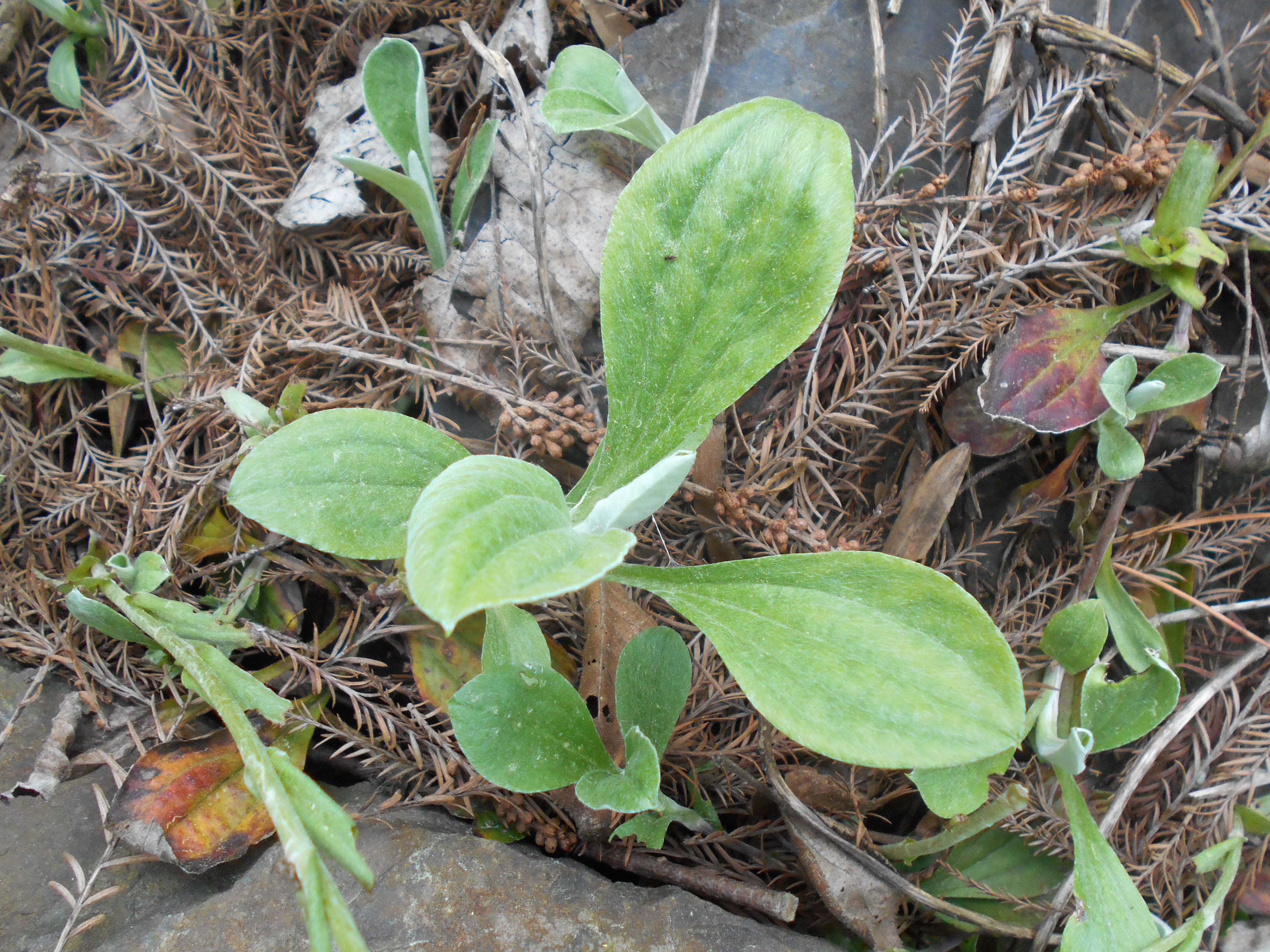
Antennaria plantaginifolia, commonly known as Pussy’s Toes, Woman’s Tobacco, or Plantain-leaf Pussytoes, is a charming native groundcover that creates enchanting carpets of silvery-white woolly foliage throughout much of North America. This diminutive member of the Asteraceae (sunflower) family is beloved for its distinctive appearance — tiny rosettes of spoon-shaped leaves covered in dense white hairs that give the plant a soft, velvety texture reminiscent of cat’s paws. Growing just 6 inches to 1 foot tall, this perennial herb spreads by underground stolons to form extensive colonies that can persist for decades.
The plant’s unique beauty lies in its striking contrast between the bright silvery-white foliage and the small clusters of white to pinkish flower heads that appear on woolly stems in spring. The leaves are arranged in basal rosettes, each leaf densely covered with fine white hairs that serve as protection against moisture loss and temperature extremes. This adaptation allows Pussy’s Toes to thrive in challenging sites including dry, sandy soils, rocky slopes, and areas with intense sun exposure where many other native groundcovers struggle.
Despite its delicate appearance, Pussy’s Toes is remarkably tough and long-lived, making it an excellent choice for naturalized areas, rock gardens, and challenging landscape sites. The plant is dioecious, with separate male and female plants, and spreads primarily through vegetative reproduction rather than seed. Its low growth habit, drought tolerance, and ability to form dense mats make it valuable for erosion control on slopes, while its early spring flowers provide crucial nectar for small native bees and other pollinators emerging from winter dormancy.
Identification
Pussy’s Toes is easily identified by its distinctive silvery-white appearance and characteristic growth pattern. The plant forms low, spreading mats of small rosettes that rarely exceed 1 foot in height.
Leaves
The most distinctive feature is the foliage — small, spoon-shaped to oval leaves arranged in tight basal rosettes. Each leaf is 1 to 3 inches long and ½ to 1 inch wide, with a distinctive silvery-white appearance created by dense woolly hairs (tomentum) covering both surfaces. The leaves have 3 to 5 prominent parallel veins running from base to tip, giving them a ribbed texture beneath the woolly coating. The leaf margins are entire (smooth) and the texture is soft and velvety to the touch, hence the common name referring to cat’s paws.
Flowers
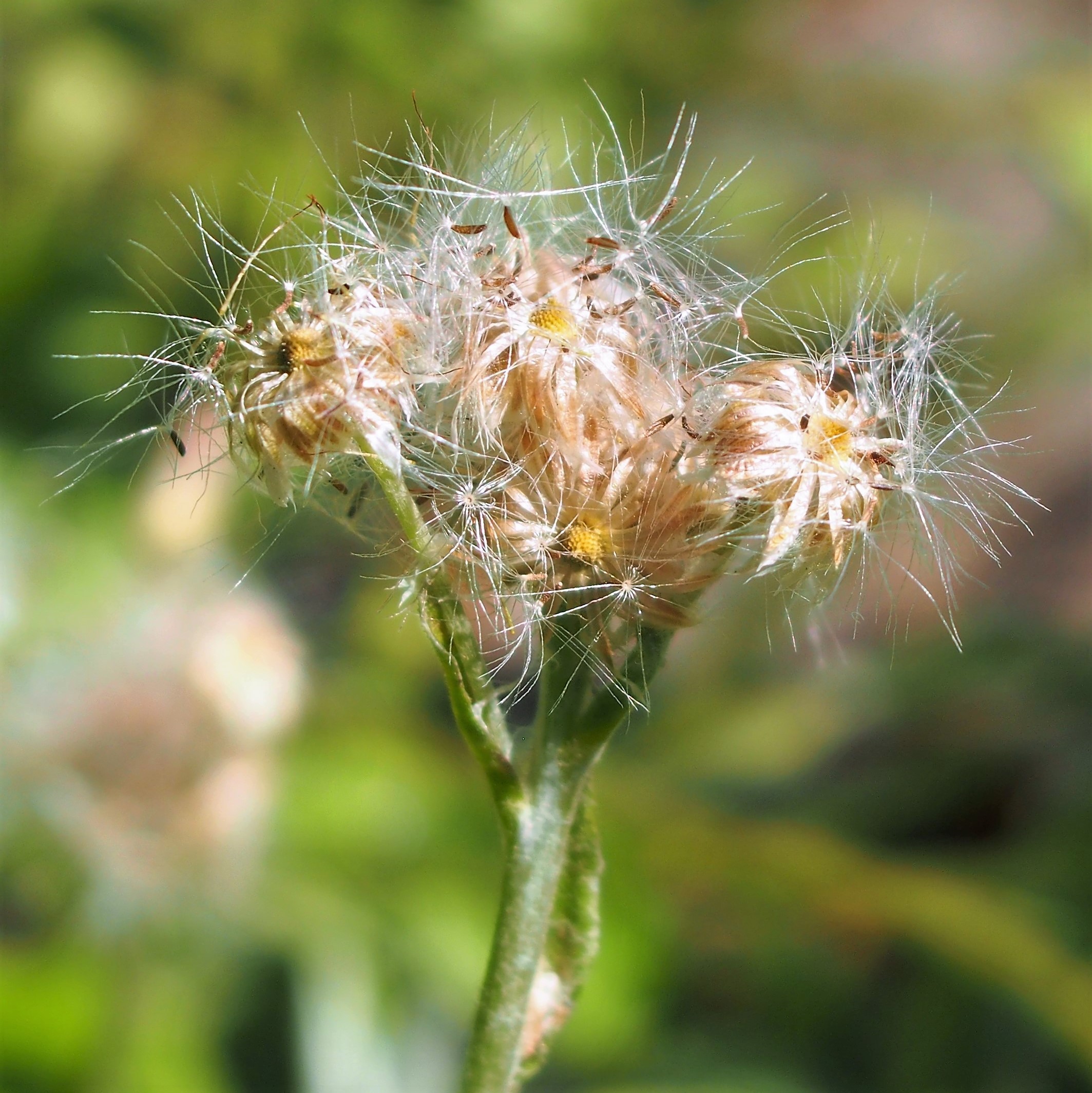
The flowers appear in spring (April through June) as small clusters of 3 to 12 flower heads atop woolly, leafless stems that rise 4 to 12 inches above the foliage rosettes. Individual flower heads are small — about ¼ inch across — and composed entirely of tiny white to pale pink disc florets, lacking the showy ray petals of typical asters and daisies. Male and female flowers occur on separate plants, with male flowers being slightly showier and more conspicuous. The overall effect is of small, fuzzy white pompoms held above the silvery foliage carpet.
Growth Pattern
Pussy’s Toes spreads primarily through underground stolons (horizontal stems) that produce new rosettes at their tips, gradually forming dense colonies that can cover large areas over time. The individual rosettes remain low to the ground, creating an even carpet typically 6 inches to 1 foot in height. The plant is evergreen to semi-evergreen, maintaining its silvery foliage through much of the winter in milder climates.
Quick Facts
| Scientific Name | Antennaria plantaginifolia |
| Family | Asteraceae (Sunflower) |
| Plant Type | Perennial Groundcover Herb |
| Mature Height | 0.5–1 ft |
| Sun Exposure | Full Sun |
| Water Needs | Moderate |
| Bloom Time | April – June |
| Flower Color | White to pale pink |
| USDA Hardiness Zones | 3–9 |
Native Range
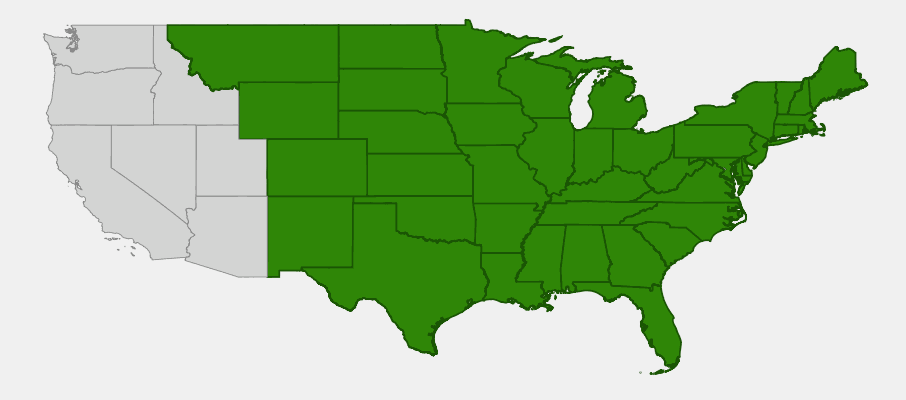
Pussy’s Toes has one of the broadest native distributions of any North American wildflower, ranging from southern Canada south to Florida and northern Mexico, and from the Atlantic to the Pacific coasts. This extensive range reflects the species’ remarkable adaptability to diverse climates and growing conditions. The plant is found from sea level to mountainous elevations exceeding 8,000 feet, demonstrating exceptional tolerance for temperature and precipitation variations.
Throughout its vast range, Pussy’s Toes inhabits a variety of habitats including dry prairies, open woodlands, rocky slopes, sandy barrens, old fields, and disturbed areas. The species shows particular affinity for sites with well-drained, sandy or gravelly soils and full sun exposure, though it also tolerates partial shade in woodland edges and clearings. This habitat flexibility has allowed Pussy’s Toes to persist and even thrive in landscapes modified by human activity, making it one of our most successful native plants.
Regional variations exist throughout the range, with plants in different areas showing subtle differences in leaf shape, flower color, and growth habits. However, the species maintains its characteristic silvery appearance and low growth form across its entire distribution. Climate change and habitat fragmentation have had minimal impact on Pussy’s Toes populations, as the species readily colonizes suitable disturbed habitats and appears to be expanding its range in some areas.
📋 Regional plant lists featuring Pussy’s Toes: North Carolina & South Carolina
Growing & Care Guide
Pussy’s Toes is an exceptionally low-maintenance groundcover that thrives with minimal intervention once established. Its natural adaptations to challenging growing conditions make it ideal for difficult sites where other plants struggle.
Light
This plant performs best in full sun conditions, where it develops the most intense silvery-white foliage color and compact growth habit. While it tolerates partial shade, plants grown in shadier conditions tend to be less densely woolly and may become somewhat leggy. The thick woolly hairs on the leaves are adaptations to intense sunlight and help reflect excess light while reducing water loss, making Pussy’s Toes particularly valuable for hot, sunny exposures.
Soil & Water
Pussy’s Toes is remarkably adaptable to poor soils and actually prefers well-drained, sandy or gravelly conditions over rich, fertile soils. The plant thrives in soils that would be challenging for most other perennials, including sandy barrens, rocky slopes, and areas with low organic matter. Good drainage is essential — avoid heavy clay soils or areas that remain wet for extended periods. Once established, the plant is extremely drought tolerant and rarely needs supplemental watering except during severe droughts.
Planting Tips
Plant Pussy’s Toes in spring or fall, choosing a location with full sun and well-drained soil. The plant spreads naturally through stolons, so give it room to form colonies over time. Space individual plants 12-18 inches apart if creating a groundcover planting, or plant singly as specimens in rock gardens. The plant establishes slowly from seed but quickly from transplanted rosettes or divisions.
Pruning & Maintenance
Pussy’s Toes requires virtually no maintenance once established. The plant is naturally neat and tidy, rarely needing pruning or deadheading. If desired, flower stems can be removed after blooming to maintain a more uniform appearance, but this is not necessary. The woolly foliage provides excellent weed suppression, and established colonies rarely need weeding or other intervention. Avoid fertilizing, as rich conditions can reduce the plant’s characteristic woolly appearance and compact growth habit.
Landscape Uses
Pussy’s Toes excels in numerous challenging landscape situations:
- Groundcover — creates beautiful silvery carpets in sunny areas
- Rock gardens — perfect for crevices and challenging exposures
- Erosion control — stabilizes slopes with its spreading root system
- Xeriscaping — excellent for low-water gardens
- Naturalized areas — fits beautifully in prairie and meadow plantings
- Difficult sites — thrives where other plants struggle
- Pollinator gardens — provides early nectar for native bees
- Winter interest — semi-evergreen foliage provides year-round color
Wildlife & Ecological Value
Despite its small stature, Pussy’s Toes provides significant ecological value, particularly as an early-season nectar source and as habitat for specialized wildlife species.
For Pollinators
The spring flowers are crucial for small native bees, including mining bees, sweat bees, and various solitary bee species that emerge early in the season when few other flowers are available. The small flower heads are perfectly sized for tiny pollinators, while the extended blooming period provides consistent nectar resources. Butterfly species including Spring Azures, American Coppers, and various skippers also visit the flowers, particularly on warm spring days.
For Birds
While not a major food source for birds, the seeds of Pussy’s Toes are consumed by small seed-eating species including various sparrows and finches. The dense mat-forming growth habit provides ground-level cover that is used by ground-nesting birds and small mammals for protection from predators. The plant’s low profile allows it to serve as understory habitat without competing with taller prairie and woodland species.
For Lepidoptera
Pussy’s Toes serves as a larval host plant for several butterfly and moth species, including the American Lady butterfly and various cutworm moths. The woolly foliage provides protection for caterpillars, while the plant’s widespread distribution makes it an important component of pollinator corridors and habitat networks. The early flowering also supports the life cycles of moths and butterflies that overwinter as adults.
Ecosystem Role
As a groundcover species, Pussy’s Toes plays an important role in soil stabilization and erosion control, particularly on disturbed or marginal sites. Its ability to establish in poor soils makes it valuable for revegetating damaged areas and creating habitat for other native species to follow. The plant’s stoloniferous growth habit helps bind soil particles and reduce surface erosion on slopes and exposed areas.
Cultural & Historical Uses
Pussy’s Toes has a rich history of traditional use by Indigenous peoples throughout its extensive range, with different tribal nations developing various applications for this widespread plant. The soft, woolly leaves were commonly used for their absorbent and insulating properties — they served as natural bandages for wounds, padding for moccasins and clothing, and even as tinder for starting fires due to their dry, flammable nature when properly prepared.
Medicinally, various tribes used Pussy’s Toes preparations for treating respiratory ailments, digestive problems, and skin conditions. The Cherokee used leaf teas for treating coughs and lung congestion, while Plains tribes used the plant for treating wounds and inflammation. The common name “Woman’s Tobacco” reflects its use by some tribes as a smoking mixture, either alone or blended with other plants, though this was typically for ceremonial rather than recreational purposes.
The plant’s scientific name, Antennaria, refers to the resemblance of the male flower parts to insect antennae, while “plantaginifolia” means “with leaves like plantain,” describing the shape and venation pattern of the foliage. Early European botanists were struck by the plant’s unusual silvery appearance and widespread distribution, leading to extensive documentation of regional variations and uses.
In contemporary times, Pussy’s Toes has gained recognition as an excellent native groundcover for sustainable landscaping and ecological restoration projects. The plant’s extreme adaptability and low maintenance requirements make it valuable for green infrastructure projects, including green roofs, rain gardens, and urban habitat restoration. Contemporary herbalists continue to use the plant in traditional ways, though always with appropriate caution and expert guidance.
Frequently Asked Questions
Why is it called Pussy’s Toes?
The common name refers to the soft, velvety texture of the leaves, which are covered in dense white hairs that feel remarkably similar to the pads on a cat’s paw. The silvery-white appearance and soft texture immediately bring to mind the fuzzy underside of a cat’s toes.
Will Pussy’s Toes spread and take over my garden?
While Pussy’s Toes does spread through underground stolons, it spreads slowly and forms discrete colonies rather than aggressively invading other plantings. The low growth habit means it won’t compete with taller plants, and it’s easily controlled by removing unwanted rosettes if necessary.
Can I grow Pussy’s Toes in rich, fertile soil?
While the plant will survive in richer soils, it performs best and maintains its characteristic silvery appearance in leaner, well-drained conditions. Rich soils may cause the plant to become less compact and reduce the intensity of the woolly leaf coating that makes it so attractive.
Is Pussy’s Toes deer resistant?
Yes, the woolly texture and low growth habit make Pussy’s Toes generally unpalatable to deer and rabbits. The dense mat-forming habit also makes it difficult for larger animals to browse effectively, contributing to the plant’s persistence in areas with wildlife pressure.
How do I tell male and female plants apart?
Male flowers are slightly larger and showier than female flowers, with more prominent stamens that give them a fuzzy appearance. Female flowers are smaller and less conspicuous. However, both sexes are attractive and the difference is subtle enough that most gardeners plant mixed colonies without concern for sex ratios.

Looking for a nursery that carries Pussy’s Toes?
Browse our native plant nursery directory: North Carolina · South Carolina