Sweetfern (Comptonia peregrina)
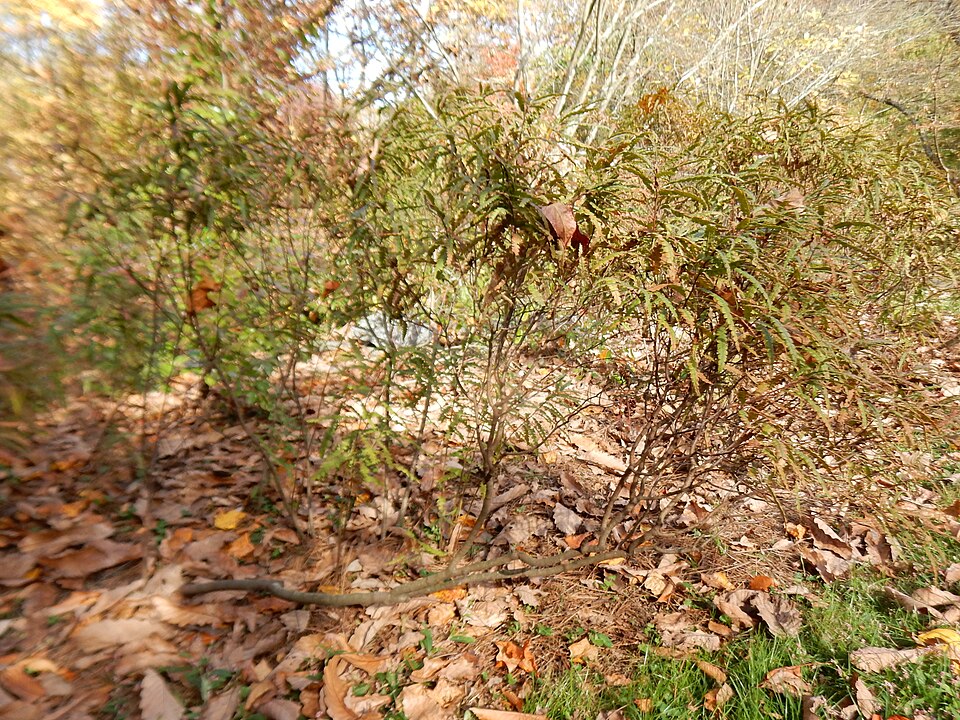
Comptonia peregrina, commonly known as Sweetfern, is a remarkable native deciduous shrub of eastern North America that belongs to neither the fern family nor the sweet gale family, despite its common name and superficial resemblance to both. This distinctive member of the Myricaceae (bayberry) family is renowned for its deeply fragrant, fern-like foliage that releases a sweet, spicy aroma when crushed — earning it the name “sweetfern” from early settlers who found its scent reminiscent of sweet bay and fern combined.
Growing naturally in acidic, sandy soils from the pine barrens of New Jersey to the rocky slopes of New England and extending west through the Great Lakes region, Sweetfern is an ecological powerhouse that thrives where many other plants struggle. This low-growing shrub, typically reaching 2 to 4 feet tall, forms extensive colonies through underground rhizomes, creating aromatic groundcover that stabilizes soil and provides critical habitat for wildlife. Its unique ability to fix nitrogen through root nodules makes it a valuable pioneer species in disturbed or nutrient-poor soils.
What makes Sweetfern truly special is its combination of remarkable drought tolerance, stunning autumn color, and year-round architectural interest. The deeply lobed, linear leaves turn brilliant yellow-orange in fall, while the small, brownish flowers give way to distinctive clusters of small, nut-like fruits that persist into winter. For gardeners seeking a native alternative to traditional foundation plantings or ground covers, Sweetfern offers unmatched fragrance, seasonal interest, and ecological value — all while thriving in challenging sites that defeat most other plants.
Identification
Sweetfern is easily recognized by its distinctive foliage and growth habit, making it one of the more memorable native shrubs once you’ve encountered it. The plant typically grows as a low, densely branched deciduous shrub reaching 2 to 4 feet tall (occasionally up to 5 feet) with a spreading, often irregular form that can extend 3 to 6 feet wide through colonization.
Leaves
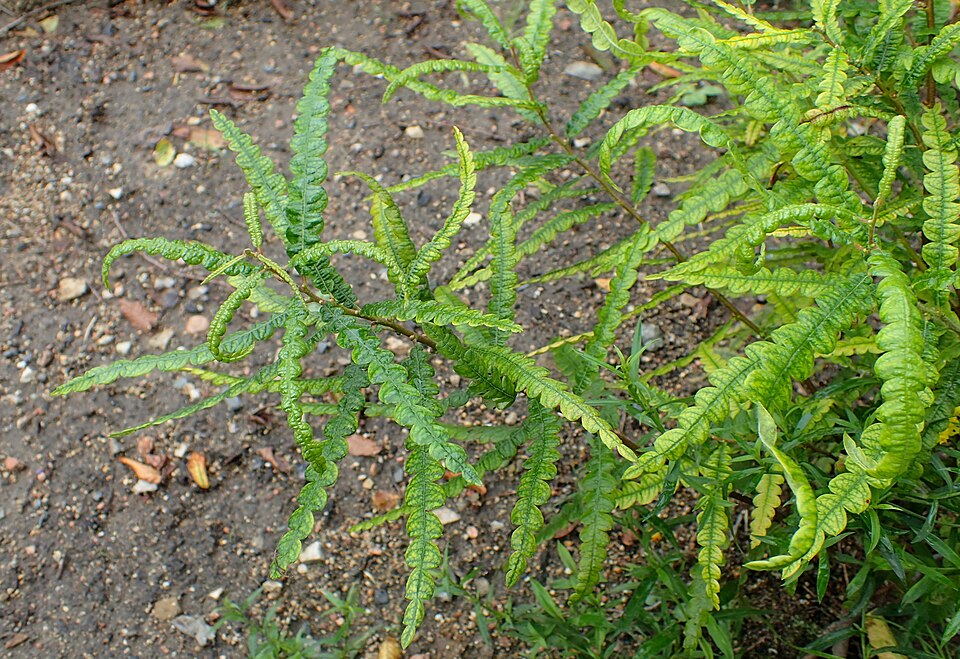
The leaves are Sweetfern’s most distinctive feature — linear and deeply pinnately lobed with rounded segments, creating a fern-like appearance that gives the plant its common name. Each leaf is 3 to 6 inches long and ½ to 1 inch wide, with 10 to 20 pairs of rounded lobes separated by deep sinuses that extend nearly to the midrib. The upper surface is dark green and smooth, while the underside is paler with prominent veining. When crushed, the leaves release an intensely sweet, spicy fragrance reminiscent of sweet bay, nutmeg, and fresh hay combined — an aroma so distinctive that it can be detected from several feet away on warm days.
Bark & Stems
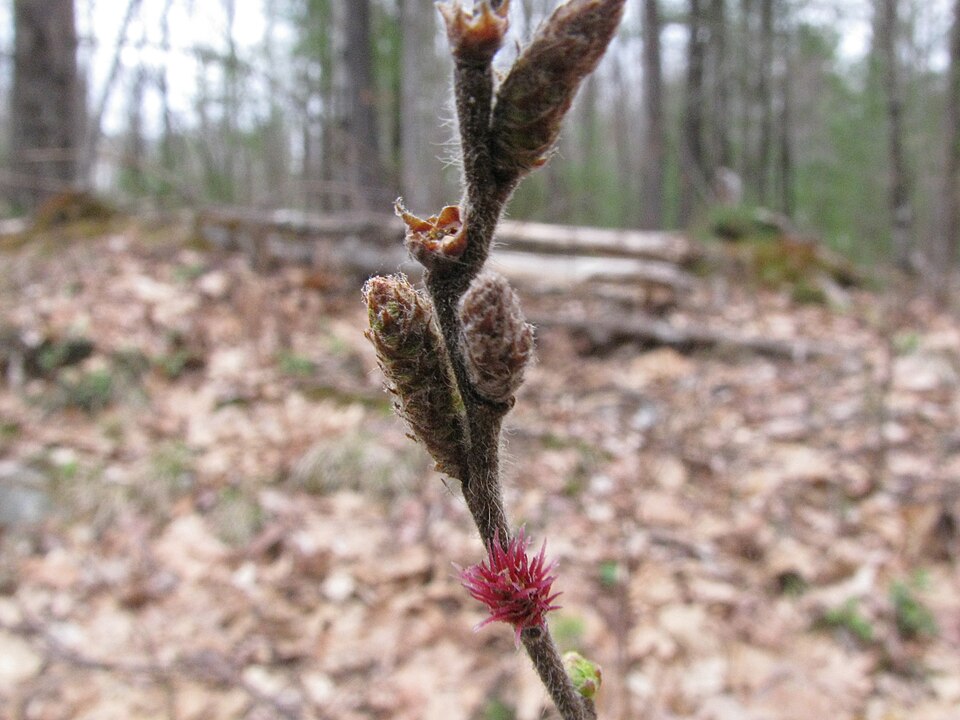
Young twigs are slender, reddish-brown to grayish-brown, and covered with fine hairs that give them a slightly fuzzy texture. The bark on older stems becomes smooth and grayish-brown with prominent lenticels (breathing pores) that appear as small, horizontal lines. The extensive underground rhizome system allows the plant to form large colonies over time, often creating dense stands in favorable locations.
Flowers & Fruit
Sweetfern is monoecious, producing both male and female flowers on the same plant in early spring before the leaves fully emerge. The male flowers appear as elongated, yellowish-green catkins 1 to 2 inches long that dangle from branch tips. Female flowers are much smaller, appearing as tiny, reddish clusters nestled along the stems. The flowers are wind-pollinated and lack showy petals, but they’re an important early-season pollen source for native bees and other insects.
The fruit is perhaps Sweetfern’s most unusual feature — clusters of small, brown, nut-like structures called “burr-nuts” that develop from the female flowers. Each fruit cluster contains 2 to 8 individual nuts, each about ⅛ inch long and covered with waxy, resinous dots. These persistent fruits remain on the plant through winter, providing food for birds and small mammals while adding textural interest to the winter landscape.
Quick Facts
| Scientific Name | Comptonia peregrina |
| Family | Myricaceae (Bayberry) |
| Plant Type | Deciduous Shrub |
| Mature Height | 3 ft |
| Sun Exposure | Full Sun to Part Shade |
| Water Needs | Moderate to Low |
| Bloom Time | April – May |
| Flower Color | Yellowish-green (male), reddish (female) |
| USDA Hardiness Zones | 2–6 |
Native Range
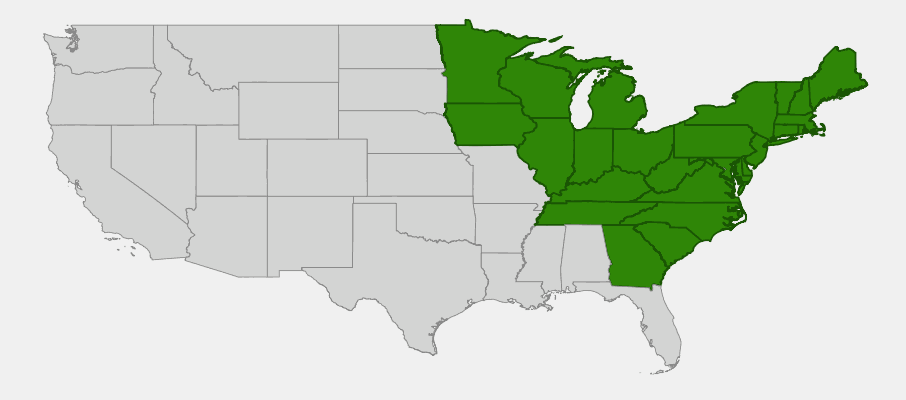
Sweetfern has one of the most extensive native ranges among North American shrubs, stretching from the Maritime Provinces of Canada south to North Carolina and Georgia, and west through the Great Lakes region to Minnesota and Iowa. This remarkable distribution reflects the plant’s adaptability to diverse climates and soil conditions, though it shows a strong preference for acidic, well-drained soils typical of pine barrens, oak woodlands, and rocky slopes.
The species is most abundant in the northeastern United States, where it forms extensive colonies in pine barrens ecosystems like those found in New Jersey, Long Island, and Cape Cod. In these habitats, Sweetfern often dominates the understory beneath pitch pine and scrub oak, creating aromatic carpets that can extend for acres. Further north, it inhabits the edges of boreal forests and clearings, while in the southern portion of its range, it’s typically found at higher elevations in the Appalachian Mountains.
Historically, Sweetfern’s range may have been even more extensive, but habitat loss due to development and fire suppression has reduced populations in many areas. The plant is particularly dependent on periodic disturbance — whether from fire, logging, or other activities — to maintain the open, sunny conditions it requires for optimal growth. Climate change and shifting precipitation patterns are also affecting populations at the edges of its range, making conservation of existing habitats increasingly important.
📋 Regional plant lists featuring Sweetfern: North Carolina & South Carolina
Growing & Care Guide
Sweetfern is surprisingly easy to grow once you understand its basic requirements, making it an excellent choice for challenging sites where other plants struggle. The key to success lies in replicating its native habitat conditions: acidic soil, good drainage, and full to partial sun exposure.
Light
Sweetfern performs best in full sun to light shade, requiring at least 4-6 hours of direct sunlight daily for optimal growth and flowering. In too much shade, the plant becomes leggy and produces fewer flowers and fruits. Full sun exposure also intensifies the fragrance of the foliage and promotes the most compact, dense growth habit. In its native range, it often grows in clearings and forest edges where it receives bright, filtered light throughout much of the day.
Soil & Water
The most critical factor for Sweetfern success is soil acidity and drainage. The plant requires acidic soil with a pH between 4.5 and 6.5, and absolutely demands well-draining conditions — it will not tolerate soggy or waterlogged soils. Sandy or sandy-loam soils are ideal, though it can adapt to rocky or gravelly conditions. Once established, Sweetfern is extremely drought tolerant and actually prefers dry conditions over consistently moist soil.
One of Sweetfern’s most remarkable features is its ability to fix nitrogen through specialized root nodules containing Frankia bacteria. This adaptation allows it to thrive in nutrient-poor soils where other plants fail, making it an excellent choice for erosion control on difficult sites.
Planting Tips
Plant Sweetfern in early spring or early fall for best establishment. Choose a site with morning sun and good air circulation. If your soil is too alkaline, amend it with sulfur or plant in raised beds filled with acidic potting mix. Space plants 3-4 feet apart if creating a mass planting — they will eventually fill in through rhizome growth. Container-grown plants establish more easily than bareroot specimens.
Pruning & Maintenance
Sweetfern requires minimal maintenance once established. Pruning is rarely necessary, but if needed, do it in late winter before new growth begins. The plant can be cut back severely if it becomes overgrown, as it readily regenerates from the extensive root system. Avoid fertilizing — Sweetfern actually prefers low-nutrient conditions and may become leggy if over-fertilized.
Landscape Uses
Sweetfern’s unique characteristics make it valuable in several landscape applications:
- Erosion control on slopes and challenging sites with poor soil
- Naturalized groundcover in pine barrens or woodland edge gardens
- Fragrance gardens — place near paths where the aromatic foliage can be enjoyed
- Wildlife habitat — provides food and shelter for numerous native species
- Low-maintenance landscaping in acidic, sandy soil areas
- Fire-resistant plantings — useful in wildfire-prone areas due to low flammability
- Native plant gardens as an authentic component of eastern woodland ecosystems
Wildlife & Ecological Value
Despite its modest appearance, Sweetfern is an ecological powerhouse that supports a remarkable diversity of wildlife throughout the year. Its combination of flowers, fruits, foliage, and dense growth structure provides resources for species ranging from tiny insects to large mammals.
For Birds
The small, nut-like fruits of Sweetfern are consumed by numerous bird species, particularly during fall and winter when other food sources become scarce. Northern Bobwhite, Ruffed Grouse, and Wild Turkey eat the fruits regularly, while smaller songbirds like American Goldfinch, Purple Finch, and various sparrows also rely on them for winter sustenance. The dense, low-growing branches provide excellent nesting sites for ground-nesting birds and cover for species like Eastern Towhee and Song Sparrow.
For Mammals
White-tailed deer browse the foliage and young twigs, especially during winter when other food is scarce, though they generally prefer other plants when available. Small mammals including Eastern Chipmunk, Red Squirrel, and various mice species cache the nuts for winter food stores. The dense colonies provide thermal cover and hiding places for rabbits, voles, and other small mammals year-round.
For Pollinators
While Sweetfern’s flowers are wind-pollinated and lack showy petals, they still provide an important early-season pollen source when few other plants are blooming. Native bees, including mining bees and sweat bees, collect pollen from the male catkins. The plant also hosts several specialist insects, including moth species whose caterpillars feed exclusively on Sweetfern foliage.
Ecosystem Role
Sweetfern plays a crucial ecological role as a nitrogen-fixing pioneer species that helps prepare soil for other plants. In disturbed areas, it’s often among the first shrubs to establish, creating improved soil conditions that allow other native plants to follow. The extensive rhizome system helps prevent soil erosion on slopes and unstable sites, while the dense colonies create habitat structure that supports entire communities of understory plants, insects, and small animals.
The plant is also adapted to fire ecology, readily resprouting from its extensive root system after burning. This adaptation helped maintain open habitats historically, and Sweetfern colonies often benefit from prescribed burns in managed natural areas.
Cultural & Historical Uses
Sweetfern holds a rich history of human use stretching back thousands of years, with Indigenous peoples of eastern North America being the first to recognize and utilize this remarkable plant’s many beneficial properties. The plant’s intensely aromatic foliage made it valuable not only for practical purposes but also for ceremonial and medicinal applications that continue to be respected today.
Many Indigenous tribes, including the Penobscot, Mi’kmaq, Ojibwe, and Potawatomi, used Sweetfern leaves to create a fragrant tea that was believed to have medicinal properties, particularly for digestive ailments and respiratory issues. The leaves were also burned as a smudge or incense for ceremonial purposes, with the sweet smoke thought to purify spaces and carry prayers. During long journeys, dried Sweetfern leaves were carried as a natural insect repellent and air freshener.
European settlers quickly adopted many Indigenous uses for Sweetfern, incorporating it into their folk medicine traditions. The plant became a popular home remedy throughout New England and eastern Canada, with the aromatic leaves used to make teas, poultices, and tinctures. Dried Sweetfern was commonly stuffed into mattresses and pillows to repel insects and provide a pleasant fragrance, while fresh sprigs were hung in homes and barns as a natural air freshener and moth deterrent.
In the 19th and early 20th centuries, Sweetfern gained some recognition in formal herbal medicine, appearing in several pharmacopeias and botanical medicine texts. However, its use declined with the rise of modern pharmaceuticals, though it maintained popularity in folk medicine traditions, particularly in rural areas where it grew abundantly.
Beyond medicinal uses, Sweetfern found practical applications in daily life. The aromatic leaves were used to flavor foods — particularly wild game — and to brew a coffee-like beverage during times when real coffee was scarce or expensive. The plant’s natural insect-repelling properties made it valuable for protecting stored grains and textiles, while the pleasant fragrance made it a popular addition to potpourri and sachets.
Today, while Sweetfern is no longer widely used medicinally, it’s experiencing renewed interest among herbalists, naturalists, and native plant enthusiasts who appreciate its historical significance and ecological value. Modern foragers and wild food enthusiasts sometimes use the leaves to make aromatic teas, though any medicinal use should be approached with caution and proper knowledge.
Frequently Asked Questions
Is Sweetfern actually a fern?
No, despite its common name and fern-like foliage, Sweetfern is actually a flowering shrub in the bayberry family (Myricaceae), not a true fern. The name comes from the deeply lobed leaves that resemble fern fronds and the sweet fragrance released when the foliage is crushed.
Can I grow Sweetfern in alkaline soil?
Sweetfern absolutely requires acidic soil (pH 4.5-6.5) and will not thrive in alkaline conditions. If your soil is alkaline, you’ll need to either amend it with sulfur to lower the pH or grow Sweetfern in containers or raised beds filled with acidic potting mix.
How fast does Sweetfern spread?
Sweetfern spreads slowly to moderately through underground rhizomes, typically expanding its colony by 6-12 inches per year under good conditions. It may take 3-5 years for a single plant to develop into a small colony, but once established, it can eventually cover large areas if left unchecked.
Is Sweetfern deer resistant?
Sweetfern has moderate deer resistance — while deer will browse it, especially in winter, they generally prefer other plants when available. The strong fragrance may help deter browsing, but it’s not completely deer-proof in areas with high deer pressure.
Can I use Sweetfern leaves for tea?
While Indigenous peoples and early settlers traditionally used Sweetfern leaves to make aromatic tea, modern use should be approached with caution. The plant contains compounds that may not be suitable for regular consumption, and any medicinal or culinary use should be thoroughly researched or done under the guidance of qualified herbalists.

Looking for a nursery that carries Sweetfern?
Browse our native plant nursery directory: North Carolina · South Carolina