New Jersey Tea (Ceanothus americanus)
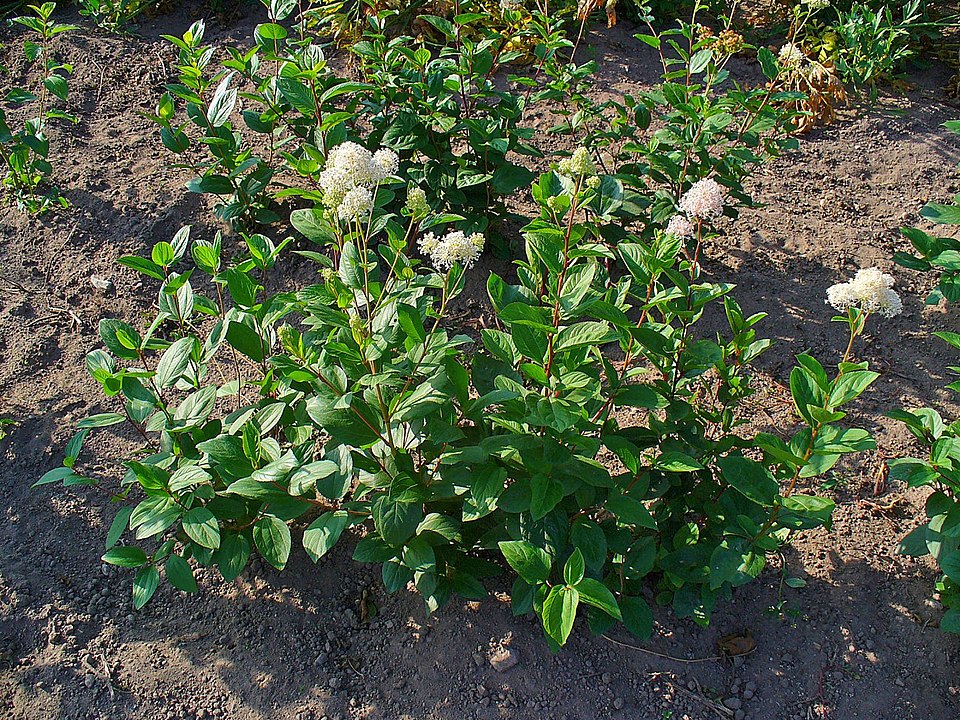
Ceanothus americanus, commonly known as New Jersey Tea, Red Root, or Jersey Tea, is a distinctive native shrub of eastern North America that produces clouds of fragrant white flowers in early summer. This member of the Rhamnaceae (buckthorn) family typically grows 2 to 4 feet tall and wide, forming a low, rounded shrub with small, oval leaves and dense terminal clusters of tiny white flowers that bloom for several weeks in June.
The plant earned its common name during the American Revolutionary War when its leaves were used as a substitute for imported tea, though it contains no caffeine. The “Red Root” name refers to its distinctive deep red root system, which can extend several feet deep into the soil, making the plant extremely drought-tolerant once established. This extensive root system also allows New Jersey Tea to thrive in poor, rocky soils where many other shrubs struggle.
New Jersey Tea is particularly valued for its exceptional wildlife benefits, supporting over 30 species of butterflies and moths as a host plant, while its abundant white flowers provide nectar for countless pollinators during the crucial early summer period. The plant’s tolerance for drought, poor soils, and full sun exposure makes it an excellent choice for challenging garden sites, restoration projects, and native landscaping throughout its extensive natural range from southern Canada to Florida and west to Texas.
Identification
New Jersey Tea is a small, deciduous shrub that typically reaches 2 to 4 feet in height and spreads 3 to 4 feet wide, forming a rounded, somewhat open growth habit. The plant develops multiple stems from the base and may appear somewhat scraggly when young but fills out into an attractive, densely branched shrub with age.
Stems & Bark
The stems are slender, somewhat ridged, and gray-brown in color. Young twigs may have a slight reddish tinge. The bark is smooth on young stems and becomes slightly furrowed with age. The wood is quite brittle and breaks easily.
Leaves
The leaves are alternate, simple, and oval to elliptical, measuring 1 to 3 inches long and ½ to 1½ inches wide. They are dark green above and paler beneath, with prominent veining that gives them a ribbed texture. The leaf margins are finely serrated (toothed), and the leaves taper to short petioles. Three prominent parallel veins run from the base to the tip of each leaf, a characteristic feature that helps identify this species.
Flowers
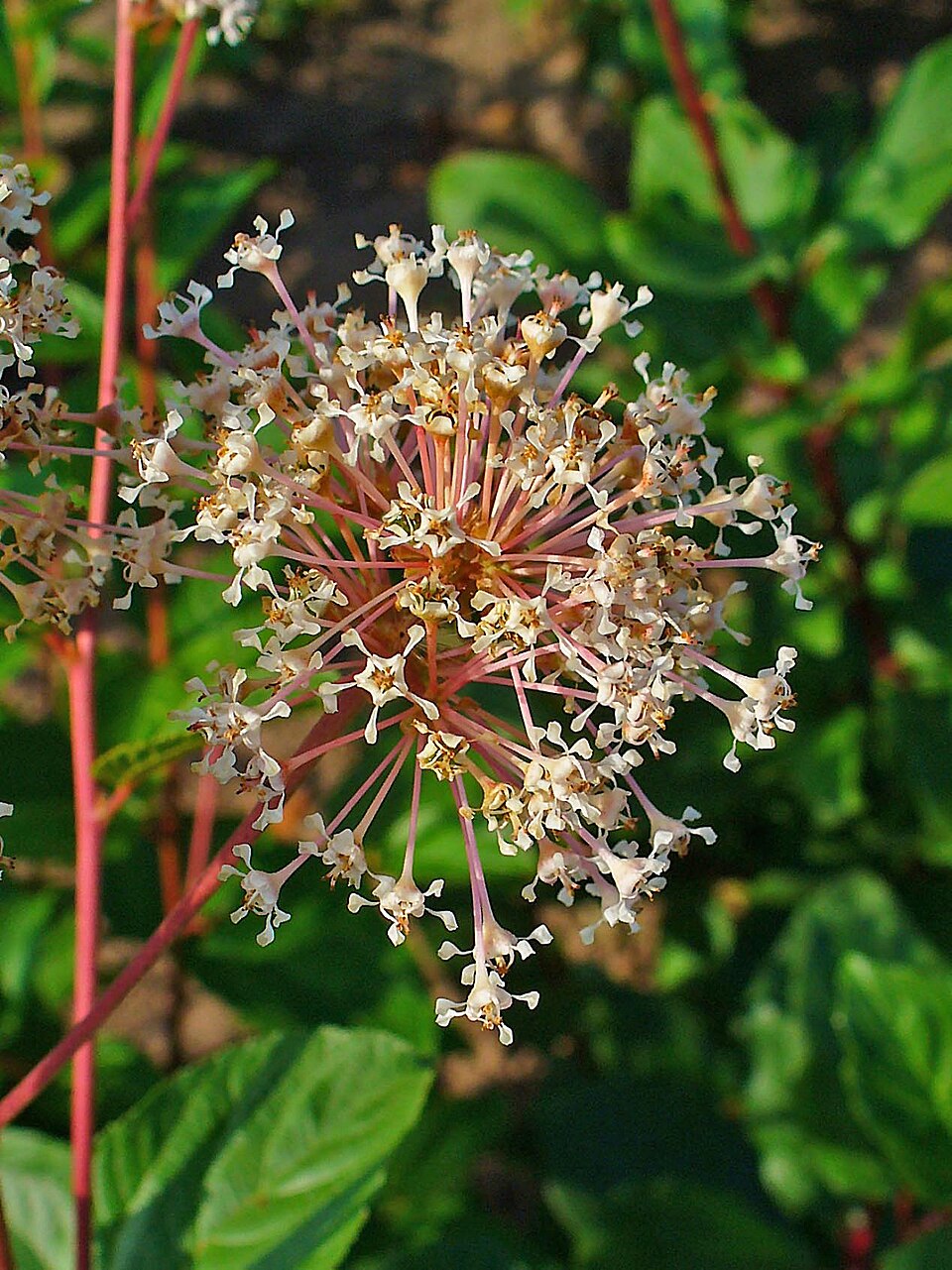
The flowers are the plant’s most distinctive and attractive feature, appearing as dense, fluffy clusters (panicles) at the tips of branches. Individual flowers are tiny, about ⅛ inch across, with five small white petals and prominent white stamens that give the clusters their fluffy appearance. Each flower cluster is 1 to 3 inches long and wide. The flowers have a sweet, pleasant fragrance that attracts numerous pollinators.
Fruit & Seeds
The fruit is a small, three-lobed capsule that splits open when ripe to release small black seeds. The capsules mature in late summer and may persist on the plant through winter. The seeds are distributed by gravity and small animals.
Root System
New Jersey Tea is famous for its extensive, deep red root system that can penetrate 8 feet or more into the soil. This taproot system is what gives the plant its drought tolerance and its alternative common name “Red Root.”
Quick Facts
| Scientific Name | Ceanothus americanus |
| Family | Rhamnaceae (Buckthorn) |
| Plant Type | Deciduous Shrub |
| Mature Height | 3 ft |
| Sun Exposure | Full Sun to Part Shade |
| Water Needs | Low (Drought Tolerant) |
| Bloom Time | June – July |
| Flower Color | White |
| USDA Hardiness Zones | 4–8 |
Native Range
New Jersey Tea has one of the most extensive native ranges of any North American shrub, stretching from southeastern Canada south to northern Florida and west from the Atlantic Coast to Texas, Nebraska, and southeastern Saskatchewan. This remarkable distribution reflects the plant’s exceptional adaptability to diverse climates, soil types, and growing conditions.
The species is found in a wide variety of natural habitats including dry prairies, oak savannas, woodland edges, rocky slopes, and disturbed areas. It thrives in well-drained soils and full to partial sun, often growing in association with native grasses and other drought-tolerant plants. New Jersey Tea is particularly common in areas with periodic fire cycles, as it resprouts vigorously from its extensive root system after burning.
Throughout its range, the plant shows considerable variation in size and form, with northern populations typically smaller and more compact than southern ones. Despite this variation, all populations share the characteristic white flower clusters, three-veined leaves, and deep red root system that make this species unmistakable across its vast natural range.
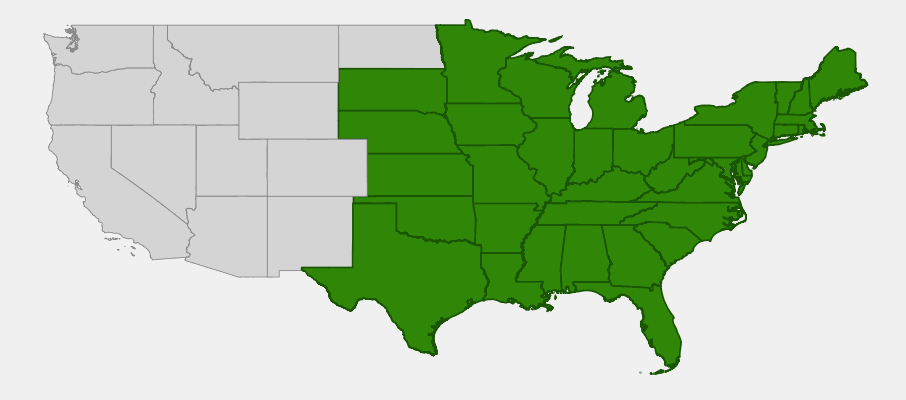
📋 Regional plant lists featuring New Jersey Tea: North Carolina & South Carolina
Growing & Care Guide
New Jersey Tea is one of the most low-maintenance native shrubs, requiring minimal care once established. Its deep root system and tolerance for poor soils make it ideal for challenging garden sites where other shrubs might struggle.
Light
This adaptable shrub thrives in full sun but tolerates partial shade, though flowering may be reduced in shadier conditions. Plants grown in full sun tend to be more compact and flower more profusely.
Soil & Water
New Jersey Tea is extremely tolerant of poor, rocky, or sandy soils and actually prefers well-drained conditions. It struggles in heavy, poorly drained soils. Once established, the deep root system makes the plant very drought-tolerant, though occasional deep watering during severe droughts will benefit flowering.
Planting Tips
Plant in spring or fall, choosing a site with good drainage. This shrub is difficult to transplant once established due to its deep taproot, so choose the location carefully. Space plants 3-4 feet apart.
Pruning & Maintenance
Minimal pruning is needed. Light pruning immediately after flowering can help maintain shape. The plant can be cut back hard in late winter if needed, as it resprouts readily from the root system.
Landscape Uses
Excellent for naturalized areas, butterfly gardens, xeriscapes, and challenging sites with poor soil or drought conditions.
Wildlife & Ecological Value
New Jersey Tea is one of the most ecologically valuable native shrubs, supporting an extraordinary array of wildlife. It serves as a larval host plant for over 30 species of butterflies and moths, including several Hairstreak butterflies and the Mottled Duskywing.
For Pollinators
The abundant white flowers attract numerous pollinators including native bees, butterflies, beneficial wasps, and flies. The long blooming period provides consistent nectar during early summer when many other native plants have finished flowering.
For Birds
Birds eat the small seeds, and the dense branching provides nesting sites for small songbirds. The plant’s low, spreading habit creates valuable ground-level habitat.
Ecosystem Role
As a nitrogen-fixing plant (through root nodule bacteria), New Jersey Tea helps improve soil fertility in natural areas. Its deep roots help stabilize soil and prevent erosion on slopes and disturbed sites.
Cultural & Historical Uses
New Jersey Tea holds a unique place in American history as a patriotic tea substitute during the Revolutionary War. When colonists boycotted imported British tea, the leaves of this native shrub provided a caffeine-free alternative that helped sustain the rebellion against British trade policies.
Native American tribes used various parts of the plant medicinally, particularly the root, which contains saponins and was used to treat respiratory ailments and as a general tonic. The Lakota called it “red root medicine” and considered it sacred.
The genus name Ceanothus comes from Greek meaning “spiny plant,” though this species lacks spines. The species name “americanus” reflects its North American origin. Modern research has confirmed that the plant does contain compounds with potential medicinal properties, though it should not be consumed without proper knowledge.
Frequently Asked Questions
Does New Jersey Tea actually taste like tea?
The leaves can be dried and brewed into a mild, somewhat astringent beverage, but it tastes quite different from true tea and contains no caffeine. It has an earthy, slightly sweet flavor.
Why is my New Jersey Tea not blooming well?
Poor flowering is often caused by too much shade, overly rich soil, or excessive moisture. This plant blooms best in full sun with lean, well-drained soil.
Is New Jersey Tea invasive?
No, it is a well-behaved native plant that rarely spreads aggressively. It may self-seed lightly in suitable conditions but is easily controlled.
Can I transplant an established New Jersey Tea?
Mature plants are very difficult to transplant successfully due to the extensive taproot system. It’s best to transplant only young plants or start new ones from seed.
When should I prune New Jersey Tea?
Prune lightly immediately after flowering (July) if needed. Avoid heavy pruning in late summer or fall, as this can reduce next year’s flower production.

Looking for a nursery that carries New Jersey Tea?
Browse our native plant nursery directory: North Carolina · South Carolina