Bush-honeysuckle (Diervilla sessilifolia)
Diervilla sessilifolia, commonly known as Bush-honeysuckle, Southern Bush-honeysuckle, or Mountain Bush-honeysuckle, is a charming native deciduous shrub that brings months of continuous blooming beauty to Appalachian gardens and naturalistic landscapes. This member of the Caprifoliaceae (Honeysuckle) family is distinguished from the invasive exotic honeysuckles by its upright shrub form, opposite leaves, and distinctive small yellow flowers that bloom continuously from late spring through summer on the tips of new growth.
Native to the mountains and foothills of the southeastern United States, Bush-honeysuckle is a medium-sized shrub that typically reaches 4 to 6 feet in height, forming dense colonies through underground rhizomes. The plant’s greatest ornamental asset is its extended blooming period — while most shrubs flower for just a few weeks, Bush-honeysuckle produces clusters of bright yellow tubular flowers from May through September, providing consistent color and nectar throughout the growing season.
This adaptable native shrub thrives in a variety of conditions from full sun to partial shade, making it valuable for challenging sites including slopes, woodland edges, and areas with poor or rocky soils. Its dense, suckering growth habit makes it excellent for erosion control, naturalized plantings, and wildlife habitat creation. For gardeners seeking a low-maintenance native shrub that provides long-lasting summer interest and supports pollinators, Bush-honeysuckle represents an outstanding and underutilized choice.
Identification
Bush-honeysuckle is a deciduous shrub that typically grows 4 to 6 feet tall and equally wide, though it can occasionally reach 8 feet in ideal conditions. The plant forms dense thickets through underground rhizomes, creating colonies that spread gradually outward from the original plant.
Stems & Bark
Young stems are green to reddish-brown and smooth, becoming light brown to gray with age. The bark on older stems develops shallow furrows and may peel slightly. The stems are hollow between the nodes (joints), and the pith is brown — features that help distinguish Bush-honeysuckle from invasive exotic honeysuckles, which have white pith.
Leaves
The leaves are opposite, simple, and lance-shaped to ovate, typically 3 to 6 inches long and 1 to 2½ inches wide. They have serrated (toothed) margins and taper to a sharp point at the tip. The upper leaf surface is dark green and somewhat glossy, while the underside is paler and may have fine hairs along the veins. The leaves are sessile or nearly so (having very short petioles), giving the species its name “sessilifolia.”
In autumn, the leaves turn various shades of yellow, orange, and red before dropping, providing attractive fall color. The opposite leaf arrangement and serrated margins help distinguish Bush-honeysuckle from other native shrubs in its range.
Flowers
The flowers are the plant’s most distinctive and attractive feature. They are small, bright yellow, and tubular, about ⅓ to ½ inch long, with five lobes that split into an irregular, somewhat two-lipped appearance. The flowers are borne in small terminal clusters (cymes) of 3 to 7 flowers at the tips of current year’s growth. This terminal flowering habit, combined with the continuous production of new growth, allows the plant to bloom repeatedly throughout the growing season from late May through September.
The flowers are rich in nectar and have a sweet fragrance, particularly in the evening. Unlike the exotic invasive honeysuckles, Bush-honeysuckle flowers are always yellow and are produced only at branch tips rather than in leaf axils.
Fruit
The fruits are small, dry capsules that split into two parts when mature, releasing tiny seeds with small tufts of hair that aid in wind dispersal. The fruits are not ornamental and are typically hidden by the foliage, but they provide food for small birds and contribute to the plant’s ability to colonize new areas.
Quick Facts
| Scientific Name | Diervilla sessilifolia |
| Family | Caprifoliaceae (Honeysuckle) |
| Plant Type | Deciduous Shrub |
| Mature Height | 4–6 ft |
| Sun Exposure | Full Sun to Full Shade |
| Water Needs | Moderate |
| Bloom Time | May – September |
| Flower Color | Bright yellow |
| USDA Hardiness Zones | 4 – 8 |
Native Range
Bush-honeysuckle has a limited native range concentrated in the Appalachian Mountains and adjacent regions of the southeastern United States. The species is found primarily from southern Pennsylvania and West Virginia south through the mountains of Virginia, North Carolina, South Carolina, Tennessee, Kentucky, and northern Georgia and Alabama. It also occurs in scattered populations in the Ozark Mountains of Arkansas and Missouri.
Within its native range, Bush-honeysuckle typically inhabits mountain slopes, ridges, and valleys at elevations ranging from about 1,000 to 6,000 feet. It grows naturally in a variety of forest types including oak-hickory forests, mixed mesophytic forests, and pine-oak woodlands. The plant shows a particular affinity for forest edges, clearings, and areas with some canopy disturbance that allows increased light penetration.
The species demonstrates remarkable adaptability within its native range, thriving in diverse soil types from rocky, thin mountain soils to deeper, more fertile valley bottoms. This ecological flexibility has made it a valuable component of Appalachian forest ecosystems and a reliable choice for restoration and landscaping projects throughout its native region.
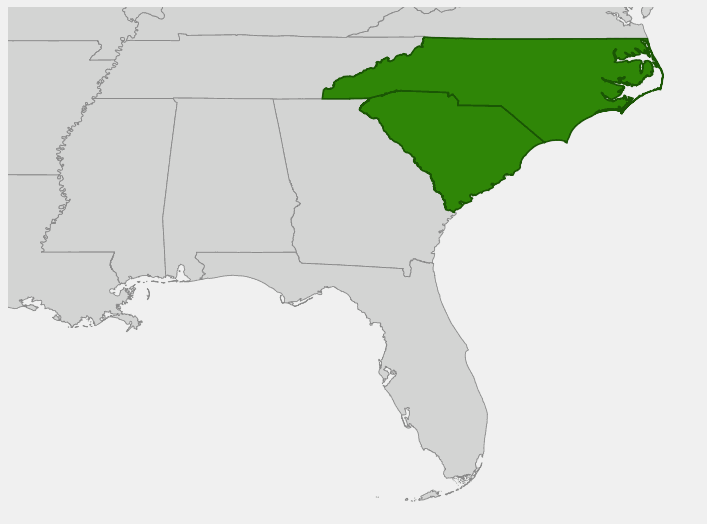
📋 Regional plant lists featuring Bush-honeysuckle: North Carolina & South Carolina
Growing & Care Guide
Bush-honeysuckle is an adaptable and relatively low-maintenance native shrub that is well-suited to a variety of garden situations, particularly those that replicate its natural mountain habitat.
Light
Bush-honeysuckle demonstrates remarkable adaptability to light conditions, thriving in everything from full sun to full shade. In full sun, plants tend to be more compact and produce more flowers, while in shade they may become more open and leggy but will still bloom reliably. The plant’s ability to flower continuously in shade makes it particularly valuable for woodland gardens and areas beneath trees where many other flowering shrubs struggle.
Soil & Water
This adaptable shrub tolerates a wide range of soil conditions, from rocky, thin mountain soils to deeper, more fertile sites. It prefers well-drained soils but can handle brief periods of drought once established. The plant is not particular about soil pH, growing well in both acidic and neutral conditions. Poor soils are not a problem — Bush-honeysuckle actually seems to prefer lean soils over rich, heavily fertilized conditions.
Moderate moisture is ideal, but the plant shows good drought tolerance once established. During the first growing season, provide regular water to help establish the root system, but mature plants typically need little supplemental irrigation except during extended dry periods.
Planting Tips
Plant Bush-honeysuckle in spring or fall when temperatures are moderate. The plant transplants easily and adapts quickly to new locations. Space plants 4 to 6 feet apart if creating a hedge or mass planting, or allow more space if you want to showcase individual specimens. The plant’s tendency to spread through rhizomes should be considered when choosing a location — it’s excellent for naturalizing areas but may not be appropriate for formal gardens where precise boundaries are important.
Pruning & Maintenance
Bush-honeysuckle requires minimal maintenance once established. Because it flowers on new growth, light pruning in late winter or early spring can encourage more vigorous blooming and maintain a compact shape. Remove any dead, damaged, or crossing branches as needed. The plant can be cut back severely if rejuvenation is needed, as it recovers quickly from hard pruning.
If the spread of the plant becomes problematic, unwanted shoots can be removed by cutting them at ground level or digging up sections of the rhizome system. A 2-3 inch layer of organic mulch around the base helps retain moisture and suppress weeds.
Landscape Uses
Bush-honeysuckle’s adaptability and extended flowering period make it valuable for many landscape applications:
- Naturalized plantings — excellent for woodland edges and meadow borders
- Erosion control — dense root system and spreading habit stabilize slopes
- Wildlife gardens — extended nectar source for pollinators
- Shade gardens — one of few shrubs that flowers well in shade
- Mixed shrub borders — provides summer-long color
- Restoration projects — valuable for restoring native plant communities
- Low-maintenance landscapes — thrives with minimal care once established
Wildlife & Ecological Value
Bush-honeysuckle provides important ecological services throughout its extended blooming period, supporting pollinators and other wildlife from late spring through early fall.
For Pollinators
The extended flowering period of Bush-honeysuckle makes it exceptionally valuable for pollinators. The bright yellow tubular flowers are particularly attractive to native bees, including bumblebees, leafcutter bees, and various solitary bee species. Butterflies, particularly smaller species, also visit the flowers regularly. The plant’s ability to provide nectar consistently from May through September makes it a crucial resource during the often flower-poor midsummer period when many other native plants have finished blooming.
For Hummingbirds
While not as strongly favored as some red tubular flowers, hummingbirds do visit Bush-honeysuckle flowers, particularly when other nectar sources are limited. The extended blooming period means the plant can provide supplemental food for hummingbirds throughout their breeding season and during fall migration.
For Birds
The dense, thicket-forming growth habit of Bush-honeysuckle provides excellent nesting habitat for many songbird species. The tangled branches offer protection from predators and weather, while the small seeds are consumed by various finches and other seed-eating birds. The plant’s tendency to form colonies creates large areas of suitable habitat that can support multiple bird territories.
For Other Wildlife
White-tailed deer occasionally browse the foliage, particularly on young plants, though the plant is not a preferred food source. Small mammals may use the dense thickets for cover and nesting sites. The plant’s rhizomatous root system helps prevent soil erosion on slopes and provides habitat for soil-dwelling invertebrates.
Ecosystem Role
Bush-honeysuckle plays an important role in forest edge and woodland opening ecosystems, bridging the gap between open areas and closed forest. Its ability to thrive in disturbed sites makes it valuable for natural succession processes, while its dense growth helps stabilize soil and create microhabitats for other plants and animals.
Cultural & Historical Uses
Bush-honeysuckle has a more limited history of human use compared to many other native plants, partly due to its restricted natural range in the mountainous regions of the Southeast. However, Cherokee and other Native American peoples within its range did make use of the plant for various purposes. The inner bark was sometimes used medicinally as a treatment for kidney problems and urinary issues, while the flowers were occasionally used to make a sweet tea.
Early European settlers in the Appalachian region learned to distinguish Bush-honeysuckle from other plants in the honeysuckle family and sometimes used it as a folk remedy for sore throats and coughs, though these uses were not widespread. The plant’s tough, fibrous stems were occasionally used for making small baskets and cordage, though other materials were generally preferred for these purposes.
Unlike its exotic relatives in the Lonicera genus, Bush-honeysuckle never became a significant ornamental plant in formal gardens during the 18th and 19th centuries, perhaps due to its relatively modest appearance compared to showier imported species. However, modern native plant enthusiasts have recognized its value for wildlife-friendly landscaping and naturalistic gardens.
The plant has gained importance in contemporary restoration ecology, where it is valued for its ability to colonize disturbed sites, provide habitat for native wildlife, and support pollinator populations with its extended blooming period. Conservation organizations now actively promote Bush-honeysuckle as an alternative to invasive exotic honeysuckles, highlighting its superior ecological value and non-invasive growth habits.
In recent years, Bush-honeysuckle has been featured in native plant societies and botanical gardens as an example of an underutilized native shrub with exceptional ornamental and ecological value, leading to increased interest among gardeners seeking alternatives to common non-native landscape plants.
Frequently Asked Questions
How can I tell Bush-honeysuckle from invasive honeysuckles?
Bush-honeysuckle has yellow flowers that appear only at branch tips, opposite serrated leaves, and brown pith in the stems. Invasive honeysuckles typically have white, pink, or red flowers in leaf axils, often have smooth-edged leaves, and have white pith. Bush-honeysuckle also forms a shrub rather than a vine.
Will Bush-honeysuckle take over my garden?
Bush-honeysuckle does spread through underground rhizomes to form colonies, but it spreads slowly and is not considered invasive. The spread can be controlled through occasional removal of unwanted shoots. Unlike exotic honeysuckles, it doesn’t produce berries that are spread by birds over long distances.
Can Bush-honeysuckle grow in deep shade?
Yes, Bush-honeysuckle is one of the few native shrubs that flowers well in deep shade. While it produces more flowers in sunnier locations, it will bloom consistently even in full shade, making it valuable for woodland gardens and areas beneath trees.
When should I prune my Bush-honeysuckle?
Prune Bush-honeysuckle in late winter or early spring before new growth begins. Because it flowers on new growth, early season pruning will not reduce flowering. Light pruning to maintain shape is usually sufficient, but the plant can be cut back severely if rejuvenation is needed.
Does Bush-honeysuckle have any pest or disease problems?
Bush-honeysuckle is generally very pest- and disease-resistant. It may occasionally be browsed by deer when young, but mature plants are rarely bothered by pests or diseases. This hardiness is one of the plant’s great advantages for low-maintenance landscaping.

Looking for a nursery that carries Bush-honeysuckle?
Browse our native plant nursery directory: North Carolina · South Carolina