
Squaw Huckleberry (Vaccinium stamineum)
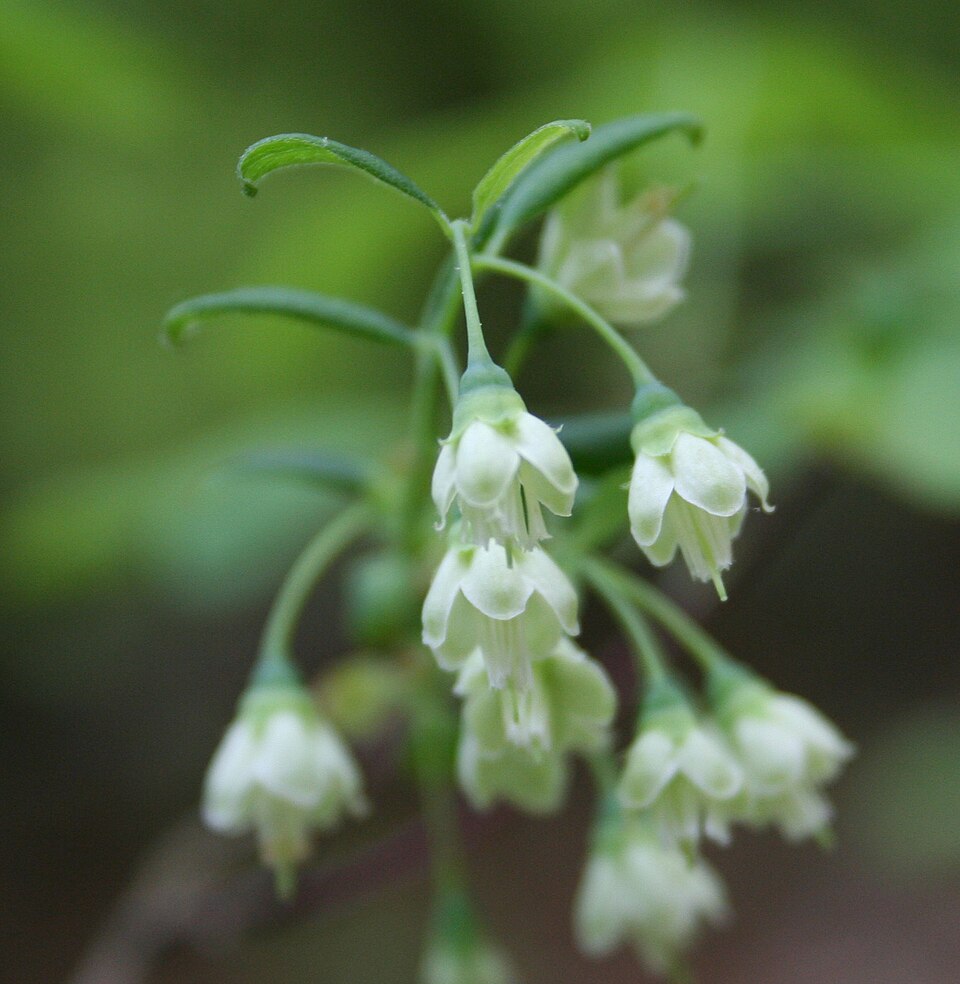
Vaccinium stamineum, commonly known as Squaw Huckleberry, Deerberry, or Gooseberry, is a remarkable native deciduous shrub of the southeastern United States that brings both ornamental beauty and exceptional wildlife value to the landscape. This member of the Ericaceae (heath) family stands out from other blueberry relatives with its distinctive white bell-shaped flowers that hang gracefully from the branches in late spring, creating an elegant display that attracts native bees and other pollinators.
Growing naturally in acidic, well-drained soils of pine woods, oak forests, and woodland edges, Squaw Huckleberry is a moderate-sized shrub reaching 6 to 8 feet tall with an open, somewhat irregular growth habit. Its oval leaves turn brilliant shades of yellow, orange, and red in autumn, while the small blue-black berries provide important food for wildlife throughout the fall months. The species gets its common name “Deerberry” from the fact that white-tailed deer frequently browse both the foliage and fruit.
Despite being less well-known than its blueberry cousins, Squaw Huckleberry is an excellent choice for native plant gardens, woodland naturalization projects, and wildlife habitat restoration throughout the Carolinas. Its adaptability to partial shade, moderate drought tolerance once established, and spectacular fall color make it a valuable addition to any native landscape seeking to support local ecosystems while providing year-round visual interest.
Identification
Squaw Huckleberry is a deciduous shrub typically growing 4 to 8 feet tall with an upright, somewhat open and irregular branching pattern. The plant develops multiple stems from the base, creating a naturalistic clumping form that spreads gradually through underground rhizomes. The overall appearance is less dense than cultivated blueberry bushes, with an airy, woodland character.
Leaves
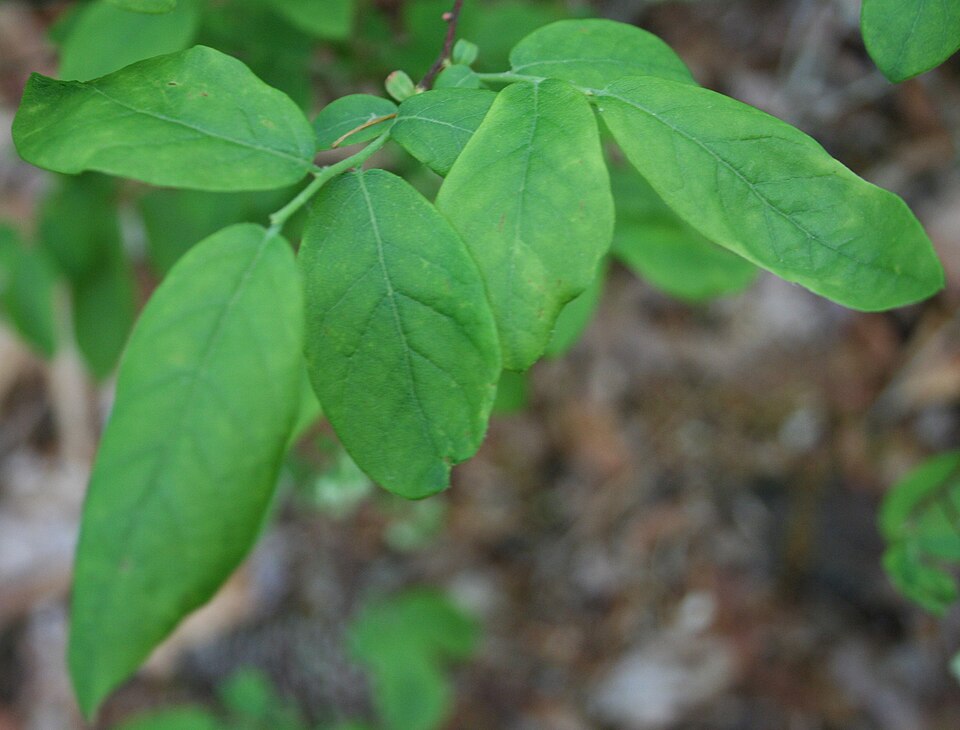
The leaves are simple, alternate, and oval-shaped, measuring 1 to 3 inches (2.5–7.5 cm) long and ¾ to 1½ inches (2–4 cm) wide. They have smooth margins (entire) and are typically bright green during the growing season, with prominent veining. The leaf surfaces are smooth and somewhat glossy, distinguishing them from the fuzzy-leaved blueberries. In autumn, the foliage transforms into a stunning display of yellow, orange, and red hues that rivals any ornamental shrub.
Flowers & Fruit
The flowers are perhaps Squaw Huckleberry’s most distinctive feature — white, bell-shaped (campanulate), and hanging downward from the branches on delicate stalks. Each flower is about ¼ to ⅜ inch (6–10 mm) long, with the characteristic urn or bell shape typical of the heath family. Unlike the pink-tinged flowers of most blueberries, these remain pure white throughout the blooming period. The flowers appear in late spring (May-June) and are highly attractive to native bees, beneficial insects, and other pollinators.
The fruit is a small berry, about ¼ to ½ inch (6–12 mm) in diameter, ripening from green to blue-black in late summer and early fall. The berries have a somewhat dry, seedy texture compared to commercial blueberries, and while technically edible, they are rather bland and are better left for wildlife. Each berry contains several small seeds that are dispersed by birds and mammals.
Quick Facts
| Scientific Name | Vaccinium stamineum |
| Family | Ericaceae (Heath) |
| Plant Type | Deciduous Shrub |
| Mature Height | 6–8 ft |
| Sun Exposure | Part Shade |
| Water Needs | Low to Moderate |
| Bloom Time | May – June |
| Flower Color | White |
| USDA Hardiness Zones | 4–8 |
Native Range
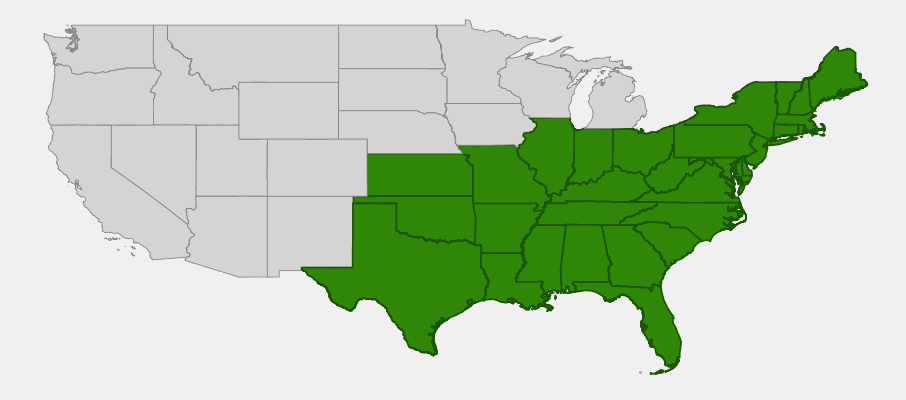
Squaw Huckleberry is native to eastern North America, with a range extending from southern Maine south to northern Florida and west to eastern Texas and southeastern Kansas. The species is most common in the southeastern United States, where it thrives in the acidic soils typical of pine-oak forests and woodland margins. In North Carolina and South Carolina, it can be found throughout both states, from the mountains to the coastal plain.
The natural habitat of Squaw Huckleberry includes dry to mesic deciduous and mixed forests, particularly those dominated by oaks, hickories, and pines. It often grows in woodland openings, along forest edges, and in areas that have experienced some disturbance such as selective logging or natural windfall gaps. The species prefers well-drained, acidic soils (pH 4.5–6.5) and is commonly associated with other members of the heath family including Mountain Laurel, Rhododendron species, and other native Vaccinium.
In its native range, Squaw Huckleberry plays an important ecological role as both a food source for wildlife and as part of the understory vegetation structure that provides habitat complexity in forest ecosystems. The species has adapted well to the fire regimes historically present in southeastern pine forests, resprouting vigorously from underground rhizomes after low-intensity burns.
📋 Regional plant lists featuring Squaw Huckleberry: North Carolina & South Carolina
Growing & Care Guide
Squaw Huckleberry is a relatively easy-to-grow native shrub once you understand its basic requirements. Like other members of the heath family, it prefers acidic soil conditions and benefits from consistent moisture during establishment, though it becomes quite drought tolerant once mature.
Light
This species is naturally adapted to partial shade conditions, thriving in the dappled sunlight of woodland understories. It grows best with morning sun and afternoon shade, or in bright filtered light throughout the day. While it can tolerate deeper shade, flowering and fruit production will be reduced. Full sun is acceptable in cooler climates or with adequate moisture, but may cause stress in hot, dry locations.
Soil & Water
Squaw Huckleberry requires well-drained, acidic soil with a pH between 4.5 and 6.5. Sandy loam or loamy soils enriched with organic matter work best. The plant is intolerant of heavy clay or poorly drained conditions, which can lead to root rot. Once established, it shows good drought tolerance but benefits from supplemental watering during extended dry periods. Mulching with pine needles or shredded leaves helps maintain soil acidity and moisture.
Planting Tips
Plant in early spring or fall for best establishment. Choose a location that mimics its natural woodland habitat — partial shade with good air circulation and well-drained soil. Space plants 4–6 feet apart if creating a naturalistic grouping. When planting, dig a hole the same depth as the root ball but twice as wide, and backfill with a mixture of native soil and acidic organic matter like pine bark or leaf mold.
Pruning & Maintenance
Squaw Huckleberry requires minimal pruning. Remove dead, damaged, or crossing branches in late winter while the plant is dormant. Light pruning to shape the plant or remove old wood can be done immediately after flowering. Avoid heavy pruning, as this species blooms on old wood and excessive cutting will reduce flower and fruit production. The plant naturally develops an open, irregular form that should be preserved.
Landscape Uses
This versatile native shrub works well in several landscape applications:
- Woodland gardens as part of a naturalized understory planting
- Wildlife habitat gardens for birds and native pollinators
- Native plant borders combined with other southeastern natives
- Naturalized areas where low maintenance is desired
- Erosion control on slopes with partial shade
- Rain gardens in areas that drain well but receive periodic moisture
- Fall color displays — spectacular autumn foliage
Wildlife & Ecological Value
Squaw Huckleberry is an exceptional wildlife plant, providing food and habitat benefits throughout multiple seasons and supporting a diverse array of native species.
For Birds
The blue-black berries are consumed by numerous bird species including Wild Turkeys, Northern Bobwhites, various thrushes, woodpeckers, and songbirds. The fruit ripens in late summer and early fall, providing an important food source during migration periods. The shrub’s branching structure also provides excellent nesting habitat for smaller birds and protective cover throughout the year.
For Mammals
White-tailed deer readily browse both the foliage and berries — hence the common name “Deerberry.” Black bears consume the fruit when available, and small mammals like chipmunks, squirrels, and mice eat both berries and seeds. The dense growth form provides escape cover and thermal protection for various small wildlife species.
For Pollinators
The white bell-shaped flowers are particularly attractive to native bees, including bumblebees and solitary ground-nesting species. The flowers bloom during a period when many native bees are most active, providing crucial nectar and pollen resources. Beneficial insects, moths, and butterflies also visit the flowers, making this shrub an important component of pollinator-friendly landscapes.
Ecosystem Role
As part of the understory layer in southeastern forests, Squaw Huckleberry contributes to habitat complexity and diversity. Its root system helps stabilize soil and prevent erosion, while the leaf litter enriches the soil as it decomposes. The plant’s ability to resprout from rhizomes after disturbance makes it valuable for forest recovery and succession processes.
Cultural & Historical Uses
Squaw Huckleberry has a rich history of use by Indigenous peoples of the southeastern United States, who incorporated both the fruit and other parts of the plant into their traditional practices. Various Native American tribes, including the Cherokee, used the berries as food, either fresh or dried for winter storage. The berries were often mixed with other wild fruits or incorporated into pemmican and other preserved foods.
The leaves and bark of Squaw Huckleberry were also used medicinally by some tribes. Cherokee healers prepared leaf teas for various ailments, and the plant was sometimes used in traditional treatments for digestive issues and other health concerns. As with all ethnobotanical information, these uses represent traditional knowledge and should not be considered modern medical advice.
European settlers and early American colonists also made use of Squaw Huckleberry berries, though they generally found them less palatable than other native Vaccinium species. The common name “Gooseberry” reflects some confusion among early botanists and settlers, as the plant was sometimes mistaken for true gooseberries (Ribes species). The name “Deerberry” came from observations of white-tailed deer frequently feeding on both the foliage and fruit.
In modern times, Squaw Huckleberry is valued primarily for its ornamental qualities and wildlife benefits rather than for food production. However, the berries are still occasionally used by foragers and wild food enthusiasts, typically in jams, jellies, or mixed with other wild berries to improve flavor. The plant has also gained recognition among native plant enthusiasts and ecological landscapers for its role in supporting biodiversity and providing authentic regional character to gardens and restored habitats.
Frequently Asked Questions
Are Squaw Huckleberry fruits edible?
Yes, the berries are technically edible and were used by Native Americans, but they are rather dry and seedy with a bland flavor compared to commercial blueberries. They’re better left for wildlife, though some people do use them in jams or jellies.
How is Squaw Huckleberry different from regular blueberries?
Squaw Huckleberry has distinctive white bell-shaped flowers (versus pink-tinged in most blueberries), smooth leaf margins, and a more open growth habit. The berries are smaller and drier than commercial blueberries, and the plant is generally more drought tolerant once established.
Does Squaw Huckleberry need acidic soil like blueberries?
Yes, like other members of the heath family, Squaw Huckleberry requires acidic soil with a pH between 4.5 and 6.5. It will not thrive in alkaline or neutral soils and may show signs of chlorosis (yellowing leaves) if soil pH is too high.
How much sun does Squaw Huckleberry need?
This species prefers partial shade and thrives in woodland conditions with dappled sunlight. While it can tolerate full sun in cooler climates, it generally performs best with morning sun and afternoon shade, especially in hot southern regions.
When should I plant Squaw Huckleberry?
The best times for planting are early spring (after the last frost) or fall (6-8 weeks before the first hard freeze). This allows the plant to establish its root system before facing summer heat or winter cold stress.

Looking for a nursery that carries Squaw Huckleberry?
Browse our native plant nursery directory: North Carolina · South Carolina