
Eastern Red Cedar (Juniperus virginiana)

Juniperus virginiana, commonly known as Eastern Red Cedar or simply Red Cedar, is one of North America’s most widespread and adaptable native conifers, ranging from southeastern Canada to the Gulf of Mexico and from the Atlantic Coast to the Great Plains. This member of the Cupressaceae (cypress) family is notable for being the most widely distributed conifer in the eastern United States, thriving in environments from rocky hillsides and abandoned fields to urban lots and coastal areas.
Despite its common name, Eastern Red Cedar is actually a juniper, not a true cedar. The tree typically grows 40 to 50 feet tall with a narrow, pyramidal crown when young that often becomes more irregular and open with age. Its distinctive reddish-brown, fibrous bark peels in long strips, while the aromatic foliage ranges from bright green scale-like leaves on mature branches to sharp, needle-like juvenile leaves. The small, blue-black berry-like cones are particularly valuable to wildlife, providing food for over 50 species of birds.
Eastern Red Cedar’s exceptional drought tolerance, ability to grow in poor soils, and resistance to urban pollution make it an outstanding choice for challenging sites where few other trees will thrive. Its dense growth habit provides excellent windbreak protection and wildlife shelter, while its year-round evergreen foliage offers consistent visual appeal. The tree’s natural tendency to colonize disturbed sites also makes it valuable for erosion control and ecological restoration projects throughout its vast native range.
Identification
Eastern Red Cedar is easily distinguished from other conifers by its combination of fibrous, reddish-brown bark, aromatic foliage, and distinctive cone structure. The tree exhibits considerable variation in form depending on age and growing conditions, but certain characteristics remain consistent throughout its range.
Bark
The bark is perhaps Eastern Red Cedar’s most distinctive feature – it is thin, fibrous, and reddish-brown to gray-brown in color, peeling in long, narrow strips that can be pulled away by hand. This stringy bark was historically important to Native Americans for various uses. On older trees, the bark may become more furrowed and darker, but the fibrous texture remains characteristic. The inner bark is orange to reddish when freshly exposed.
Foliage
Eastern Red Cedar displays two distinct types of foliage depending on the age of the branch and environmental conditions. Mature foliage consists of tiny, scale-like leaves pressed tightly against the twigs in overlapping pairs, creating a braided or rope-like appearance. These scales are typically dark green but may have a blue-green or yellow-green cast. Juvenile foliage appears as sharp, needle-like leaves ¼ to ½ inch long, arranged in whorls of three around the stem. Young trees and vigorous shoots often display both types of foliage simultaneously. All foliage is aromatic when crushed, releasing a distinctive cedar scent.
Cones
Eastern Red Cedar is dioecious, meaning male and female cones appear on separate trees. Male cones are small, yellowish, and appear at branch tips in early spring, releasing abundant pollen before falling. Female cones are berry-like, starting green and maturing to blue-black with a waxy coating (glaucous). These “berries” are actually modified cones with fleshy scales, typically ¼ to ⅓ inch in diameter, containing 1-3 seeds. They ripen in fall and persist into winter, providing important wildlife food.
Growth Form
Young Eastern Red Cedars typically display a narrow, pyramidal shape with a single straight trunk and regularly spaced horizontal branches. As trees mature, especially in open conditions, the crown often becomes more irregular and broader, sometimes developing multiple trunks. In windy or harsh conditions, trees may develop a more twisted, picturesque form. The growth rate varies considerably with conditions but is generally moderate, with annual height increases of 1-2 feet under favorable conditions.

Quick Facts
| Scientific Name | Juniperus virginiana |
| Family | Cupressaceae (Cypress) |
| Plant Type | Evergreen Conifer |
| Mature Height | 30–80 ft |
| Sun Exposure | Full Sun |
| Water Needs | Low to Moderate |
| Bloom Time | March – April (pollen release) |
| Fruit | Blue-black berry-like cones |
| USDA Hardiness Zones | 2–9 |
Native Range
Eastern Red Cedar has one of the largest native distributions of any North American tree species, extending from southeastern Canada south to the Gulf of Mexico and from the Atlantic Coast west to the eastern edge of the Great Plains. This remarkable range spans from Nova Scotia and southern Quebec south to northern Florida, and from the Atlantic states west to eastern Wyoming, Colorado, New Mexico, and central Texas.
The species is most abundant in the eastern and central United States, where it occurs in a wide variety of habitats from sea level to elevations of 2,900 feet. It is particularly common in areas with limestone or alkaline soils but adapts to many soil types. Eastern Red Cedar often serves as a pioneer species on abandoned agricultural land, disturbed sites, and forest edges, gradually giving way to hardwood forests in the natural succession process.
Within its native range, Eastern Red Cedar demonstrates remarkable adaptability, thriving in environments from the rocky bluffs and glades of the Ozarks to the coastal plains of the Southeast and the prairie edges of the Great Plains. This wide ecological tolerance has made it one of the most successful native conifers, though it faces challenges from habitat loss and fire suppression in some regions where it historically occurred in more open, fire-maintained landscapes.
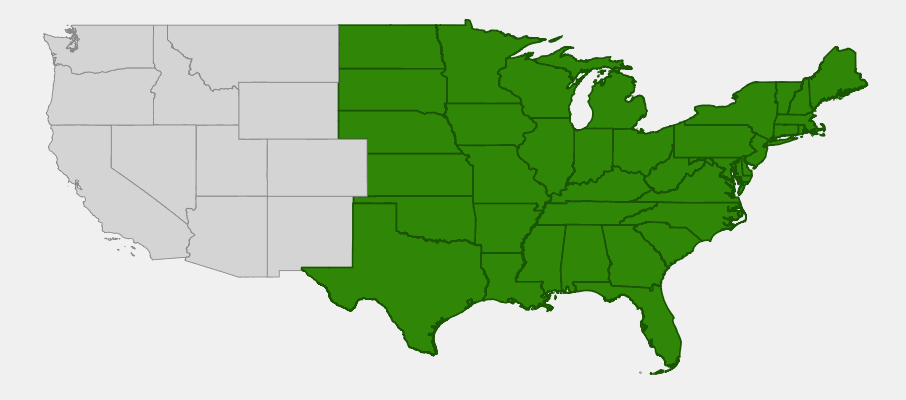
📋 Regional plant lists featuring Eastern Red Cedar: North Carolina & South Carolina
Growing & Care Guide
Eastern Red Cedar is among the most low-maintenance and adaptable native trees available to gardeners. Its exceptional drought tolerance, ability to thrive in poor soils, and resistance to most pests and diseases make it an excellent choice for challenging sites and low-maintenance landscapes.
Light
Eastern Red Cedar performs best in full sun, where it develops its densest foliage and most attractive form. While it can tolerate partial shade, trees grown in shadier conditions tend to become more open and leggy, losing the dense, full appearance that makes them valuable for screening and windbreaks. For optimal growth and form, provide at least 6-8 hours of direct sunlight daily.
Soil & Water
One of Eastern Red Cedar’s greatest strengths is its adaptability to various soil conditions. It thrives in well-drained soils ranging from sandy to heavy clay, and shows particular tolerance for alkaline soils and limestone-based sites where many other trees struggle. The tree is remarkably drought tolerant once established, making it ideal for xeriscapes and areas with limited irrigation. While it adapts to various moisture levels, avoid poorly drained or consistently wet soils, which can lead to root problems.
Planting Tips
Plant Eastern Red Cedar in early spring or fall for best establishment. Choose container-grown or balled-and-burlapped specimens from reputable nurseries. Space trees according to your intended use: 6-8 feet apart for dense screens, 15-20 feet for individual specimens. The tree transplants relatively easily but establish a regular watering schedule for the first year to encourage deep root development.
Pruning & Maintenance
Eastern Red Cedar typically requires minimal pruning beyond removing dead or damaged branches. If grown as a screen or hedge, light pruning in late spring can help maintain density, but avoid heavy pruning as the tree doesn’t readily produce new growth from old wood. For windbreaks or naturalized plantings, allow the tree to develop its natural form with minimal intervention. The tree is naturally pest and disease resistant, requiring no regular treatments.
Landscape Uses
Eastern Red Cedar’s versatility makes it valuable for numerous landscape applications:
- Windbreaks and shelterbelts – excellent for blocking wind and providing protection
- Privacy screens – dense evergreen foliage provides year-round screening
- Erosion control – deep taproot system stabilizes slopes and disturbed sites
- Wildlife habitat – provides shelter and food for numerous bird species
- Xeriscape gardens – outstanding drought tolerance for water-wise landscapes
- Urban forestry – tolerates pollution and challenging urban conditions
- Specimen trees – attractive form and year-round interest
- Naturalized areas – excellent for restoring abandoned or disturbed sites
Wildlife & Ecological Value
Eastern Red Cedar provides exceptional value to wildlife and plays a crucial role in many ecosystems throughout its range. The tree’s dense evergreen foliage, abundant fruit production, and year-round shelter make it a keystone species for wildlife support, particularly during harsh winter conditions.
For Birds
Over 50 species of birds consume Eastern Red Cedar’s berry-like cones, including Cedar Waxwings (which are named for their preference for cedar berries), American Robins, Eastern Bluebirds, Northern Mockingbirds, and various sparrows and finches. The dense branching provides excellent nesting sites for songbirds, while the evergreen foliage offers crucial winter shelter and roosting sites. Game birds such as Wild Turkeys and Bobwhite Quail also consume the berries and use the trees for cover.
For Mammals
White-tailed deer browse the foliage, particularly young growth, though mature trees are generally deer resistant due to the aromatic oils. Small mammals such as rabbits and rodents eat the berries and use the dense lower branches for shelter. The fibrous bark is sometimes used by various mammals for nest building material.
For Pollinators
While not producing nectar-rich flowers, Eastern Red Cedar supports specialized wildlife through its pollen production. The abundant spring pollen release, while sometimes problematic for allergy sufferers, provides food for various insects. The tree also hosts several species of moth caterpillars, including the Juniper Hairstreak butterfly, whose larvae feed exclusively on juniper species.
Ecosystem Role
Eastern Red Cedar serves as a pioneer species in forest succession, often being among the first trees to colonize abandoned fields and disturbed sites. Its deep taproot helps break up compacted soils and adds organic matter, preparing the site for other tree species. The tree’s role in providing year-round wildlife shelter is particularly crucial in harsh winter climates, where its dense foliage can mean the difference between survival and death for many bird species.

Cultural & Historical Uses
Eastern Red Cedar holds deep cultural significance and has been utilized by humans for thousands of years. Native American tribes throughout the tree’s range considered it sacred and used virtually every part of the tree for practical and ceremonial purposes. The Cherokee called it “ga-ti-yo,” while many Plains tribes burned the foliage as ceremonial incense and used the smoke for purification rituals.
The fibrous inner bark was particularly valuable, being used to make cordage, mats, and clothing. Native Americans also used the bark to line cradle boards and as tinder for starting fires. The wood, naturally resistant to decay and insects due to its aromatic oils, was fashioned into fence posts, arrows, and other tools. Many tribes used the berries medicinally and occasionally as food, though they are quite bitter and resinous.
European settlers quickly discovered the practical value of Eastern Red Cedar wood, which became highly prized for fence posts due to its rot resistance. The wood was also used extensively for cedar chests, closet linings, and pencils – in fact, most wooden pencils were made from Eastern Red Cedar until the mid-20th century. The aromatic properties that repel moths and other insects made it particularly valuable for protecting stored clothing and blankets.
During the 19th and early 20th centuries, Eastern Red Cedar wood was so highly valued that it was extensively harvested, leading to significant population declines in some areas. Today, while still used commercially, the tree is more appreciated for its ecological and landscape value. The essential oils from the foliage are still used in some traditional medicines and aromatherapy, though such uses should be approached with caution as the oils can be toxic in large quantities.
Frequently Asked Questions
Is Eastern Red Cedar really a cedar?
No, despite its common name, Eastern Red Cedar is actually a juniper (Juniperus virginiana). True cedars belong to the genus Cedrus and are not native to North America. The common name arose from the aromatic, cedar-like qualities of the wood and foliage.
Why do some people consider Eastern Red Cedar a problem tree?
In some agricultural areas, Eastern Red Cedar can become overly abundant on abandoned land, and it serves as an alternate host for cedar-apple rust, a fungal disease that affects apple trees. However, in appropriate landscape settings and natural areas, it’s an extremely valuable native species.
How fast does Eastern Red Cedar grow?
Eastern Red Cedar has a moderate growth rate, typically adding 1-2 feet in height per year under good conditions. Young trees often grow faster than mature ones, and growth rate varies considerably with soil conditions, moisture, and climate.
Can Eastern Red Cedar be used as a hedge?
Yes, Eastern Red Cedar makes an excellent evergreen hedge or screen. Plant trees 6-8 feet apart and lightly prune in late spring to maintain density. However, avoid heavy pruning as the tree doesn’t readily produce new growth from old wood.
Does Eastern Red Cedar cause allergies?
Eastern Red Cedar produces large amounts of pollen in early spring, which can trigger allergies in sensitive individuals. The pollen season is relatively short (2-3 weeks) but can be intense. Male trees produce more pollen than female trees.

Looking for a nursery that carries Eastern Red Cedar?
Browse our native plant nursery directory: North Carolina · South Carolina