Chalice Phlox (Phlox amoena)
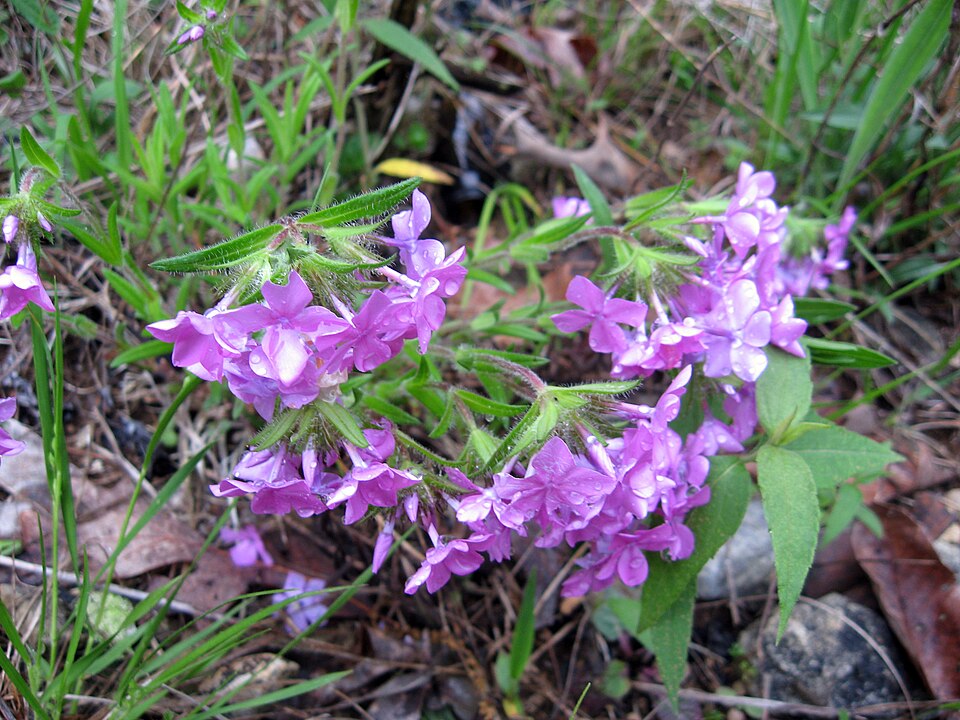
Phlox amoena, commonly known as Chalice Phlox, Hairy Phlox, or Lovely Phlox, is a stunning native wildflower that brings vibrant color to the southeastern United States each spring. This member of the Polemoniaceae (phlox) family is perfectly named — its clusters of five-petaled flowers create natural chalices of pink, rose, white, or occasionally purple that seem to glow against rocky outcrops and open woodlands. The fragrant blooms and their nectar-rich centers make Chalice Phlox irresistible to butterflies, hummingbirds, and a variety of beneficial insects.
Growing naturally from Virginia south to northern Florida and west to Kentucky and Alabama, Chalice Phlox typically reaches 2–3 feet in height, forming loose colonies through underground rhizomes. The plant is particularly associated with rocky soils, thin woodlands, and barren areas where few other wildflowers can establish. Its hairy stems and leaves — which give rise to the “Hairy Phlox” common name — help the plant conserve moisture in these challenging growing conditions.
Chalice Phlox blooms from April through June, creating spectacular naturalized displays that attract both wildlife and wildflower enthusiasts. The species has become increasingly popular in native plant gardening for its exceptional drought tolerance, reliable spring color, and ability to thrive in difficult sites where many other perennials struggle. Its compact size and spreading habit make it ideal for rock gardens, naturalized slopes, and challenging landscape areas throughout the Southeast.
Identification
Chalice Phlox is easily recognized by its combination of hairy, lance-shaped leaves and dense terminal clusters of five-petaled flowers in shades of pink, rose, or white. The plant forms loose, spreading colonies that create impressive spring displays in the wild.
Stems & Foliage
The stems are erect to ascending, reaching 1–3 feet (30–90 cm) tall, and are notably hairy throughout — a key identification feature that distinguishes this species from other phlox. The leaves are opposite, lance-shaped to narrowly oval, measuring 1–3 inches (2.5–8 cm) long and ½–1 inch (1–2.5 cm) wide. Both stems and leaves are covered with soft, grayish hairs that give the plant a slightly fuzzy appearance and help it conserve moisture in dry conditions. The leaves are sessile (attached directly to the stem without petioles) and have prominent parallel veins.
Flowers
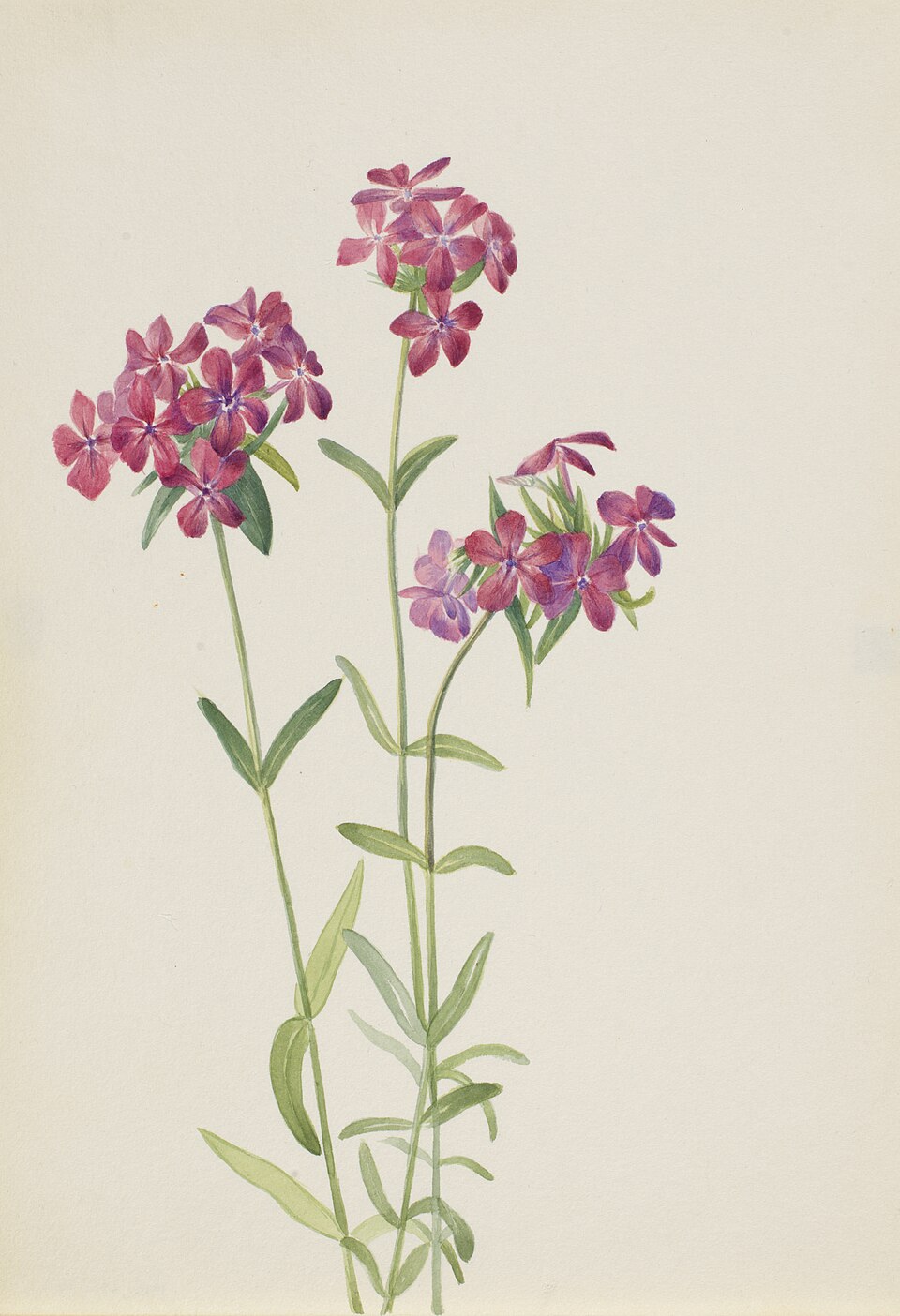
The flowers are Chalice Phlox’s crowning glory — dense, terminal clusters (corymbs) of tubular flowers, each with five spreading petals that form a flat, circular face about ¾ inch (18–20 mm) across. The flower colors range from deep rose-pink to pale pink, white, or occasionally purple, often with subtle color variations within a single colony. The tubular portion of the flower (corolla tube) is about ½ inch (12–15 mm) long, perfectly shaped for butterfly and hummingbird feeding.
Each flower cluster contains 15–30 individual blooms that open progressively over several weeks, extending the blooming period from April through June. The flowers are notably fragrant, especially in the evening, and produce copious nectar that attracts a wide variety of pollinators. After pollination, the flowers develop into small, three-chambered capsules containing small, dark seeds.
Growth Habit
Chalice Phlox spreads slowly through underground rhizomes, forming loose colonies that can persist and expand for decades. Individual stems may be short-lived, but the plant’s perennial nature comes from the persistent root system that sends up new shoots each spring. In optimal conditions, established colonies can spread several feet over time, creating impressive naturalized displays.
Quick Facts
| Scientific Name | Phlox amoena |
| Family | Polemoniaceae (Phlox) |
| Plant Type | Perennial Wildflower |
| Mature Height | 2–3 ft |
| Sun Exposure | Full Sun to Part Shade |
| Water Needs | Moderate |
| Bloom Time | April – June |
| Flower Color | Rose, pink, white, occasionally purple |
| USDA Hardiness Zones | 5–9 |
Native Range
Chalice Phlox has a relatively compact but ecologically significant native range across the southeastern United States, from Virginia south through the Carolinas to northern Florida and northern Alabama, and west through Tennessee and Kentucky. This range encompasses some of the most biodiverse temperate regions in North America, including the Appalachian foothills, Piedmont region, and coastal plains. The species shows particular affinity for areas with thin, rocky soils and seasonal moisture variation.
Within its native range, Chalice Phlox occupies specialized habitats that reflect its adaptation to challenging growing conditions. The species thrives on rocky outcrops, thin-soiled barrens, open woodlands with poor soils, and disturbed areas where competition from other plants is reduced. It’s particularly common in areas with acidic soils derived from granite, sandstone, or other weathered rock formations. These harsh conditions actually favor Chalice Phlox, as its drought tolerance and ability to grow in shallow soils give it a competitive advantage.
The plant’s distribution closely follows geological formations and soil types rather than simple climatic zones. It’s most abundant in areas with exposed bedrock, shallow soils over rock, and naturally thin forest cover. Climate change may expand suitable habitat northward, but habitat loss due to development and forest succession poses challenges to some populations. The species’ tendency to grow in “marginal” areas has actually helped protect many populations from direct human disturbance.
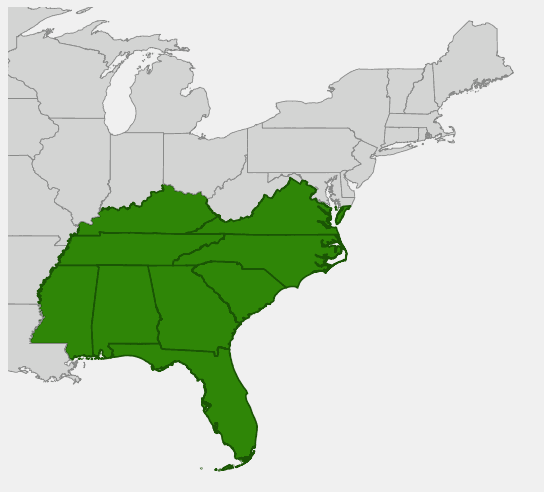
📋 Regional plant lists featuring Chalice Phlox: North Carolina & South Carolina
Growing & Care Guide
Chalice Phlox is one of the most rewarding native wildflowers for gardeners seeking low-maintenance plants that thrive in challenging conditions. Its natural adaptation to poor soils and dry conditions makes it perfect for rock gardens, naturalized areas, and sites where many other perennials struggle to establish.
Light
Chalice Phlox performs best in full sun to partial shade, with morning sun being particularly important for healthy growth and abundant flowering. The plant tolerates more shade than many other phlox species, making it suitable for woodland gardens and areas with filtered light. In deep shade, flowering is reduced and plants may become leggy, but they typically survive well. Full sun produces the most compact growth and prolific blooming.
Soil & Water
This species thrives in well-drained, somewhat poor soils — a trait that makes it invaluable for difficult garden situations. Chalice Phlox actually prefers thin, rocky, or sandy soils with low fertility, as rich soils can lead to excessive foliage growth at the expense of flowers. The plant is notably drought-tolerant once established and can handle extended dry periods better than most perennial wildflowers. Avoid heavy, clay soils and areas with poor drainage, which can cause root rot.
Planting Tips
Plant Chalice Phlox in spring or fall, choosing a site with good drainage. The species is perfect for rock gardens, slopes, and areas with challenging soil conditions. Space plants 12–18 inches apart for naturalistic plantings — they will gradually spread to form colonies over time. Container-grown plants establish easily, while divisions from established clumps can be planted in early spring or fall.
Pruning & Maintenance
Chalice Phlox requires minimal maintenance once established. Deadheading spent flower clusters can prolong the blooming period slightly and prevent excessive self-seeding if desired. After flowering, the foliage typically remains attractive through summer and fall. Cut back dead stems in late winter or early spring before new growth begins. The plant rarely needs fertilization and may actually perform better without it.
Landscape Uses
Chalice Phlox’s adaptability to difficult conditions makes it valuable in numerous garden applications:
- Rock gardens and alpine gardens where its drought tolerance and compact size shine
- Naturalized slopes and embankments for erosion control and color
- Woodland gardens in areas with dappled shade and poor soil
- Pollinator gardens — flowers attract butterflies, hummingbirds, and beneficial insects
- Cottage gardens and perennial borders for early season color
- Difficult sites where few other perennials will thrive
- Native plant gardens and restoration projects in the Southeast
Wildlife & Ecological Value
Chalice Phlox provides exceptional wildlife value despite its relatively compact size, serving as a crucial early-season nectar source and supporting various specialized relationships with native fauna.
For Pollinators
The tubular flowers and abundant nectar make Chalice Phlox particularly attractive to long-tongued pollinators. Butterflies, including swallowtails, fritillaries, and skippers, are frequent visitors and important pollinators. The flowers are also perfectly designed for hummingbird feeding — the tube length and nectar abundance make them a preferred early-season food source for Ruby-throated Hummingbirds. Various native bees, including mason bees and small carpenter bees, also visit the flowers for both nectar and pollen.
For Specialized Insects
Chalice Phlox serves as a host plant for several moth species, including sphinx moths whose caterpillars feed on the foliage. The plant’s spring blooming period coincides with the emergence of many beneficial insects, providing critical early-season resources when few other flowers are available. This timing makes it particularly valuable for supporting spring migrants and emerging pollinators.
For Birds
While not a major seed producer, Chalice Phlox seeds are consumed by various small songbirds, particularly finches and sparrows. More importantly, the insects attracted to the flowers provide food for insectivorous birds during the critical nesting season. The plant’s tendency to grow in colonies creates concentrated feeding areas that birds learn to visit regularly.
Ecosystem Role
In its natural rocky and barren habitats, Chalice Phlox plays an important pioneering role, helping to establish plant communities in challenging environments. Its ability to thrive in thin soils and harsh conditions makes it a foundation species that creates microhabitats for other plants to establish. The species contributes to soil development through organic matter addition and helps prevent erosion on steep slopes and rocky areas.
Cultural & Historical Uses
Chalice Phlox has been appreciated by indigenous peoples and settlers throughout the Southeast for both its beauty and practical uses. Various Native American tribes recognized the plant’s value, though specific traditional uses varied among different groups and regions. Some southeastern tribes incorporated Chalice Phlox into spring ceremonies, valuing its early bloom time as a symbol of renewal and the return of warm weather.
The Cherokee and other southeastern tribes occasionally used Chalice Phlox preparations for minor medicinal purposes, though it was not as widely used medicinally as some other phlox species. The plant’s most significant cultural role was often aesthetic — its spectacular spring displays made it a welcome sight after long winters, and its ability to thrive in challenging locations was seen as a symbol of persistence and beauty in adversity.
European settlers quickly noticed and appreciated Chalice Phlox, and it became one of the first native wildflowers to be brought into formal garden cultivation in the southeastern United States. Early botanists and plant collectors, including John Bartram and André Michaux, documented the species and helped introduce it to botanical gardens and cultivated landscapes. The species’ common name “Lovely Phlox” reflects the appreciation early settlers had for its beauty.
In modern times, Chalice Phlox has gained recognition as an excellent native plant for challenging landscape conditions. It has become a symbol of successful native plant gardening, demonstrating that native species can be both beautiful and practical for sustainable landscaping. The plant is increasingly used in ecological restoration projects, particularly in areas damaged by construction or erosion where its pioneering nature and soil-binding abilities are especially valuable.
Frequently Asked Questions
Why is it called Chalice Phlox?
The name “Chalice Phlox” refers to the cup-like or chalice-shaped appearance of the flower clusters. When viewed from the side, the tubular flowers with their flared petals resemble small chalices or cups, particularly when grouped together in the dense terminal clusters. This poetic name captures the elegant, upward-facing nature of the blooms.
Can Chalice Phlox handle poor soil conditions?
Yes, Chalice Phlox actually prefers poor, thin, rocky soils and often struggles in rich, fertile conditions. It’s naturally adapted to grow in challenging sites with shallow soils, rock outcrops, and low fertility. This makes it perfect for problem areas in the landscape where other perennials fail to thrive.
How does Chalice Phlox spread?
The plant spreads slowly through underground rhizomes, forming loose colonies over time. It also self-seeds moderately, with seedlings appearing in suitable nearby locations. The spreading is gradual and not aggressive — established colonies may expand a few inches to a foot per year under optimal conditions.
Is Chalice Phlox deer resistant?
Chalice Phlox shows good deer resistance, though no plant is completely deer-proof when populations are high and food is scarce. The slightly hairy foliage and the plant’s tendency to grow in rocky, difficult-to-access areas help protect it from browsing. In most situations, deer will choose other plants before turning to Chalice Phlox.
When is the best time to plant or divide Chalice Phlox?
Plant container-grown Chalice Phlox in spring or fall for best establishment. Existing clumps can be divided in early spring just as new growth begins, or in fall after the foliage dies back. Spring division is generally preferred as it gives plants a full growing season to establish before winter.

Looking for a nursery that carries Chalice Phlox?
Browse our native plant nursery directory: North Carolina · South Carolina