Black Cohosh (Cimicifuga racemosa)

Cimicifuga racemosa (syn. Actaea racemosa), commonly known as Black Cohosh, Black Snakeroot, or Bugbane, is a striking native perennial herb of the eastern United States that commands attention in woodland gardens with its dramatic architectural presence and spectacular summer flower display. This member of the Ranunculaceae (buttercup) family produces some of the most impressive flowering spikes in the American forest understory — towering white racemes that can reach 8 feet tall, creating ethereal candlesticks of fragrant blooms that illuminate shaded woodland clearings from July through September.
Native to rich, moist deciduous forests from southern Canada to northern Georgia, Black Cohosh has been treasured by Indigenous peoples for centuries as a powerful medicinal plant, particularly for women’s health issues. The Cherokee, Iroquois, and other tribes used the dark, gnarly rhizome extensively, calling it various names that translate to “rattle-top” for the sound made by its dried seed pods. European colonists quickly adopted its use, and it became one of the most important herbs in early American folk medicine, earning names like “squaw root” and “women’s root” for its traditional applications.
In the modern landscape, Black Cohosh offers unmatched drama for shade gardens, with its deeply divided, compound leaves creating bold textural contrast and its towering flower spikes providing vertical accent that few other native plants can match. The fragrant flowers attract a wide array of pollinators, while the architectural seed heads extend interest into fall and winter. Despite its medicinal reputation, all parts of the plant should be considered potentially toxic if consumed, making it both a beautiful and deer-resistant addition to woodland gardens throughout its native range.
Identification
Black Cohosh is a robust herbaceous perennial that emerges each spring from thick, dark rhizomes to create impressive clumps 3 to 8 feet tall. The plant’s most distinctive feature is its dramatic flowering display — tall, branched racemes of small white flowers that can tower 4 to 6 feet above the foliage, creating an unmistakable presence in the woodland understory.
Roots & Rhizome
The root system consists of thick, woody, dark-colored rhizomes that can spread to form substantial colonies over time. These gnarly, blackish underground stems are the source of the plant’s common name and were historically harvested for medicinal use. The rhizomes have a distinctly bitter taste and strong odor when fresh, characteristics that helped early botanists distinguish it from similar species.
Leaves
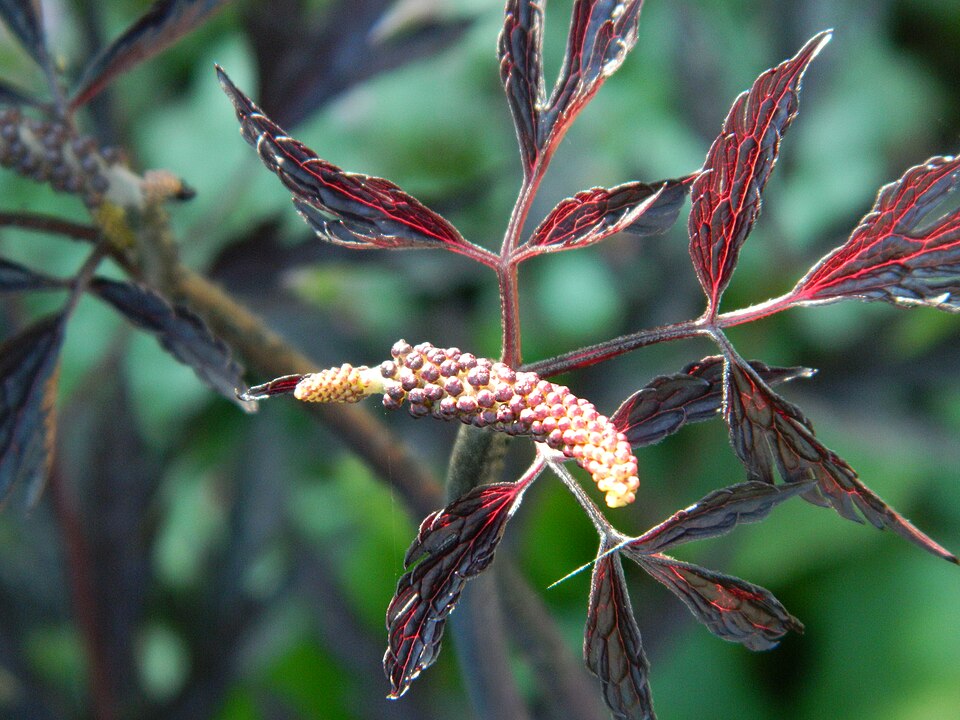
The foliage is one of Black Cohosh’s most distinctive features — large, compound leaves that are twice or thrice-divided (bi- or tri-ternately compound) into numerous leaflets. Each leaflet is oval to heart-shaped, 2 to 4 inches long, with irregularly toothed margins and prominent veining. The leaves are arranged alternately on sturdy stems and create a bold, tropical-looking texture that stands out dramatically in woodland settings. Fresh foliage is bright green in spring, deepening to dark green through summer, then turning yellow-brown before dying back in fall.
Flowers & Seed Heads
The flowers appear from June through August in spectacular fashion — multiple tall, branched racemes rising well above the foliage to heights of 4 to 8 feet. Individual flowers are small (¼ inch across) but densely packed along the branching spikes, creating a bottlebrush or candelabra effect. Each flower has 4 to 8 small white petals (actually sepals) and numerous prominent white stamens that give the spikes their fuzzy, ethereal appearance. The flowers have a sweet, somewhat fetid fragrance that attracts flies and beetles as well as other pollinators.
After flowering, the plant produces distinctive dry follicles (seed pods) that split open to release small, flattened seeds. These dried seed heads make a characteristic rattling sound when shaken by wind, giving rise to some of the plant’s traditional names. The architectural seed stalks often persist into winter, providing structural interest in the dormant garden.
Quick Facts
| Scientific Name | Cimicifuga racemosa (syn. Actaea racemosa) |
| Family | Ranunculaceae (Buttercup) |
| Plant Type | Herbaceous Perennial |
| Mature Height | 3–8 ft |
| Sun Exposure | Part Shade to Full Shade |
| Water Needs | Moderate |
| Bloom Time | June – August |
| Flower Color | White |
| USDA Hardiness Zones | 3–8 |
Native Range
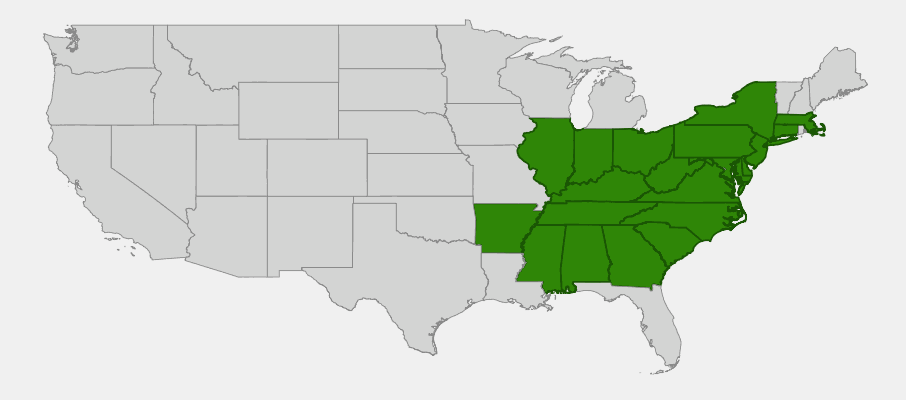
Black Cohosh is native to eastern North America, ranging from southern Ontario and Quebec south to northern Georgia and Alabama, and west to eastern Kansas and Arkansas. The species is most abundant in the Appalachian Mountains, where it thrives in the rich, moist soils of deciduous and mixed forests at elevations from sea level to approximately 3,000 feet. Its core range encompasses the mixed mesophytic forests of the eastern United States, particularly in areas with consistent moisture and rich, organic soils.
The plant typically grows in the understory of mature hardwood forests, particularly those dominated by American Beech (Fagus grandifolia), Sugar Maple (Acer saccharum), Tulip Tree (Liriodendron tulipifera), and various oak species. It shows a preference for north-facing slopes and stream valleys where moisture levels remain consistent throughout the growing season. Black Cohosh is often found in association with other woodland wildflowers like Trillium, Wild Ginger (Asarum canadense), and Bloodroot (Sanguinaria canadensis), forming part of the rich herbaceous layer that characterizes eastern deciduous forests.
Historically, Black Cohosh was much more common throughout its range, but intensive harvesting for the herbal medicine trade has significantly reduced wild populations in many areas. The slow-growing nature of the plant and the practice of harvesting entire rhizomes has made it vulnerable to overharvesting, leading to conservation concerns in several states. Today, sustainable cultivation and protection of remaining wild populations are important for ensuring the species’ long-term survival.
📋 Regional plant lists featuring Black Cohosh: North Carolina & South Carolina
Growing & Care Guide
Black Cohosh is surprisingly easy to grow once you provide the right conditions, making it an excellent choice for woodland gardens and naturalized shade areas. The key to success is recreating the moist, rich forest conditions where it thrives naturally.
Light
Black Cohosh performs best in partial to full shade, mimicking the dappled light conditions of its native forest understory. While it can tolerate some morning sun, it prefers to be protected from hot afternoon sun, especially in southern climates. In deep shade, the plant may grow taller as it reaches for light, while in brighter conditions it tends to be more compact and may flower more prolifically. Avoid full sun locations, as this can cause leaf scorch and stress the plant.
Soil & Water
The most critical requirement for Black Cohosh is rich, moist, well-draining soil with high organic content. It thrives in loamy or clayey soils amended with compost, leaf mold, or other organic matter to mimic the rich forest floor of its native habitat. Soil pH should be slightly acidic to neutral (6.0-7.0), and consistent moisture is essential — the soil should never be allowed to dry out completely. However, the plant will not tolerate waterlogged conditions, so good drainage is equally important.
Planting Tips
Plant Black Cohosh in spring or fall when temperatures are moderate. Choose a location with morning sun and afternoon shade, or full shade beneath deciduous trees. Space plants 3 to 4 feet apart to allow for their eventual spread. When planting, work plenty of organic matter into the soil and set plants at the same depth they were growing in their containers. Water thoroughly after planting and maintain consistent moisture through the first growing season.
Pruning & Maintenance
Black Cohosh requires minimal maintenance once established. Cut back flower stalks after blooming if seed production is not desired, or leave them for winter interest and to allow self-seeding. In late fall or early spring, cut all stems back to ground level before new growth emerges. The plant benefits from an annual application of compost or leaf mold to maintain soil fertility and moisture retention. Divide established clumps every 4-5 years in early spring or fall to prevent overcrowding and maintain vigor.
Landscape Uses
Black Cohosh’s dramatic architectural presence makes it valuable in many shade garden applications:
- Woodland gardens — provides vertical accent and structural interest
- Shade borders — excellent backdrop plant for shorter perennials
- Naturalized areas — creates colonies in suitable conditions
- Pollinator gardens — attracts beneficial insects in shaded areas
- Rain gardens — tolerates periodic flooding in shaded locations
- Slope stabilization — helps prevent erosion with spreading rhizomes
- Cut flower gardens — dramatic spikes make striking arrangements
Wildlife & Ecological Value
While not as heavily utilized by wildlife as some native plants, Black Cohosh provides important ecological services, particularly for specialized pollinators and as a component of forest understory plant communities.
For Birds
Few birds directly consume Black Cohosh seeds, as they are generally not preferred food items. However, the tall, persistent seed stalks provide perching sites for small woodland birds, and the dense foliage offers cover during the growing season. Some ground-feeding birds may occasionally consume seeds that fall to the forest floor, particularly during harsh winters when other food sources are scarce.
For Mammals
Most mammals avoid Black Cohosh due to its bitter taste and potentially toxic compounds, making it essentially deer and rabbit resistant. This characteristic can be valuable in gardens where browsing pressure is high. The rhizomes were historically consumed by some Indigenous peoples after special preparation, but the plant is generally avoided by wildlife mammals.
For Pollinators
Black Cohosh flowers are primarily pollinated by flies, beetles, and other insects attracted to their sweet but somewhat fetid fragrance. The abundant white stamens provide significant amounts of pollen, making the flowers valuable to various beneficial insects. Native bees, including sweat bees and small carpenter bees, visit the flowers for pollen and nectar. The plant also attracts various beneficial predatory insects that help control garden pests.
Ecosystem Role
As a component of the eastern deciduous forest understory, Black Cohosh contributes to the complex layered structure that characterizes mature forest ecosystems. Its large leaves and dense growth help create the moist microclimate conditions that benefit other woodland plants, fungi, and soil organisms. The plant’s deep rhizome system helps stabilize soil and contributes organic matter as older portions decompose. In woodland gardens, Black Cohosh can serve as a nurse plant, creating favorable conditions for establishing other shade-loving native species.
Cultural & Historical Uses
Few North American plants have a richer medicinal history than Black Cohosh, which has been used for centuries by Indigenous peoples and later adopted into European-American folk medicine. The Cherokee, Iroquois, Ojibwe, and other tribes valued the plant’s rhizomes for treating a wide variety of ailments, particularly those related to women’s health, including difficult childbirth, menstrual irregularities, and menopausal symptoms. The plant was also used for rheumatism, kidney problems, sore throats, and as a general tonic.
European colonists quickly recognized the value of Black Cohosh, and it became one of the most important medicinal plants in early American folk medicine. The Eclectics — a group of 19th-century American physicians who emphasized botanical medicine — considered Black Cohosh essential for treating “female complaints” and nervous disorders. The plant earned common names like “squaw root” and “women’s root” (terms now considered culturally insensitive) reflecting its traditional uses. It was officially included in the United States Pharmacopeia from 1820 to 1950.
In the modern era, Black Cohosh has gained international recognition as an herbal remedy, particularly in Germany where it has been extensively studied and is widely prescribed for menopausal symptoms. However, concerns about potential liver toxicity and other side effects have led to increased regulatory scrutiny. The commercial demand for Black Cohosh has put significant pressure on wild populations, leading to conservation efforts and increased cultivation of the species for medicinal use.
Beyond its medicinal applications, Black Cohosh has limited other traditional uses. Some Indigenous groups used the dried seed pods as rattles in ceremonies, giving rise to names like “rattle-top” and “rattle-weed.” The plant’s ability to repel insects (hence “bugbane”) was also recognized, and it was sometimes planted around homes and barns for this purpose. Today, Black Cohosh is primarily grown as an ornamental plant and for sustainable herbal medicine production.
Frequently Asked Questions
Is Black Cohosh safe to use medicinally?
While Black Cohosh has a long history of traditional use, it should never be consumed without proper medical supervision. The plant contains potentially toxic compounds, and there have been reports of liver damage associated with some commercial preparations. Always consult with a qualified healthcare provider before using any herbal medicine.
How long does it take Black Cohosh to flower?
Black Cohosh grown from seed typically takes 3-4 years to produce its first flowers, while divisions from established plants may flower in their second year. The dramatic flower spikes are worth the wait, and established plants become more impressive each year.
Can I grow Black Cohosh from seed?
Yes, but the seeds require a complex stratification process to germinate reliably. Fresh seeds need 3-4 months of warm, moist stratification followed by 3-4 months of cold stratification. It’s often easier to purchase established plants or obtain divisions from other gardeners.
Why won’t my Black Cohosh flower?
Non-flowering is usually due to insufficient light, dry soil conditions, or plants that are too young. Ensure your plant receives at least dappled sunlight, maintain consistent soil moisture, and be patient — young plants need time to establish before flowering vigorously.
Is Black Cohosh invasive?
No, Black Cohosh is native to eastern North America and is not considered invasive within its natural range. While it can spread slowly by rhizomes to form colonies, it does not aggressively displace other plants and remains well-behaved in garden settings.

Looking for a nursery that carries Black Cohosh?
Browse our native plant nursery directory: North Carolina · South Carolina