Meadow Rose (Rosa blanda)
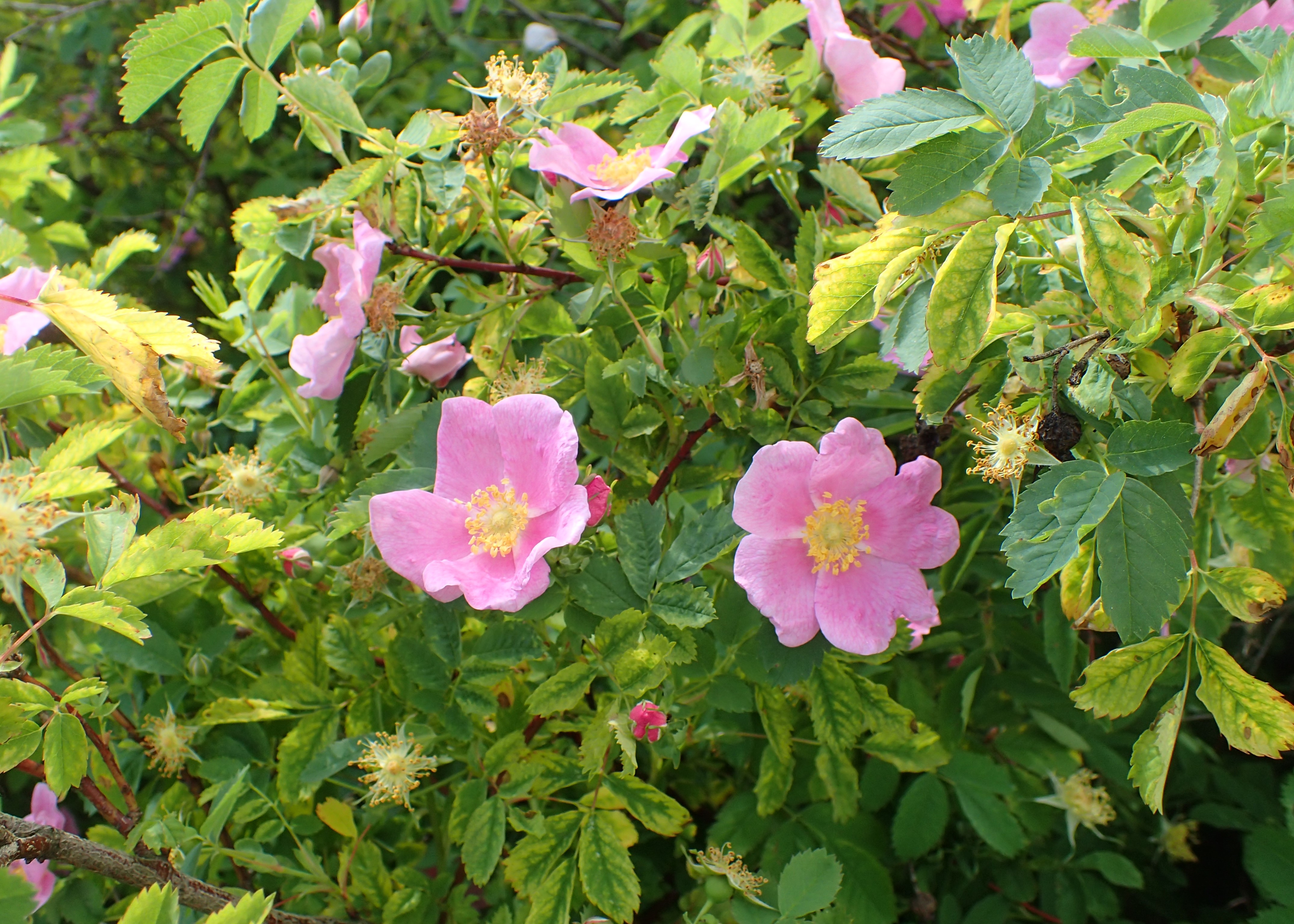
Rosa blanda, commonly known as Meadow Rose, Smooth Rose, or Prairie Rose, is a hardy native shrub rose that brings understated elegance to natural landscapes across much of North America. This member of the Rosaceae (rose) family is distinguished by its nearly thornless stems, delicate single pink flowers, and exceptional cold tolerance that allows it to thrive in harsh northern climates where many other roses fail. Unlike the thorny, high-maintenance garden roses familiar to most gardeners, Meadow Rose offers the simple beauty of wild roses with minimal care requirements.
Growing naturally in prairies, meadows, open woodlands, and along stream banks, Meadow Rose forms spreading colonies through underground rhizomes, creating informal thickets that provide valuable wildlife habitat and erosion control. The shrub typically reaches 3 to 6 feet tall, producing clusters of fragrant pink flowers from late spring through early summer, followed by bright red hips that persist well into winter. Its smooth, reddish stems and serrated compound leaves turn attractive shades of yellow and orange in fall, extending the plant’s ornamental value throughout the growing season.
Meadow Rose is particularly valued by wildlife enthusiasts and native plant gardeners for its exceptional ecological benefits. The flowers provide nectar for butterflies and native bees, while the vitamin C-rich hips are consumed by over 40 species of birds and various mammals. The dense, suckering growth habit creates nesting sites for songbirds and cover for small mammals, making this species a cornerstone plant for wildlife habitat restoration and naturalized landscapes from the Great Plains to the Atlantic Coast.
Identification
Meadow Rose is a deciduous shrub that typically grows 3 to 6 feet tall and wide, though it can occasionally reach up to 8 feet in ideal conditions. The plant forms spreading colonies through underground rhizomes, creating loose thickets of upright to arching stems that provide excellent structure in naturalized settings.
Stems
One of Meadow Rose’s most distinctive features is its nearly smooth stems, which are either completely thornless or bear only very small, weak prickles near the base — a stark contrast to most wild roses. Young stems are green to reddish-brown, maturing to smooth, reddish-brown canes with a slight glossy sheen. The stems are typically slender, about ¼ to ½ inch in diameter, and tend to arch gracefully outward from the center of the plant.
Leaves
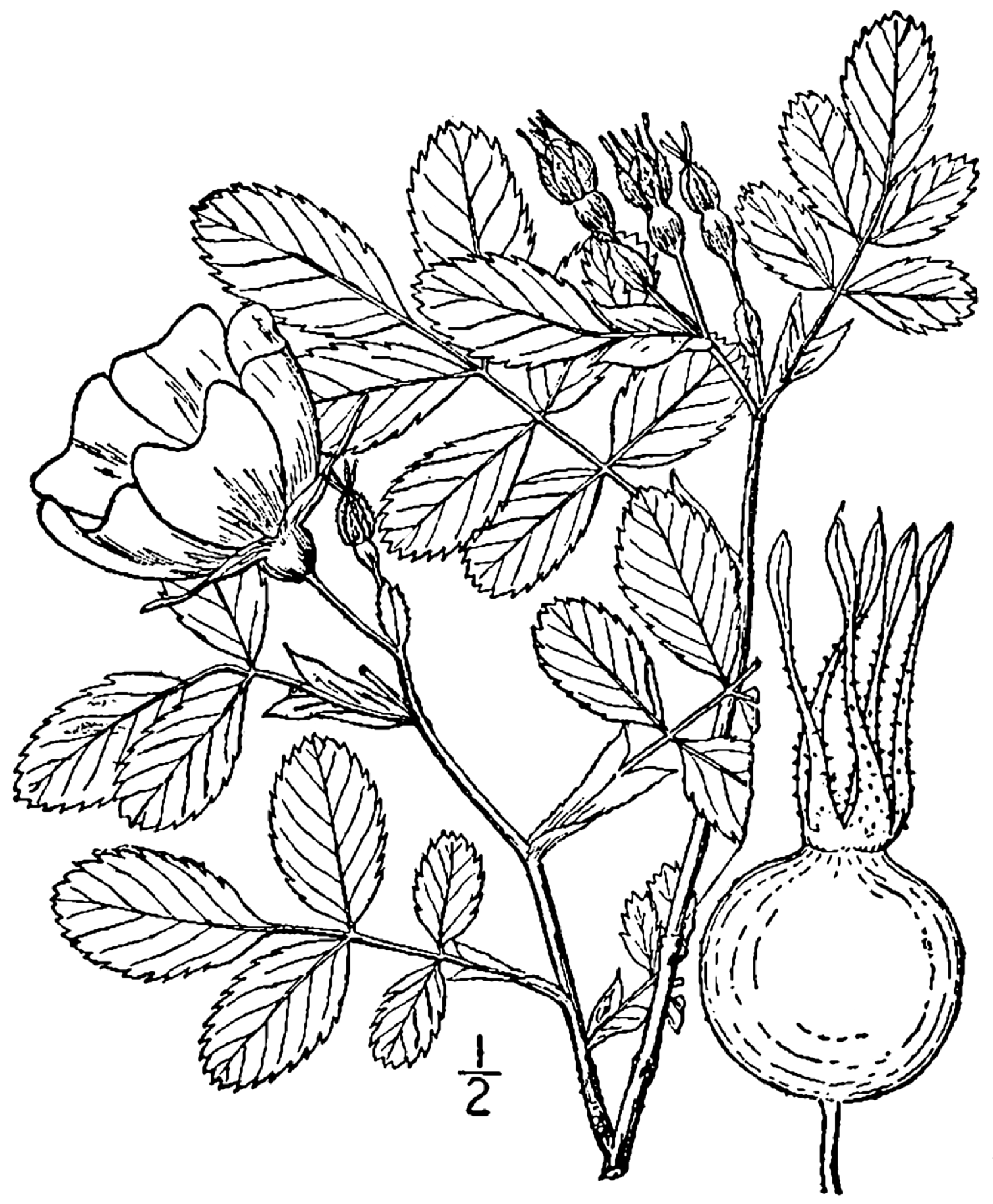
The compound leaves are alternate and pinnately divided into 5 to 9 (usually 7) leaflets. Each leaflet is oval to elliptic, 1 to 2½ inches long, with finely serrated margins and a slightly pointed tip. The upper surface is medium to dark green and smooth, while the underside is paler and may have fine hairs along the veins. The leaflets are attached to a common leaf stalk (rachis) that may bear small prickles. Stipules — small, leaf-like appendages at the base of each leaf — are relatively broad and may be toothed along their margins.
Flowers
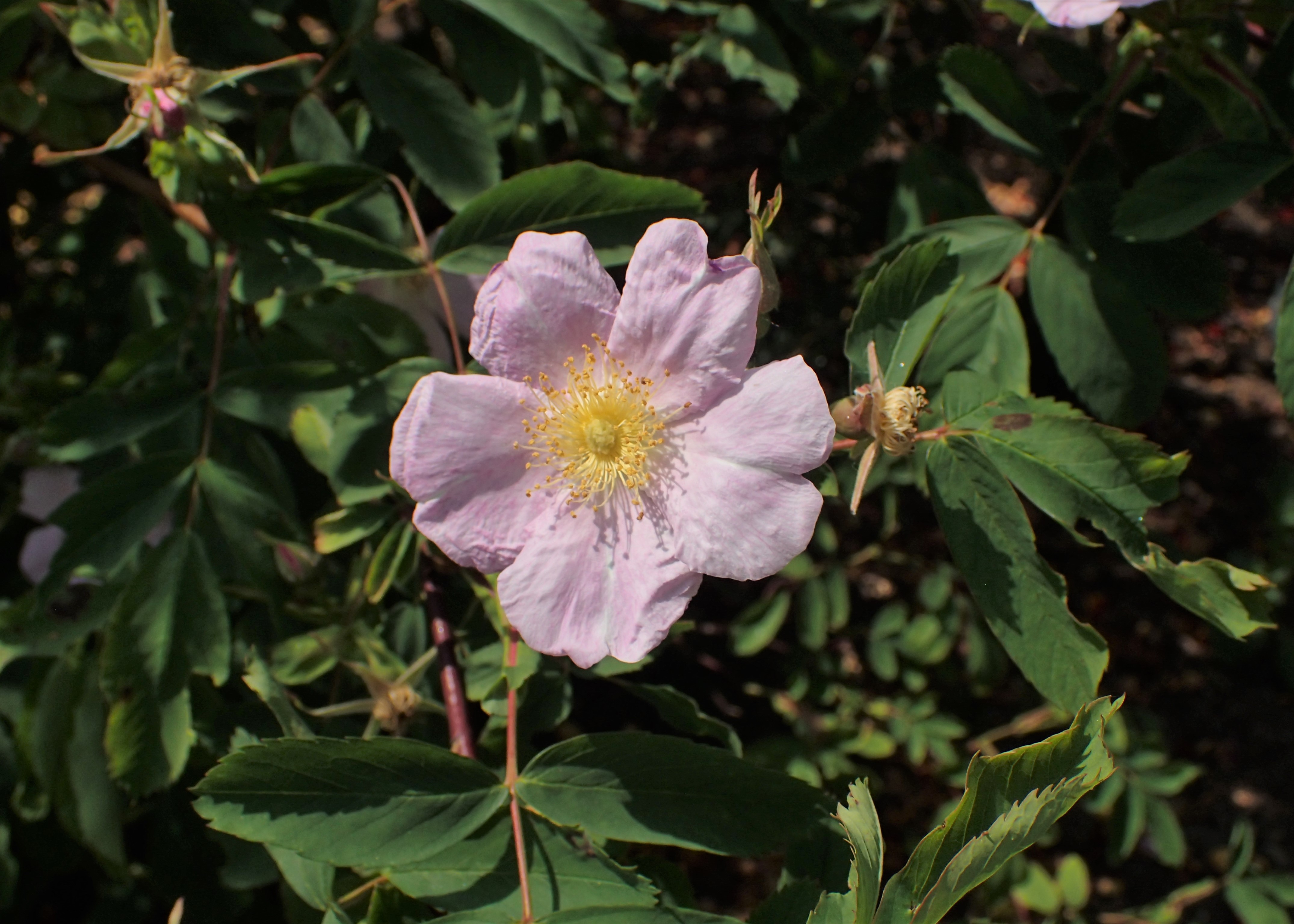
The flowers are the plant’s crowning glory: simple, 5-petaled blooms that are 2 to 3 inches across with a delicate, sweet fragrance. The petals are typically pink, ranging from pale pink to deeper rose-pink, though occasionally white forms occur. Each flower has numerous yellow stamens clustered around a central group of pistils, creating an attractive contrast against the pink petals. Flowers appear from late May through July, usually in small clusters of 1 to 3 blooms at the ends of branches, though occasionally they may appear singly.
Fruit
The fruits are rose hips — fleshy, berry-like structures that develop from the enlarged receptacle (hypanthium) of the flower. Meadow Rose hips are bright red to dark red, round to somewhat flattened, and about ½ inch in diameter. They ripen from late summer through fall and often persist well into winter, providing important food for wildlife during the cold months. Each hip contains several small, hard seeds surrounded by the fleshy, edible (though seedy) pulp that is rich in vitamin C.
Quick Facts
| Scientific Name | Rosa blanda |
| Family | Rosaceae (Rose) |
| Plant Type | Deciduous Shrub |
| Mature Height | 5 ft |
| Sun Exposure | Full Sun |
| Water Needs | Moderate |
| Bloom Time | May – July |
| Flower Color | Pink (occasionally white) |
| USDA Hardiness Zones | 2–7 |
Native Range
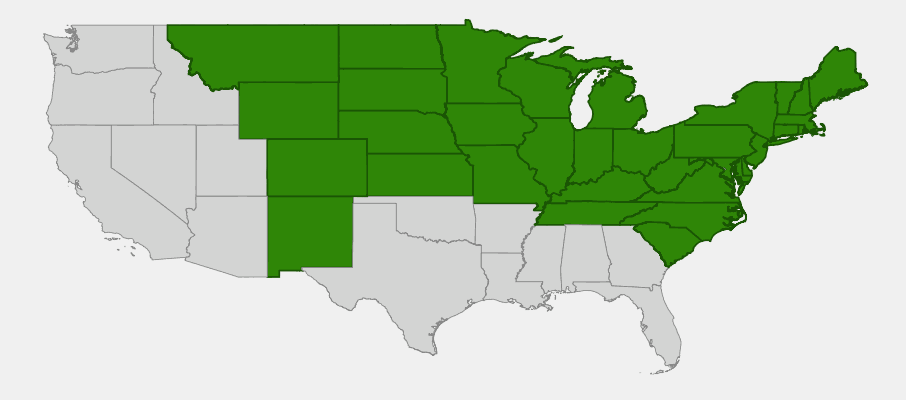
Meadow Rose has one of the most extensive native ranges of any North American rose, stretching from the Maritime Provinces of Canada west to Saskatchewan and south to New Mexico, with scattered populations extending into the southeastern United States. This remarkable distribution reflects the species’ exceptional adaptability to diverse climatic conditions and habitats, from the harsh winters of northern Canada to the semi-arid conditions of the western Great Plains.
The species is most abundant in the northern Great Plains and Great Lakes regions, where it thrives in the prairie-forest transition zone. Here, Meadow Rose grows naturally in native prairies, meadows, open woodlands, and along stream corridors, often forming extensive colonies in areas with rich, moist soils. The plant’s ability to spread via underground rhizomes allows it to colonize disturbed areas and maintain populations even after periodic fires or grazing — important adaptations in its prairie homeland.
Throughout its range, Meadow Rose demonstrates remarkable ecological plasticity, growing in habitats ranging from wet meadows and marsh edges to dry prairie hills and open forest clearings. This adaptability has allowed the species to persist across much of its historic range despite habitat conversion, though populations have declined in many agricultural areas where native prairies have been converted to cropland.
📋 Regional plant lists featuring Meadow Rose: North Dakota, South Dakota & Western Minnesota
Growing & Care Guide
Meadow Rose is among the easiest and most rewarding native shrubs to grow, combining exceptional hardiness with minimal maintenance requirements. Its tolerance of diverse growing conditions and ability to thrive with minimal intervention makes it an excellent choice for both beginning and experienced gardeners interested in low-maintenance, wildlife-friendly landscaping.
Light
While Meadow Rose grows best in full sun (6+ hours of direct sunlight daily), it also tolerates partial shade reasonably well, though flowering may be reduced in shadier locations. In full sun conditions, the plant develops its most compact form and produces the most abundant flowers. In partial shade, it tends to grow taller and more open, reaching toward available light sources.
Soil & Water
One of Meadow Rose’s greatest strengths is its adaptability to diverse soil conditions. It thrives in average garden soils but also tolerates clay, sandy soils, and periodic flooding. The plant prefers moist, well-drained conditions but demonstrates excellent drought tolerance once established, making it suitable for xeriscaping and low-water gardens. Soil pH is not critical — Meadow Rose grows well in slightly acidic to slightly alkaline soils (pH 6.0–8.0).
Planting Tips
Plant Meadow Rose in spring or fall when temperatures are moderate. Space plants 4–6 feet apart if creating a naturalized hedge or screen, or plant singly as a specimen shrub. The plant’s spreading habit means it will eventually form colonies, so consider this when planning placement. Water regularly during the first growing season to establish a strong root system, after which the plant becomes quite drought tolerant.
Pruning & Maintenance
Meadow Rose requires minimal pruning. Remove dead, damaged, or weak canes in late winter or early spring before new growth begins. To maintain a more compact form, cut back about one-third of the oldest canes each year. If the plant becomes too large or spreads beyond desired boundaries, dig up and remove excess suckers in spring or fall. Avoid heavy pruning, as roses bloom on previous year’s wood.
Landscape Uses
Meadow Rose’s versatility makes it valuable in numerous landscape applications:
- Prairie and meadow gardens — essential component of authentic native plantings
- Wildlife habitat gardens — provides four-season wildlife value
- Natural screens and hedgerows — forms loose, informal barriers
- Erosion control — spreading root system stabilizes slopes and stream banks
- Low-maintenance borders — requires minimal care once established
- Rain gardens — tolerates periodic flooding and helps manage stormwater
- Restoration projects — quickly establishes in disturbed areas
Wildlife & Ecological Value
Meadow Rose is exceptional for its wildlife value, providing resources that support dozens of bird species, countless insects, and various mammals throughout the year. This single species can serve as a cornerstone plant in wildlife habitat gardens, offering food, shelter, and nesting sites across multiple seasons.
For Birds
The bright red hips are consumed by over 40 species of birds, including Northern Cardinals, Blue Jays, American Robins, Cedar Waxwings, various finches, sparrows, and gamebirds like Sharp-tailed Grouse and Ring-necked Pheasants. The hips are particularly valuable as a winter food source, persisting on the plant well into the cold months when other food sources are scarce. The dense, thorny (or nearly thornless) growth provides excellent nesting sites for songbirds, while the shrub’s structure offers protection from predators and harsh weather.
For Mammals
White-tailed deer, elk, and moose browse both the foliage and twigs of Meadow Rose, particularly during winter months. Small mammals including cottontail rabbits, ground squirrels, and various mice consume the hips and seek shelter within the shrub’s protective cover. Bears occasionally eat the hips where their ranges overlap, and the spreading root system provides habitat for various small rodents and invertebrates.
For Pollinators
The simple, open flowers provide easily accessible pollen and nectar for a wide variety of native bees, butterflies, moths, and beneficial insects. Native bees, including mining bees, leafcutter bees, and various solitary bee species, are particularly attracted to the abundant pollen. Butterfly species such as mourning cloaks and various skippers visit the flowers, while the foliage serves as a host plant for several moth caterpillars.
Ecosystem Role
In its native prairie and woodland edge habitats, Meadow Rose serves as an important structural component, creating habitat diversity within grassland ecosystems. Its ability to spread via underground rhizomes allows it to quickly colonize disturbed areas, helping to stabilize soil and prevent erosion. The plant’s fire tolerance — it resprouts vigorously from underground parts after burns — makes it important for maintaining ecosystem function in fire-adapted landscapes.
Cultural & Historical Uses
Meadow Rose has a rich history of use by Indigenous peoples across its vast range, with various tribes utilizing different parts of the plant for food, medicine, and materials. The Ojibwe and other Great Lakes tribes made extensive use of rose hips, which they called “binesikwunig,” harvesting them in late summer and fall to dry for winter food stores. The vitamin C-rich hips were particularly valuable during the long northern winters when fresh foods were unavailable.
Many Plains tribes, including the Dakota, Lakota, and various Cree nations, incorporated Meadow Rose into traditional medicines. The inner bark of the roots was used to treat stomach ailments and diarrhea, while poultices made from the leaves were applied to wounds and skin irritations. The roots were also used to make a wash for treating sore eyes and mouth problems. Some tribes used the straight, flexible stems for making arrows and other tools, taking advantage of the plant’s relatively thorn-free nature.
During the settlement period, European-American pioneers learned to use rose hips as a source of vitamin C, particularly important during long winters when fresh fruits and vegetables were unavailable. Rose hip jelly and syrup became common preserves in frontier households. During both World Wars, when citrus fruits were rationed or unavailable, governments encouraged civilians to harvest wild rose hips as an alternative vitamin C source, leading to organized collection efforts in many rural communities.
In modern times, rose hips from Meadow Rose and other native roses continue to be harvested by foragers and herbalists. The hips are used to make teas, jellies, and natural vitamin supplements, though cultivated sources are now more commonly used commercially. The plant has also found renewed appreciation in native landscaping and ecological restoration, valued for its low maintenance requirements and exceptional wildlife benefits.
Frequently Asked Questions
Is Meadow Rose really thornless?
While often described as “thornless,” Meadow Rose typically has few to no thorns on its upper stems and branches, but may have small, weak prickles near the base of the plant. Compared to most wild roses, it is remarkably smooth and safe to handle, making it much more garden-friendly than thorny species.
How fast does Meadow Rose spread?
Meadow Rose spreads at a moderate rate through underground rhizomes, typically expanding its colony by 1-2 feet per year under good growing conditions. The spreading can be controlled by removing unwanted suckers, or you can embrace the natural colony-forming habit for wildlife habitat or erosion control.
Can you eat Meadow Rose hips?
Yes, the red hips are edible and rich in vitamin C, though they’re quite seedy and tart when raw. They’re best used for making jellies, syrups, or teas. Remove the seeds before eating, as they can be irritating. The petals are also edible and can be used in salads or to make rose water.
Will Meadow Rose attract Japanese beetles?
Like most roses, Meadow Rose can attract Japanese beetles during their peak season (typically June-August). However, native roses generally suffer less damage than hybrid garden roses. If Japanese beetles become problematic, hand-picking in the morning when they’re sluggish is often the most effective control method.
How do I start new plants from my Meadow Rose?
The easiest method is to dig up and transplant the natural suckers that emerge from the spreading root system. These can be moved in spring or fall. You can also grow new plants from seed, though this requires cold stratification over winter. Cuttings are more challenging with roses and generally less successful than division.

Looking for a nursery that carries Meadow Rose?
Browse our native plant nursery directory: North Dakota · South Dakota · Minnesota