
American Highbush Cranberry (Viburnum trilobum)
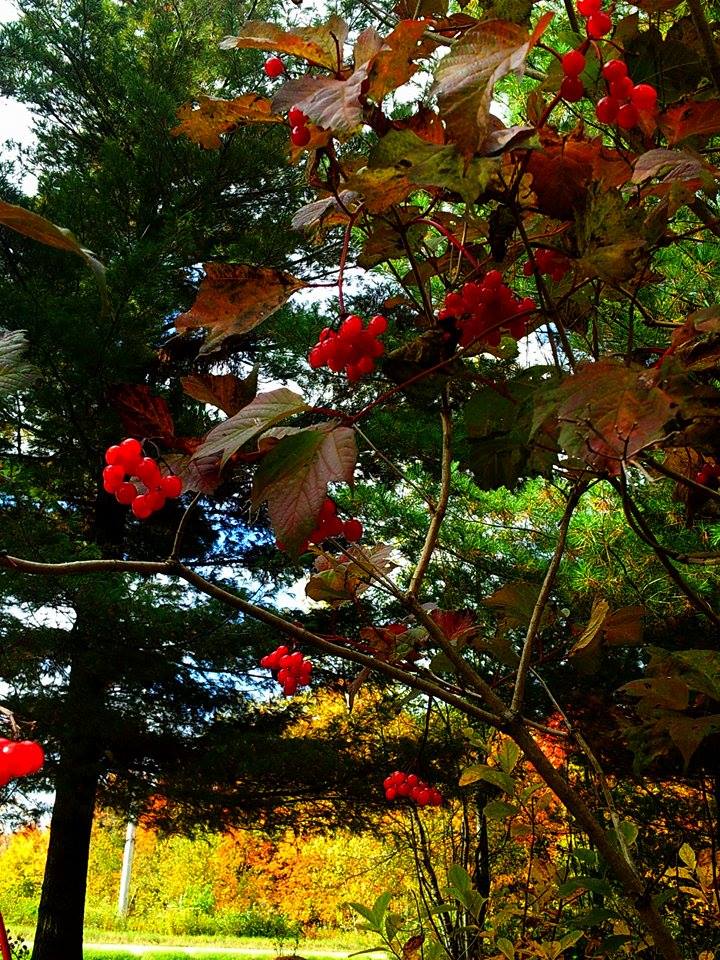
Viburnum trilobum, commonly known as American Highbush Cranberry, American Cranberrybush, or Pimbina, is a distinctive native deciduous shrub that brings vibrant beauty and exceptional wildlife value to northern landscapes. Despite its common name, this member of the Adoxaceae (formerly Caprifoliaceae) family is not a true cranberry at all, but rather a viburnum that earned its name from the bright red, tart berries that closely resemble cranberries in both appearance and flavor. This hardy shrub is one of the most reliable and attractive native plants for cold climates, thriving across much of northern North America from Alaska to the Atlantic provinces.
Growing naturally in moist woods, swampland edges, and streamside thickets, American Highbush Cranberry is a medium-sized shrub reaching 8 to 15 feet tall and wide, with an upright, somewhat spreading growth habit. Its most distinctive features include large, maple-like three-lobed leaves that turn brilliant orange-red in fall, showy white flower clusters in spring, and clusters of glossy red berries that persist well into winter. The berries are not only beautiful but also edible — with a tart, cranberry-like flavor that makes excellent jellies, sauces, and traditional preserves.
This adaptable native shrub is equally at home in naturalized woodland gardens, wildlife plantings, and more formal landscape settings. Its exceptional cold hardiness, tolerance of wet soils, spectacular fall color, and abundant wildlife food make it an invaluable addition to gardens across the northern United States and Canada. Whether planted as a specimen shrub, in naturalistic groupings, or as part of a native hedgerow, American Highbush Cranberry provides four seasons of interest and serves as an ecological cornerstone for northern wildlife.
Identification
American Highbush Cranberry typically grows as a large, upright deciduous shrub reaching 8 to 15 feet (2.4–4.5 m) tall and equally wide at maturity, though it can occasionally reach 18 feet in ideal conditions. The growth form is open and somewhat arching, with multiple stems arising from the base. The branches are smooth and grayish-brown, while younger twigs may have a reddish tinge.
Leaves
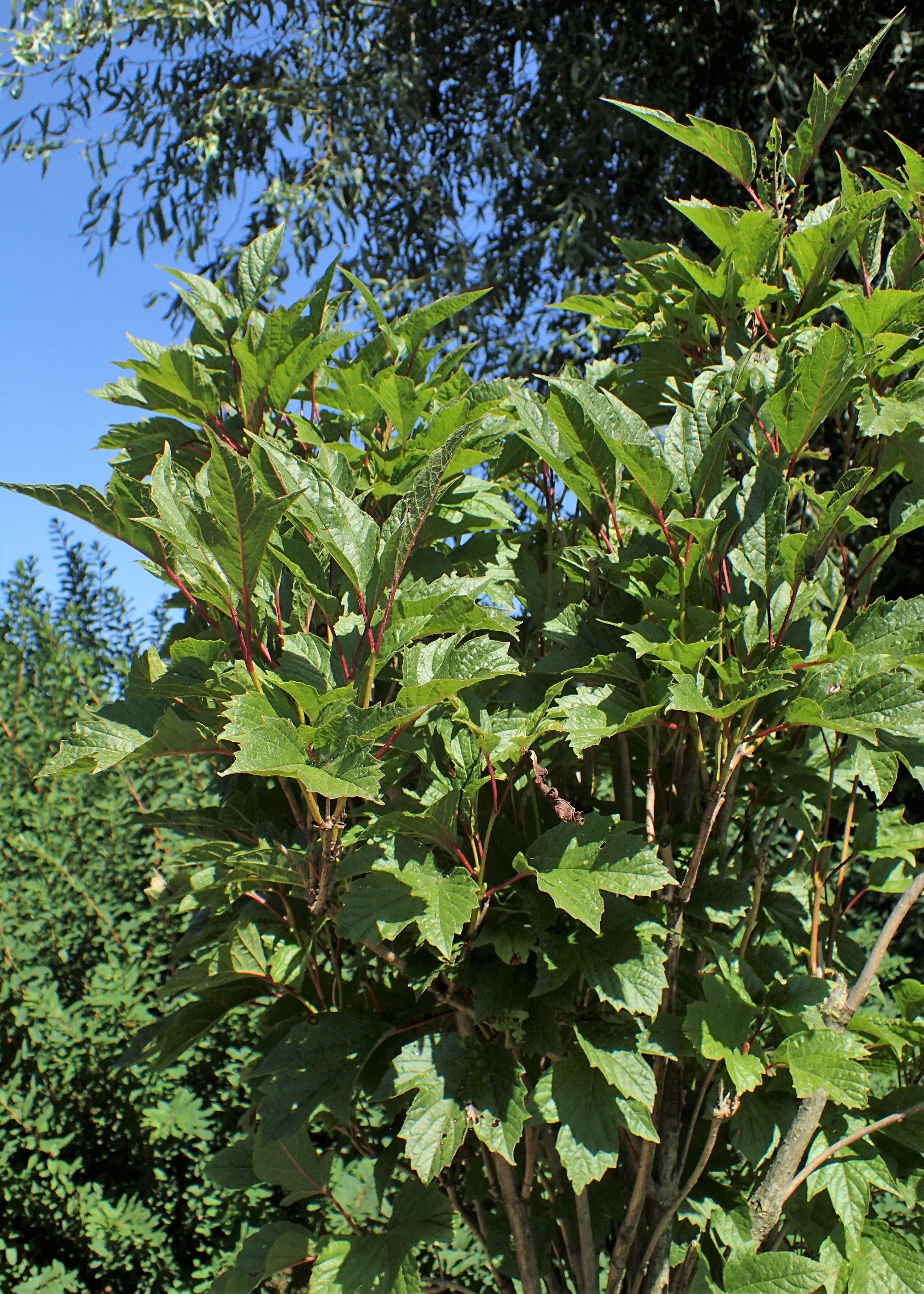
The leaves are the plant’s most distinctive vegetative feature — they are opposite, simple, and deeply three-lobed, giving them a maple-like appearance that makes this viburnum easy to identify even when not in flower or fruit. Each leaf is 2 to 5 inches (5–12 cm) long and wide, with the central lobe typically longer and more pointed than the two side lobes. The leaf margins have irregular, rounded teeth. The upper surface is dark green and smooth, while the underside is paler and may have fine hairs along the veins. In autumn, the foliage transforms into brilliant shades of orange, red, and yellow, creating one of the most spectacular fall displays of any native shrub.
Flowers
The flowers appear in late spring to early summer, arranged in flat-topped clusters (cymes) 2 to 4 inches (5–10 cm) across at the ends of branches. Each flower cluster consists of two types of flowers: small, fertile flowers in the center and larger, showy sterile flowers around the rim. The outer sterile flowers are pure white with five petals and can be up to ¾ inch (2 cm) across, while the inner fertile flowers are much smaller and creamy white. This arrangement creates a lace-cap effect similar to some hydrangeas and is highly attractive to pollinators.
Fruit
The fruit is a drupe, ¼ to ⅜ inch (6–10 mm) in diameter, that develops from the fertile flowers in the center of each cluster. The berries ripen in late summer and early fall, transitioning from green to bright, glossy red. They hang in clusters and persist well into winter, providing a stunning display against snow. Each berry contains a single large, flat seed. The fruit has a tart, cranberry-like flavor and can be eaten raw (though quite sour) or cooked into jellies, sauces, and other preserves.
Quick Facts
| Scientific Name | Viburnum trilobum |
| Family | Adoxaceae (Moschatel) |
| Plant Type | Deciduous Shrub |
| Mature Height | 8–15 ft |
| Sun Exposure | Full Sun to Part Shade |
| Water Needs | Moderate to High |
| Bloom Time | May – June |
| Flower Color | White |
| USDA Hardiness Zones | 2–7 |
Native Range
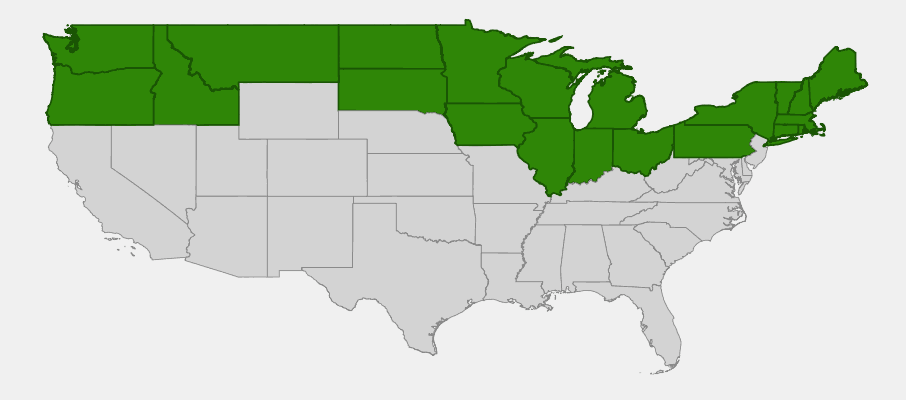
American Highbush Cranberry has one of the most extensive native ranges of any North American shrub, stretching across the continent from Alaska to Newfoundland and south through the northern United States to Pennsylvania, Iowa, and Colorado. This wide distribution reflects the species’ exceptional adaptability to cold climates and diverse growing conditions, making it one of the most reliable native shrubs for northern gardens.
The species is found throughout the boreal forest region of Canada and Alaska, extending south into the mixed deciduous-coniferous forests of the Great Lakes region and northern Appalachian Mountains. In its natural habitat, American Highbush Cranberry typically grows in moist woods, swamp edges, streamside thickets, and forest clearings. It thrives in areas with consistent moisture but good drainage, often forming dense colonies through root sprouting.
Within this vast range, the species shows remarkable adaptability to different soil types and moisture levels, though it generally prefers rich, moist, slightly acidic soils. The northern populations are especially cold-hardy, surviving temperatures well below -40°F (-40°C), while southern populations are adapted to warmer conditions but still require some winter chilling to bloom and fruit properly.
📋 Regional plant lists featuring American Highbush Cranberry: North Dakota, South Dakota & Western Minnesota
Growing & Care Guide
American Highbush Cranberry is one of the most reliable and low-maintenance native shrubs for cold-climate gardens. Its adaptability to different growing conditions, combined with exceptional cold hardiness and attractive features in all seasons, makes it an excellent choice for both novice and experienced gardeners.
Light
This adaptable shrub grows well in full sun to part shade, though its flowering and fruiting are best in full sun to light shade. In full sun, plants develop a more compact, dense habit with abundant flowers and berries, while in shadier locations they may become more open and produce fewer flowers. The plant’s natural habitat includes forest edges and clearings, so it tolerates varying light conditions throughout the growing season.
Soil & Water
American Highbush Cranberry prefers moist, well-drained soil but is quite adaptable to different soil types, including clay, loam, and sandy soils. It thrives in slightly acidic to neutral pH (5.5–7.0) but tolerates a wide range. The plant naturally grows in areas with consistent moisture, so regular watering during dry spells will promote the best growth and fruit production. However, established plants show good drought tolerance once their root systems are well-developed. Avoid waterlogged conditions, though the plant tolerates seasonal flooding better than many other shrubs.
Planting Tips
Plant American Highbush Cranberry in fall or early spring for best establishment. Choose a location with morning sun and protection from harsh afternoon sun in warmer climates. Space plants 8–12 feet apart for individual specimens, or 6–8 feet apart for hedgerow plantings. The shrub transplants well from container stock and establishes quickly. Mulch around the base with 2–3 inches of organic matter to retain moisture and suppress weeds.
Pruning & Maintenance
This low-maintenance shrub requires minimal pruning. Remove dead, damaged, or crossing branches in late winter while dormant. If renewal pruning is needed, cut one-third of the oldest stems to ground level each year for three years. The plant naturally suckers from the base, which can be removed if a more tree-like form is desired, or left to develop a naturalistic colony. American Highbush Cranberry is generally pest- and disease-resistant, though it may occasionally be affected by aphids or viburnum leaf beetles.
Landscape Uses
American Highbush Cranberry’s versatility makes it valuable in many landscape applications:
- Wildlife gardens — provides food and shelter for numerous bird and mammal species
- Edible landscaping — berries are excellent for jellies, sauces, and preserves
- Native hedgerows and privacy screens
- Specimen planting for four-season interest
- Woodland gardens and naturalized areas
- Rain gardens and wet soil areas
- Winter interest — persistent berries and architectural form
- Pollinator gardens — flowers attract beneficial insects
Wildlife & Ecological Value
American Highbush Cranberry is exceptionally valuable to wildlife, providing food, nesting habitat, and shelter for a wide variety of species throughout the year. Its berries, flowers, and dense branching structure make it one of the most important native shrubs for northern ecosystems.
For Birds
The bright red berries are consumed by over 40 species of birds, including American Robins, Cedar Waxwings, Northern Cardinals, Rose-breasted Grosbeaks, Pine Grosbeaks, Bohemian Waxwings, and various thrush species. The berries are high in vitamin C and other nutrients, providing crucial energy during migration and harsh winter months. Game birds such as Ruffed Grouse and Sharp-tailed Grouse also feed on both the berries and winter buds. The dense branching structure provides excellent nesting sites for songbirds, while the early flowers attract insects that serve as important protein sources during the breeding season.
For Mammals
Many mammals rely on American Highbush Cranberry for food and cover. Black bears are particularly fond of the berries, often stripping entire shrubs in late summer and fall. White-tailed deer browse the twigs and foliage, especially in winter when other food sources are scarce. Small mammals including chipmunks, squirrels, and mice consume the berries and cache them for winter food. The dense growth provides essential thermal cover and escape habitat for numerous small mammals, rabbits, and ground-dwelling birds.
For Pollinators
The abundant spring flowers attract a diverse array of pollinators including native bees, honeybees, hover flies, and beneficial beetles. The flat-topped flower clusters provide easily accessible nectar and pollen, making them especially valuable to smaller native bee species. The long flowering period (4–6 weeks) provides sustained foraging opportunities during the critical spring season when many pollinator species are most active.
Ecosystem Role
American Highbush Cranberry serves as a keystone species in many northern ecosystems. Its ability to form dense colonies through root sprouting creates important shrubland habitat that supports high biodiversity. The plant’s extensive root system helps prevent soil erosion along streambanks and in wetland areas. The fallen leaves decompose to enrich the soil, while the shrub’s presence helps create microclimates that support understory plants and soil organisms. Its role in supporting both herbivorous and predatory insects makes it a crucial link in northern food webs.
Cultural & Historical Uses
American Highbush Cranberry holds significant cultural importance for many Indigenous peoples of North America, particularly among the Ojibwe (Chippewa), Cree, and other northern tribes who called it “pimbina” or similar variations. The berries were a crucial traditional food source, harvested in late summer and fall and processed in various ways for year-round consumption. Fresh berries were often mixed with dried meat and fat to make pemmican, a high-energy travel food that could be stored for months. The berries were also dried on their own or cooked into sauces and preserves.
Beyond nutrition, the plant had important medicinal applications in traditional Indigenous medicine. The bark was used to treat various ailments including muscle cramps, stomach problems, and as a general tonic. Some tribes used preparations from the berries to treat scurvy, taking advantage of their high vitamin C content — a practice that proved scientifically sound, as American Highbush Cranberry berries contain more vitamin C than true cranberries or even citrus fruits.
European settlers quickly adopted the use of American Highbush Cranberry berries, especially Scandinavian immigrants who found them reminiscent of the lingonberries and cloudberries of their homeland. The berries became popular for making jellies, jams, and sauces, often served alongside game meats. During World War II, American Highbush Cranberry gained attention as a potential commercial fruit crop due to its high vitamin C content and cold hardiness, though it never achieved widespread agricultural cultivation.
Today, the berries remain popular among foragers, homesteaders, and those interested in native foods. They make excellent substitutes for cranberries in most recipes, though they have a slightly more complex, tart flavor with hints of apple. The berries are typically harvested after the first frost, which reduces their somewhat unpleasant raw smell and improves their flavor. Modern food enthusiasts prize them for gourmet applications including artisanal jellies, craft cocktail ingredients, and fusion cuisine incorporating traditional Indigenous food ways.
Frequently Asked Questions
Are American Highbush Cranberry berries safe to eat?
Yes, the berries are completely safe to eat and are highly nutritious, containing more vitamin C than oranges. However, they have a very tart, sour flavor when raw and are usually cooked into jellies, sauces, or other preserves. They’re best harvested after the first frost, which improves their flavor.
How can I tell American Highbush Cranberry apart from European Cranberrybush?
The easiest way is to examine the seeds: American Highbush Cranberry has one flat seed per berry, while European Cranberrybush (Viburnum opulus) has three grooved seeds. The leaves of the American species also tend to be more deeply lobed, and the native plant typically grows in more upright form.
Will American Highbush Cranberry grow in wet soil?
Yes, this is one of the best native shrubs for wet or periodically flooded sites. It naturally grows along stream edges and in swampy areas, so it tolerates wet feet better than most landscape shrubs. However, it also adapts well to average garden conditions once established.
How long does it take for American Highbush Cranberry to produce berries?
Plants typically begin flowering and producing berries within 2–4 years of planting, depending on the size of the initial plant and growing conditions. Container-grown nursery plants often flower in their first or second year, while smaller plants may take a bit longer to mature.
Does American Highbush Cranberry need cross-pollination to produce fruit?
While individual plants can self-pollinate and produce fruit, cross-pollination between different genetic individuals typically results in better fruit set and larger berry clusters. Planting multiple shrubs spaced throughout the landscape will maximize fruit production for both the plants and the wildlife that depend on them.

Looking for a nursery that carries American Highbush Cranberry?
Browse our native plant nursery directory: North Dakota · South Dakota · Minnesota