
Cup Plant (Silphium perfoliatum)
Silphium perfoliatum, commonly known as Cup Plant, is a striking native perennial wildflower that stands as one of the tallest and most impressive members of the Prairie ecosystem. This member of the Asteraceae (sunflower) family earned its distinctive common name from its unique pairs of large, opposite leaves that wrap around the stem to form natural cups that collect and hold rainwater. These water-filled leaf cups serve as tiny reservoirs for birds, insects, and other wildlife, making Cup Plant not just a beautiful garden specimen but a vital component of prairie biodiversity.
Native to the central and eastern United States, Cup Plant is a robust prairie perennial that can reach heights of 3 to 8 feet, producing masses of bright yellow, sunflower-like blooms from midsummer through early fall. The plant’s towering presence and extended bloom period make it a magnet for pollinators, particularly native bees, butterflies, and beneficial insects. Its deep taproot system helps it tolerate drought while also making it an excellent choice for erosion control and prairie restoration projects.
Beyond its ecological value, Cup Plant has a rich cultural history, having been used by Indigenous peoples for various medicinal purposes and valued as a reliable source of clean water in the prairie landscape. Today, it serves as an outstanding choice for native plant gardens, pollinator habitats, rain gardens, and naturalized landscapes where its bold architectural form and wildlife value can be fully appreciated.
Identification
Cup Plant is easily recognized by its impressive stature and distinctive leaf arrangement. This robust perennial typically grows 3 to 8 feet tall, though exceptional specimens may reach 10 feet in ideal conditions. The plant develops a strong, square-stemmed architecture with a deep taproot that can extend 15 feet into the soil, allowing it to access deep moisture reserves.
Leaves
The most distinctive feature of Cup Plant is its unique leaf arrangement. Large, opposite leaves (4 to 12 inches long) are positioned in pairs that wrap around the square stem, creating natural cups or basins at each node. These perfoliate leaves appear as though the stem passes directly through them, giving rise to the scientific name “perfoliatum” meaning “through the leaf.” The leaves are coarsely toothed, somewhat rough to the touch, and bright green in color. Each cup formed by the leaf pairs can hold up to ½ cup of water, providing drinking water for birds and serving as breeding pools for beneficial insects.
Flowers
The flowers are classic composite blooms typical of the sunflower family, measuring 2 to 3 inches across. Each bright yellow flower head consists of 20 to 30 ray petals (actually individual flowers) surrounding a central disc of tiny yellow disc flowers. The flowers are arranged in loose, branching clusters at the top of the plant, creating an impressive display when in full bloom. Individual flowers bloom sequentially, extending the overall flowering period from July through September.
Seeds & Fruit
Cup Plant produces small, flattened achenes (seed-like fruits) about ¼ inch long, each equipped with a small tuft of white bristles (pappus) that aids in wind dispersal. The seeds mature in late summer and fall, providing food for goldfinches, siskins, and other seed-eating birds. A single mature plant can produce thousands of seeds, though successful establishment from seed requires specific conditions.
Quick Facts
| Scientific Name | Silphium perfoliatum |
| Family | Asteraceae (Sunflower) |
| Plant Type | Herbaceous Perennial |
| Mature Height | 3–6 ft |
| Sun Exposure | Full Sun |
| Water Needs | Moderate |
| Bloom Time | July – September |
| Flower Color | Bright Yellow |
| USDA Hardiness Zones | 3–9 |
Native Range
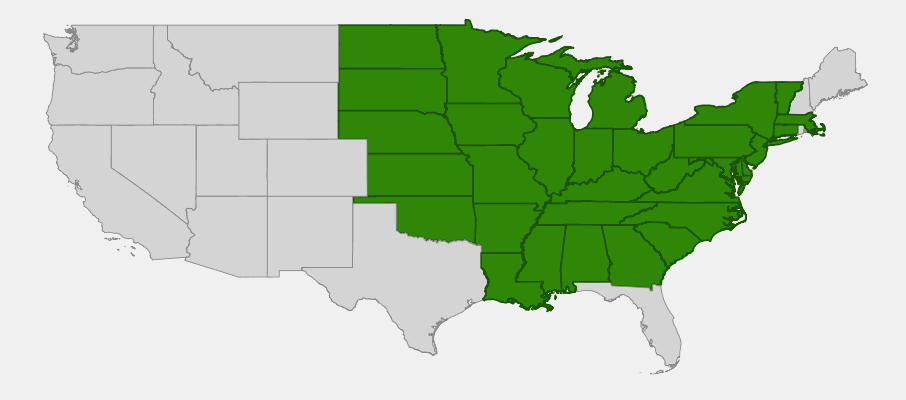
Cup Plant is native to the tallgrass prairie and adjacent woodland edges of central and eastern North America. Its natural range extends from the northern Great Plains through the Great Lakes region and south through the Mississippi River valley to the Gulf Coast states. The species is most abundant in the prairie pothole region of the upper Midwest, where it thrives in the rich, moist soils of prairie swales and along stream corridors.
Historically, Cup Plant was a characteristic species of the vast tallgrass prairies that once covered much of the American Midwest. It typically occurred in the wetter portions of prairies, along with other moisture-loving species like Prairie Cordgrass (Spartina pectinata), Blue Joint Grass (Calamagrostis canadensis), and various sedges. The species also extended into prairie openings within deciduous forests and along woodland edges where sufficient sunlight and moisture were available.
Today, with the conversion of over 99% of original tallgrass prairie to agriculture, Cup Plant exists primarily in prairie remnants, restored prairies, and naturalized areas. It has proven adaptable to a variety of garden conditions and is widely planted in prairie restoration projects throughout its native range and beyond.
📋 Regional plant lists featuring Cup Plant: North Dakota, South Dakota & Western Minnesota
Growing & Care Guide
Cup Plant is surprisingly easy to grow and maintain once established, making it an excellent choice for both experienced native plant gardeners and beginners looking to create wildlife habitat. Its deep taproot system and prairie heritage give it remarkable drought tolerance once mature, while its impressive size and extended bloom period provide maximum impact in the landscape.
Light
Cup Plant performs best in full sun, requiring at least 6-8 hours of direct sunlight daily for optimal flowering and robust growth. In partial shade, plants will grow taller and more spindly as they reach for light, and flower production may be significantly reduced. The intense sunlight of prairie environments helps keep plants compact and encourages maximum flower production.
Soil & Water
While Cup Plant is quite adaptable to various soil conditions, it thrives in rich, moist, well-drained soils similar to those found in prairie swales. The plant prefers slightly alkaline to neutral soils (pH 6.5-7.5) but will tolerate a wide range. Once established, the deep taproot allows Cup Plant to access soil moisture far below the surface, making it quite drought tolerant. However, supplemental watering during extended dry periods will promote better flowering and overall plant health, especially in the first 2-3 years as the root system develops.
Planting Tips
Cup Plant can be grown from seed or transplants, though transplants provide quicker establishment. If starting from seed, plant in fall or early spring, as seeds require cold stratification to germinate reliably. Plant transplants in spring after the last frost, spacing them 3-4 feet apart to accommodate their mature spread. The plant may take 2-3 years to reach full flowering maturity, but the wait is worth it for the spectacular display that follows.
Pruning & Maintenance
Cup Plant requires minimal maintenance once established. In late fall or early spring, cut stems back to 6-12 inches above ground level, leaving some height for beneficial insects that may be overwintering in hollow stems. If you wish to prevent self-seeding, deadhead flowers after blooming, though this will eliminate the valuable seed source for birds. The plant may benefit from staking in windy locations, especially when young, but mature plants with well-developed root systems are typically quite stable.
Landscape Uses
Cup Plant’s impressive stature and wildlife value make it suitable for many landscape applications:
- Prairie gardens and restorations — an essential component of authentic tallgrass prairie plantings
- Pollinator gardens — attracts numerous native bee species, butterflies, and beneficial insects
- Rain gardens — tolerates periodic flooding and helps absorb excess water
- Wildlife gardens — seeds feed birds, water cups serve various wildlife
- Natural screens or backgrounds — provides height and structure to perennial borders
- Erosion control — deep root system helps stabilize soil on slopes
- Cut flower gardens — makes excellent long-lasting cut flowers
Wildlife & Ecological Value
Cup Plant is an ecological powerhouse, providing resources for wildlife throughout multiple seasons. Its unique combination of nectar-rich flowers, nutritious seeds, and water-holding leaf cups makes it one of the most valuable native plants for supporting biodiversity in prairie and garden ecosystems.
For Birds
The seeds of Cup Plant are highly prized by seed-eating birds, particularly American Goldfinches, which often perch on the sturdy stems to extract seeds directly from the flower heads. Other frequent visitors include Pine Siskins, House Finches, and various sparrow species. The water-filled leaf cups provide a reliable source of clean drinking water, especially valuable during dry periods when natural water sources may be scarce. Many birds also use these natural cups for bathing.
For Mammals
While large mammals don’t typically browse Cup Plant heavily due to its coarse texture and bitter compounds, small mammals like chipmunks and ground squirrels will collect fallen seeds. White-tailed deer may occasionally browse young shoots in spring, but mature plants are generally avoided. The dense root system provides habitat for various soil-dwelling mammals and invertebrates.
For Pollinators
Cup Plant is outstanding for pollinators, with its large, open flowers providing easily accessible nectar and pollen throughout the late summer period when many other flowers have finished blooming. Native bee species, including bumble bees, leaf-cutter bees, and sweat bees, are frequent visitors. Butterflies, particularly larger species like Monarchs and Swallowtails, use the flat-topped flower clusters as landing platforms. The extended bloom period of 8-10 weeks provides consistent resources during the critical late-season period when many butterflies are building up energy reserves for migration or overwintering.
Ecosystem Role
Beyond its direct wildlife value, Cup Plant plays important ecological roles in prairie ecosystems. Its deep taproot helps break up compacted soils and brings nutrients from deep soil layers to the surface through leaf decomposition. The plant’s height and sturdy stems provide nesting sites and shelter for various insects and spiders. In restoration contexts, Cup Plant serves as an indicator species — its presence and robust growth often signal healthy prairie soil conditions and successful restoration efforts.
Cultural & Historical Uses
Cup Plant holds significant cultural importance among Indigenous peoples of the Great Plains and Great Lakes regions, where it was valued both for its practical uses and its reliable provision of clean drinking water in the vast prairie landscape. The Lakota people called it “wahpe makoskan” (bear medicine), while the Ojibwe knew it as “wedjibikakons” (cup-shaped leaf plant), names that reflect both its distinctive appearance and medicinal applications.
Traditional uses of Cup Plant were primarily medicinal, with various parts of the plant employed to treat different ailments. The root was used to make poultices for treating burns, wounds, and skin conditions, while leaf extracts were applied to sore or inflamed eyes. Some tribes used the plant as a component in smoking mixtures and ceremonial preparations. The large, cup-shaped leaves had practical applications as well, serving as natural containers for gathering berries or as emergency water vessels during long journeys across the prairie.
European settlers quickly recognized the plant’s value, both for its medicinal properties and as a reliable indicator of good prairie soil. The plant’s presence in an area typically signaled fertile, well-drained land suitable for agriculture. Unfortunately, this same association led to the destruction of most Cup Plant habitat as prairies were converted to farmland during the 19th and early 20th centuries.
In modern times, Cup Plant has found new appreciation in sustainable landscaping and ecological restoration. It’s increasingly used in bioretention systems and green infrastructure projects where its ability to handle periodic flooding and its deep root system make it valuable for stormwater management. The plant has also gained attention in permaculture circles for its multiple functions — providing wildlife habitat, erosion control, and emergency water sources in garden settings.
Frequently Asked Questions
How long does it take Cup Plant to bloom from seed?
Cup Plant typically takes 2-3 years to reach blooming maturity from seed. The first year is spent developing the root system, with only modest top growth. Flowering usually begins in the second or third year, with full-size displays developing by the fourth year. Patience is required, but the eventual payoff is spectacular.
Will Cup Plant take over my garden?
While Cup Plant can self-seed, it’s not aggressively invasive. The large seeds don’t disperse far from the parent plant, and seedlings are easy to remove if unwanted. The main plant forms clumps slowly through short rhizomes but won’t spread rapidly like some prairie grasses. Most gardeners find it well-behaved and easy to manage.
Can I grow Cup Plant in containers?
Due to its deep taproot and eventual large size, Cup Plant is not well-suited for container growing. It really needs the space to develop its natural root system and achieve its impressive mature stature. Consider it a permanent landscape plant rather than a container specimen.
Do the leaf cups really hold water for wildlife?
Yes! The perfoliate leaves form genuine cups that can hold up to ½ cup of water each. These natural water sources are regularly used by birds, beneficial insects, and other small wildlife. It’s one of the few plants that literally provides both food and water for wildlife in the same structure.
Is Cup Plant deer resistant?
Mature Cup Plant is generally avoided by deer due to its coarse texture and bitter taste. However, young plants may be browsed, so protection may be needed in areas with heavy deer pressure until plants are established and reach mature size.

Looking for a nursery that carries Cup Plant?
Browse our native plant nursery directory: North Dakota · South Dakota · Minnesota