Kinnikinnik (Arctostaphylos uva-ursi)
Arctostaphylos uva-ursi, commonly known as Kinnikinnik, Bearberry, or Manzanita, is a remarkable evergreen groundcover native to northern regions across North America, Europe, and Asia. This hardy member of the Ericaceae (heath) family forms dense, spreading mats of small, leathery evergreen leaves topped with clusters of delicate white to pink bell-shaped flowers in April and May, followed by bright red berries that persist through winter. The name “kinnikinnik” comes from an Algonquian word meaning “smoking mixture,” reflecting the plant’s historical use by Indigenous peoples.
Perhaps no other native plant combines such exceptional cold hardiness with year-round ornamental appeal. Kinnikinnik thrives in some of North America’s harshest climates, from the Arctic tundra to high mountain slopes, yet adapts beautifully to garden conditions throughout its range. The evergreen foliage provides constant structure and color, turning bronze-red in winter, while the spring flowers attract early pollinators and the persistent red berries feed wildlife through the coldest months.
This versatile groundcover excels in challenging sites where other plants struggle — sandy soils, rocky slopes, areas with poor drainage, and locations with extreme temperature swings. Its deep root system and drought tolerance make it invaluable for erosion control, while its low maintenance requirements and striking seasonal interest have earned it recognition as one of North America’s finest native groundcovers for sustainable landscaping.
Identification
Kinnikinnik is a low, evergreen shrub that typically forms dense, spreading mats through trailing branches that root at the nodes. The plant creates extensive colonies over time, with individual plants capable of spreading several feet across while maintaining a low profile close to the ground.
Growth Form
The plant grows as a prostrate, creeping shrub with long, flexible branches that trail along the ground and root wherever they touch soil. New upright shoots emerge from these rooted branches, creating the dense mat-forming habit. In optimal conditions, established colonies can spread extensively, sometimes covering areas many yards across.
Leaves
The leaves are evergreen, simple, and alternate, measuring ½ to 1¼ inches long and about ½ inch wide. They are oval to obovate (egg-shaped with the wider end toward the tip), with smooth margins and a leathery texture. The upper surface is dark green and glossy, while the underside is paler. During winter, the foliage often takes on beautiful bronze, red, or purplish tints, particularly in exposed locations. The leaves are arranged densely along the stems, creating a lush, carpet-like appearance.
Flowers
The flowers are small but charming, appearing in terminal clusters of 3 to 15 from April through May. Each flower is bell-shaped (urceolate), about ¼ inch long, and ranges from white to pale pink. The flowers have 5 fused petals forming the distinctive urn shape typical of the heath family, with the opening at the bottom of the “urn.” Despite their small size, the flowers are quite attractive when viewed up close and provide important early nectar for bees and other pollinators.
Fruits
The fruits are small, bright red berries (technically drupes) about ¼ to ⅜ inch in diameter. They ripen in late summer and persist through winter, providing important wildlife food when other sources are scarce. The berries are dry and mealy when eaten fresh, with a somewhat astringent taste, but they are edible and have been used traditionally by various Indigenous peoples both as food and medicine.
Quick Facts
| Scientific Name | Arctostaphylos uva-ursi |
| Family | Ericaceae (Heath) |
| Plant Type | Evergreen Groundcover Shrub |
| Mature Height | 4–6 ft |
| Sun Exposure | Full Sun to Part Shade |
| Water Needs | Low to Moderate |
| Bloom Time | April – May |
| Flower Color | White to Pink |
| USDA Hardiness Zones | 2–6 (−7) |
Native Range
Kinnikinnik has one of the most extensive native ranges of any woody plant in North America, found across northern regions from coast to coast and extending south along mountain ranges. In North America, it ranges from Alaska and northern Canada south to California, New Mexico, and the Great Lakes region. The species is also native to northern Europe and Asia, making it one of the most widely distributed plants in the Northern Hemisphere.
Throughout its vast range, Kinnikinnik typically inhabits well-drained, acidic soils in open or partially shaded locations. It’s commonly found in coniferous forests, on rocky slopes, in sandy areas near lakes and streams, and on exposed sites from sea level to high mountain elevations. The plant’s exceptional cold tolerance allows it to thrive in areas with harsh winters, while its drought tolerance enables survival in dry, sandy soils where many other plants struggle.
This remarkable adaptability to diverse climates and soil conditions makes Kinnikinnik valuable for landscaping throughout much of the northern United States and southern Canada. It’s particularly important in northern ecosystems, where it provides crucial ground cover, erosion control, and wildlife habitat in environments too harsh for many other plants.
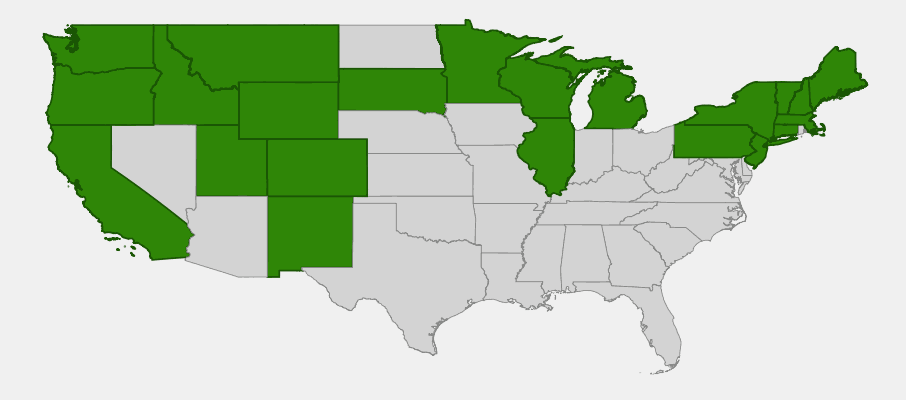
📋 Regional plant lists featuring Kinnikinnik: North Dakota, South Dakota & Western Minnesota
Growing & Care Guide
Kinnikinnik is an exceptional groundcover for challenging sites, offering year-round beauty with minimal maintenance once established. Its adaptability to poor soils and extreme conditions makes it invaluable for sustainable landscaping in northern climates and difficult growing situations.
Light
Kinnikinnik performs well in both full sun and partial shade, though it tends to be most dense and floriferous in locations with good light exposure. In very hot climates, some protection from intense afternoon sun can be beneficial. The plant tolerates quite deep shade but may become more open and less dense in very low light conditions.
Soil & Water
This hardy groundcover prefers acidic, well-drained soils (pH 4.5-6.5) and is particularly well-suited to sandy or rocky sites where many other plants struggle. It has excellent drought tolerance once established, thanks to its deep root system and waxy leaf surfaces that reduce water loss. While it can tolerate moderate moisture, avoid waterlogged conditions. Kinnikinnik thrives in nutrient-poor soils and generally does not require fertilization.
Planting Tips
Plant Kinnikinnik from container-grown plants in spring or fall. Choose a location with good drainage — raised beds or slopes work well. Space plants 2-3 feet apart for quicker coverage, or farther apart if you’re willing to wait for natural spreading. Add organic matter to heavy clay soils to improve drainage, and consider using acidifying amendments like peat moss or sulfur if your soil is alkaline.
Pruning & Maintenance
Kinnikinnik requires minimal maintenance once established. Avoid fertilizing, as the plant prefers lean soils and excessive nutrients can promote soft growth susceptible to disease. Pruning is rarely necessary, though you can lightly trim to maintain shape or remove any damaged portions in early spring. The plant is naturally tidy and self-maintaining.
Landscape Uses
Kinnikinnik’s versatility makes it valuable in numerous landscape applications:
- Groundcover — excellent for large areas where low maintenance is important
- Erosion control — ideal for slopes, banks, and areas prone to soil erosion
- Rock gardens — complements rocks and boulders beautifully
- Under trees — tolerates root competition from pines and other conifers
- Coastal gardens — tolerates salt spray and sandy soils
- Wildlife gardens — provides year-round food and cover for birds
- Alpine gardens — authentic choice for high-elevation landscapes
- Parking strips — handles urban stresses and poor soils well
Wildlife & Ecological Value
Kinnikinnik provides exceptional wildlife value throughout the year, serving as both food source and habitat for numerous species across its extensive range. Its evergreen nature and persistent berries make it particularly important during harsh winter months when other food sources are scarce.
For Birds
The bright red berries are consumed by many bird species, including grouse, ptarmigan, quail, thrushes, and various songbirds. The berries persist through winter, providing crucial sustenance during the coldest months when other food sources are unavailable. The dense, low-growing foliage provides excellent ground cover and nesting sites for ground-dwelling birds, while the evergreen structure offers year-round shelter.
For Mammals
Bears are among the most notable consumers of Kinnikinnik berries, and the common name “bearberry” reflects this relationship. The berries are also eaten by chipmunks, squirrels, and various small mammals. Deer and elk browse the foliage, though it’s generally not a preferred food source. The dense mat-forming growth provides cover and denning sites for small mammals.
For Pollinators
The early spring flowers provide important nectar for emerging bees, including bumblebees and various solitary bee species. The urn-shaped flowers are particularly well-suited to bees, which must crawl inside to reach the nectar, ensuring effective pollination. This early nectar source is especially valuable in northern regions where the growing season is short and early flowers are crucial for pollinator survival.
Ecosystem Role
Kinnikinnik plays a vital role in northern and mountain ecosystems as a dominant groundcover species. Its extensive root systems help stabilize soils and prevent erosion on slopes and disturbed sites. The plant contributes to nutrient cycling and soil development, particularly in harsh environments where few other plants can establish. Its ability to colonize disturbed areas makes it important for ecosystem recovery after fires, logging, or other disturbances.
Cultural & Historical Uses
Kinnikinnik has an extraordinarily rich cultural history among Indigenous peoples throughout its range, with uses spanning food, medicine, ceremony, and daily life. The Algonquian name “kinnikinnik” refers to the plant’s widespread use as a tobacco substitute and ceremonial smoking mixture. Numerous tribes including the Ojibwe, Cree, and many others collected and dried the leaves for smoking, either alone or mixed with other plants.
The berries served as an important traditional food source, particularly in northern regions where other fruits were scarce. While somewhat dry and astringent when fresh, the berries could be dried for winter storage, cooked into sauces, or mixed with other foods. Some tribes made a type of pemmican incorporating Kinnikinnik berries with meat and fat, creating a nutritious, long-lasting trail food.
Medicinally, various parts of the plant were used to treat urinary tract infections, kidney problems, and digestive issues. The leaves contain compounds called arbutins, which have antibacterial properties and were recognized by traditional healers long before modern science understood the mechanisms. The plant’s medicinal reputation was so widespread that it eventually found its way into European and American pharmacopeias.
In many Indigenous traditions, Kinnikinnik held ceremonial significance beyond its practical uses. The plant was often incorporated into sacred smoking mixtures used in ceremonies, prayers, and spiritual practices. Its evergreen nature and ability to thrive in harsh conditions made it a symbol of endurance and persistence in many cultural contexts.
Today, Kinnikinnik is primarily valued for its ornamental and ecological benefits, though it continues to be used in traditional ways by some Indigenous communities. The plant has gained recognition as one of North America’s finest native groundcovers and is increasingly planted in sustainable landscapes, native plant gardens, and restoration projects throughout its range.
Frequently Asked Questions
Is Kinnikinnik the same as Manzanita?
Kinnikinnik belongs to the same genus (Arctostaphylos) as the larger shrubs commonly called Manzanitas, but it’s a distinct species that grows as a low groundcover rather than an upright shrub. Both share similar flowers and berries but have very different growth habits.
Are Kinnikinnik berries edible?
Yes, the berries are edible and were traditionally used as food by many Indigenous peoples. However, they are quite dry and mealy when fresh, with an astringent taste that many people find unpalatable. They’re best cooked or processed rather than eaten raw.
How long does it take Kinnikinnik to establish as groundcover?
Kinnikinnik spreads slowly, typically taking 3-5 years to form dense coverage from individual plants. However, once established, it forms extensive, long-lasting colonies that can persist for decades with minimal care. Patience during establishment is rewarded with exceptionally durable groundcover.
Can Kinnikinnik grow in alkaline soils?
Kinnikinnik strongly prefers acidic soils (pH 4.5-6.5) and may struggle in alkaline conditions. If you have alkaline soil, consider using acidifying amendments like sulfur or peat moss, or choose a different groundcover better suited to your soil conditions.
Will Kinnikinnik spread aggressively?
While Kinnikinnik does spread to form large colonies over time, it spreads relatively slowly and is easy to control if needed. The spreading is gradual and predictable, making it suitable for most landscape situations where groundcover is desired.

Looking for a nursery that carries Kinnikinnik?
Browse our native plant nursery directory: North Dakota · South Dakota · Minnesota