Downy Hawthorn (Crataegus mollis)
Crataegus mollis, commonly known as Downy Hawthorn, Red Haw, or Downy Haw, is one of the most valuable and widespread native trees of the North American Great Plains and eastern woodlands. This member of the Rosaceae (rose) family transforms the landscape each spring with masses of fragrant white flowers that give way to distinctive red fruits by autumn, creating a spectacular display of seasonal color that has made it a beloved component of native plant gardens and prairie restoration projects.
Growing naturally in thickets along stream valleys, prairie edges, and open woodlands, Downy Hawthorn is a hardy medium-sized tree or large shrub reaching 35 to 50 feet tall, with a broad, rounded crown and characteristic thorny branches. Its common name derives from the soft, downy texture of its young leaves and shoots, distinguishing it from other hawthorn species. The tree’s spring flowers are among the most fragrant in the native flora, attracting countless bees, butterflies, and other pollinators during their brief but spectacular blooming period.
Beyond its ornamental value, Downy Hawthorn plays a crucial ecological role throughout its range. The bright red fruits, ripening in late summer and persisting into winter, provide essential food for over 30 species of birds during migration and overwintering periods. The dense, thorny growth creates secure nesting sites and winter cover for wildlife, while the flowers support native bee populations and other beneficial insects. This remarkable native tree combines beauty, wildlife value, and remarkable hardiness, making it an exceptional choice for native landscaping from the Dakotas to the Southeast.
Identification
Downy Hawthorn typically grows as a small to medium-sized tree reaching 35 to 50 feet tall, though it often forms large, multi-stemmed shrubs in open prairie locations. The crown is broad and rounded, often wider than tall when fully mature. Young trees have a more upright form that gradually spreads with age. The species is distinguished from other hawthorns by its soft, downy leaves and shoots, particularly noticeable on new growth.
Bark & Branches
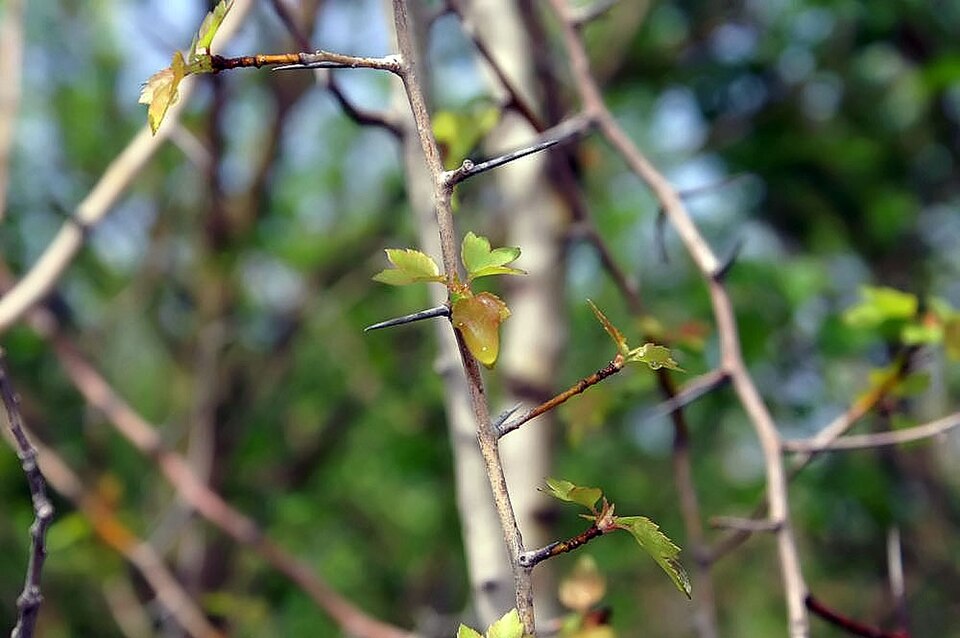
The bark on mature trunks is gray to gray-brown with shallow furrows and scaly ridges. Young branches are initially greenish-brown and covered with fine, downy hairs that give the species its common name. As branches mature, they develop the characteristic thorns that make hawthorns infamous — sharp, straight spines 1 to 2 inches long that emerge from the branch nodes. These thorns serve as excellent protection for nesting birds while making the tree somewhat challenging to prune without proper protection.
Leaves
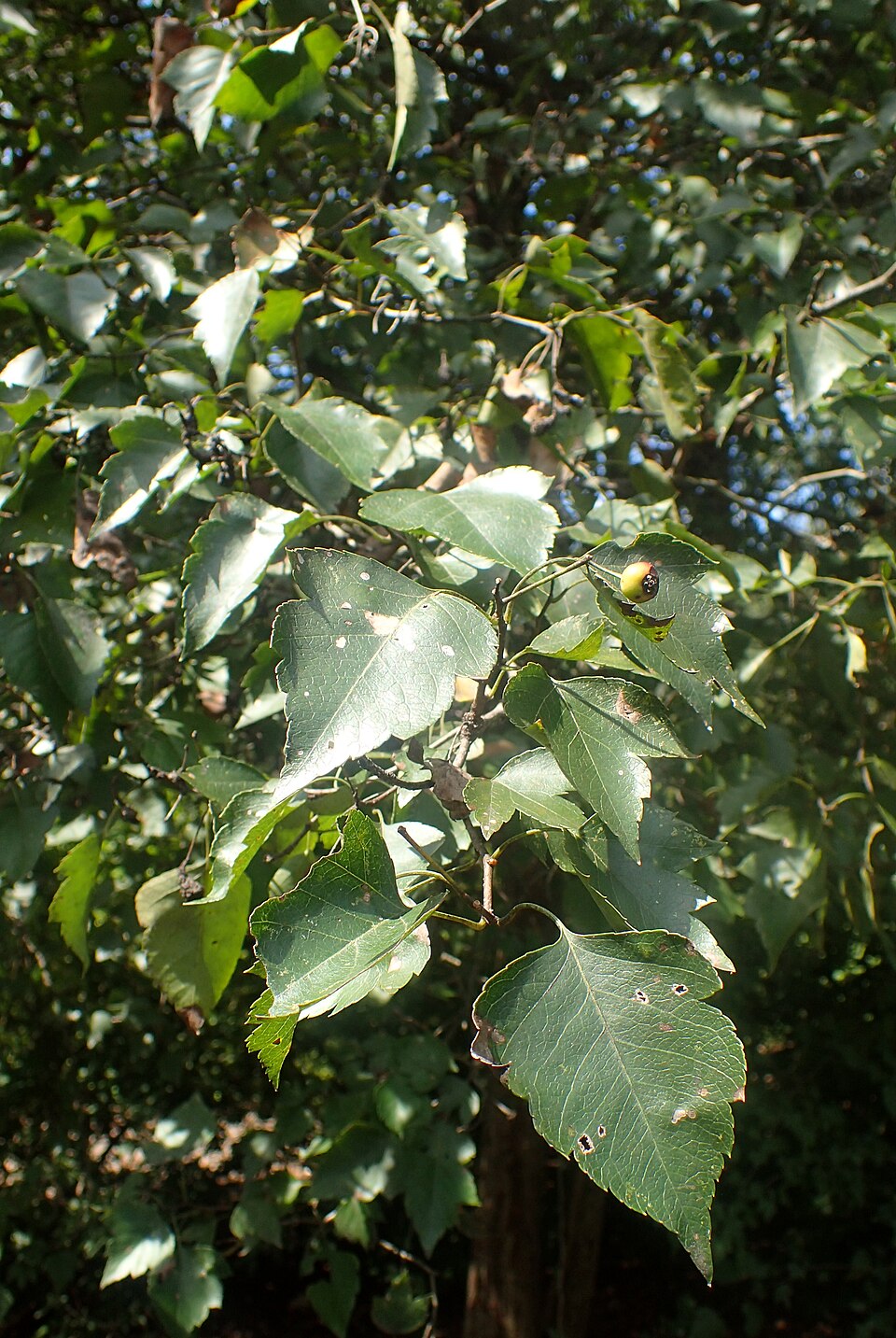
The leaves are simple, alternate, and broadly oval to nearly round, 2 to 4 inches long and almost as wide. They are shallowly lobed with 7 to 11 pointed lobes and coarse, irregular teeth along the margins. The upper surface is dark green and smooth, while the underside is paler and covered with fine, soft hairs when young — the diagnostic “downy” texture. The leaves are prominently veined and turn yellow-orange to reddish-brown in fall before dropping, though fall color can be variable from year to year.
Flowers
The flowers are the tree’s most striking feature — appearing in dense, flat-topped clusters (corymbs) of 6 to 20 flowers each in late spring. Individual flowers are about ¾ inch across with five white petals surrounding prominent pink to red stamens, creating a beautiful contrast. The flowers are intensely fragrant with a sweet, somewhat musky scent that can be detected from considerable distances. This fragrance is particularly strong in the evening, attracting nocturnal pollinators along with daytime visitors.
Fruit
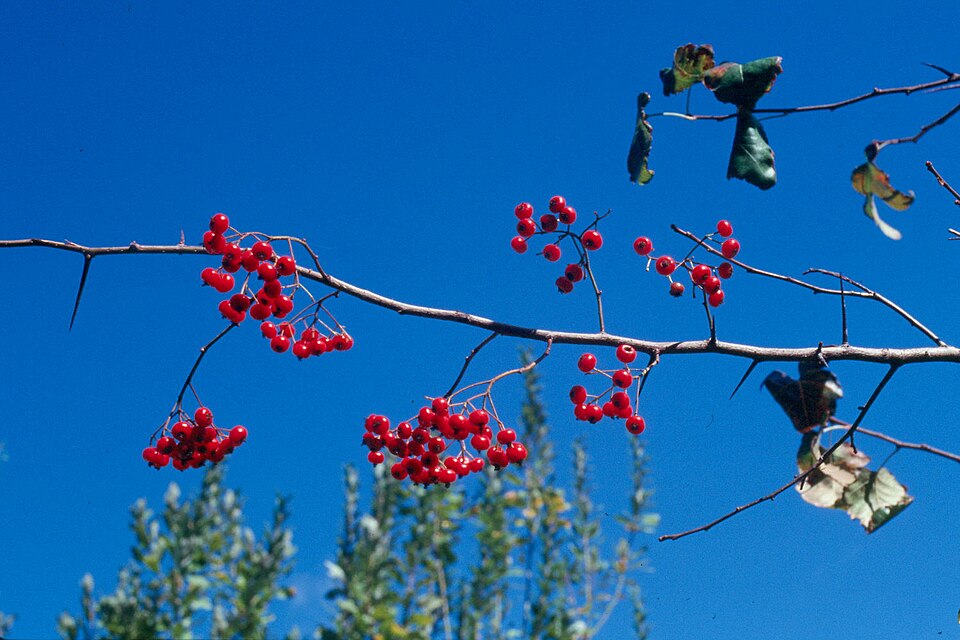
The fruit is a small pome (like a tiny apple) about ½ to ¾ inch in diameter, ripening from green to bright red or dark red by late summer. Each fruit contains 3 to 5 hard seeds and has a sweet, somewhat dry flesh that is edible but mealy in texture. The fruits often persist well into winter, providing critical food for wildlife during the coldest months. Wildlife quickly consumes the fruits, but those remaining on the tree gradually shrivel and darken, eventually falling by spring.
Quick Facts
| Scientific Name | Crataegus mollis |
| Family | Rosaceae (Rose) |
| Plant Type | Deciduous Tree / Large Shrub |
| Mature Height | 35–50 ft |
| Sun Exposure | Full Sun to Part Shade |
| Water Needs | Low to Moderate |
| Bloom Time | Late April – June |
| Flower Color | White with pink stamens |
| USDA Hardiness Zones | 3–8 |
Native Range
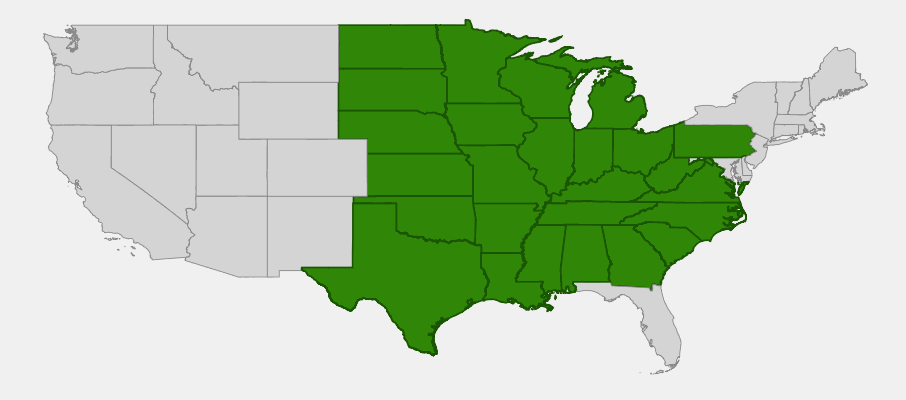
Downy Hawthorn has one of the most extensive ranges of any North American hawthorn, stretching from the Great Plains states eastward to the Atlantic Coast and from southern Canada to the Gulf of Mexico. The species is particularly common in the tallgrass prairie regions of the central United States, where it forms dense thickets along stream corridors and in the transition zones between prairie and woodland.
Throughout this vast range, Downy Hawthorn typically grows in moist to moderately dry soils in open areas such as prairie margins, old fields, fence rows, and stream valleys. It is often found in association with other early-succession species in disturbed areas, but also occurs naturally in stable prairie-woodland edge communities. The species demonstrates remarkable adaptability to different soil types and moisture conditions, from the clay soils of the eastern states to the sandy loams of the Great Plains.
This wide distribution reflects Downy Hawthorn’s exceptional hardiness and adaptability. From the harsh winters and hot summers of the northern Great Plains to the humid conditions of the Southeast, this species thrives across an impressive range of climatic conditions, making it one of the most reliable native trees for restoration and landscaping projects throughout its range.
📋 Regional plant lists featuring Downy Hawthorn: North Dakota, South Dakota & Western Minnesota
Growing & Care Guide
Downy Hawthorn is one of the most reliable and low-maintenance native trees you can grow, combining exceptional hardiness with outstanding ornamental and wildlife value. Once established, it tolerates drought, extreme temperatures, and challenging soil conditions with remarkable resilience, making it an excellent choice for sustainable landscaping and restoration projects.
Light
This adaptable tree thrives in full sun to partial shade, though flowering and fruiting are most abundant in full sun conditions. In its natural habitat, Downy Hawthorn often grows along prairie edges where it receives morning sun and some afternoon protection from taller trees. It can tolerate significant shade when young but will become leggy and flower poorly if light levels are too low for extended periods.
Soil & Water
Downy Hawthorn is remarkably adaptable to different soil types, growing well in clay, loam, or sandy soils as long as drainage is adequate. It prefers slightly acidic to neutral pH (6.0–7.5) but tolerates alkaline conditions common in prairie soils. While naturally occurring in moist stream valleys, established trees are quite drought-tolerant once their deep root systems develop. Water regularly the first year after planting, then reduce to supplemental watering only during extended dry periods.
Planting Tips
Plant Downy Hawthorn in fall or early spring while the tree is dormant. Choose a site with good air circulation to minimize potential disease issues. Space trees 20–30 feet apart for specimen plantings, or plant 10–15 feet apart for wildlife hedgerows. The tree transplants well from containers but may be slow to establish from bare-root stock. Be patient — hawthorns often take 2–3 years to show vigorous growth after transplanting.
Pruning & Maintenance
Minimal pruning is required beyond removing dead, damaged, or crossing branches during dormancy. If you need to shape the tree, prune lightly immediately after flowering to avoid removing next year’s flower buds. Always wear heavy gloves and eye protection when working around the thorns. Downy Hawthorn can be managed as either a single-trunk tree or allowed to develop its natural multi-stemmed shrub form. The dense, thorny growth makes an excellent natural barrier or wildlife cover when left unpruned.
Landscape Uses
Downy Hawthorn’s versatility makes it valuable in many landscape settings:
- Wildlife gardens — exceptional value for birds and pollinators
- Prairie restoration — key component of prairie-woodland edge communities
- Natural barriers — thorny growth creates effective security screening
- Specimen tree — beautiful spring flowers and fall color
- Erosion control — deep roots stabilize slopes and stream banks
- Pollinator gardens — fragrant flowers attract numerous native bees
- Windbreaks — dense growth provides excellent wind protection
Wildlife & Ecological Value
Downy Hawthorn is among the most valuable native trees for wildlife, supporting an incredible diversity of species throughout the year. From early spring pollinators to winter birds, this single species provides food, shelter, and nesting opportunities that make it a cornerstone of any wildlife-friendly landscape.
For Birds
Over 30 species of birds feed on Downy Hawthorn fruits, including Cedar Waxwings, American Robins, Northern Cardinals, Blue Jays, Northern Mockingbirds, and various thrushes. The fruits are particularly valuable during fall migration when birds need high-energy food to fuel their journeys. The dense, thorny branches provide secure nesting sites for species like Northern Cardinals, Brown Thrashers, and Northern Mockingbirds, who appreciate the protection the thorns provide from predators. Game birds such as Ring-necked Pheasants and Wild Turkeys also consume the fallen fruits.
For Mammals
White-tailed Deer browse the foliage and twigs, while raccoons, opossums, and various small mammals eat the fallen fruits. Cottontail Rabbits often shelter beneath the thorny canopy, using it as protection from predators. The dense growth provides thermal cover for small mammals during harsh winter conditions.
For Pollinators
The fragrant spring flowers attract an exceptional diversity of pollinators, including native bees, honeybees, butterflies, and beneficial insects. The timing of bloom coincides with the emergence of many native bee species, making Downy Hawthorn a crucial early-season nectar source. The flowers remain open for several weeks, providing sustained support for pollinator populations during their active period.
Ecosystem Role
In prairie and savanna ecosystems, Downy Hawthorn serves as a “nurse tree,” providing shelter for other native plants and helping create the structural diversity that supports complex ecological communities. The leaf litter decomposes relatively quickly, enriching the soil and supporting beneficial soil organisms. The extensive root system helps prevent erosion while creating habitat for soil-dwelling insects and other invertebrates that form the base of many food webs.
Cultural & Historical Uses
Downy Hawthorn has been an important plant in both Indigenous and European-American cultures for centuries. Native American tribes throughout the Great Plains and eastern woodlands used various parts of the tree for food, medicine, and tools, recognizing its value long before European settlement.
The fruits, while somewhat dry and mealy, were collected and processed into food by numerous Indigenous groups. They were often dried and ground into flour, mixed with other ingredients to make nutritious cakes, or processed into pemmican — a high-energy food mixture perfect for long journeys or winter storage. Some tribes fermented the fruits to make beverages, while others used them fresh as a famine food during difficult times. The inner bark was sometimes used medicinally to treat heart conditions and digestive ailments, a use that parallels modern understanding of hawthorn’s cardiovascular benefits.
European settlers quickly recognized Downy Hawthorn’s value, both for its practical uses and its beauty. The dense, thorny growth made it ideal for creating “living fences” that could contain livestock without the need for expensive wooden or stone barriers. Pioneer families often planted hawthorn hedgerows around their properties, creating natural boundaries that provided wildlife habitat while serving practical purposes. The wood, though small in diameter, was prized for making tool handles, walking sticks, and other items requiring strong, durable wood.
In folk medicine traditions, various preparations from Downy Hawthorn were used to treat heart conditions, high blood pressure, and digestive problems — uses that modern research has shown to have some scientific basis. Today, hawthorn extracts are still used in herbal medicine and dietary supplements, though the European Hawthorn (Crataegus monogyna) is more commonly used commercially than our native Downy Hawthorn.
Frequently Asked Questions
How long does it take for Downy Hawthorn to start flowering and fruiting?
Young trees typically begin flowering within 3–5 years of planting, though maximum flower and fruit production usually doesn’t occur until the tree is 7–10 years old. Be patient — the wait is worth it for the spectacular spring display and abundant wildlife food that follows.
Are the thorns dangerous, and should I avoid planting this tree?
While the thorns are sharp and require caution during maintenance, they’re actually one of the tree’s greatest assets for wildlife. The thorns protect nesting birds from predators and create secure shelter. Plant the tree away from high-traffic areas, and always wear protective gear when pruning. The wildlife benefits far outweigh the minor inconvenience.
Can humans eat Downy Hawthorn fruits?
Yes, the fruits are edible and were traditionally used as food by Indigenous peoples. However, they’re quite dry and mealy compared to commercial fruits, with large seeds that must be worked around. They’re much more valuable left for wildlife, which depends on them as a crucial food source during fall and winter.
How can I tell Downy Hawthorn apart from other hawthorn species?
The key identifying feature is the soft, downy texture of the young leaves and shoots — run your fingers along new growth and you’ll feel the characteristic fuzziness. The leaves are also more shallowly lobed than many other hawthorns, and the fruits are typically larger and more uniformly red than those of related species.
Does Downy Hawthorn have any disease or pest problems?
This native species is generally quite healthy and disease-resistant, especially compared to non-native ornamental trees. Occasional issues include fire blight (a bacterial disease) and aphids, but these rarely cause serious problems in landscape settings. Good air circulation and avoiding overhead watering help prevent most disease issues.

Looking for a nursery that carries Downy Hawthorn?
Browse our native plant nursery directory: North Dakota · South Dakota · Minnesota