
Bur Oak (Quercus macrocarpa)
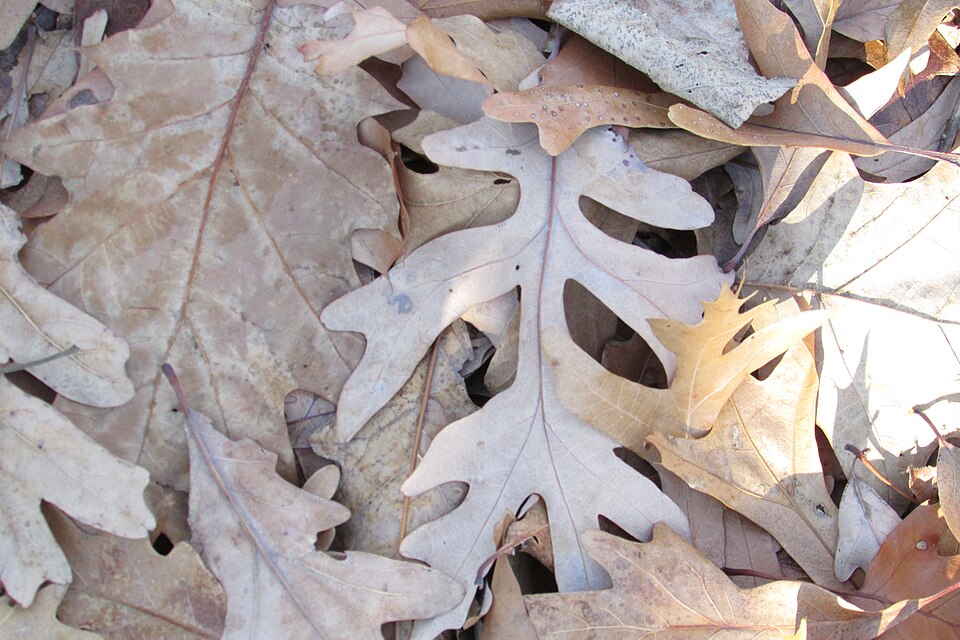
Quercus macrocarpa, commonly known as Bur Oak, Burr Oak, or Mossycup Oak, is a majestic native deciduous tree that stands as one of the most impressive and long-lived oaks in North America. This member of the Fagaceae (beech) family gets its common name from the distinctive large acorns enclosed in deeply fringed, “bur-like” caps that can cover up to three-quarters of the nut. The species epithet “macrocarpa” means “large fruit,” a fitting description for the largest acorns of any North American oak.
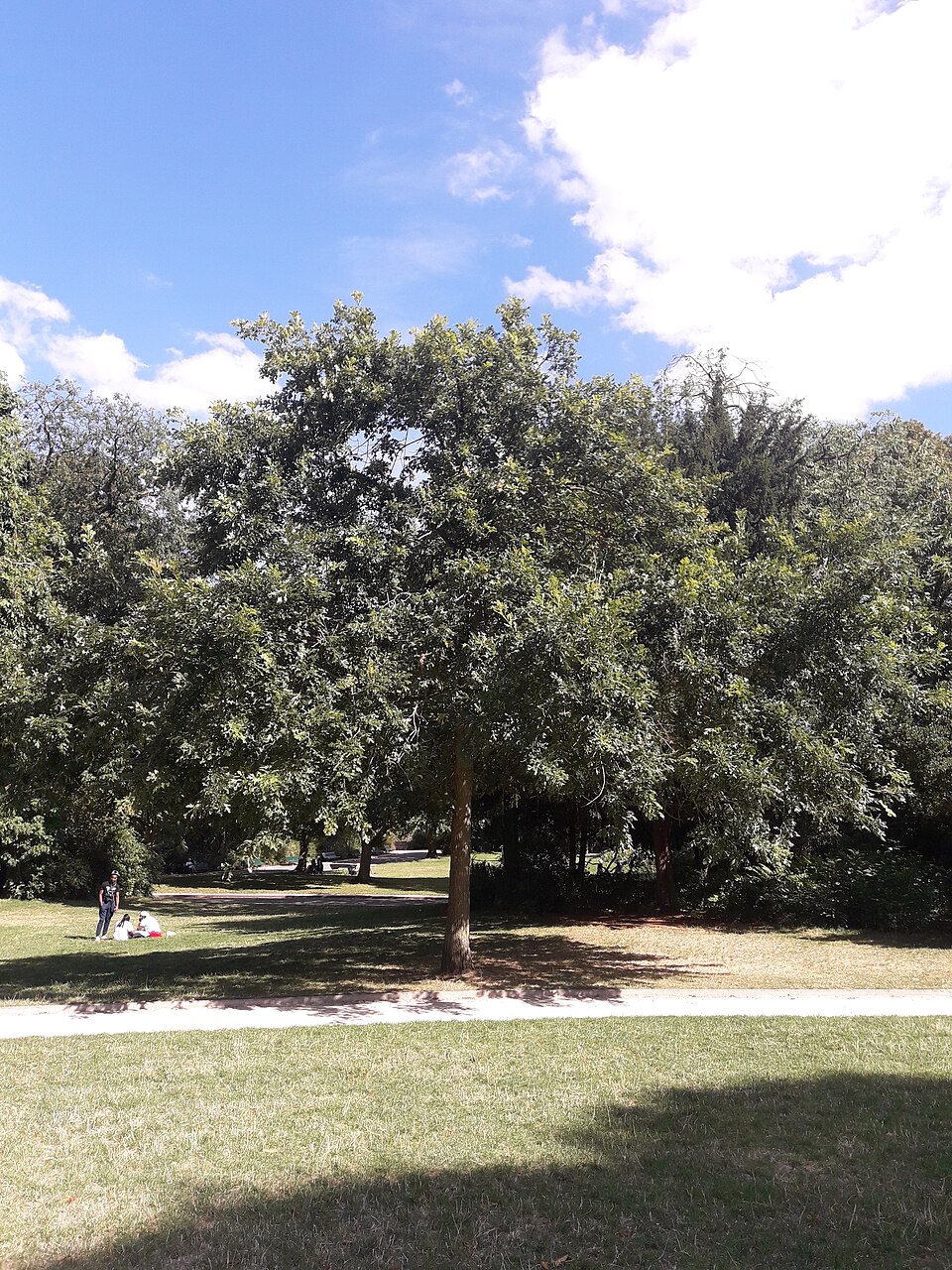
Bur Oak is renowned for its exceptional size and longevity, commonly reaching 80 to 100 feet tall with a massive trunk that can exceed 10 feet in diameter. Some specimens live for 400 years or more, becoming living landmarks that define the landscape around them. The species is characterized by its deeply furrowed, thick bark and broad, spreading crown that can extend 120 feet across, creating an almost perfect dome of shade. Its mild yellow-brown fall color, while subtle, adds warmth to the autumn landscape.
As a cornerstone species of the Great Plains and prairie-forest transition zones, Bur Oak has played a crucial role in North American ecology for millennia. Its exceptional drought tolerance and fire resistance made it one of the few trees able to survive and thrive in the challenging prairie environment, often forming the “bur oak openings” that characterized the landscape between prairie and forest. Today, this adaptable giant continues to be valued for its wildlife benefits, carbon sequestration capabilities, and its ability to provide cooling shade and windbreak protection in both rural and urban settings.
Identification
Bur Oak is easily recognized as one of the most distinctive and impressive oaks in North America. Mature trees typically reach 80 to 100 feet (24–30 m) tall, with exceptional specimens growing even taller. The trunk can reach 4 to 10 feet (1.2–3 m) in diameter, and the broad, spreading crown often extends 80 to 120 feet across, creating a massive dome-shaped canopy.
Bark
The bark is one of Bur Oak’s most distinctive features, especially on mature trees. It is deeply furrowed with thick, irregular ridges that can be 2 to 4 inches thick, creating a deeply textured, almost corky appearance. The bark color ranges from light gray to brown, often with a somewhat ashy appearance. Young trees have smoother, lighter-colored bark that gradually develops the characteristic deep furrows as the tree matures. This exceptionally thick bark provides excellent fire resistance, one of the reasons Bur Oak could survive prairie fires.
Leaves
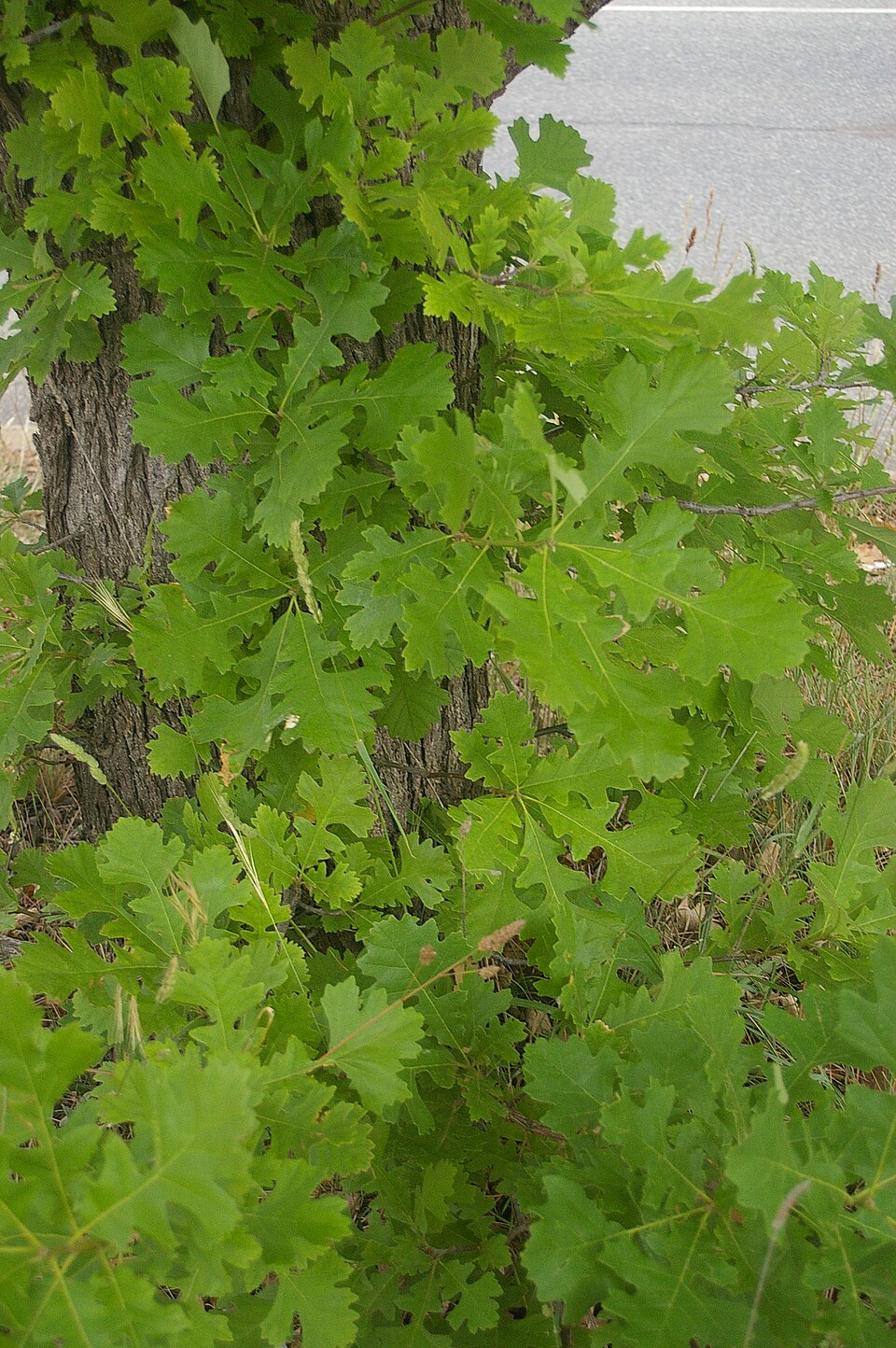
The leaves are simple, alternate, and highly variable in shape, typically 4 to 12 inches (10–30 cm) long and 3 to 8 inches wide. They are obovate (wider toward the tip) with 5 to 9 rounded lobes. The distinctive feature is the deep sinuses (indentations) that extend nearly to the midrib, especially on the upper portion of the leaf, creating an almost pinched appearance in the middle. The lobes are typically rounded rather than pointed. The leaves are dark green above and paler green below, often with a slightly fuzzy texture on the undersides. Fall color is typically a mild yellow-brown, though it can occasionally be more golden.
Flowers & Fruit
Like all oaks, Bur Oak is monoecious, producing both male and female flowers on the same tree in spring. Male flowers appear as drooping catkins 4 to 6 inches long, while female flowers are small and inconspicuous, appearing as tiny red clusters near the tips of new shoots.
The fruit is the most distinctive feature of Bur Oak — large acorns that are 1 to 2 inches long and nearly as wide. The acorn cap (cupule) is the most remarkable part, extending up to three-quarters of the way down the nut and deeply fringed with scales that create a distinctive “bur-like” or “mossy” appearance. This fringe can be so pronounced that it almost completely encloses the acorn. The acorns mature in a single season, ripening in early fall, and are sweet-tasting compared to many other oak species, making them particularly attractive to wildlife.
Quick Facts
| Scientific Name | Quercus macrocarpa |
| Family | Fagaceae (Beech) |
| Plant Type | Deciduous Tree |
| Mature Height | 80–100 ft |
| Sun Exposure | Full Sun |
| Water Needs | Low to Moderate |
| Bloom Time | April – May |
| Flower Color | Yellowish-green catkins |
| USDA Hardiness Zones | 3–8 |
Native Range
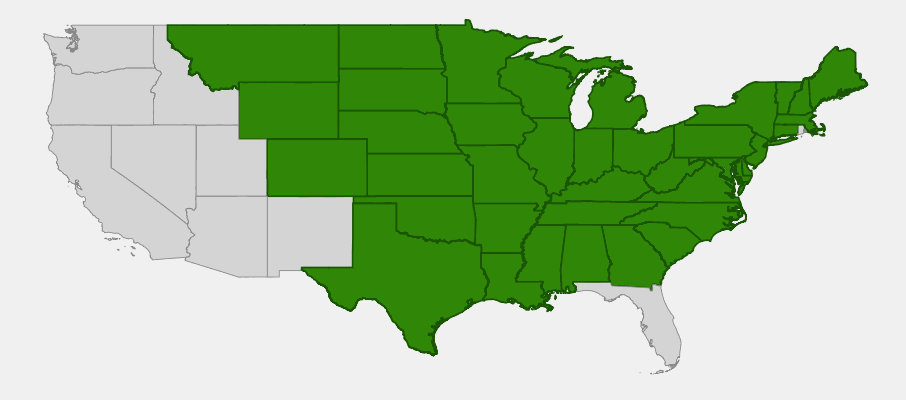
Bur Oak has one of the most extensive native ranges of any North American oak, stretching across the central portion of the continent from southeastern Canada to the Gulf of Mexico. The species is particularly associated with the Great Plains and the prairie-forest transition zone, where it often formed the boundary between grassland and woodland ecosystems. Its range extends from the Maritime Provinces of Canada west to Saskatchewan and south through the central United States to Texas and Louisiana.
The species reaches its greatest abundance in the upper Midwest, particularly in Minnesota, Wisconsin, Iowa, Illinois, and parts of the Great Plains states where it was a dominant component of oak savannas and prairie groves. Bur Oak’s remarkable adaptability allows it to thrive in diverse habitats, from the edges of tallgrass prairies to river bottoms and upland sites. It commonly occurs in areas that experience periodic drought and was historically one of the few trees able to persist in the fire-prone prairie landscape.
Eastward, Bur Oak’s range extends into the Ohio Valley and parts of Appalachian foothills, though it becomes less common in areas with dense forest cover. Westward, it reaches into the eastern edges of the Rocky Mountain region, where it typically occurs in river valleys and protected sites with adequate moisture. The species’ broad ecological tolerance has allowed it to colonize a remarkable variety of habitats, from clay soils to sandy loams, and from periodically flooded bottomlands to well-drained upland sites.
📋 Regional plant lists featuring Bur Oak: North Dakota, South Dakota & Western Minnesota
Growing & Care Guide
Bur Oak is an excellent choice for large-scale landscaping, windbreaks, and restoration projects where a long-lived, low-maintenance native tree is desired. Its exceptional drought tolerance and adaptability make it particularly valuable in challenging sites where other large trees struggle.
Light
Bur Oak performs best in full sun, where it develops its characteristic broad, spreading crown and most robust growth. The species evolved in open prairie and savanna environments and requires abundant sunlight for optimal development. While young trees can tolerate some light shade, mature specimens need full sun exposure to maintain their health and distinctive form. In shaded conditions, the tree may become more upright and less characteristic in its growth habit.
Soil & Water
One of Bur Oak’s greatest strengths is its adaptability to a wide range of soil conditions. The species thrives in everything from heavy clay to sandy loam, and tolerates both acidic and alkaline soils (pH 6.0–8.0). It performs well in both well-drained upland sites and areas with seasonal flooding, making it extremely versatile for different landscape situations.
Regarding water needs, Bur Oak is exceptionally drought tolerant once established, able to survive extended periods of dry weather that would stress or kill many other large trees. This drought tolerance comes from its deep taproot system, which can extend 20 feet or more into the soil to access groundwater. However, the species also tolerates periodic flooding and can grow successfully in areas with higher moisture levels.
Planting Tips
Plant Bur Oak in fall or early spring, giving preference to fall planting when possible as this allows for better root establishment. Choose a location with plenty of room for the mature size — remember that the crown can spread 100+ feet across. Space trees at least 80–100 feet apart unless you’re creating a grove or windbreak. Young trees benefit from protection from deer and rabbits, as they may browse the tender shoots and bark.
When planting, dig a hole only as deep as the root ball but 2–3 times as wide to encourage lateral root development. Bur Oak transplants best when young (under 3 inches in diameter), as older specimens may struggle to establish due to their deep taproot system.
Pruning & Maintenance
Bur Oak requires minimal pruning and maintenance once established. Remove dead, damaged, or crossing branches in late winter while the tree is dormant. Avoid heavy pruning, as oaks are susceptible to oak wilt disease when pruned during the growing season. Young trees may benefit from light structural pruning to develop a strong central leader and well-spaced scaffold branches.
The species is naturally pest- and disease-resistant, though it can be affected by oak wilt in some regions. Avoid wounding the tree during the growing season, and never prune during April through July when oak wilt beetles are active.
Landscape Uses
Bur Oak excels in multiple landscape applications:
- Specimen tree — creates a dramatic focal point in large landscapes
- Shade tree — provides extensive cooling shade for homes and outdoor spaces
- Windbreak — excellent for protecting buildings and crops from wind
- Street tree — suitable for wide boulevards and park settings
- Prairie restoration — key species for recreating historic oak savanna ecosystems
- Wildlife habitat — supports dozens of species with food and nesting sites
- Carbon sequestration — long-lived trees store significant amounts of carbon
Wildlife & Ecological Value
Bur Oak is one of the most ecologically valuable native trees in North America, supporting an extraordinary diversity of wildlife species and providing crucial ecosystem services throughout its range.
For Birds
The large, sweet acorns of Bur Oak are consumed by over 50 species of birds, including Wild Turkeys, Wood Ducks, Blue Jays, Red-headed Woodpeckers, and various species of game birds. The massive canopy provides nesting sites for numerous songbirds, raptors, and cavity-nesting species. Woodpeckers excavate nest holes in the thick bark and dead branches, creating cavities that are later used by secondary cavity nesters like bluebirds, chickadees, and flying squirrels. The tree’s longevity means that mature Bur Oaks can support bird communities for centuries.
For Mammals
White-tailed deer, elk, and moose browse the young shoots and leaves, while the nutritious acorns provide crucial fall food for deer, squirrels, chipmunks, and mice. Black bears, where present, consume large quantities of the sweet acorns to build fat reserves before winter. The hollow trunks of ancient Bur Oaks provide den sites for raccoons, opossums, and other mammals. Bats roost in the bark crevices and under loose bark plates.
For Pollinators
While wind-pollinated, Bur Oak supports numerous insects that serve as food for other wildlife. The tree hosts over 500 species of caterpillars and other insects, making it one of the most important native trees for supporting insectivorous birds and other predators. Many of these insects also serve as pollinators for other plants in the ecosystem.
Ecosystem Role
As a foundational species in oak savanna and prairie-forest ecosystems, Bur Oak plays crucial roles in ecosystem function. Its deep root system helps cycle nutrients from deep soil layers to the surface, while its extensive canopy moderates temperature and moisture levels in the surrounding area. The annual leaf drop contributes significant organic matter to the soil, supporting mycorrhizal networks and soil organisms. Bur Oak’s fire resistance allowed it to serve as a “nurse tree” for other species, protecting them from prairie fires and gradually expanding forested areas. The species also provides significant carbon sequestration, with large trees storing several tons of carbon over their lifetimes.
Cultural & Historical Uses
Bur Oak holds deep cultural and historical significance throughout its range, serving as both a practical resource and a symbol of strength and endurance for numerous communities over thousands of years. Native American tribes throughout the Great Plains and Midwest made extensive use of Bur Oak, valuing it both for its material properties and its spiritual significance.
The large, sweet acorns were a crucial food source for many Indigenous peoples, including the Dakota, Ojibwe, and other tribes of the Great Lakes region. The acorns were processed by leaching out tannins, then ground into meal for bread or stored for winter use. The inner bark was used medicinally to treat various ailments, while the thick outer bark provided material for shelters and containers. The strong, durable wood was prized for tool handles, bows, and construction timbers.
European settlers quickly recognized the value of Bur Oak timber, which was highly prized for its strength and rot resistance. The wood was extensively used for fence posts, ship building, railroad ties, and construction timbers. Many historic buildings throughout the Midwest feature Bur Oak beams and flooring that remain sound after more than a century. The species’ fire resistance and massive size made individual trees valuable landmarks and gathering places for pioneer communities.
Bur Oak played a crucial ecological role in shaping the pre-settlement landscape of the American Midwest. The species formed the famous “bur oak openings” — park-like landscapes where scattered mature oaks created a transition zone between prairie and forest. These openings were maintained by periodic fires that killed fire-sensitive species but left the thick-barked Bur Oaks largely unharmed. This ecosystem supported vast herds of bison and elk and was crucial to the cultures of Plains and Woodland tribes.
In modern times, Bur Oak has become a symbol of conservation and restoration efforts across the Midwest. The species is extensively planted in prairie restoration projects aimed at recreating historic oak savanna ecosystems. Many communities have designated ancient Bur Oaks as heritage trees, recognizing their historical and ecological importance. The tree’s longevity and resilience have made it a powerful metaphor for endurance and adaptation in an era of rapid environmental change.
Frequently Asked Questions
How can I tell a Bur Oak from other oaks?
The distinctive deeply fringed acorn caps are the most reliable identifier — no other North American oak has such elaborately “burred” caps that can cover three-quarters of the acorn. The deeply lobed leaves with pronounced sinuses near the middle and the extremely thick, deeply furrowed bark on mature trees are also diagnostic features.
How long does it take for a Bur Oak to produce acorns?
Bur Oaks typically begin producing acorns when they’re 30–40 years old, though this can vary depending on growing conditions. Trees grown in open, sunny locations tend to produce acorns earlier than those in crowded or shaded conditions. Once they begin producing, healthy trees can continue for centuries.
Is Bur Oak a good tree for my yard?
Bur Oak is excellent for large properties but needs considerable space — the mature crown can spread 100+ feet across. It’s ideal if you want a long-term shade tree and don’t mind waiting for growth (it’s slow to establish but eventually becomes quite large). Consider the ultimate size carefully before planting near structures.
Why is my young Bur Oak growing so slowly?
Bur Oak puts most of its early energy into developing an extensive root system, particularly the deep taproot. This can make top growth appear slow for the first 5–10 years, but this root development makes the tree extremely drought tolerant and long-lived. Growth typically accelerates once the root system is well-established.
Can Bur Oak handle city conditions?
Yes, Bur Oak is quite tolerant of urban conditions including air pollution, compacted soil, and salt spray. However, it needs adequate space both above and below ground. It’s better suited to parks, large boulevards, and suburban settings rather than confined urban spaces. The species is also quite tolerant of wind and storm damage due to its strong wood and deep roots.

Looking for a nursery that carries Bur Oak?
Browse our native plant nursery directory: North Dakota · South Dakota · Minnesota