
Boneset (Eupatorium perfoliatum)
Eupatorium perfoliatum, commonly known as Boneset, is a distinctive native perennial herb renowned for both its striking appearance and its remarkable medicinal history. This member of the Asteraceae (sunflower) family stands out in wetlands and moist prairies with its unique “perfoliate” leaves — pairs of lance-shaped leaves that appear to be pierced by the stem, creating the illusion that the stem grows through a single, large leaf. The common name “boneset” reflects its historical use in treating “breakbone fever” (dengue fever), though it has been used medicinally by Indigenous peoples and early settlers for a wide variety of ailments.
Growing naturally in wet meadows, marshes, and along streambanks throughout much of eastern and central North America, Boneset is easily recognized by its flat-topped clusters of small, fuzzy white flowers that bloom from late summer through fall. These dense, showy flower clusters can be 3 to 5 inches across and serve as important late-season nectar sources for butterflies, bees, and other pollinators when many other wildflowers have finished blooming.
Beyond its ecological value as a pollinator magnet, Boneset serves as an excellent choice for rain gardens, native plant gardens, and naturalized landscapes where its tolerance of both wet and moderately dry conditions makes it remarkably adaptable. The plant’s coarse texture and substantial size — typically reaching 3 to 6 feet in height — make it an effective backdrop plant or focal point in wildlife gardens designed to support native butterflies and beneficial insects.
Identification
Boneset is a robust perennial herb that forms substantial clumps over time, with multiple stems arising from a fibrous root system. The plant’s most distinctive feature — its perfoliate leaves — makes identification straightforward even when not in flower.
Stems
The stems are sturdy, upright, and typically hairy, growing 3 to 6 feet tall (occasionally reaching 8 feet in ideal conditions). Stems are round in cross-section and often branched near the top where the flower clusters develop. The surface is covered with fine, soft hairs that give the stems a slightly rough texture. Stems remain standing through winter, providing structure and interest in the garden even after the flowers have faded.
Leaves
The leaves are the plant’s most diagnostic feature. They are arranged in opposite pairs along the stem, and each pair of leaves appears to be fused together with the stem passing through the center — hence the term “perfoliate.” Individual leaves are lance-shaped, 4 to 8 inches long and 1 to 2 inches wide, with prominently toothed margins and a wrinkled or rugose surface texture.
The upper surface of the leaves is dark green and somewhat rough, while the undersides are paler and covered with fine hairs. The prominent venation creates a deeply textured appearance, and the leaves feel substantial and slightly coarse to the touch. In fall, the foliage may turn yellowish before dying back to the ground.
Flowers
Boneset produces its most spectacular display from August through October, when large, flat-topped clusters (corymbs) of small white flowers appear at the stem tips. Each flower cluster can be 3 to 5 inches across and may contain 50 to 100 individual flower heads. The individual flowers are tiny — only about ¼ inch across — but are densely packed to create a showy, frothy appearance.
Each flower head consists entirely of disc florets (no ray petals like a daisy), giving the clusters their characteristically fuzzy, dense appearance. The flowers have a mild, sweet fragrance and produce abundant nectar, making them extremely attractive to butterflies, bees, and other pollinators during the late season when many other nectar sources have finished blooming.
Quick Facts
| Scientific Name | Eupatorium perfoliatum |
| Family | Asteraceae (Sunflower) |
| Plant Type | Perennial Herb |
| Mature Height | 3–6 ft |
| Sun Exposure | Full Sun to Full Shade |
| Water Needs | High to Moderate |
| Bloom Time | August – October |
| Flower Color | White |
| USDA Hardiness Zones | 3–8 |
Native Range
Boneset has one of the most extensive native ranges of any North American wildflower, extending from southeastern Canada south to Florida and west to the Great Plains. The species is found naturally from Nova Scotia and New Brunswick south through the eastern United States to Georgia and Florida, and west to Saskatchewan, North Dakota, Kansas, Oklahoma, and eastern Texas. This broad distribution reflects the plant’s adaptability to diverse climatic conditions and habitat types.
Within this vast range, Boneset typically inhabits wet or moist soils in a variety of settings including wet prairies, marshes, swamp edges, wet meadows, and along streams and pond margins. It is commonly found in areas that experience seasonal flooding or consistently high soil moisture, though established plants can tolerate periodic drought. The species often grows in association with other moisture-loving natives like Blue Flag Iris, Swamp Milkweed, and Cardinal Flower.
Boneset demonstrates remarkable habitat flexibility, growing in everything from full sun to partial shade, and tolerating a wide range of soil types from clay to sandy loam. This adaptability has allowed it to maintain stable populations across much of its range, though like many wetland plants, it has declined in areas where wetlands have been drained or degraded.
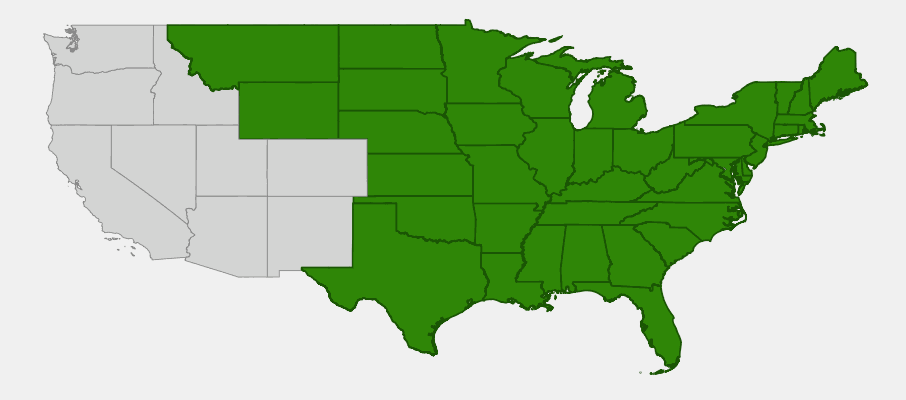
📋 Regional plant lists featuring Boneset: North Dakota, South Dakota & Western Minnesota
Growing & Care Guide
Boneset is an excellent choice for challenging garden sites, particularly areas with poor drainage or seasonal flooding. Once established, it requires minimal care and provides years of reliable late-season blooms.
Light
While Boneset grows naturally in both full sun and partial shade, it performs best and produces the most flowers in full sun to light shade (6+ hours of direct sunlight). In deeper shade, plants may become taller and more sprawling as they reach for light, and flower production may be reduced. The species shows remarkable tolerance for varying light conditions, making it useful in transitional areas between sun and shade.
Soil & Water
Boneset thrives in consistently moist to wet soils and is an excellent choice for rain gardens, bioswales, and areas with poor drainage. It tolerates periodic flooding and can handle clay soils that remain soggy. However, established plants show surprising drought tolerance and can survive dry periods once their root systems are well-developed. The species is not particular about soil pH and grows in everything from acidic to slightly alkaline conditions.
Planting Tips
Boneset can be grown from seed or transplants. Seeds should be cold-stratified for best germination — either plant outdoors in fall for natural stratification, or refrigerate seeds in moist sand for 30-60 days before spring sowing. Transplants establish easily when planted in spring after the last frost. Space plants 2-3 feet apart, as mature clumps can spread to 3 feet across.
Pruning & Maintenance
Boneset requires minimal maintenance once established. The plants may be cut back by half in early summer (June) to reduce final height and create bushier growth, though this may delay flowering slightly. Leave the seed heads standing through winter to provide food for birds and beneficial insects. Cut back to 6 inches in early spring before new growth begins.
Landscape Uses
Boneset’s adaptability and wildlife value make it suitable for many landscape applications:
- Rain gardens — excellent for managing stormwater runoff
- Butterfly gardens — late-season nectar source when most flowers have finished
- Native plant borders — provides structure and fall interest
- Wetland restoration — stabilizes soil in moist areas
- Naturalized meadows — works well in prairie and meadow plantings
- Pollinator habitat — supports diverse beneficial insects
Wildlife & Ecological Value
Boneset is exceptionally valuable for supporting native wildlife, particularly pollinators that depend on late-season nectar sources.
For Birds
Many songbird species feed on Boneset’s abundant small seeds throughout fall and winter. American Goldfinches are particularly fond of the seeds, often seen clinging to the dried flower heads. The plant structure also provides nesting materials and shelter. Dense stands of Boneset create protective cover for ground-nesting birds and offer secure roosting sites during migration.
For Mammals
While not a primary food source for most mammals, Boneset provides cover and habitat structure in wetland environments. Small mammals may use the dense clumps for shelter, and the root systems help stabilize soil along waterways where many animals come to drink.
For Pollinators
Boneset is renowned as one of the most valuable late-season pollinator plants in North America. The flowers attract an enormous diversity of butterflies, including Monarchs, Painted Ladies, Red Admirals, and numerous skippers. Native bees, including bumblebees, mining bees, and sweat bees, are frequent visitors. The plant also supports beneficial wasps, hover flies, and beetles. The timing of Boneset’s bloom is particularly critical, as it provides nectar when many migratory butterflies are building energy reserves for long-distance travel.
Ecosystem Role
As a dominant component of many wetland plant communities, Boneset helps define habitat structure and supports entire food webs. Its extensive root system helps prevent erosion along stream banks and pond edges. The plant also serves as a host for several specialized insects, including the larvae of certain moths and beetles that depend on Eupatorium species for reproduction.
Cultural & Historical Uses
Boneset holds a prominent place in North American ethnobotanical history, with a medicinal use record spanning centuries among both Indigenous peoples and European settlers.
Native American tribes including the Iroquois, Cherokee, and Menominee used Boneset extensively as medicine. The plant was typically prepared as a tea or decoction from the leaves and flowering tops to treat fevers, colds, influenza, and rheumatism. Some tribes used it as a general tonic and immune system booster. The name “boneset” comes from its historical use in treating “breakbone fever” (dengue fever), though it was also used for setting actual broken bones by creating poultices and wraps.
European colonists quickly adopted Boneset from Indigenous knowledge, and it became one of the most widely used medicinal plants in early American folk medicine. By the 1800s, it was commonly found in home gardens and was considered an essential medicinal plant for frontier families. The plant was used so extensively that it earned the nickname “thoroughwort” and was included in the official U.S. Pharmacopoeia from 1820 to 1950.
Modern research has identified compounds in Boneset that may have immune-stimulating and anti-inflammatory properties, lending some scientific support to traditional uses. However, the plant contains pyrrolizidine alkaloids that can be toxic if used improperly, and its medicinal use is not recommended without proper botanical and medical expertise. Today, Boneset is valued primarily for its ecological benefits and ornamental qualities in native plant gardens.
Frequently Asked Questions
What does “perfoliate” mean?
Perfoliate describes the way Boneset’s leaves appear to be pierced by the stem. The opposite pairs of leaves are fused at their bases around the stem, creating the illusion that the stem grows through a single large leaf. This is a relatively uncommon leaf arrangement that makes Boneset easy to identify.
Is Boneset aggressive or invasive in the garden?
No, Boneset is well-behaved in garden settings. While it will slowly expand by underground rhizomes to form colonies over time, it is not aggressively spreading and is easily controlled. Individual clumps typically reach 3 feet across at maturity and remain in bounds.
Can Boneset grow in dry conditions?
While Boneset prefers consistently moist soil, established plants show surprising drought tolerance. However, plants in dry conditions will be shorter, less robust, and produce fewer flowers compared to those grown in their preferred moist conditions.
When do I cut back Boneset?
Leave Boneset standing through winter — the seed heads provide food for birds and the stems offer habitat for overwintering beneficial insects. Cut back to 6 inches in early spring before new growth begins, typically in March or early April.
Is Boneset deer resistant?
Yes, Boneset is generally avoided by deer, likely due to its coarse texture and bitter compounds. This makes it a good choice for gardens in areas with heavy deer pressure, especially when planted alongside other deer-resistant native plants.

Looking for a nursery that carries Boneset?
Browse our native plant nursery directory: North Dakota · South Dakota · Minnesota