
Gray Dogwood (Cornus racemosa)
Cornus racemosa, commonly known as Gray Dogwood, Panicled Dogwood, or Northern Swamp Dogwood, is one of the most valuable and adaptable native shrubs of eastern North America. This member of the Cornaceae (dogwood) family forms dense colonies through underground runners, creating extensive thickets that provide critical wildlife habitat while offering exceptional landscape value. With its clusters of creamy white spring flowers, attractive blue-white berries, and brilliant red fall foliage, Gray Dogwood delivers year-round interest that has made it a cornerstone species in native plant gardens and restoration projects.
Growing naturally in a wide range of habitats from wet swales to dry upland edges, Gray Dogwood typically reaches 10 to 15 feet tall, forming dense, multi-stemmed colonies that can spread extensively over time through its vigorous suckering habit. The species gets its common name from the distinctive gray bark that develops on mature stems, creating an attractive winter feature when combined with the reddish young twigs. This adaptable shrub thrives in conditions where many other plants struggle, from full sun to deep shade and from wet soils to relatively dry sites.
Beyond its ornamental qualities, Gray Dogwood plays a crucial ecological role throughout its range. The late-summer berries provide essential food for dozens of bird species during fall migration, while the dense growth creates secure nesting habitat and thermal cover. The flowers support native bees and butterflies, and the extensive root system helps prevent erosion while improving soil stability. This remarkable native shrub combines exceptional wildlife value with outstanding adaptability, making it an excellent choice for challenging sites and naturalistic landscapes from the Great Lakes to the Southeast.
Identification
Gray Dogwood typically grows as a dense, multi-stemmed shrub reaching 8 to 15 feet tall and equally wide, though it can occasionally reach 20 feet under ideal conditions. The growth form is distinctly colonial, with new stems arising from underground runners to create extensive thickets over time. Individual stems are slender and upright when young, becoming more spreading with age. The overall form is somewhat open and irregular, giving the shrub a naturalistic appearance.
Bark & Branches
The bark on mature stems is smooth and gray to gray-brown, giving the species its common name. Young twigs are distinctively reddish-brown to purplish-red, creating an attractive contrast with the gray older bark and providing excellent winter interest. The stems have a characteristic feature of dogwoods — white pith that can be seen when a twig is broken or cut. This white pith helps distinguish dogwoods from other shrubs with similar bark coloration.
Leaves
The leaves are simple, opposite, and oval to elliptical, 2 to 5 inches long and 1 to 3 inches wide. They have smooth margins (no teeth) and prominent parallel veins that curve toward the leaf tip — a characteristic feature of all dogwoods. The upper surface is dark green and smooth, while the underside is paler and may have fine hairs along the veins. In fall, the foliage turns brilliant red to reddish-purple, creating one of the most spectacular autumn displays among native shrubs.
Flowers
The flowers appear in late spring to early summer in dense, flat-topped clusters (cymes) at the ends of branches. Each cluster contains 20 to 50 small, four-petaled white flowers, each about ¼ inch across. While individual flowers are tiny, the overall effect of the dense clusters is quite showy, creating masses of white blooms that attract numerous pollinators. The flowers have a subtle, sweet fragrance and remain attractive for 2 to 3 weeks.
Fruit
The fruit is a small drupe about ¼ inch in diameter, ripening from green to blue-white or sometimes pure white by late summer. The berries are borne in loose clusters and are quickly consumed by birds, who distribute the seeds throughout the area. Each berry contains a single hard seed surrounded by somewhat dry, mealy flesh. The berries are technically edible for humans but are quite bitter and best left for wildlife.
Quick Facts
| Scientific Name | Cornus racemosa |
| Family | Cornaceae (Dogwood) |
| Plant Type | Deciduous Shrub |
| Mature Height | 15 ft |
| Sun Exposure | Full Sun to Full Shade |
| Water Needs | Moderate |
| Bloom Time | May – July |
| Flower Color | Creamy white |
| USDA Hardiness Zones | 3–8 |
Native Range
Gray Dogwood has one of the most extensive ranges of any North American dogwood, stretching from southeastern Canada south to Georgia and from the Atlantic Coast west to the Great Plains states. The species is particularly common in the transition zones between different forest types, where it often forms the understory in mixed deciduous forests and creates dense colonies along forest edges and in openings.
Throughout this vast range, Gray Dogwood demonstrates remarkable adaptability, growing in habitats ranging from wet streamside areas to relatively dry upland sites. It is commonly found along rivers and streams, in wet meadows, at the edges of swamps and marshes, and in the understory of deciduous and mixed forests. The species also colonizes disturbed areas such as old fields, abandoned pastures, and forest clearings, where it plays an important role in ecological succession.
This wide ecological tolerance reflects Gray Dogwood’s exceptional value for restoration projects and challenging landscape sites. From the harsh winters of the northern Great Lakes region to the humid conditions of the Southeast, this species thrives across an impressive range of climatic conditions, making it one of the most reliable native shrubs for restoration and landscaping projects throughout eastern North America.
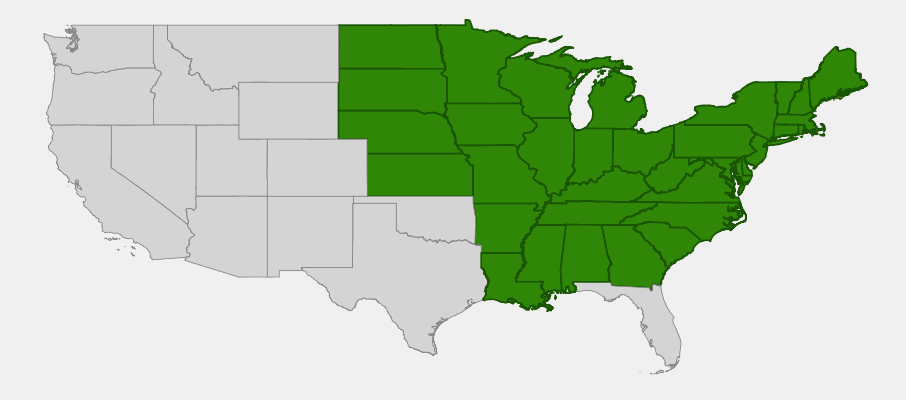
📋 Regional plant lists featuring Gray Dogwood: North Dakota, South Dakota & Western Minnesota
Growing & Care Guide
Gray Dogwood is one of the most reliable and low-maintenance native shrubs you can grow, offering exceptional adaptability combined with outstanding wildlife and ornamental value. Its ability to thrive in a wide range of conditions, from wet to dry soils and full sun to deep shade, makes it an excellent choice for challenging sites where other plants might struggle.
Light
This remarkably adaptable shrub thrives equally well in full sun, partial shade, or even deep shade conditions. In full sun, it develops a denser, more compact form with abundant flowering and fruiting. In shade, it becomes more open and may stretch toward available light, but still flowers and fruits well. This exceptional shade tolerance makes Gray Dogwood invaluable for understory plantings and woodland gardens where few other flowering shrubs perform well.
Soil & Water
Gray Dogwood demonstrates remarkable tolerance for different soil conditions, growing well in everything from wet, poorly-drained sites to relatively dry, well-drained soils. It prefers moist, organic-rich soils but established plants can tolerate periods of drought and occasional flooding. The shrub grows in clay, loam, or sandy soils and tolerates pH levels from acidic to slightly alkaline (5.5–7.5). This adaptability makes it excellent for rain gardens, bioswales, and other challenging landscape situations.
Planting Tips
Plant Gray Dogwood in fall or early spring while dormant. Space plants 6–10 feet apart if creating a naturalistic colony, or farther apart if you want to control spreading. Keep in mind that this species spreads by underground runners, so it will eventually form colonies regardless of initial spacing. Choose your location carefully, as the suckering habit can make it challenging to remove once established. Container plants transplant easily and establish quickly.
Pruning & Maintenance
Gray Dogwood requires minimal maintenance once established. Prune lightly in late winter or early spring if needed to control size or remove old stems. The shrub can be renovated by cutting all stems to 6–12 inches above ground level — it will resprout vigorously from the roots. To control spreading, regularly remove unwanted suckers during the growing season. The species has few pest or disease problems and is quite drought-tolerant once established.
Landscape Uses
Gray Dogwood’s adaptability makes it valuable in many landscape settings:
- Wildlife gardens — exceptional food and shelter for birds
- Erosion control — extensive root system stabilizes slopes and stream banks
- Rain gardens — tolerates both wet and dry conditions
- Naturalized areas — forms attractive colonies over time
- Screening — dense growth provides privacy and wind protection
- Woodland gardens — thrives in shade where few other shrubs flower well
- Restoration projects — excellent for re-establishing native plant communities
Wildlife & Ecological Value
Gray Dogwood is among the most valuable native shrubs for wildlife, providing food, shelter, and nesting opportunities that support an incredible diversity of species throughout the year. Its combination of flowers, fruits, and dense growth structure makes it a keystone species in many natural communities.
For Birds
Over 40 species of birds feed on Gray Dogwood berries, including Wood Thrushes, American Robins, Cedar Waxwings, Northern Cardinals, Blue Jays, and various woodpeckers. The berries ripen in late summer and early fall, providing critical food during migration when birds need high-energy nutrition. The dense, suckering growth creates ideal nesting habitat for species like American Goldfinches, Gray Catbirds, and Brown Thrashers, who build their nests in the protective cover of the thorny thickets.
For Mammals
White-tailed Deer browse the foliage and twigs, while small mammals like chipmunks and squirrels eat both the berries and seek shelter in the dense growth. Cottontail Rabbits use the thickets for cover and winter protection, and various small mammals create trails and runways through the colony structure. The extensive root system and leaf litter provide habitat for numerous small creatures that form the base of the food web.
For Pollinators
The abundant spring and early summer flowers attract a wide variety of native bees, butterflies, and beneficial insects. The timing of bloom coincides with the emergence of many native bee species, providing crucial nectar and pollen when few other shrubs are flowering. The flat-topped flower clusters are particularly attractive to smaller pollinators, including many native sweat bees and mining bees.
Ecosystem Role
Gray Dogwood serves as an important “nurse plant” in ecological succession, helping to establish conditions that allow other native species to become established. Its dense growth provides wind protection and creates a more favorable microclimate for tree seedlings and woodland wildflowers. The species helps prevent erosion with its extensive root system and improves soil organic matter through its leaf litter, gradually building the soil conditions that support more diverse plant communities over time.
Cultural & Historical Uses
Gray Dogwood has been utilized by Indigenous peoples and early settlers throughout its range, though it was never as prominent in traditional use as some other dogwood species. Several Native American tribes used the inner bark medicinally to treat various ailments including headaches, skin conditions, and digestive problems. The bark contains compounds similar to those found in willow bark, giving it mild anti-inflammatory properties that may have provided real therapeutic benefit.
The straight, flexible young stems were occasionally used for basketry and the construction of small tools, fish traps, and temporary shelters. While not as valued for woodworking as the larger Flowering Dogwood, the dense wood was sometimes used for small items requiring durability, such as tool handles and wooden pegs.
European settlers quickly recognized Gray Dogwood’s value for erosion control and wildlife habitat, often encouraging its growth along stream banks and in areas where soil stabilization was needed. The species’ ability to form dense thickets made it valuable for creating natural windbreaks and barriers around farmsteads, while its abundant berries provided food for both domestic and wild birds during harsh winter months.
In modern times, Gray Dogwood has become increasingly valued in ecological restoration and sustainable landscaping. Its exceptional adaptability and wildlife value have made it a cornerstone species in projects ranging from stream corridor restoration to urban rain garden installations. Conservation organizations frequently use the species in habitat restoration projects, recognizing its role as a keystone species that supports biodiversity while providing practical benefits like erosion control and stormwater management.
Frequently Asked Questions
How aggressively does Gray Dogwood spread, and can I control it?
Gray Dogwood spreads moderately through underground runners, typically expanding its colony by 1–3 feet per year. You can control spreading by regularly removing unwanted suckers and installing root barriers if needed. While it does spread, it’s not considered invasively aggressive and can be managed with basic maintenance.
Will Gray Dogwood grow in very wet soils?
Yes, Gray Dogwood is one of the best native shrubs for wet, poorly-drained soils. It naturally grows in swamps, stream corridors, and seasonal wetlands, making it excellent for rain gardens and bioswales. However, it’s equally adaptable to drier conditions once established.
How can I tell Gray Dogwood apart from other dogwood species?
Gray Dogwood can be identified by its suckering growth habit (forming colonies), blue-white berries (rather than red), and the characteristic gray bark on mature stems combined with reddish young twigs. The flowers are in loose, open clusters rather than the large, showy bracts of Flowering Dogwood.
Is Gray Dogwood good for attracting birds to my garden?
Absolutely! Gray Dogwood is one of the best native shrubs for attracting birds. The berries feed over 40 species, the dense growth provides excellent nesting habitat, and the flowers attract insects that birds feed on. It’s particularly valuable during fall migration when birds need high-energy food.
Can I plant Gray Dogwood in full shade?
Yes, Gray Dogwood is one of the few native shrubs that flowers and fruits well in deep shade. While it’s most productive in partial to full sun, it adapts well to woodland conditions and will still provide good wildlife value even in heavily shaded locations.

Looking for a nursery that carries Gray Dogwood?
Browse our native plant nursery directory: North Dakota · South Dakota · Minnesota