Tall Meadow Rue (Thalictrum dasycarpum)
Thalictrum dasycarpum, commonly known as Tall Meadow Rue, Purple Meadow Rue, or Hairy-fruited Meadow Rue, is a graceful native perennial wildflower that adds vertical drama and delicate texture to prairies, meadows, and naturalistic gardens across central and eastern North America. This member of the Ranunculaceae (buttercup) family is distinguished by its impressive height, reaching 3 to 5 feet tall, and its ethereal clusters of tiny, fluffy flowers that create a cloud-like display above finely divided compound leaves.
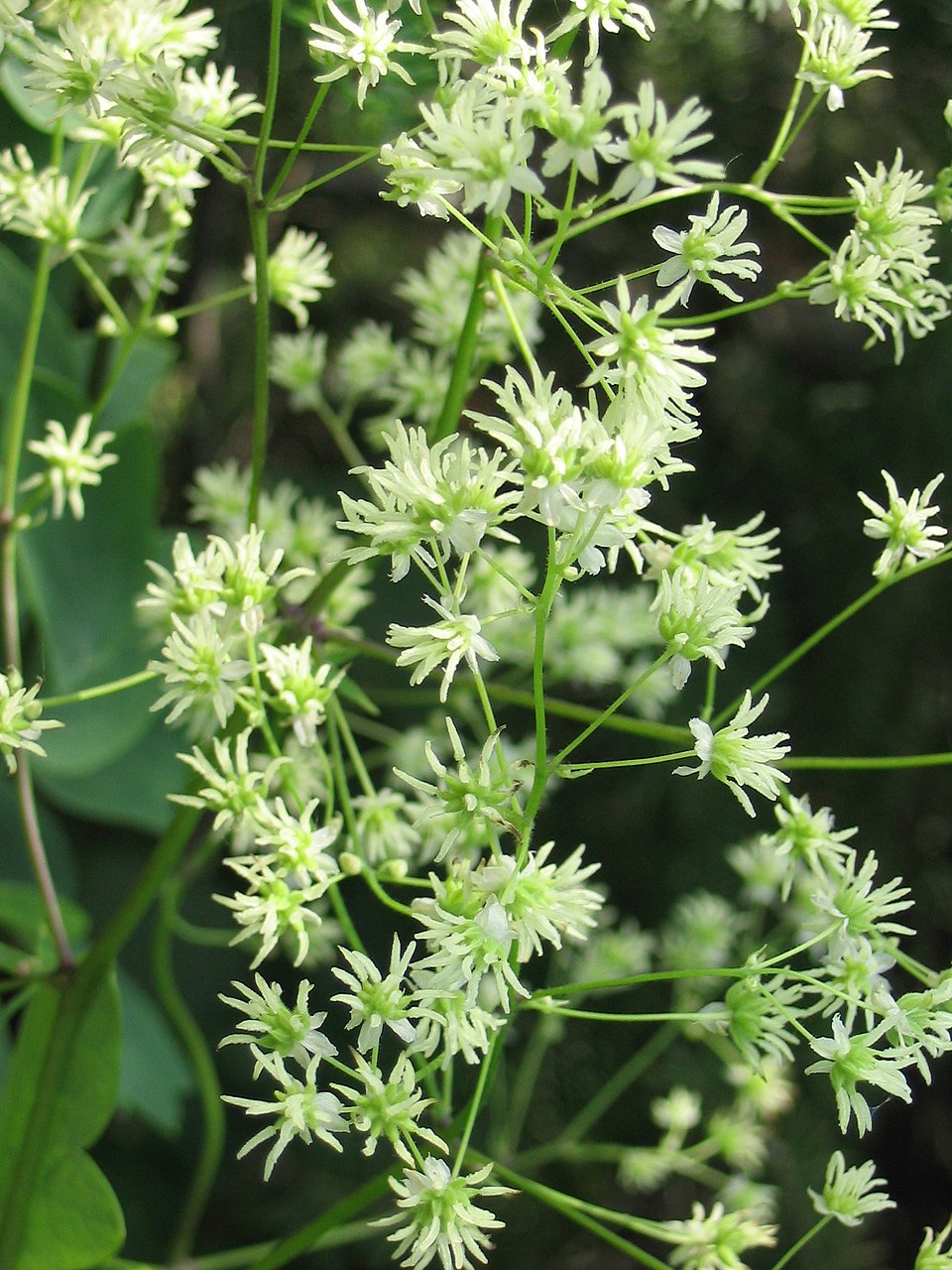
The plant’s common name “Meadow Rue” comes from the resemblance of its compound leaves to those of the herb rue (Ruta graveolens), while “Tall” distinguishes it from its smaller relatives. In late spring to mid-summer (May through July), Tall Meadow Rue produces branched sprays of tiny purplish-white flowers that lack petals but are adorned with numerous prominent stamens, creating a distinctly feathery appearance that dances beautifully in prairie breezes.
Tall Meadow Rue is particularly valued for its ability to naturalize in both wet and mesic prairie conditions while providing important habitat for native pollinators. Its tall stature makes it an excellent background plant for prairie restorations and native wildflower gardens, where it creates vertical interest without overwhelming shorter companions. The plant is dioecious, meaning male and female flowers occur on separate plants, with the showy staminate (male) flowers being the most ornamentally impressive.
Identification
Tall Meadow Rue grows as an herbaceous perennial from fibrous roots, typically reaching 3 to 5 feet in height, though exceptional specimens can reach 6 feet or more. The plant forms loose colonies through short rhizomes and develops a distinctive upright, branching growth habit that becomes increasingly impressive with age.
Stems & Growth Form
The stems are smooth, hollow, and often develop a slight purple or reddish tinge, especially near the base and nodes. They are sturdy yet flexible, allowing the plant to sway gracefully in wind without breaking. The stems branch extensively in the upper portion, creating the framework for the large, airy flower clusters that give the plant its distinctive appearance.
Leaves
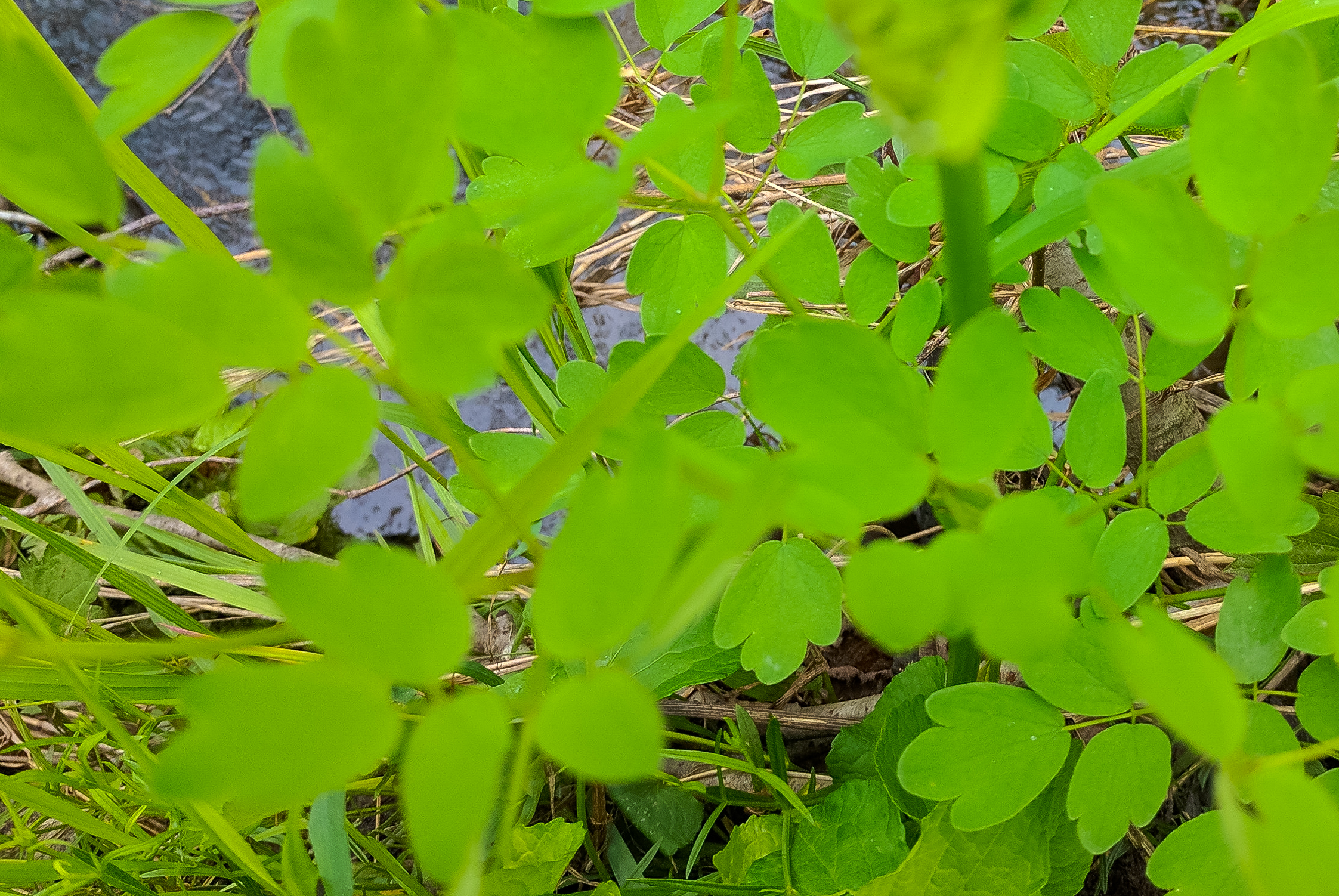
The leaves are one of Tall Meadow Rue’s most distinctive features — they are compound, typically divided two to four times (bi- to quadri-pinnate), creating an intricate, fern-like texture. Each ultimate leaflet is small, roughly ½ to 1 inch long, and three-lobed with rounded teeth. The leaflets are blue-green to gray-green in color with a slightly waxy texture that gives them a distinctive matte appearance. The overall effect is delicate and lacy, providing an excellent textural contrast to the bold forms of other prairie plants.
Flowers & Fruit
The flowers of Tall Meadow Rue are unique and immediately recognizable — they lack petals entirely, instead featuring prominent clusters of stamens (in male flowers) or pistils (in female flowers). The male flowers are the more showy, with numerous long, thread-like stamens crowned with yellow to purplish anthers that create a fluffy, tassel-like appearance. These are arranged in large, branched, pyramidal clusters (panicles) that can be 6 to 12 inches across.
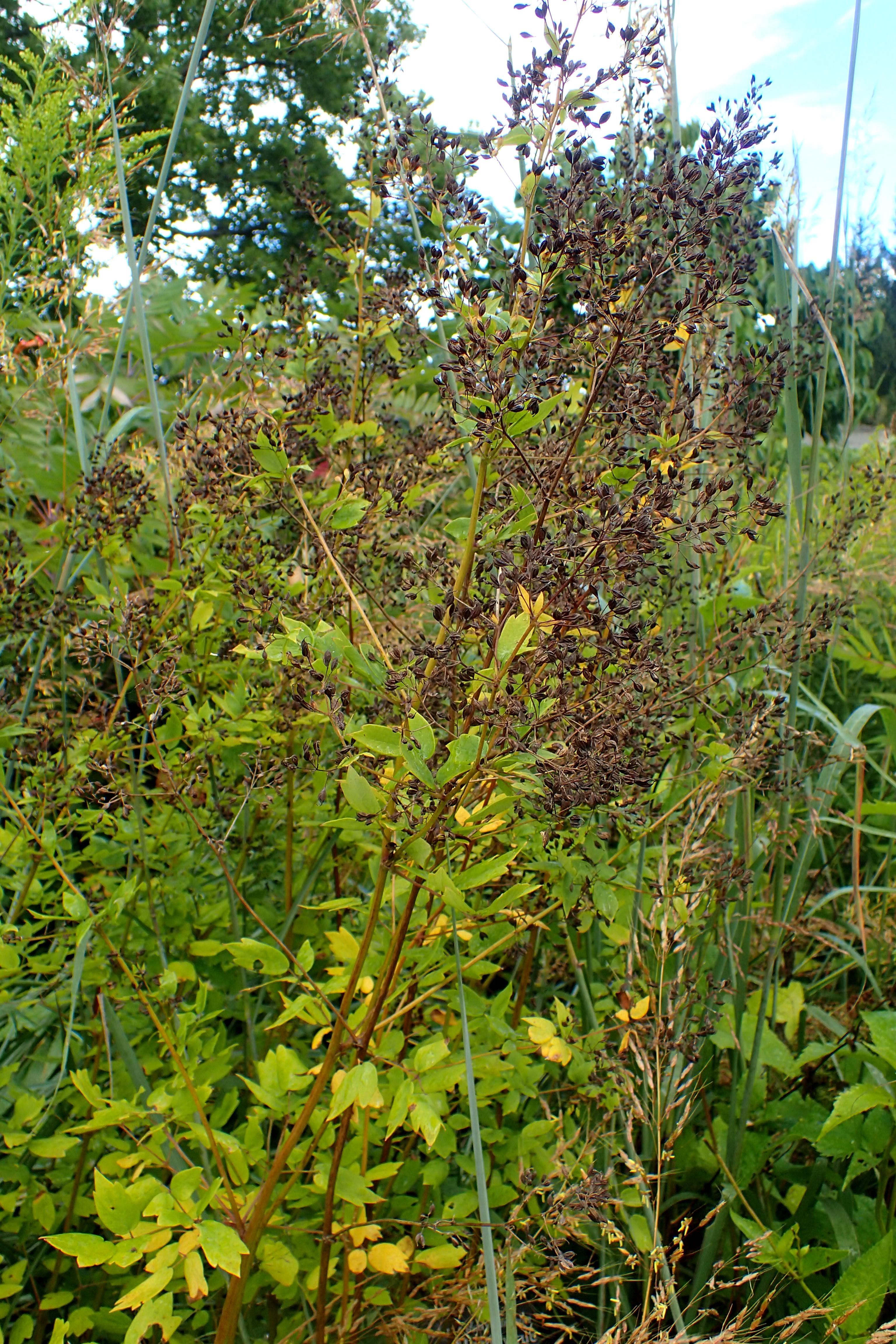
Female flowers are less conspicuous, consisting of small clusters of pistils that develop into small, ribbed, three-angled fruits (achenes) about ¼ inch long. The fruits have a distinctive hairy appearance when young, which gives the species its alternate name “Hairy-fruited Meadow Rue.” The flowering period extends from May through July, with peak bloom typically occurring in early summer.
Quick Facts
| Scientific Name | Thalictrum dasycarpum |
| Family | Ranunculaceae (Buttercup) |
| Plant Type | Herbaceous Perennial |
| Mature Height | 3–5 ft |
| Sun Exposure | Part Shade to Full Shade |
| Water Needs | Moderate |
| Bloom Time | May – July |
| Flower Color | Purplish-white |
| USDA Hardiness Zones | 4–8 |
Native Range
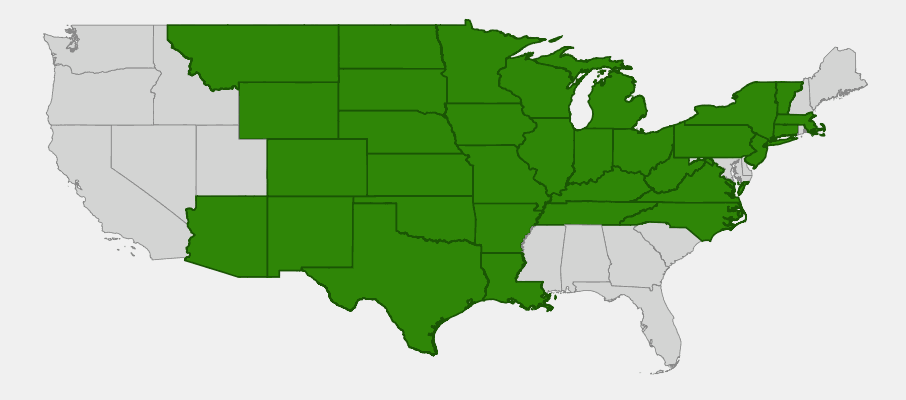
Tall Meadow Rue has an extensive native range across the central and eastern United States, extending from the Great Plains east to the Atlantic coast and from southern Canada south to Texas and the Carolinas. This broad distribution reflects the plant’s adaptability to diverse prairie and woodland edge habitats, from the tallgrass prairies of the Midwest to the mountain meadows of the western states.
The species is most abundant in the tallgrass prairie regions of the upper Midwest, where it thrives in the rich, fertile soils of wet to mesic prairies, prairie swales, and meadows. It extends westward into the mixed-grass prairies of the Great Plains and eastward into the prairie openings and woodland edges of the eastern deciduous forest region. This wide native range makes Tall Meadow Rue suitable for cultivation across much of temperate North America.
In its natural habitat, Tall Meadow Rue is typically found in moist to wet prairies, sedge meadows, stream valleys, roadside ditches, and the edges of marshes and wetlands. It often grows in association with other tall prairie plants like Big Bluestem, Switch Grass, Wild Bergamot, and various asters and goldenrods, forming part of the diverse community that characterizes healthy prairie ecosystems.
📋 Regional plant lists featuring Tall Meadow Rue: North Dakota, South Dakota & Western Minnesota
Growing & Care Guide
Tall Meadow Rue is a relatively easy-to-grow native perennial that thrives with minimal care once established. Its adaptability to various moisture levels and light conditions, combined with its impressive height and unique flowers, makes it an excellent choice for naturalistic gardens, prairie restorations, and native plant enthusiasts.
Light
Tall Meadow Rue performs well in both partial shade and full sun conditions, though it tends to prefer partial shade, especially in hot climates. In its native prairie habitat, it often grows among tall grasses that provide some afternoon shade. In cultivation, morning sun with some afternoon shade produces the best flowering and prevents the stems from becoming too tall and potentially requiring staking. In deeper shade, the plant may become more lax and require support.
Soil & Water
This adaptable prairie plant grows best in moist, fertile, well-draining soils but can tolerate a wide range of conditions from wet to moderately dry. It prefers slightly alkaline to neutral soils (pH 6.5-7.5) but adapts to various pH levels. Tall Meadow Rue is particularly well-suited to heavy clay soils and areas with fluctuating moisture levels, making it excellent for rain gardens and low-lying areas that may be temporarily flooded. While drought-tolerant once established, consistent moisture produces the most vigorous growth and flowering.
Planting Tips
Plant Tall Meadow Rue in spring or fall, spacing plants 2-3 feet apart to allow for their mature spread. The plant can be grown from seed, which should be stratified (cold-treated) for 2-3 months before planting. Seeds can be direct-sown in fall for natural stratification. Since the species is dioecious, plant several specimens to ensure you have both male and female plants for the best ornamental display and seed production. The showy male plants are typically preferred for ornamental purposes.
Pruning & Maintenance
Tall Meadow Rue requires minimal maintenance once established. Cut stems to ground level in late fall or early spring before new growth emerges. If self-seeding is desired, leave some stems standing through winter to allow seeds to disperse naturally. In windy locations or rich soils, the tall stems may require staking, though this is often unnecessary if the plant is grown in its preferred conditions with adequate light. Division is rarely necessary but can be done in early spring every 4-5 years if desired.
Landscape Uses
Tall Meadow Rue’s impressive height and unique texture make it valuable in many landscape settings:
- Prairie gardens as a tall background plant or accent specimen
- Rain gardens and bioswales due to its tolerance of wet conditions
- Naturalistic borders providing vertical interest and texture
- Native wildflower meadows as part of diverse plant communities
- Butterfly and pollinator gardens attracting native bees and beneficial insects
- Cutting gardens — the flowers make interesting additions to arrangements
- Screening when planted in masses for seasonal privacy
Wildlife & Ecological Value
Tall Meadow Rue plays a significant role in prairie ecosystems, providing important resources for native wildlife throughout the growing season. Its flowers, seeds, and foliage support a diverse array of pollinators, birds, and other prairie fauna, while its extensive root system contributes to prairie soil health and carbon sequestration.
For Birds
While birds don’t typically eat the seeds of Tall Meadow Rue directly, they benefit from the plant in several ways. The tall, sturdy stems provide excellent perching sites for meadowlarks, bobolinks, and other grassland birds that hunt insects from elevated positions. Small songbirds like goldfinches and sparrows may use the fine, fibrous seed heads and plant material for nesting. The plant’s height also creates important vertical habitat structure that supports diverse bird communities in prairie ecosystems.
For Mammals
Large herbivores like deer and elk occasionally browse Tall Meadow Rue, though it’s not a preferred food source due to its bitter alkaloids. The plant’s tolerance of browsing makes it deer-resistant in most situations. Small mammals like voles and mice may shelter among the base of the plant, and the seeds occasionally provide minor food sources for rodents, though they’re not a significant dietary component.
For Pollinators
Tall Meadow Rue is particularly valuable for native pollinators, especially small native bees and beneficial insects. The abundant pollen from male flowers attracts sweat bees, mining bees, and various small beetles. While the flowers lack nectar, they provide an important protein-rich pollen source during early to mid-summer when many other prairie plants have not yet bloomed. The flowers also attract syrphid flies (flower flies) and other beneficial insects that help control garden pests.
Ecosystem Role
Tall Meadow Rue contributes significantly to prairie ecosystem function and health. Its deep root system, which can extend 6-8 feet into the soil, helps build soil structure, prevent erosion, and sequester carbon. The plant adds important vertical diversity to prairie communities, creating habitat niches for insects and other small creatures at various heights. As part of the diverse prairie plant community, it contributes to the complex web of plant-soil-microorganism interactions that maintain prairie resilience and productivity.
Cultural & Historical Uses
Tall Meadow Rue has a modest but interesting history of use by Indigenous peoples and early European settlers in North America. Unlike some prairie plants with extensive traditional medicinal applications, Tall Meadow Rue was used more selectively and with considerable caution due to its potentially toxic alkaloid content.
Several Native American tribes, including the Dakota and Lakota peoples of the Great Plains, used Tall Meadow Rue medicinally, though always with great care due to its potent compounds. The plant was sometimes used in very small amounts to treat certain women’s health issues and as a component in ceremonial preparations. However, its use was limited and strictly controlled by experienced healers due to the risk of toxicity.
The plant’s most notable historical use was as a source of yellow dye, extracted from the roots and stems. This golden-yellow dye was used to color both textiles and basketry materials by various Indigenous groups across the plant’s range. The dye was considered particularly valuable because it produced a clear, bright yellow that was fade-resistant and did not require mordanting with metal salts.
Early European settlers learned of some uses for Tall Meadow Rue from Native Americans but generally regarded it with suspicion due to its bitter taste and potential toxicity. Some folk medicine traditions included the plant as a treatment for fevers and headaches, but its use in European-American herbalism never became widespread. By the 19th century, most settlers preferred other, safer prairie plants for both medicinal and practical purposes.
In modern times, Tall Meadow Rue has found renewed appreciation not for its traditional uses but for its ecological and ornamental value. Contemporary prairie restoration efforts have highlighted the plant’s importance as a native pollinator resource and its role in maintaining prairie biodiversity. The plant’s unique flowers and impressive stature have also made it increasingly popular in naturalistic landscape design and native plant gardening, where it’s valued for its ability to add height and delicate texture to plantings.
Frequently Asked Questions
Why doesn’t my Tall Meadow Rue have showy flowers?
Tall Meadow Rue is dioecious, meaning plants are either male or female. The male plants produce the showy, fluffy flowers with prominent stamens, while female plants have smaller, less conspicuous flowers. If your plant lacks showy flowers, it may be female. To ensure showy blooms, purchase plants from reputable nurseries that can identify male specimens.
Is Tall Meadow Rue aggressive or invasive?
No, Tall Meadow Rue is not aggressive. While it may self-seed under ideal conditions, seedlings are easy to remove and the plant doesn’t spread rapidly by rhizomes. It’s considered well-behaved in most garden settings and actually helps support native prairie ecosystems where it’s native.
Does Tall Meadow Rue need to be staked?
In most cases, no. When grown in appropriate conditions with adequate light and normal prairie soils, Tall Meadow Rue develops strong, self-supporting stems. Staking may be necessary in very windy locations, overly rich soils that cause excessive growth, or deep shade conditions that result in weak stems.
Can I grow Tall Meadow Rue in a small garden?
Yes, but consider its mature size. At 3-5 feet tall and 2-3 feet wide, it’s best suited to medium to large gardens or used as a single accent specimen in smaller spaces. Its upright growth habit means it doesn’t take up much ground space relative to its height.
Is Tall Meadow Rue toxic to pets or humans?
Yes, like many members of the buttercup family, Tall Meadow Rue contains alkaloids that can be toxic if consumed in significant quantities. While not typically fatal, ingestion can cause digestive upset in pets and humans. The plant is generally bitter-tasting, which discourages consumption, but it should be planted with caution around small children and pets that tend to chew on plants.

Looking for a nursery that carries Tall Meadow Rue?
Browse our native plant nursery directory: North Dakota · South Dakota · Minnesota