
Bottle Gentian (Gentiana andrewsii)
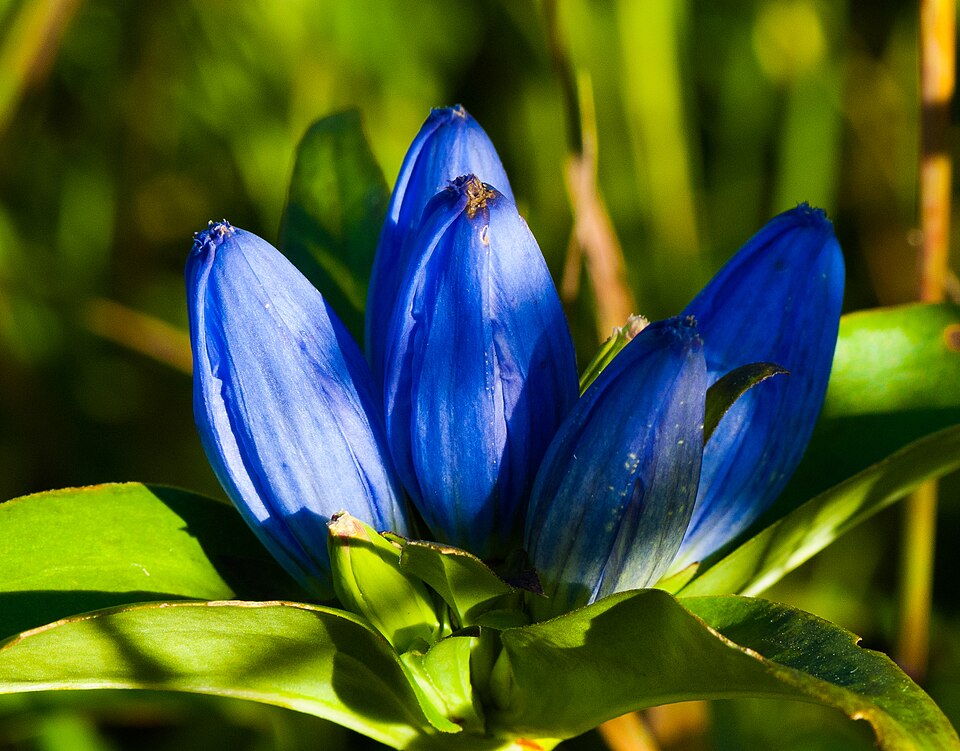
Gentiana andrewsii, commonly known as Bottle Gentian or Closed Gentian, is one of the most enchanting late-season wildflowers of the northern prairies and meadows. This striking herbaceous perennial belongs to the Gentianaceae (gentian) family and is named for Henry C. Andrews, an English botanical artist who first illustrated the species. Its most remarkable feature is its flowers — deep, intense blue to violet blooms that remain permanently closed or nearly closed, resembling elegant sealed bottles clustered at the tops of sturdy stems.
Growing 1 to 2 feet tall in moist prairies and meadows, Bottle Gentian blooms from August through October, providing a splash of brilliant blue at a time when most other prairie wildflowers have faded. The closed flower structure creates a fascinating pollination puzzle — only the strongest bumblebees can force their way inside to reach the nectar, making it a bumblebee specialist that has co-evolved with these powerful pollinators over millennia. This exclusive pollination relationship makes Bottle Gentian both ecologically important and endlessly fascinating to observe.
For native plant gardens in the Dakotas and western Minnesota, Bottle Gentian offers rare late-season color in shades of blue that are uncommon among prairie plants. While it can be challenging to establish from seed, once settled it is long-lived and reliable, returning faithfully year after year in moist, partially shaded garden settings.
Identification
Leaves
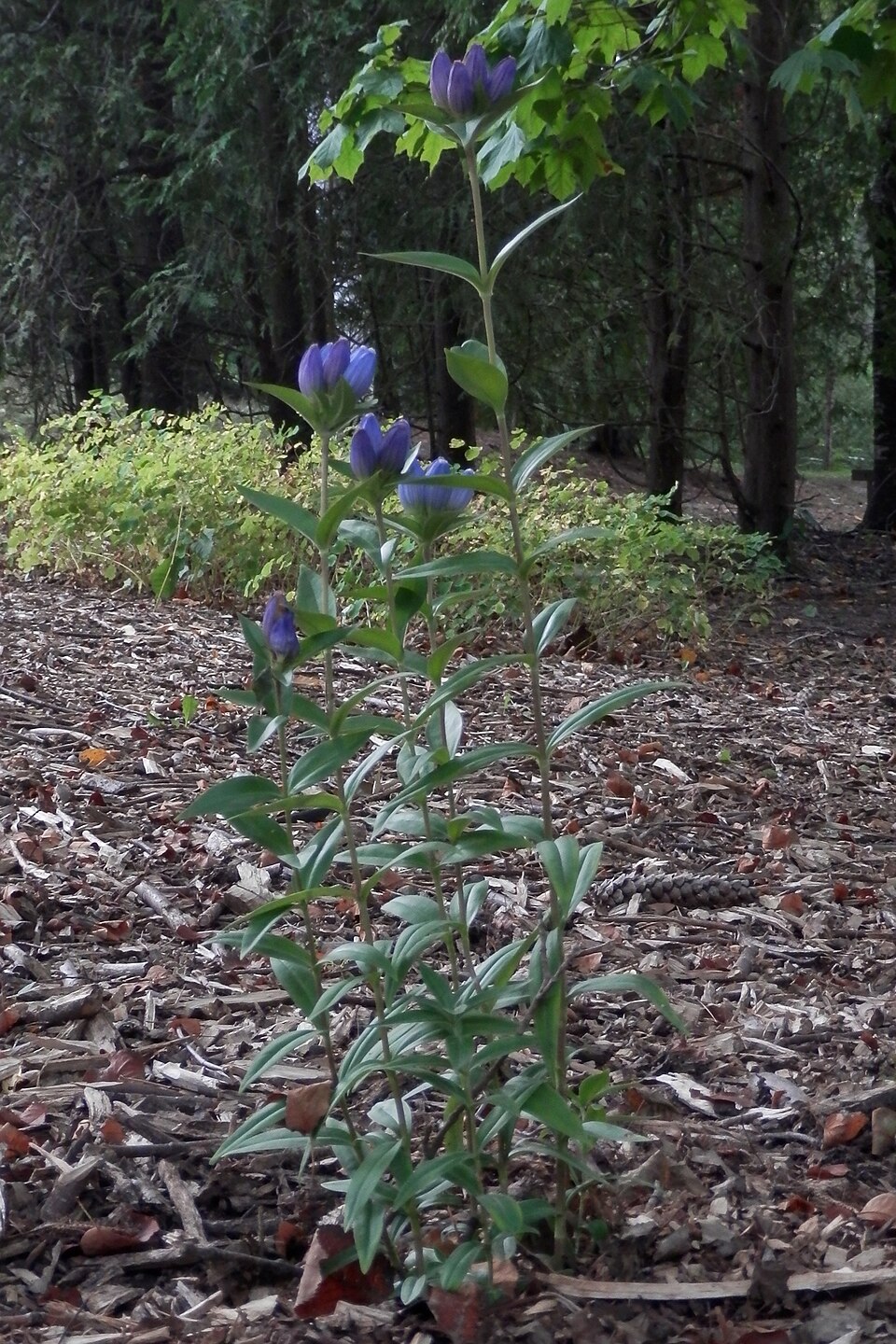
The leaves are opposite, sessile (attached directly to the stem without stalks), and broadly lance-shaped, 2 to 4 inches long. They are smooth, bright green, with prominent parallel veins and entire (smooth) margins. The leaf pairs are closely spaced along the stem, giving the plant a lush, well-clothed appearance. In fall, the foliage turns a warm bronze-yellow before dying back.
Flowers & Fruit
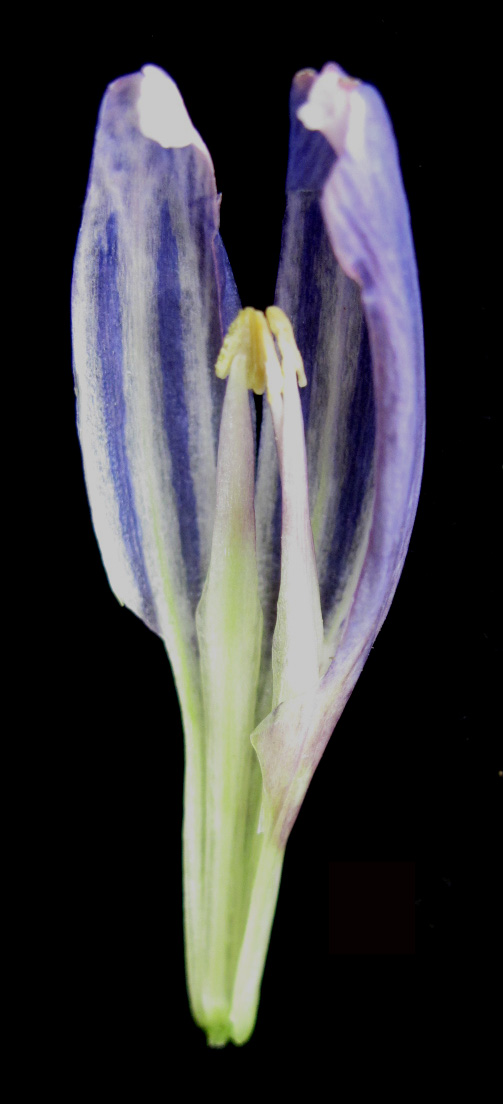
The flowers are the star attraction — deep blue to violet, tubular, and 1 to 1.5 inches long, clustered in groups of 2 to 5 at the top of the stem and in the upper leaf axils. Each flower is bottle-shaped and remains permanently closed or barely open at the tip, with the petal lobes sealed together by a membrane. The closed structure gives the plant its common names. Inside, white fringe-like structures (plications) between the petals help keep the flower sealed. Only large, strong bumblebees can pry open the flower to access nectar and pollen. Fruits are small capsules containing numerous tiny, winged seeds that are dispersed by wind.
Quick Facts
| Scientific Name | Gentiana andrewsii |
| Family | Gentianaceae (Gentian) |
| Plant Type | Herbaceous Perennial |
| Mature Height | 1–2 ft |
| Sun Exposure | Full Sun to Part Shade |
| Water Needs | Moderate to High |
| Bloom Time | August – October |
| Flower Color | Deep blue to violet |
| USDA Hardiness Zones | 3–7 |
Native Range
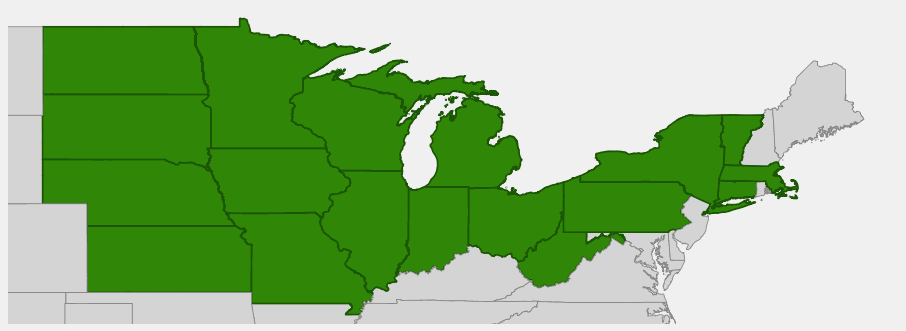
Bottle Gentian (Gentiana andrewsii) is native to a broad range across North America, growing naturally in moist prairies, wet meadows, stream banks, open woodlands, calcareous fens. In the United States, it occurs in Connecticut, Iowa, Illinois, Indiana, Kansas, Massachusetts, Michigan, Minnesota, Missouri, Nebraska, North Dakota, New York, Ohio, Pennsylvania, South Dakota, Vermont, Wisconsin, West Virginia. The species is found from 500 – 3,000 ft elevation, adapting to the local conditions within each region of its range.
Within its native range, Bottle Gentian is associated with the Northern Tallgrass Prairie, Great Lakes region, Eastern Deciduous Forest margins ecoregion, where it grows alongside species such as Big Bluestem, Prairie Dock, Joe-Pye Weed, Ironweed, Switchgrass. These plant communities have co-evolved over thousands of years, forming the complex ecological relationships that characterize healthy native landscapes. The presence of Bottle Gentian in a plant community is often an indicator of good site conditions and ecological integrity.
In the Dakotas and western Minnesota, Bottle Gentian occurs naturally in suitable habitats and is well-adapted to the region’s continental climate with its cold winters, warm summers, and variable precipitation. Conservation efforts and native plant restoration projects are helping to maintain and expand populations of Bottle Gentian throughout the region, ensuring that this valuable native species continues to thrive for future generations.
📋 Regional plant lists featuring Bottle Gentian: North Dakota, South Dakota & Western Minnesota
Growing & Care Guide
Light
Bottle Gentian grows best in full sun to part shade, tolerating more shade than many prairie species. In the Dakotas, a site with morning sun and afternoon dappled shade is ideal. In full sun, ensure consistent soil moisture to prevent wilting.
Soil & Water
This species thrives in moist, well-drained soils rich in organic matter. It prefers slightly acidic to neutral pH (5.5–7.0) and performs exceptionally well in loamy or clay-loam soils that retain moisture. Consistent water is essential — Bottle Gentian will not tolerate prolonged drought. Mulch generously with shredded leaves or fine bark to maintain moisture and mimic its natural meadow conditions.
Planting Tips
Bottle Gentian is best established from nursery-grown plants rather than seed, as germination requires a period of cold stratification and can be erratic. Plant in spring or fall, spacing plants 12 to 18 inches apart. Do not bury the crown too deeply — set it at the same level it was growing in the container. Water regularly during the first growing season to establish roots.
Pruning & Maintenance
Leave spent flower stems standing through winter — they provide visual interest and allow seeds to disperse naturally. Cut back dead stems in early spring before new growth emerges. Bottle Gentian is pest- and disease-free and does not need dividing. It spreads slowly by self-seeding in favorable conditions.
Landscape Uses
- Rain gardens and moist border plantings
- Wildflower meadows for late-season blue color
- Pollinator gardens — essential bumblebee plant
- Woodland edges and partial shade gardens
- Native plant borders paired with asters and goldenrods
- Wetland restoration projects
Wildlife & Ecological Value
For Birds
While Bottle Gentian is not a primary bird food source, its seeds are eaten by small songbirds. More importantly, the plant supports the insect communities that birds depend on. The standing winter stems provide perching spots and contribute to the structural complexity of meadow habitats that ground-nesting birds require.
For Mammals
White-tailed Deer occasionally browse Bottle Gentian, though it is not a preferred food. Small mammals like meadow voles may shelter beneath the dense foliage. The plant’s primary mammalian significance is indirect — it supports the healthy pollinator populations that maintain the broader meadow ecosystem.
For Pollinators
Bottle Gentian is a bumblebee specialist. The permanently closed flowers can only be pollinated by large, powerful bumblebees (primarily Bombus species) that can force their way between the sealed petals. Watch closely and you’ll see bumblebees literally push and squeeze their bodies inside the flower to reach the nectar chamber. This makes Bottle Gentian critically important for bumblebee conservation, particularly as many native bumblebee species face population declines.
Ecosystem Role
As a late-blooming species, Bottle Gentian provides critical nectar resources for bumblebees preparing for winter hibernation. The timing of its bloom — August through October — coincides with the period when bumblebee queens are fattening up before entering their winter dormancy. By supporting these essential pollinators, Bottle Gentian plays a role far outsized relative to its modest stature in maintaining healthy prairie and meadow ecosystems.
Cultural & Historical Uses
The gentian family has a long and distinguished history in human medicine and culture. The genus Gentiana is named after Gentius, King of Illyria (180–168 BCE), who reputedly discovered the medicinal properties of gentian roots. While the European Yellow Gentian (Gentiana lutea) has been the primary medicinal species, Native American peoples also recognized the value of North American gentians.
Several Indigenous nations, including the Meskwaki (Fox) and Potawatomi, used Gentiana andrewsii medicinally. The roots were prepared as a bitter tea or decoction used to treat digestive disorders, fever, and snakebite. The intensely bitter compounds in gentian roots (shared across the genus) stimulate digestive secretions and have been validated by modern pharmacology as effective bitter tonics. The Meskwaki reportedly used Bottle Gentian as a love charm and in ceremonial contexts.
In the 19th and 20th centuries, Bottle Gentian became a beloved wildflower of American naturalists and botanists. Emily Dickinson referenced gentians in her poetry as symbols of late-season beauty and resilience. Today, Bottle Gentian is increasingly popular in native plant gardens, and it has been designated as an indicator species for high-quality remnant prairies — its presence suggests a prairie that has never been plowed, as the plant does not readily colonize disturbed ground. This makes Bottle Gentian both a beautiful garden plant and a living marker of North America’s vanishing tallgrass prairie heritage.
Frequently Asked Questions
Why won’t Bottle Gentian flowers open?
The closed flowers are a natural feature, not a sign of problems. Bottle Gentian flowers are permanently closed or barely open, which is why it’s called “Bottle” or “Closed” Gentian. Only bumblebees are strong enough to force their way inside for pollination.
Is Bottle Gentian hard to grow from seed?
Yes, germination requires 60–90 days of cold, moist stratification and can be erratic. Most gardeners have better success purchasing nursery-grown plants. If starting from seed, sow outdoors in fall and be patient — germination may take one to two springs.
Can Bottle Gentian grow in full sun?
Yes, if soil stays consistently moist. In the Dakotas, a spot with morning sun and afternoon shade is ideal, as this mimics the dappled conditions of its native moist prairie and meadow edge habitats.
How long does Bottle Gentian live?
Individual plants can live 10 to 20+ years once established. They are slow to mature but extremely long-lived and reliable once settled. Expect flowering to begin 2–3 years after planting nursery stock.
What should I plant with Bottle Gentian?
Pair it with other moisture-loving native plants that bloom at different times: Joe-Pye Weed, Ironweed, New England Aster, Switchgrass, and Big Bluestem. The blue flowers are particularly stunning against the golden fall foliage of native grasses.

Looking for a nursery that carries Bottle Gentian?
Browse our native plant nursery directory: North Dakota · South Dakota · Minnesota