
Wild Plum (Prunus americana)
Prunus americana, commonly known as Wild Plum, is a resilient native deciduous tree that has long been treasured throughout much of North America for both its ornamental beauty and practical value. This member of the Rosaceae (rose) family typically grows 20 to 35 feet tall, forming dense thickets or graceful single-trunked specimens that burst into spectacular displays of fragrant white flowers each spring before the leaves emerge. The species has been an important food source for both wildlife and humans for millennia, producing colorful red to yellow plums that, while small and often tart, are prized for jams, jellies, and traditional foods.
Native across a vast range extending from southeastern Canada through much of the central and eastern United States, Wild Plum demonstrates remarkable adaptability to diverse growing conditions. It thrives in everything from full sun to partial shade and tolerates drought once established, making it equally at home in prairie edges, woodland clearings, stream banks, and fence rows. The tree’s natural tendency to form colonies through root suckers has made it invaluable for erosion control and wildlife habitat creation, while its early spring blooms provide crucial nectar sources for pollinators emerging from winter dormancy.
Beyond its ecological importance, Wild Plum holds deep cultural significance throughout its range. Indigenous peoples have long utilized the fruit, bark, and roots for food and medicine, while early European settlers quickly adopted the species for both sustenance and natural hedgerows. Modern landowners continue to value Wild Plum for its low-maintenance nature, exceptional wildlife value, and the nostalgic beauty of its spring flower displays that signal the end of winter across America’s heartland.
Identification
Wild Plum is a small to medium-sized deciduous tree or large shrub that typically reaches 20 to 35 feet in height with a similar spread when grown as a single specimen. More commonly, it forms dense thickets through prolific root suckering, creating colonies that can extend over large areas. The overall form is irregular and often multi-stemmed, with a rounded to somewhat flat-topped crown that provides excellent structure in the landscape.
Bark & Stems
The bark is one of Wild Plum’s most distinctive features—dark reddish-brown to nearly black on mature trunks, with a characteristic plated or scaly appearance that becomes more pronounced with age. Young stems are smooth and reddish-brown, developing the distinctive plated bark texture as they mature. The bark often exhibits horizontal lenticels (breathing pores) that appear as lighter-colored lines across the darker background. Twigs are slender, reddish to grayish-brown, and often armed with short, sharp spines or spur branches.
Leaves
The leaves are alternate, simple, and oval to elliptical in shape, typically 2 to 4 inches long and 1 to 2 inches wide. They have finely serrated margins with sharp teeth and prominent veining that gives them a slightly textured appearance. The upper surface is dark green and somewhat glossy, while the underside is paler and may be slightly hairy when young. Leaves emerge after the flowers in spring and turn various shades of yellow, orange, and red in fall before dropping, creating an attractive seasonal display.
Flowers
The flowers are Wild Plum’s most celebrated feature—appearing in dense clusters of 3 to 5 blooms along the bare branches in early spring, typically in April or May before the leaves emerge. Each flower is about ¾ to 1 inch across with five pure white, rounded petals surrounding numerous yellow stamens. The flowers are intensely fragrant with a sweet, almond-like scent that can be detected from considerable distances. The early blooming period makes Wild Plum one of the first native trees to flower each spring, often coinciding with redbud and serviceberry blooms.
Fruit
The fruit is a drupe (stone fruit) that ripens in midsummer, typically July through August. The plums are round to oval, about ½ to 1 inch in diameter, and range in color from bright red to yellow or orange, often with a slight bluish bloom on the skin. The flesh is yellow to orange and surrounds a single large, flattened pit. While the fruit is edible, it varies considerably in taste from quite tart to moderately sweet, with wild trees generally producing more astringent fruit than cultivated selections.
Quick Facts
| Scientific Name | Prunus americana |
| Family | Rosaceae (Rose) |
| Plant Type | Deciduous Tree / Large Shrub |
| Mature Height | 20–35 ft |
| Sun Exposure | Full Sun to Part Shade |
| Water Needs | Low to Moderate |
| Bloom Time | April – May |
| Flower Color | White |
| USDA Hardiness Zones | 3–8 |
Native Range
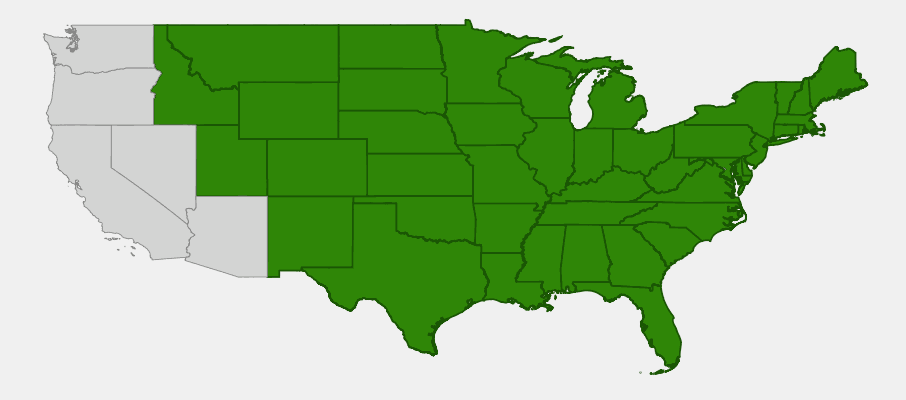
Wild Plum has one of the most extensive native ranges of any North American tree species, stretching from southeastern Canada south to northern Florida and Texas, and from the Atlantic coast west to the foothills of the Rocky Mountains. This remarkable distribution reflects the species’ exceptional adaptability to diverse climate conditions, soil types, and ecological settings. The tree is particularly abundant throughout the Great Plains, where it has historically formed extensive thickets along stream courses, prairie edges, and in other mesic sites that provided refugia during drought periods.
Throughout its range, Wild Plum typically inhabits edge environments—the transition zones between different habitat types where it can take advantage of both sun and some protection from harsh conditions. It’s commonly found along fence rows, stream banks, woodland margins, and in old fields and pastures. The species shows remarkable soil tolerance, thriving in everything from sandy loams to heavy clays and adapting to both slightly alkaline and acidic conditions. This adaptability has enabled it to colonize disturbed sites throughout its range and persist in agricultural landscapes where many other native trees have been displaced.
Historically, Wild Plum was even more abundant across the Great Plains and prairie regions, where vast thickets provided important wildlife habitat and food resources. While agricultural development has reduced some populations, the species remains common throughout most of its range and continues to play important ecological roles in both natural and human-modified landscapes. Its ability to establish in marginal sites and tolerate various disturbance regimes has actually enabled it to expand into some new habitats created by human activities.
📋 Regional plant lists featuring Wild Plum: North Dakota, South Dakota & Western Minnesota
Growing & Care Guide
Wild Plum is among the most adaptable and low-maintenance native trees, making it an excellent choice for gardeners seeking a species that provides four-season interest with minimal care requirements. Its natural hardiness and tolerance for adverse conditions, combined with exceptional wildlife value and ornamental appeal, make it suitable for a wide range of landscape applications.
Light
Wild Plum performs well in full sun to partial shade conditions, though flowering and fruiting are most prolific in full sun locations with at least 6 hours of direct sunlight daily. In shadier locations, the tree will grow successfully but may produce fewer flowers and fruit. The species’ natural habitat in woodland edges and prairie margins reflects this adaptability to varying light conditions, making it useful in transitional areas of the landscape.
Soil & Water
One of Wild Plum’s greatest strengths is its remarkable soil adaptability. The tree thrives in a wide range of soil types, from sandy loams to heavy clays, and tolerates both slightly acidic and alkaline conditions (pH 6.0-8.0). While it prefers well-draining soil, it can handle periodic flooding and also demonstrates excellent drought tolerance once established. Young trees benefit from regular watering during their first 2-3 years, but mature specimens typically require supplemental irrigation only during extended dry periods.
Planting Tips
Wild Plum can be grown from seed, though stratification is required and results can be variable. Commercially grown container plants establish most reliably and typically begin flowering within 3-5 years. Plant in spring or fall, spacing single specimens 15-20 feet apart to allow for mature spread. If creating a thicket or hedge, space plants 6-10 feet apart and allow natural suckering to fill in the gaps. The tree establishes readily and begins producing suckers within a few years of planting.
Pruning & Maintenance
Wild Plum requires minimal pruning beyond removal of dead, damaged, or crossing branches. If grown as a single-trunked tree, remove suckers regularly to maintain the desired form. For naturalistic thickets, allow suckering to occur but remove any growth extending beyond desired boundaries. Pruning is best done in late winter or immediately after flowering to avoid removing next year’s flower buds. The tree has no serious pest or disease problems in most regions, though occasional issues with aphids or scale may occur in stressed plants.
Landscape Uses
Wild Plum excels in numerous landscape applications:
- Naturalized areas — ideal for prairie restorations and wildlife habitats
- Erosion control — excellent root system stabilizes slopes and banks
- Windbreaks — dense growth provides effective wind protection
- Living fences — forms impenetrable barriers when allowed to sucker
- Pollinator gardens — early blooms provide crucial spring nectar
- Specimen planting — attractive single-trunked tree for smaller spaces
- Wildlife food plots — fruit attracts diverse array of animals
Wildlife & Ecological Value
Wild Plum provides exceptional ecological value throughout the growing season, supporting diverse wildlife communities and playing important roles in ecosystem function. Its early flowering, nutritious fruit production, and dense growth habit make it particularly valuable for wildlife habitat creation and restoration projects.
For Pollinators
The early spring flowers are crucial nectar sources for emerging pollinators, including native bees, honeybees, and various beneficial wasps. The abundant blooms appear when few other nectar sources are available, making Wild Plum essential for supporting pollinator populations through the critical early season period. The flowers attract numerous species of butterflies and moths, and the extended blooming period helps ensure pollinator success even if weather conditions interrupt flowering of other early species.
For Birds
Wild Plum fruit is consumed by over 40 species of birds, including Northern Mockingbirds, Brown Thrashers, Cedar Waxwings, American Robins, and various woodpecker species. The dense thicket growth provides excellent nesting habitat for shrubland birds such as Gray Catbirds, Brown Thrashers, and various sparrow species. The thorny branches offer protection from predators, while the multiple trunks and dense foliage create ideal nest sites at various heights. Winter seed and fruit remnants continue to provide food sources during harsh weather periods.
For Mammals
Numerous mammals consume Wild Plum fruit, including white-tailed deer, raccoons, opossums, foxes, coyotes, and black bears where present. Small mammals such as mice and ground squirrels eat fallen fruit and occasionally gnaw on bark during winter. The dense thicket growth provides important cover and denning sites for various small mammals, while the root system supports soil organisms and invertebrates that form the base of many food webs.
Ecosystem Role
As a pioneer species, Wild Plum plays important roles in succession and habitat development. Its ability to colonize disturbed sites and form dense colonies helps stabilize soil, prevent erosion, and create the structural complexity needed by many wildlife species. The extensive root system improves soil structure and water infiltration, while the annual leaf litter contributes organic matter that supports soil organisms and nutrient cycling. In agricultural landscapes, Wild Plum thickets serve as wildlife corridors connecting fragmented habitats.
Cultural & Historical Uses
Wild Plum holds a distinguished place in North American cultural history, having served as an important food source and natural resource for Indigenous peoples throughout its range for thousands of years. Many Native American tribes, including the Dakota, Lakota, Cheyenne, and Pawnee, harvested the fruit extensively for both immediate consumption and winter storage. The plums were eaten fresh, dried into fruit leather, or pounded with meat to create pemmican—a high-energy food that sustained hunters and warriors during long journeys.
Beyond food uses, various parts of the tree served medicinal purposes in traditional Indigenous medicine. The bark was used to treat digestive ailments and skin conditions, while root preparations were employed for various internal disorders. The inner bark was sometimes used as a fiber source for cordage and basketry, and the wood, though small in diameter, was utilized for tools handles and other small implements where hardwood was required.
European settlers quickly adopted Wild Plum for both sustenance and practical purposes. The fruit became a staple in frontier diets, used to make jams, jellies, and preserves that provided essential vitamins during long winters. Settlers also recognized the tree’s value for creating living fences and windbreaks, often deliberately establishing thickets around homesteads to provide wind protection and livestock barriers. Many old farmsteads still feature Wild Plum thickets that were planted by early settlers over a century ago.
In modern times, Wild Plum continues to be valued for its historical connections and practical uses. Many rural communities maintain traditions of wild plum harvesting, creating jellies and preserves that connect current generations to their pioneer heritage. The tree has also gained recognition in restoration ecology and permaculture systems, where its ability to improve soil, provide wildlife habitat, and produce food with minimal inputs makes it valuable for sustainable land management practices.
Frequently Asked Questions
Will Wild Plum take over my property?
Wild Plum does spread by root suckers and can form large colonies over time, but this spread is generally slow and manageable. Most gardeners can easily control unwanted spread by mowing or cutting suckers that appear outside desired areas. For complete containment, install root barriers or plant in areas where spreading is welcome.
Are wild plums safe to eat?
Yes, wild plums are completely edible and nutritious, though they vary considerably in taste from quite tart to moderately sweet. Always ensure positive identification before consuming any wild fruit. The pits contain compounds that can be toxic if consumed in large quantities, so they should be removed before eating or processing the fruit.
How long does it take for Wild Plum to produce fruit?
Trees grown from seed typically begin producing fruit in 4-6 years, while grafted or container-grown plants may fruit in 2-3 years after planting. Peak production usually occurs when trees are 8-15 years old. Cross-pollination between different trees generally improves fruit set and quality.
Can I prevent my Wild Plum from forming thickets?
Yes, regular removal of root suckers will maintain a single-trunked tree form. Cut suckers at ground level as they appear, typically 2-3 times per growing season. Some persistent sucker removal may be needed for several years until the tree matures and produces fewer suckers naturally.
What pests or diseases affect Wild Plum?
Wild Plum is generally quite healthy with few serious pest problems. Occasional issues include aphids, scale insects, and tent caterpillars, though these rarely cause significant damage. Some fungal diseases like black knot may occur in humid climates, but proper spacing for air circulation and avoiding overhead watering help prevent most problems.

Looking for a nursery that carries Wild Plum?
Browse our native plant nursery directory: North Dakota · South Dakota · Minnesota