
Swamp Milkweed (Asclepias incarnata)
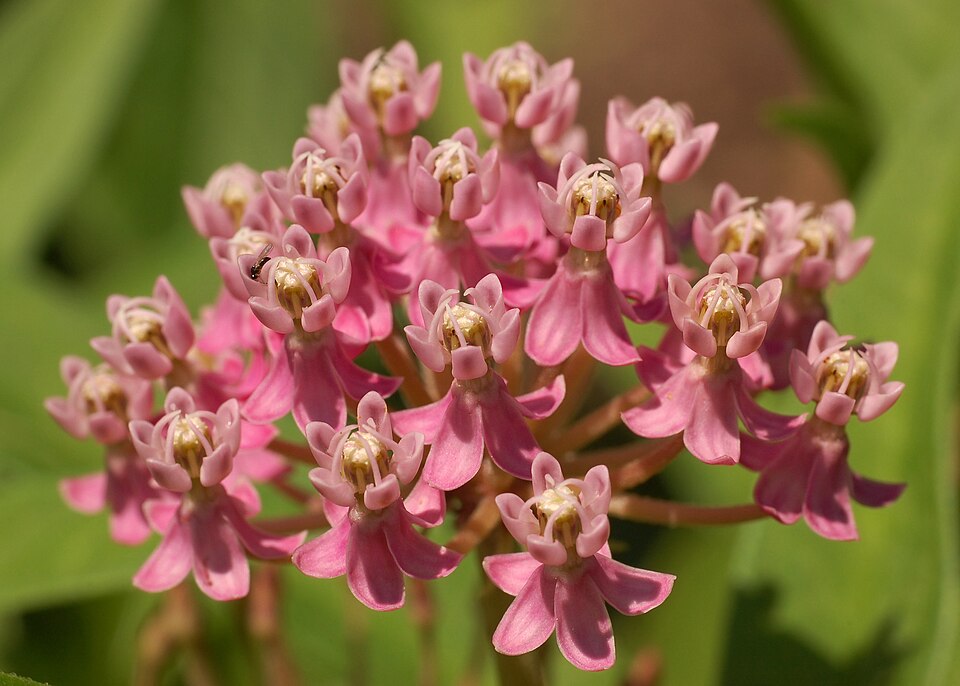
Asclepias incarnata, commonly known as Swamp Milkweed, Rose Milkweed, or Red Milkweed, is one of North America’s most valuable and beautiful native wildflowers. This tall, graceful perennial herb is a cornerstone species for pollinators, particularly monarch butterflies, whose caterpillars feed exclusively on milkweed species. Unlike its name suggests, Swamp Milkweed thrives not only in wetlands but also in ordinary garden conditions, making it an excellent choice for butterfly gardens, rain gardens, and naturalized plantings across much of the United States and southern Canada.
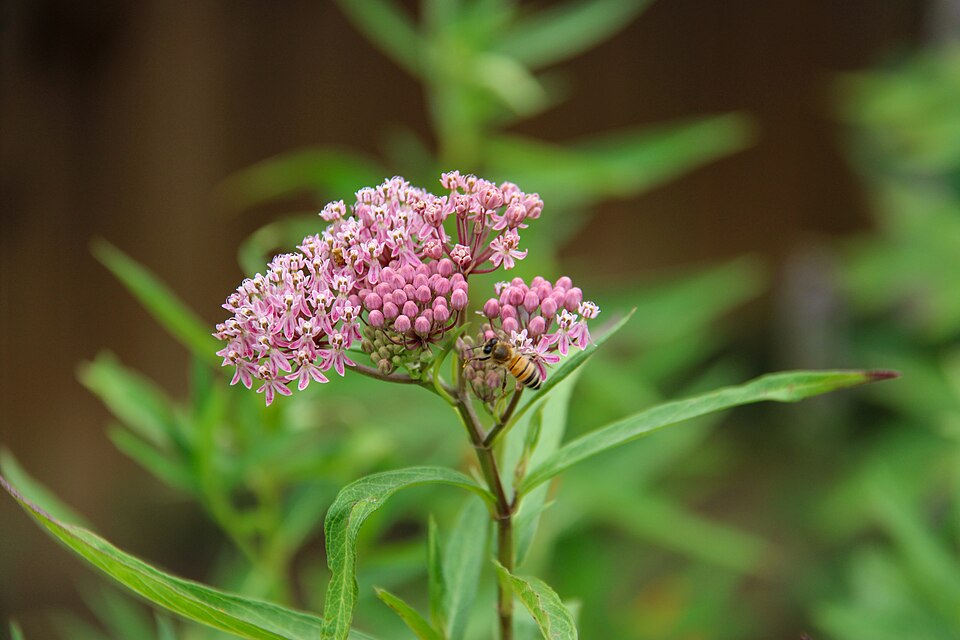
Standing 2 to 4 feet tall with narrow, lance-shaped leaves and showy clusters of fragrant pink to mauve flowers, Swamp Milkweed blooms from midsummer through early fall, providing crucial nectar when many other native flowers have finished their season. The flowers are followed by distinctive seed pods that split open to release silky-tufted seeds on the autumn wind — a sight that signals the end of the growing season and the continuation of this important plant’s lifecycle.
Beyond its ecological importance, Swamp Milkweed has a rich cultural history, used traditionally by Indigenous peoples for both medicinal and practical purposes. Today, it represents one of the most reliable ways gardeners can support declining monarch butterfly populations while adding months of color and wildlife activity to their landscapes.
Identification
Swamp Milkweed is a robust herbaceous perennial that typically grows 2 to 4 feet tall, occasionally reaching 5 feet in ideal conditions. The plant forms clumps through underground rhizomes, creating attractive colonies over time. Like all milkweeds, it produces a thick, white, milky latex when stems or leaves are broken — this sap contains cardiac glycosides that make the plant toxic to most mammals but provide chemical defense for monarch caterpillars that feed on it.
Stems & Growth Form
The stems are sturdy, upright, and usually unbranched, with a smooth texture and reddish tinge, especially on younger growth. Multiple stems often emerge from the same root system, creating a bushy, full appearance. The plant dies back to the ground each winter and reemerges reliably from its perennial root system in spring.
Leaves
The leaves are simple, opposite (sometimes whorled near the base), and narrowly lance-shaped to oblong, measuring 3 to 6 inches long and ½ to 1½ inches wide. They have smooth margins and prominent parallel veining that runs from the midrib to the leaf edge. The upper surface is dark green and somewhat glossy, while the underside is paler. Leaves attach directly to the stem without petioles (leaf stalks) and have a distinctive narrow, pointed tip.
Flowers
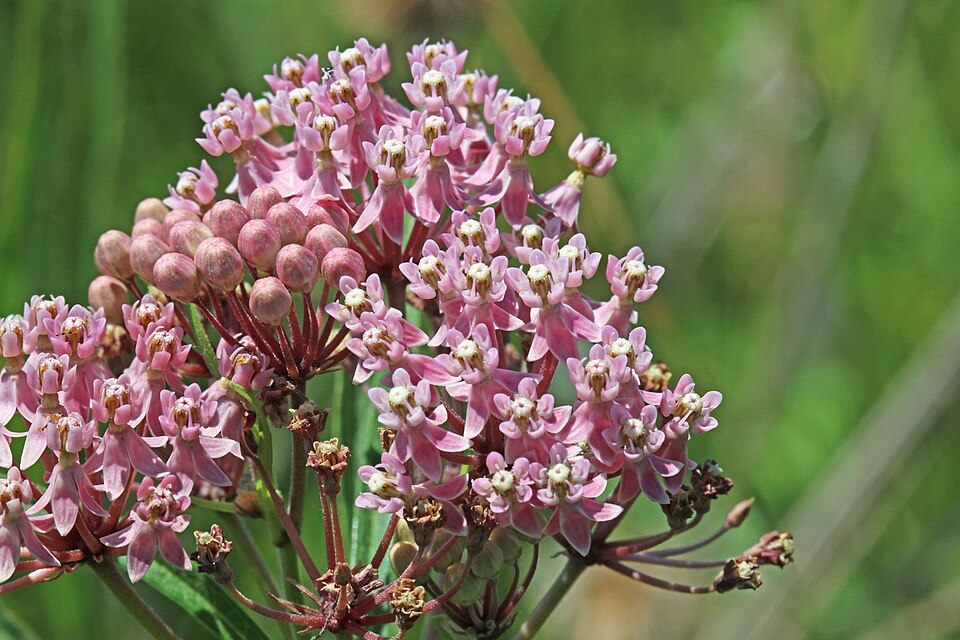
The flowers are the plant’s most striking feature — small individual blooms arranged in dense, dome-shaped terminal clusters (umbels) typically 2 to 4 inches across. Each flower is about ¼ inch long with five reflexed petals and five upright hoods, all in shades of pink, rose, mauve, or occasionally white. The complex flower structure is specifically adapted for butterfly pollination, with the anthers forming a central column that deposits pollen packets (pollinia) on visiting insects.
Blooming occurs from July through September, with peak flowering in mid to late summer. The flowers are notably fragrant, especially in the evening, and produce abundant nectar that attracts butterflies, bees, hummingbirds, and other pollinators. Individual flower clusters can bloom for several weeks, making this one of the longest-flowering native perennials.
Fruit & Seeds
The flowers develop into distinctive narrow, spindle-shaped seed pods (follicles) 3 to 5 inches long. The pods start green and mature to brown, splitting along one side in late fall to release 30-40 flat, brown seeds, each attached to a tuft of long, silky white hairs (coma) that allows them to disperse on the wind. The empty pods often persist into winter, adding structural interest to the garden.
Quick Facts
| Scientific Name | Asclepias incarnata |
| Family | Apocynaceae (Dogbane) |
| Plant Type | Herbaceous Perennial |
| Mature Height | 2–4 ft |
| Sun Exposure | Full Sun to Part Shade |
| Water Needs | Moderate to High |
| Bloom Time | July – September |
| Flower Color | Pink to Mauve |
| USDA Hardiness Zones | 3–8 |
Native Range
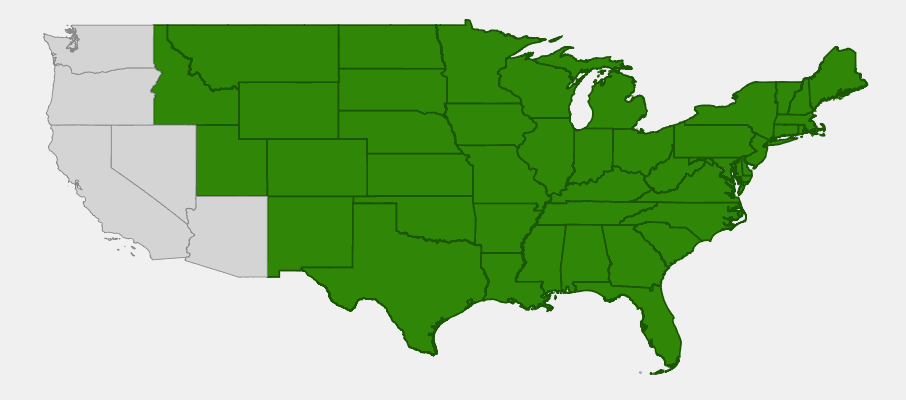
Swamp Milkweed has one of the broadest native ranges of any North American milkweed, extending from southeastern Canada south to the Gulf Coast and from the Atlantic seaboard west to the Great Plains. It naturally occurs across most of the eastern two-thirds of the United States, thriving in diverse habitats from southern Maine to northern Florida, and from the Atlantic coast west to Montana, Wyoming, Colorado, New Mexico, and eastern Texas.
In its native range, Swamp Milkweed inhabits wet meadows, marshes, streambanks, pond edges, wet prairies, and roadside ditches — anywhere the soil remains consistently moist during the growing season. Despite its common name, it also grows in average garden conditions and can tolerate periods of drought once established. The species shows remarkable adaptability, occurring at elevations from sea level to over 7,000 feet in the Rocky Mountains.
This wide distribution makes Swamp Milkweed one of the most important monarch butterfly host plants across North America. It provides critical breeding habitat along the major monarch migration routes and is particularly valuable in the Great Lakes region, where it often dominates wet prairie restorations and supports large monarch populations during their peak breeding season.
📋 Regional plant lists featuring Swamp Milkweed: North Dakota, South Dakota & Western Minnesota
Growing & Care Guide
Swamp Milkweed is one of the easiest native perennials to grow and maintain, adapting well to both wet and moderately dry conditions once established. Its tolerance for various moisture levels and soil types, combined with its spectacular flowers and wildlife value, makes it a must-have plant for any native garden.
Light
Swamp Milkweed performs best in full sun, where it develops the strongest stems, most abundant blooms, and most compact growth habit. However, it tolerates partial shade quite well, though plants may become slightly taller and more open in habit. In shadier locations, provide at least 4-6 hours of direct sunlight daily for good flowering.
Soil & Water
Despite its name and native habitat preferences, Swamp Milkweed is surprisingly adaptable to different moisture conditions. While it thrives in consistently moist to wet soils, it also grows well in average garden conditions and can tolerate brief drought periods once established. The plant prefers rich, organic soils but tolerates clay, loam, or sandy conditions with pH ranging from slightly acidic to neutral (6.0-7.5).
For optimal growth, provide consistent moisture during the growing season, especially in the first year after planting. Mulching around plants helps retain soil moisture and suppress weeds. In very dry conditions, afternoon watering during hot spells will keep plants vigorous and blooming longer.
Planting Tips
Plant Swamp Milkweed in spring after the last frost date, or in early fall at least 6-8 weeks before hard frost. Space plants 18-24 inches apart, as mature clumps can spread 2-3 feet wide. The plant establishes quickly from container-grown nursery stock and begins blooming in its first year.
When starting from seed, cold stratification improves germination rates. Sow seeds in fall for natural winter stratification, or stratify in the refrigerator for 30-60 days before spring sowing. Seeds need light to germinate, so press them into the soil surface rather than covering deeply.
Pruning & Maintenance
Swamp Milkweed requires minimal maintenance. Deadhead spent flowers if you want to prevent self-seeding, though many gardeners prefer to leave the attractive seed pods for winter interest and wildlife food. Cut the entire plant back to 3-4 inches in late fall or early spring before new growth emerges.
The plant may self-seed moderately in favorable conditions, and established clumps gradually expand through underground rhizomes. Division is rarely necessary but can be done in early spring to control spread or create new plants.
Landscape Uses
Swamp Milkweed excels in many garden situations:
- Butterfly gardens — essential monarch host plant and nectar source
- Rain gardens — tolerates periodic flooding and drought
- Native plant borders — provides mid-summer to fall color
- Pond and water garden edges — thrives in moist soil conditions
- Naturalized meadows — establishes easily and spreads gradually
- Pollinator gardens — attracts butterflies, bees, and hummingbirds
- Prairie restorations — important component of wet prairie ecosystems
Wildlife & Ecological Value
Few native plants provide as much wildlife value as Swamp Milkweed. It serves as a critical hub of ecological activity, supporting dozens of species throughout its long growing season and playing an irreplaceable role in maintaining healthy pollinator populations.
For Butterflies
Swamp Milkweed is most famous as a monarch butterfly host plant — monarch caterpillars feed exclusively on milkweed species and cannot complete their lifecycle without them. The plant also attracts numerous other butterflies as a nectar source, including Great Spangled Fritillary, Silver-spotted Skipper, Eastern Tiger Swallowtail, and various sulfurs and whites. The long blooming season provides nectar during critical periods of monarch migration and breeding.
Beyond monarchs, several other butterfly and moth species use Swamp Milkweed as a host plant, including the Milkweed Tussock Moth and various aphid species that, in turn, support ladybugs and other beneficial insects.
For Birds
American Goldfinches and other seed-eating birds eagerly consume the seeds in fall and winter. The silky seed material is also collected by birds for nest building. During the growing season, the plant’s abundant insect life attracts insectivorous birds, while hummingbirds occasionally visit the nectar-rich flowers.
For Pollinators
The complex flower structure attracts a diverse array of native bees, including bumblebees, sweat bees, and solitary bees. Honeybees also visit frequently, and the flowers provide high-quality nectar with excellent sugar content. The long blooming period makes Swamp Milkweed particularly valuable during late summer when many other nectar sources have finished flowering.
Ecosystem Role
In wetland ecosystems, Swamp Milkweed helps stabilize soil with its deep root system and provides important structural diversity in plant communities. The plant’s ability to spread gradually creates habitat patches that support specialized insect communities, while its prolific seed production contributes to natural area restoration and wildlife corridor establishment.
Cultural & Historical Uses
Swamp Milkweed holds a significant place in Indigenous North American ethnobotany, with many tribes utilizing both its medicinal properties and practical applications. The Ojibwe people used root preparations to treat kidney problems and as a contraceptive, while the Potawatomi employed the plant for heart conditions and lung ailments. The Cherokee used various parts of the plant for stomach issues and as a folk remedy for dropsy (fluid retention).
The plant’s common name reflects the historical understanding of different milkweed species’ habitats, though early European-American settlers sometimes confused the various species. The specific epithet “incarnata” refers to the flesh-colored (pink) flowers that distinguish this species from other milkweeds. Indigenous peoples were careful to distinguish between different milkweed species, as some have much stronger medicinal effects than others.
The long, strong stem fibers were used to make cordage, fishing nets, and textiles. Some Plains tribes wove the silky seed hairs into fabric and used them as tinder for fire-starting. During World War II, the buoyant seed hairs were collected on a large scale as a substitute for kapok in life jackets, leading to organized collection drives involving schoolchildren across the Midwest.
Today, Swamp Milkweed has become a symbol of conservation efforts, particularly those focused on monarch butterfly preservation. It’s widely planted in habitat restoration projects and has gained recognition as an essential component of pollinator-friendly gardens, representing the growing movement to use native plants in landscape design.
Frequently Asked Questions
Is Swamp Milkweed toxic to pets and livestock?
Yes, like all milkweeds, Swamp Milkweed contains cardiac glycosides that are toxic to mammals if consumed in quantity. However, most animals avoid eating milkweeds due to their bitter taste and milky sap. Keep pets away from the plant and consider fencing if you have browsing livestock, though poisoning incidents are rare due to the plant’s unpalatable nature.
How long does it take for Swamp Milkweed to attract monarchs?
Monarch butterflies can find and use Swamp Milkweed plants within the first growing season, especially if you plant in spring. However, it may take 2-3 years for plants to reach full size and maximum attractiveness. The key is planting in areas with good sun exposure and ensuring you have multiple plants, as monarchs prefer to lay eggs on large milkweed patches.
Will Swamp Milkweed grow in dry conditions?
Despite its name and native habitat, Swamp Milkweed is quite drought-tolerant once established. While it prefers moist conditions, it adapts well to average garden conditions and can survive dry periods. However, consistently dry plants may not grow as tall or flower as abundantly as those receiving regular water.
Should I deadhead the flowers to keep the plant blooming?
Deadheading spent flower clusters can encourage additional blooming and may extend the flowering season slightly. However, many gardeners prefer to leave some seed pods to develop, both for the wildlife value of the seeds and for the attractive winter structure. You can deadhead about half the flowers and let the rest go to seed for the best of both approaches.
How do I prevent Swamp Milkweed from spreading too much?
Swamp Milkweed spreads slowly through underground rhizomes and can self-seed in favorable conditions, but it’s not aggressively invasive. To control spread, deadhead flowers before seeds mature and divide clumps every 3-4 years in early spring. Installing root barriers can also help contain the rhizomes if needed in smaller gardens.

Looking for a nursery that carries Swamp Milkweed?
Browse our native plant nursery directory: North Dakota · South Dakota · Minnesota