Palmer Penstemon (Penstemon palmeri)
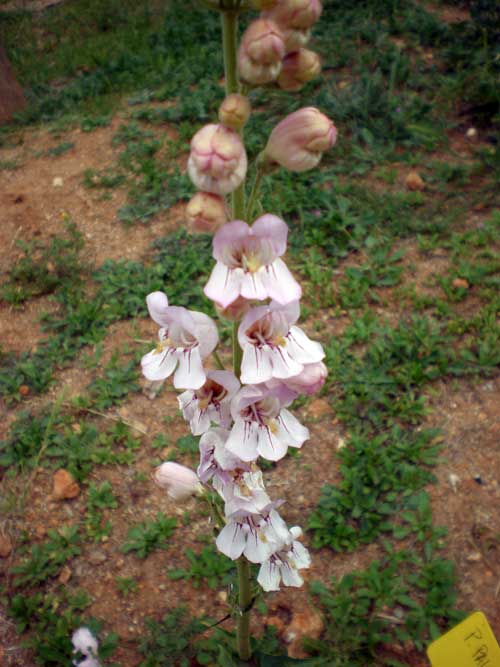
Penstemon palmeri, commonly known as Palmer Penstemon or Palmer’s Penstemon, stands out among the 270+ species in the penstemon genus as one of the most dramatically beautiful and delightfully fragrant. This statuesque wildflower — reaching 2–4 feet tall — erupts into bloom in late spring and early summer with large, inflated, balloon-like flowers of soft pink to white with distinctive rose-purple veining. Unlike most penstemons, which are primarily adapted for hummingbird or bee pollination, Palmer Penstemon’s large, open-throated flowers and strong, sweet fragrance (reminiscent of vanilla or sweet clover) are a specific adaptation to large native bees, particularly bumblebees and carpenter bees, though hummingbirds readily visit as well.
Named for Edward Palmer (1831–1911), the prolific English-American botanist and archaeologist who collected extensively throughout the American West and Mexico, this penstemon is native to the arid bajadas, desert washes, sandy plains, and canyon slopes of the Intermountain West and Southwest. It is most abundant in Utah, Nevada, Arizona, and southern California, where it colonizes open, well-drained soils from desert foothills to about 6,500 feet elevation. Its adaptation to poor, gravelly soils and periodic drought makes it an outstanding choice for xeriscape and low-water gardens throughout the region.
In garden culture, Palmer Penstemon has gained well-deserved recognition as one of the showiest and most adaptable native wildflowers for western landscapes. Its large flowers, extended bloom period, pleasant fragrance, and minimal care requirements have made it a staple of native plant nurseries and Southwestern water-wise gardens. It naturalizes readily from seed and can form impressive drifts in suitable conditions.
Identification
Palmer Penstemon is a robust herbaceous perennial, growing from a woody taproot and forming basal rosettes of distinctive grayish-green, clasping leaves. Flowering stalks reach 2–4 feet (60–120 cm) tall and bear the large, showy flowers that define this species. The plant spreads slowly by rhizomes to form clumps and self-seeds in suitable conditions. The large, inflated flower size and sweet fragrance distinguish it from most other penstemons.
Leaves
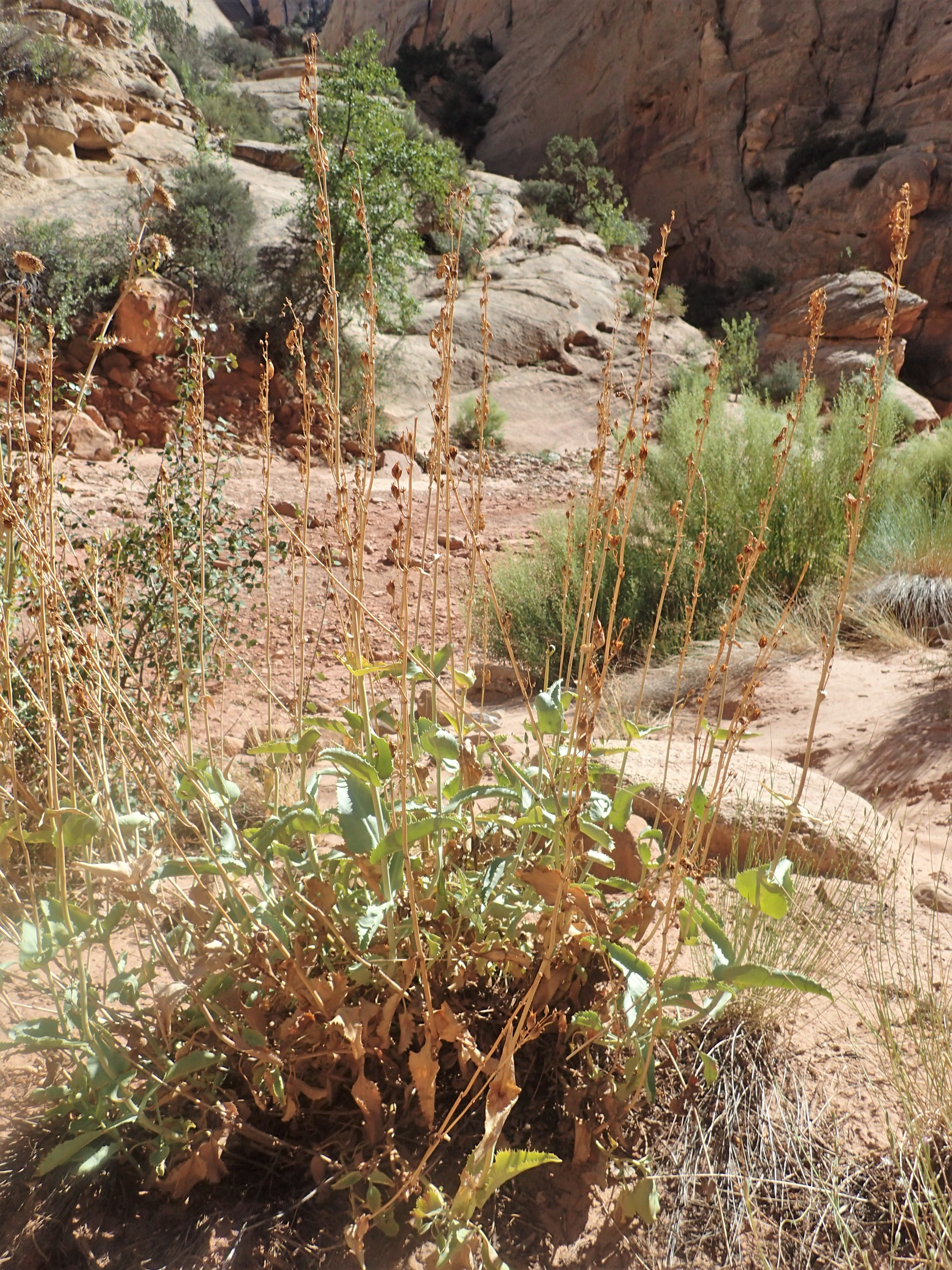
The leaves are a distinctive feature even before the plant blooms. Basal and lower stem leaves are large, 3–7 inches long, grayish-green to blue-green, with a glaucous (waxy-powdery) bloom. A remarkable characteristic of the stem leaves is that they are perfoliate — the stem appears to pass through the leaf, creating a distinctive clasping appearance unlike most other penstemons. The leaf edges have fine, irregular teeth. This blue-gray, clasping leaf character is one of the most reliable identification features when the plant is not in flower.
Flowers
The flowers are large (1–1.5 inches long), gaping, and two-lipped, with an inflated, balloon-like corolla. The overall color is pale pink to white on the outside, with the interior lined with purple to rose-colored nectar guides (veining) that direct pollinators to the nectar source. The flower throat is notably wide — allowing large bumblebees to enter completely. The staminode (the beard-bearing sterile stamen characteristic of penstemons) is yellow-bearded, adding to the flower’s visual complexity. The flowers are strongly and pleasantly fragrant — a distinctive sweet, vanilla-like scent that is immediately noticeable near the plants on warm days.
Quick Facts
| Scientific Name | Penstemon palmeri |
| Family | Plantaginaceae (Plantain) |
| Plant Type | Perennial herbaceous wildflower |
| Mature Height | 2–4 ft |
| Sun Exposure | Full Sun |
| Water Needs | Low to Moderate |
| Bloom Time | May – July |
| Flower Color | Pale pink to white with purple veining |
| Fragrance | Yes — strong, sweet, vanilla-like |
| Pollinator Value | Bumblebees, hummingbirds, native bees |
| USDA Hardiness Zones | 4–9 |
Native Range
Palmer Penstemon is native to the Intermountain West and Southwest, occurring across Utah, Nevada, Arizona, southern California, New Mexico, southwestern Colorado, and southern Idaho. Its range is centered on the Great Basin and Colorado Plateau, where it is most abundant on gravelly alluvial fans, desert washes, and open rocky slopes. In Utah, it grows from the desert floors of the Colorado River basin north to the Wasatch Front foothills. In Nevada, it is found throughout the Basin and Range province at moderate elevations.
The species favors open, sunny, well-drained habitats and is commonly encountered along roadsides, in disturbed areas, and in natural desert scrub and pinyon-juniper woodland communities. It grows from about 2,500 feet elevation in warm desert foothills to approximately 6,500 feet in montane areas. The wide elevation range and its affinity for disturbed habitats make it one of the more adaptable and widespread penstemons in its region.
Palmer Penstemon has been widely introduced outside its native range throughout the western United States for erosion control and revegetation projects, and cultivated plants are found across much of the arid West. It naturalizes readily from seed and can persist in appropriate conditions well beyond its original native range.
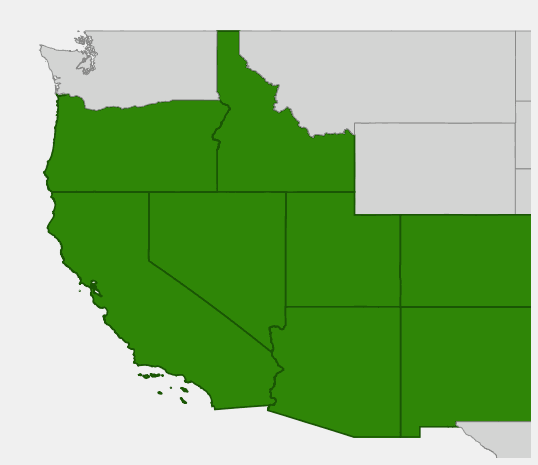
📋 Regional plant lists featuring Palmer Penstemon: Intermountain West
Growing & Care Guide
Palmer Penstemon is one of the easiest native penstemons to grow in western gardens. Its tolerance for poor soils, drought, and heat — combined with spectacular flowers and fragrance — make it a must-have for Intermountain West and Southwest gardens.
Light
Full sun is required for best performance. Palmer Penstemon blooms most heavily and grows most compactly in full sun. It will tolerate light afternoon shade in hot desert climates but blooms less profusely and is more prone to disease in shaded conditions. Choose the sunniest, most open location available.
Soil & Water
Well-drained soil is the critical requirement. Palmer Penstemon thrives in gravelly, sandy, or loamy soils and handles alkaline conditions well. It struggles and may rot in heavy clay or consistently moist soils. Once established, it is quite drought tolerant and survives on moderate annual precipitation (12–16 inches) without supplemental irrigation. In cultivation, water deeply once a week during establishment; reduce to bi-weekly in the second year; thereafter, water only during extended drought (once every 2–3 weeks in summer). This penstemon performs better with slightly more water than extreme drought-tolerant species, but overwatering remains the primary failure mode.
Planting Tips
Direct seeding is often the most successful approach — scatter seeds on prepared, weed-free ground in fall and allow natural winter stratification to break dormancy. Seedlings bloom in their second or third year. Container-grown transplants establish well when planted in fall or spring. Space 2–3 feet apart. Because it is a short-lived perennial (3–5 years), allow some self-seeding to maintain the colony. The plants self-seed prolifically in suitable conditions — potentially too prolifically in irrigated garden beds.
Pruning & Maintenance
Deadhead spent flower stalks to the basal rosette to encourage a second flush of bloom and prevent excessive self-seeding. Leave some stalks to set seed for natural regeneration. The basal rosette is semi-evergreen and should not be removed in fall. Palmer Penstemon is resistant to most pests and diseases. Root rot in wet soils is the primary concern.
Landscape Uses
- Hummingbird and pollinator garden centerpiece
- Roadside and median planting — highly tolerant of poor conditions and vehicle exhaust
- Wildflower meadow — naturalizes and self-seeds in appropriate conditions
- Rock garden and xeriscape design
- Cut flower garden — the large flowers have good vase life
- Erosion control on dry slopes and disturbed areas
- Fragrance garden — among the most fragrant native wildflowers of the West
Wildlife & Ecological Value
Palmer Penstemon is an important pollinator plant and provides structural habitat in open desert and shrubland environments.
For Hummingbirds
Though primarily adapted for bee pollination (via its wide-open flower throat designed for bumblebees), the large flowers with their abundant nectar are readily visited by Broad-tailed Hummingbirds, Black-chinned Hummingbirds, and migrating Rufous Hummingbirds throughout its range. The combination of fragrance, size, and pale coloration distinguishes it from the typically red, scentless hummingbird penstemons — but hummingbirds are opportunists and visit Palmer Penstemon eagerly.
For Bees
The wide flower throat is specifically designed to accommodate large native bees. Bumblebees (Bombus spp.) are among the most frequent and effective pollinators, often entering the flower completely to access nectar and emerging with pollen on their bodies. Carpenter bees, sweat bees, and various native mining bees also visit. The extended bloom season (May–July) provides a sustained nectar resource during the period when many other native wildflowers have finished blooming.
For Butterflies & Other Insects
Various butterfly species, including swallowtails, skippers, and checkerspots, visit the flowers for nectar. The dense basal rosettes provide shelter for ground-dwelling beetles, spiders, and other invertebrates. The plant supports a minor insect community that in turn supports insectivorous birds and lizards in the surrounding landscape.
Ecosystem Role
On disturbed desert soils, Palmer Penstemon is one of the first native wildflowers to establish, providing early successional habitat structure and pollinator food resources that support the establishment of other native species. Its deep taproot helps break compacted soils and adds organic matter as roots decompose, improving soil conditions for subsequent plant establishment.
Cultural & Historical Uses
Palmer Penstemon was used medicinally by various Indigenous peoples of the Southwest and Great Basin. The Navajo prepared decoctions of the root for treating headaches, joint pain, and digestive complaints. The Hopi used penstemon preparations in ceremonial contexts. The Paiute and Shoshone used various penstemon species for similar purposes, and P. palmeri was certainly within the knowledge system of peoples living in its range.
The species was formally described to science by Asa Gray in 1876 based on collections made by Edward Palmer during his extensive botanical surveys of the Great Basin and Colorado Plateau in the 1870s. Gray recognized the distinctiveness of this penstemon — its large size, fragrant flowers, and unusual perfoliate leaves set it apart from all other species in the genus — and named it in honor of its discoverer.
In the modern era, Palmer Penstemon has become a significant tool in revegetation and erosion control programs throughout the western United States. Its ability to establish rapidly from seed on disturbed, compacted soils — including roadsides, mine spoils, and construction sites — makes it invaluable for ecological restoration. It has been used extensively in highway revegetation projects throughout Utah, Nevada, and Arizona, where the dramatic flowering stalks brighten roadsides each spring and early summer.
Frequently Asked Questions
Is Palmer Penstemon fragrant?
Yes — it is one of the few strongly fragrant penstemons. The scent is sweet and vanilla-like, noticeable from several feet away on warm, calm days. This fragrance is a specific adaptation to bumblebee pollination (many bee-pollinated flowers are fragrant, while hummingbird-pollinated ones typically are not). The fragrance is strongest in the morning and early afternoon.
How do I grow Palmer Penstemon from seed?
Seeds benefit from cold stratification — sow outdoors in fall for natural treatment, or refrigerate seeds in moist sand for 4–6 weeks before spring sowing. Direct sow on prepared, weed-free soil and do not cover seeds (they need light to germinate). Plants typically bloom in their second year from seed.
Will Palmer Penstemon come back every year?
It is a perennial but short-lived (3–5 years). It self-seeds prolifically in suitable conditions, so once established, the colony typically persists indefinitely through natural regeneration even as individual plants die. Allow some seeds to mature and scatter to maintain the planting.
What makes the leaves unusual?
The stem leaves are perfoliate — the leaf bases completely encircle the stem, giving the appearance that the stem passes through the leaf. This is a distinctive and unusual characteristic among penstemons and makes Palmer Penstemon easy to identify even when not in flower.
Can Palmer Penstemon grow in alkaline soil?
Yes — it handles alkaline, calcareous (limestone-based) soils quite well, making it suitable for the often-alkaline desert soils of the Intermountain West. pH tolerance is approximately 6.5–8.5. Good drainage is more important than soil pH for successful culture.