Blue Elderberry (Sambucus cerulea)
Sambucus cerulea (also known as Sambucus nigra subsp. cerulea), commonly called Blue Elderberry, is one of the most ecologically productive and landscape-versatile native shrubs of the western United States. This vigorous, fast-growing deciduous shrub or small tree is found from British Columbia south through the Pacific Coast states and east across the Intermountain West to the Rocky Mountain foothills. Its broad, flat-topped clusters of tiny creamy white flowers in late spring are a magnet for pollinators, while the small, powder-blue to deep purple berry clusters that follow in summer are consumed by dozens of species of birds and mammals.
Growing naturally along stream banks, in moist canyon bottoms, on forest edges, and in disturbed areas, Blue Elderberry is adapted to a wider range of conditions than many native shrubs — it can handle everything from full sun to partial shade, and from moderately moist to regularly irrigated garden soil. In the Intermountain West, it grows most commonly in riparian corridors and moist foothill slopes at low to middle elevations, reaching heights of 8 to 20 feet under favorable conditions, though typically staying smaller in drier garden settings.
Beyond its ecological value, Blue Elderberry has been one of the most important food plants for Indigenous peoples across the West for thousands of years. The berries are edible when cooked and have been used to make jellies, syrups, wines, and pies. The flowers are edible and fragrant, used in fritters, syrups, and teas. In the modern landscape, Blue Elderberry earns its place as a multi-season interest plant — flowers in spring, berries in summer, and golden-yellow fall color — while simultaneously providing exceptional value for wildlife.
Identification
Blue Elderberry typically grows as a large multi-stemmed shrub or small tree reaching 8 to 20 feet (2.5–6 m) in height, occasionally taller in ideal riparian conditions. The stems are stout with large, prominent, corky lenticels (pores) and a thick, spongy white pith that distinguishes elderberry from most other shrubs. The bark is grayish-brown and becomes rough and furrowed with age.
Leaves
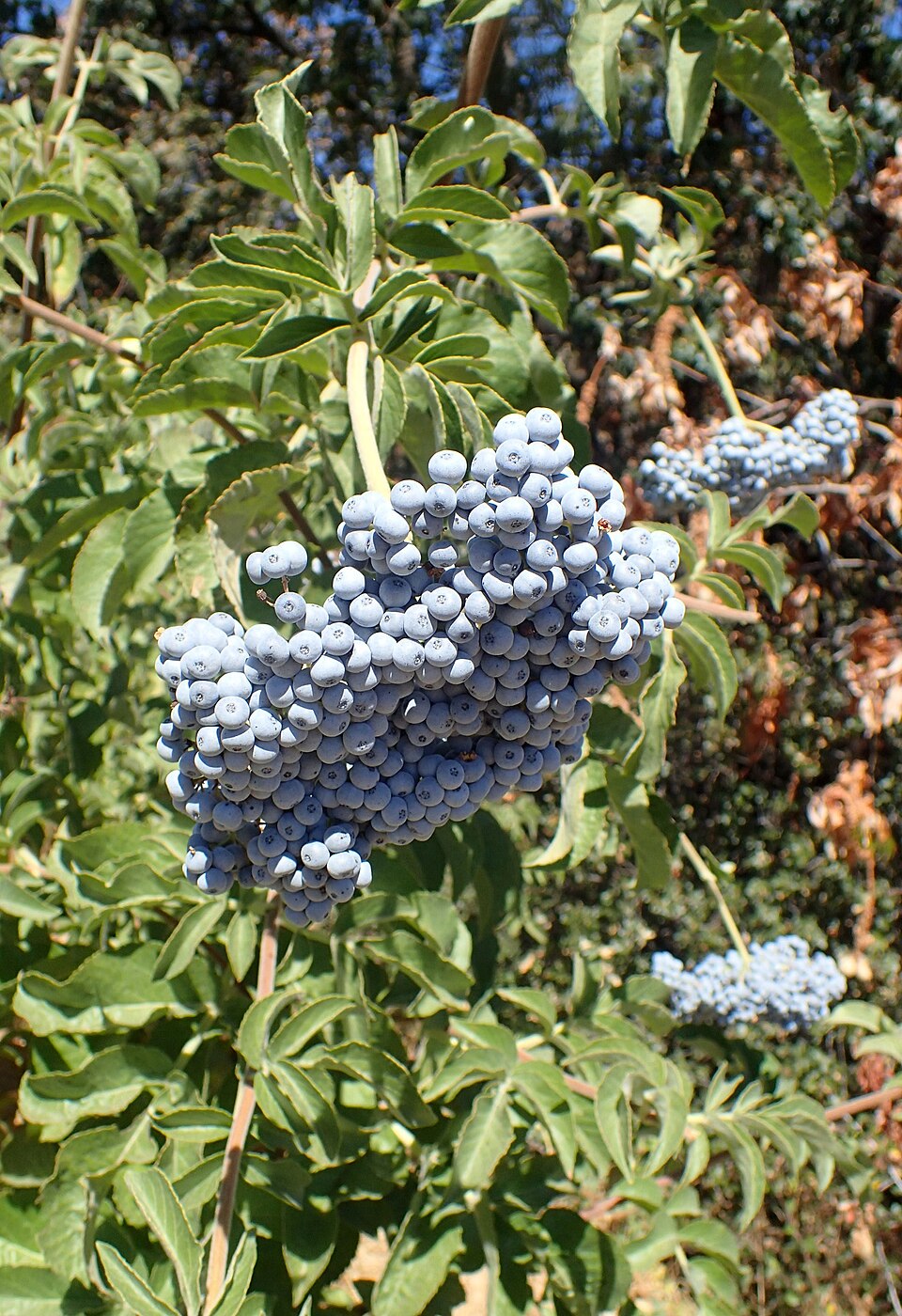
The leaves are pinnately compound with 5 to 9 leaflets arranged in pairs along a central stalk, with a single leaflet at the tip. Each leaflet is 1 to 4 inches (2.5–10 cm) long, lance-shaped to oval, with a sharply toothed margin and a pointed tip. The upper surface is medium green; the underside is paler with a slight blue-green hue — contributing to the “cerulea” (sky blue) species epithet. The leaves have a strong, distinctive odor when crushed. Fall color is yellow.
Flowers
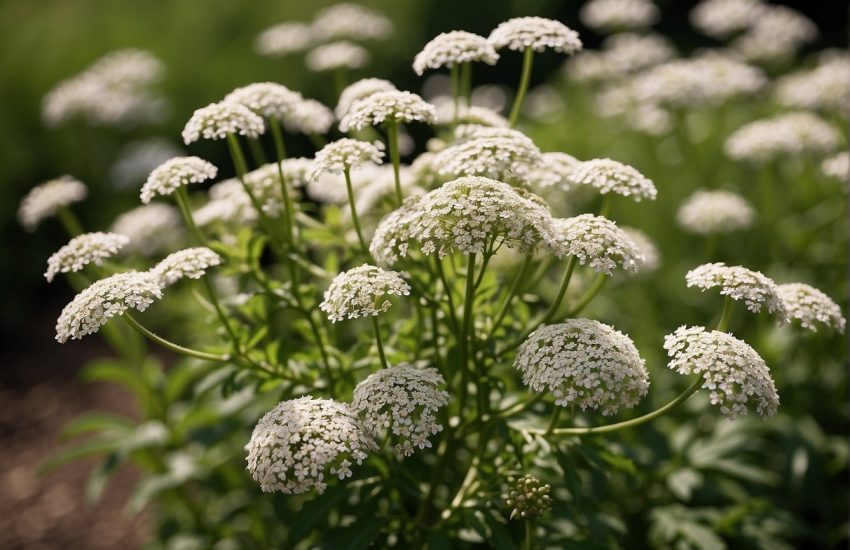
The flowers are tiny — just 3–5 mm across — but are borne in large, flat-topped compound cymes (flower clusters) measuring 4 to 8 inches (10–20 cm) across. Each individual flower has 5 small cream-white petals and 5 yellow stamens. The entire cluster has a strong, sweet fragrance that carries considerable distance and attracts huge numbers of pollinators. Bloom occurs from May through July, depending on elevation and location.
Fruit
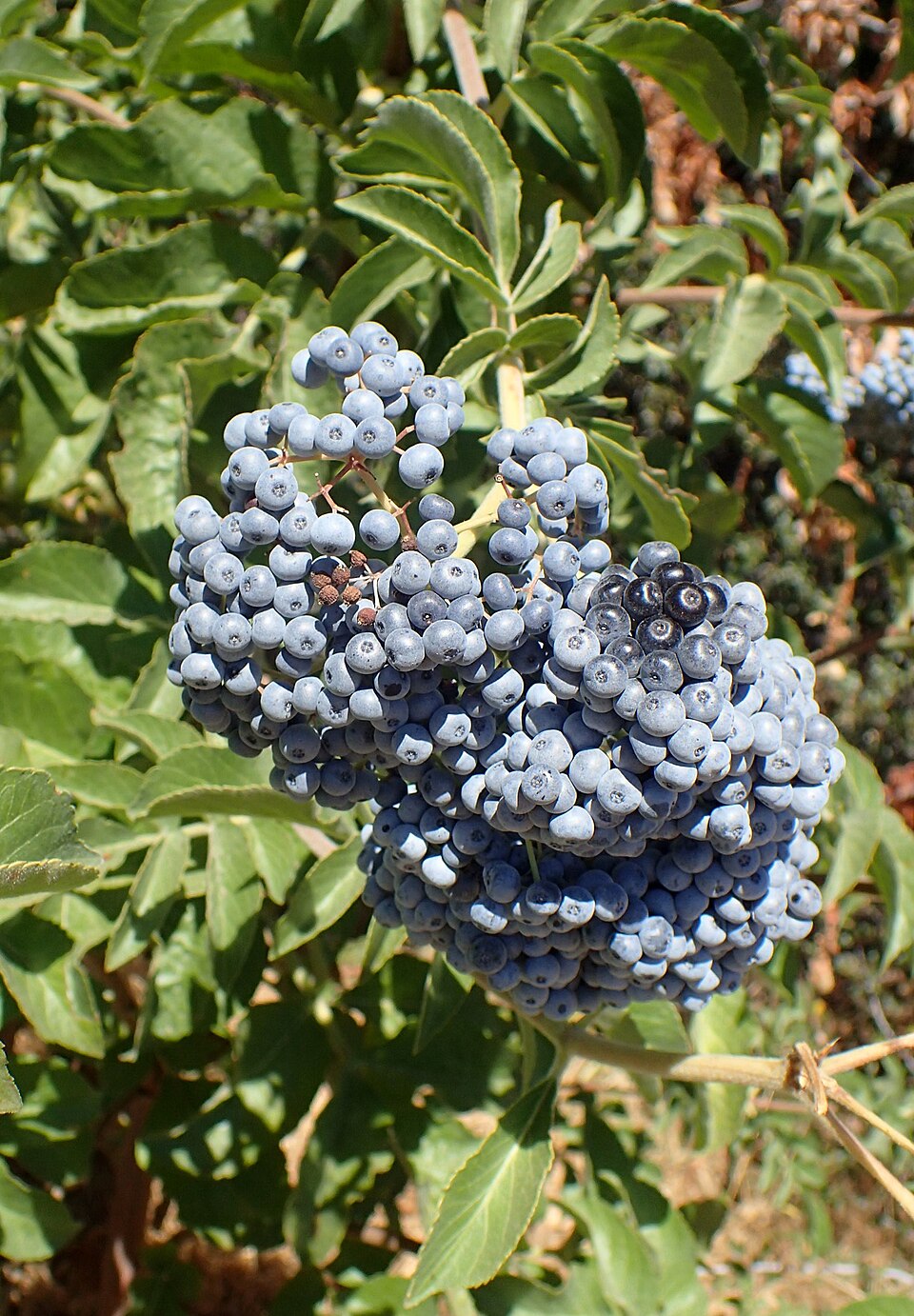
The fruit clusters are drooping umbrella-shaped cymes of small drupes, each about ¼ inch (5–6 mm) in diameter. Unripe fruits are green, turning to deep blue-black at maturity and typically covered in a whitish powdery bloom that gives them a blue-gray appearance (and the species its common name). Each berry contains 3 small seeds. The berries ripen from July through September and hang in heavy clusters that weigh down the branches.
Quick Facts
| Scientific Name | Sambucus cerulea (syn. S. nigra subsp. cerulea) |
| Family | Adoxaceae (Moschatel Family) |
| Plant Type | Deciduous Shrub or Small Tree |
| Mature Height | 8–12 ft |
| Sun Exposure | Full Sun to Part Shade |
| Water Needs | High |
| Bloom Time | May – July |
| Flower Color | Creamy white |
| USDA Hardiness Zones | 4–9 |
Native Range
Blue Elderberry has one of the widest distributions of any western elderberry, ranging from southern British Columbia and Alberta south along the Pacific Coast to Baja California, and eastward through the Intermountain West to the Rocky Mountains of Colorado, Wyoming, and Montana. It is found at elevations from near sea level to around 10,000 feet in mountain locations. In the Intermountain West, it is most common in riparian corridors, moist canyon bottoms, and the wetter aspects of foothills and lower montane zones.
The species is most abundant and vigorous west of the Cascade and Sierra Nevada crests, where reliable moisture supports large, tree-like specimens in valley bottoms and streamside habitats. East of the Cascades, in the drier Intermountain region, Blue Elderberry is typically found in protected riparian habitats where water is more consistently available — along permanent streams, springs, and the lower edges of irrigated valleys.
Throughout its range, Blue Elderberry is a characteristic component of riparian shrubland communities and the shrubby ecotone between moist forest and open dry slopes. It is often found in association with willows (Salix spp.), alders (Alnus spp.), Red-osier Dogwood (Cornus sericea), and various species of cottonwood.
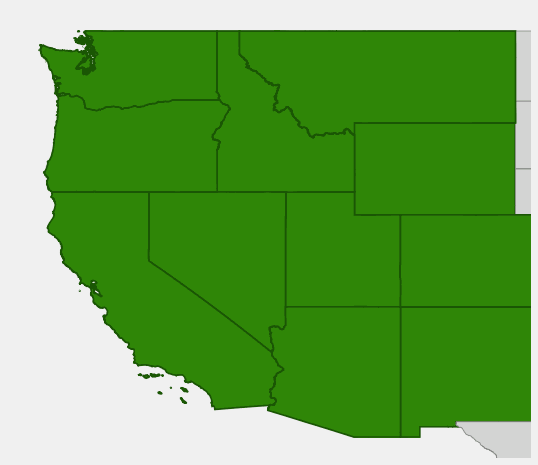
📋 Regional plant lists featuring Blue Elderberry: Intermountain West
Growing & Care Guide
Blue Elderberry is a vigorous and fast-growing shrub that is relatively easy to establish given adequate moisture. It rewards gardeners with rapid growth, spectacular floral displays, abundant berries, and exceptional wildlife value.
Light
Blue Elderberry grows best in full sun to partial shade — it is adaptable across a wide range of light conditions. In full sun with adequate moisture, it produces the most abundant flowers and berries. In partial shade, it grows more open and tall, with slightly reduced flowering but still attractive form. Avoid deep shade, where flowering will be sparse and the shrub becomes leggy.
Soil & Water
Blue Elderberry requires consistently moist soil and is rated as having high water needs. In the garden, it grows best with regular irrigation or near a water feature. It thrives in moist, rich, well-drained loam but will also grow in clay soils that retain moisture. Avoid sandy soils that dry out quickly unless you can provide reliable irrigation. A generous layer of organic mulch (3–4 inches) helps retain soil moisture and encourages the vigorous growth this species is capable of.
Planting Tips
Plant Blue Elderberry in spring or fall in a location with adequate moisture. Space specimens 8–15 feet apart for a naturalistic screen or riparian planting. Container plants transplant readily. The shrub can also be propagated from hardwood cuttings taken in late fall or early spring — cuttings root readily and is the most common propagation method for large-scale restoration plantings.
Pruning & Maintenance
Blue Elderberry benefits from annual renewal pruning: cut the oldest, largest stems down to the ground in late winter or early spring, leaving the newest growth untouched. This cycling keeps the shrub productive and prevents it from becoming overly woody. Flowers and fruit are borne on new growth, so removal of old canes stimulates fresh, productive branches. Hard cut-backs to 12–18 inches can reinvigorate old shrubs that have become unproductive.
Landscape Uses
- Riparian plantings — an ideal companion for willows and alders along streams and ponds
- Wildlife garden centerpiece — the berries feed dozens of bird species
- Edible landscape — harvest flowers for elderflower syrup and berries for preserves
- Privacy screen or hedge — fast growth creates a tall, dense screen quickly
- Erosion control on moist streambanks and slopes
- Mixed native shrub border — combines beautifully with Red-osier Dogwood and native roses
Wildlife & Ecological Value
Blue Elderberry is one of the highest-value wildlife plants in the West, supporting a remarkable diversity of birds, mammals, and insects across multiple seasons.
For Birds
The berries are consumed by over 50 species of birds, including American Robins, Townsend’s Warblers, Western Tanagers, Swainson’s Thrushes, Cedar Waxwings, Bullock’s Orioles, Band-tailed Pigeons, and many others. Migratory species time their fall movements to coincide with elderberry ripening across the West. The dense shrub structure also provides prime nesting sites for numerous songbirds including Yellow Warblers, Song Sparrows, and Black-headed Grosbeaks.
For Mammals
Bears are major consumers of Blue Elderberry fruit and actively seek out fruiting shrubs in late summer. Coyotes, foxes, raccoons, and skunks also eat the berries. Various small mammals including chipmunks, squirrels, and deer mice consume both fruits and seeds. Deer browse the foliage, making protection advisable for newly planted specimens. The dense shrub structure provides cover and denning sites for rabbits and small mammals.
For Pollinators
The large flower clusters are outstanding nectar and pollen sources, attracting an extraordinary diversity of pollinators. Blue Elderberry flowers support hundreds of species of native bees, flies, beetles, and butterflies. The flowers also support specialist pollen-collecting bees in the genus Andrena that are elderberry specialists. For hummingbirds, the dense leafy structure provides shade and nesting sites even though the flowers are not a primary hummingbird nectar source.
Ecosystem Role
In riparian ecosystems, Blue Elderberry helps stabilize streambanks, provides shade that cools water temperatures for fish, and contributes large volumes of leaf litter and woody debris that enrich stream and soil ecosystems. Its rapid growth and high productivity make it particularly important in disturbed riparian areas undergoing restoration. The hollow stems are used as nesting sites by cavity-nesting insects including native bees and parasitic wasps, adding yet another ecological benefit to this remarkably productive species.
Cultural & Historical Uses
Blue Elderberry ranks among the most culturally significant plants used by Indigenous peoples of western North America. Virtually every part of the plant was utilized by one group or another, making it one of the most comprehensively exploited native species on the continent. The Paiute, Shoshone, Nez Perce, Coast Salish, Okanagan, and dozens of other nations incorporated elderberry into their food systems, medicine, and material culture.
The berries were a primary fall food crop for many groups — gathered in large quantities, cooked with bear fat or other oils, and dried into cakes for winter storage. The Coast Salish peoples of the Pacific Northwest harvested berries in great quantities, drying them on skewers or pressing them into cakes. Elderberry juice was fermented into wine and vinegar. The flowers were eaten fresh or made into fritters. Modern use continues these culinary traditions: Blue Elderberry berries and flowers are used today in syrups, jams, wines, cordials, and baked goods across the West.
Medicinally, Blue Elderberry preparations were used for respiratory ailments, fever, rheumatism, and as a general tonic. The bark was used in cathartic preparations. Modern elderberry products (particularly Sambucus nigra preparations from European elderberry) are popular for immune support, and the western Blue Elderberry shares similar flavonoid chemistry. The hollow stems were used to make flutes and pipes, and the hard, fine-grained wood was used for arrows, combs, and small implements.
Frequently Asked Questions
Are Blue Elderberries edible?
Yes, when cooked. Raw Blue Elderberries can cause nausea due to sambunigrin and other alkaloids present in all parts of elderberry plants. Cooked berries are safe and delicious — the small seeds should be strained out. The flowers are safe to eat raw or cooked. All other parts of the plant (leaves, bark, stems, roots) are toxic and should not be consumed.
How fast does Blue Elderberry grow?
Blue Elderberry is one of the fastest-growing native shrubs in the West. Under good conditions with adequate moisture, it can grow 3–6 feet per year. It can reach 10+ feet within 3–4 years of planting from a small container. This fast growth makes it ideal for quickly establishing a wildlife habitat planting or privacy screen.
Why are my elderberry berries not ripening?
Blue Elderberry berries ripen from July through September, depending on elevation and location. If the berries are still green in midsummer, they simply haven’t reached full maturity yet. Birds often harvest nearly-ripe berries aggressively, so the shrub may appear to have had berries and then suddenly bare stems — this is normal bird activity, not a problem with the plant.
How do I control the spread of Blue Elderberry?
Blue Elderberry spreads by root suckers and can expand beyond its original planting location. To control spread, remove suckers promptly as they appear (dig them out at the root). Regular pruning keeps the main shrub more compact and manageable.
Can I grow Blue Elderberry in a container?
Blue Elderberry grows too large for most permanent container culture — it’s best grown in the ground. However, it can be maintained in a large container (25+ gallons) with consistent watering, though it will need transplanting as it grows.