Rocky Mountain Penstemon (Penstemon strictus)
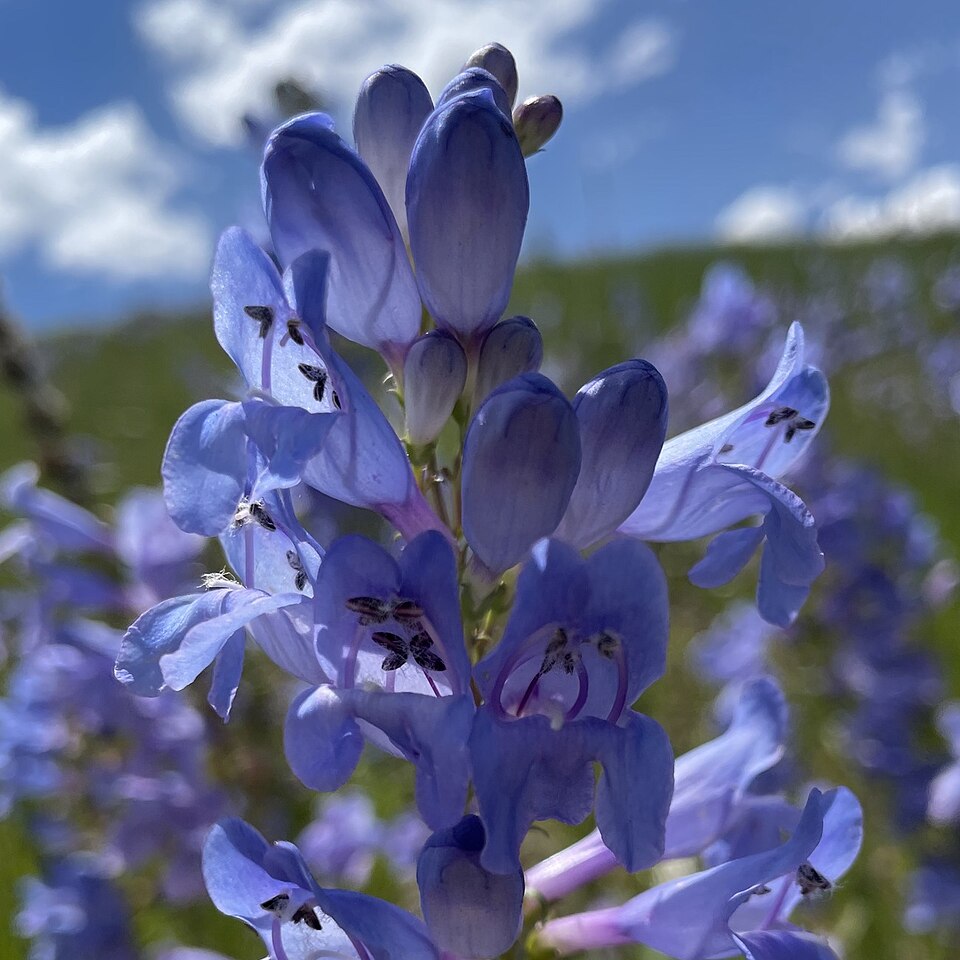
Penstemon strictus, commonly known as Rocky Mountain Penstemon, is one of the most spectacularly colorful native wildflowers of the central Rocky Mountains. This robust perennial herb produces upright flower stalks adorned with numerous tubular, blue to deep violet-purple flowers from June through July, creating one of the most eye-catching floral displays of the mountain West. A member of the plantain family (Plantaginaceae), Rocky Mountain Penstemon is one of approximately 250 penstemon species native to North America — and it is widely regarded as one of the easiest and most rewarding to cultivate in gardens throughout the Intermountain West.
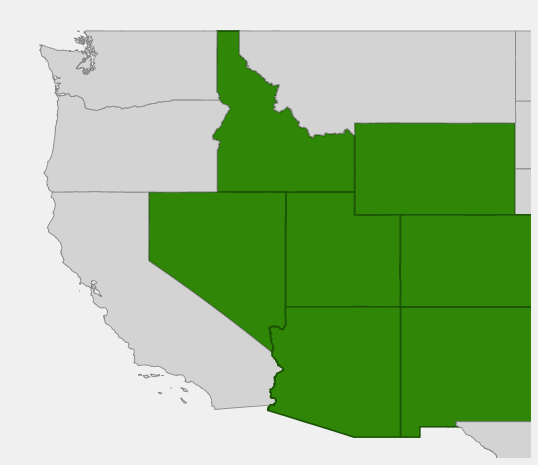
Rocky Mountain Penstemon is native to the central Rocky Mountains, growing naturally from Wyoming and Idaho south through Utah, Colorado, Nevada, Arizona, and New Mexico at elevations from 5,000 to over 10,000 feet. It thrives in open meadows, dry rocky slopes, sagebrush flats, and forest openings that characterize the montane and subalpine zones of the Southern and Central Rockies. The species is one of the dominant wildflowers of the Colorado Rockies, where its blue-violet flower spikes color meadows and roadside slopes throughout June and July.
In the garden, Rocky Mountain Penstemon is prized for its brilliant color, drought tolerance, and ease of cultivation. It requires only full sun, good drainage, and minimal water — the same conditions it experiences in its native mountain habitat. It is also an outstanding hummingbird and native bee plant, drawing a constant stream of pollinators to its tubular flowers. Few perennials deliver such intensity of color with so little maintenance in the challenging conditions of the Intermountain West and Rocky Mountain garden.
Identification
Rocky Mountain Penstemon forms a basal rosette of persistent, somewhat leathery leaves, from which emerge 1 to 3 erect flowering stems reaching 1 to 3 feet (30–90 cm) tall. The overall form is somewhat stiff and upright, with the flowering stems becoming more slender and flexible near the top where the flowers are borne. Plants spread slowly by rhizomes to form small clumps over several years.
Leaves
Basal leaves are oblanceolate to spatulate (broadest near the tip), 2 to 5 inches (5–12 cm) long, with smooth margins, a prominent midrib, and a leathery texture. They are dark to medium green, often persisting through winter as a semi-evergreen rosette. Stem leaves are opposite, lance-shaped, progressively smaller and more clasping up the stem. All leaves are smooth (glabrous), without hairs, and have a somewhat waxy, blue-green sheen.
Flowers
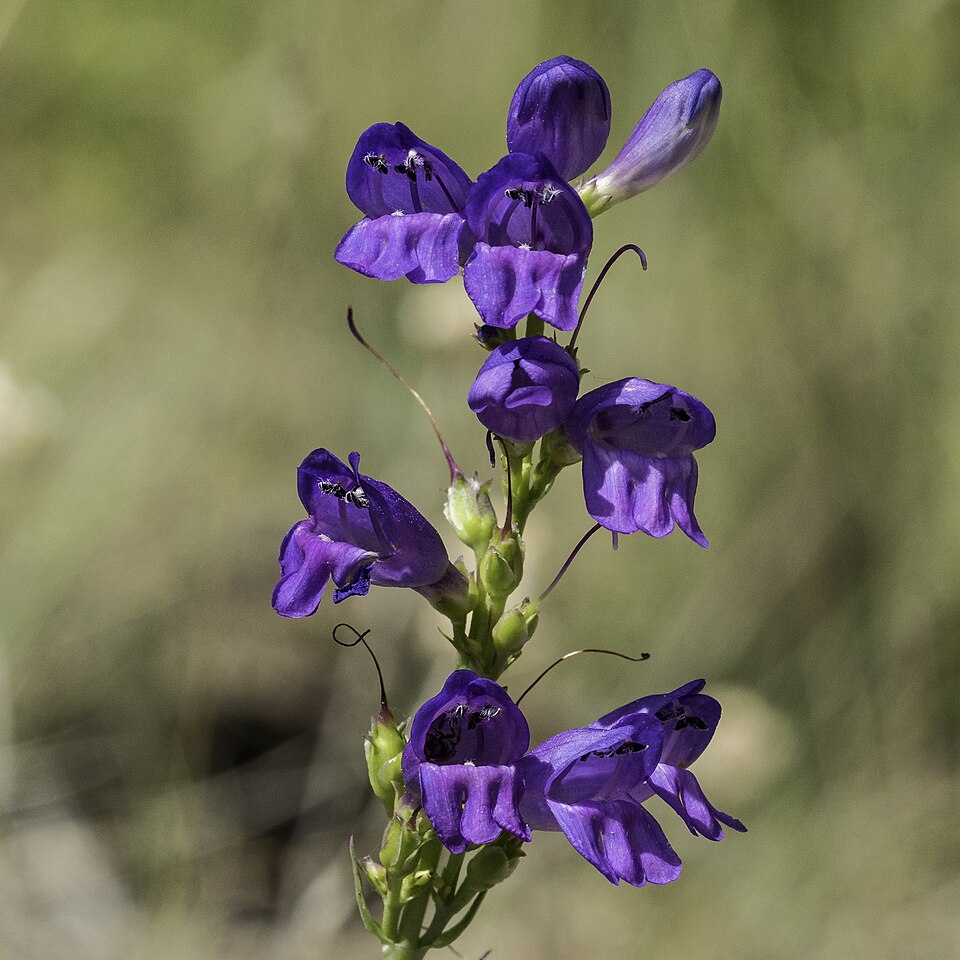
The flowers are the defining glory of this species: tubular, bilaterally symmetrical, and arranged in a one-sided, interrupted raceme (whorls of flowers spaced along the upper portion of the stem). Each flower is ¾ to 1½ inches (2–3.5 cm) long, composed of two fused petals forming an upper lip with 2 lobes and three petals forming the larger lower lip with 3 lobes that project forward. The interior of the flower tube is pale with fine purple guide lines. Color ranges from bright sky blue to deep violet-blue, occasionally with pinkish tints. The fifth stamen (staminode) is sterile, bearded with golden hairs at its tip — a characteristic feature of the penstemon genus and the source of the group’s common name “beardtongue.”
Seeds & Fruits
The fruit is a dry, two-valved capsule containing numerous small, angular, dark brown seeds. Capsules develop in August and September, and the dry seed heads persist attractively through fall and winter. Seeds are small and can be wind-dispersed from the swaying stems. They self-sow freely in favorable conditions, gradually expanding the planting.
Quick Facts
| Scientific Name | Penstemon strictus |
| Family | Plantaginaceae (Plantain Family) |
| Plant Type | Perennial Herb |
| Mature Height | 1–3 ft |
| Sun Exposure | Full Sun |
| Water Needs | Moderate |
| Bloom Time | June – July |
| Flower Color | Blue to violet-purple |
| USDA Hardiness Zones | 3–9 |
Native Range
Rocky Mountain Penstemon is native to the central and southern Rocky Mountains, ranging from southeastern Idaho and southwestern Wyoming south through Utah, Colorado, Nevada, Arizona, and New Mexico. It is most abundant in Colorado, where it is among the most common and widely distributed penstemon species, coloring mountain meadows, roadsides, and rocky slopes with blue-violet throughout June and July. It grows from foothills elevation (around 5,000 feet) to subalpine parklands at 10,000+ feet.
Within its range, Rocky Mountain Penstemon grows in open, sunny situations with well-draining, typically rocky or gravelly soil: open meadows, sagebrush slopes, rocky roadcuts, dry forest clearings, and the margins of ponderosa pine and pinyon-juniper woodlands. It tolerates a wide range of soil types from sandy loam to rocky clay, but always requires excellent drainage and good sun. It is found in association with sagebrush (Artemisia tridentata), rabbitbrush (Ericameria spp.), other penstemon species, and a rich diversity of mountain wildflowers.
Rocky Mountain Penstemon is also commonly found along roadsides and disturbed areas throughout the Colorado Rockies, where it has naturalized extensively and is often considered one of the signature wildflowers of summer drives in the mountains. The combination of its brilliant color and its tendency to grow in large roadside colonies makes it one of the most visually impactful native plants in the region.
📋 Regional plant lists featuring Rocky Mountain Penstemon: Intermountain West
Growing & Care Guide
Rocky Mountain Penstemon is one of the most rewarding native perennials for western gardens — providing brilliant color with minimal care. The key to success is matching its native conditions: full sun, excellent drainage, and low to moderate water.
Light
Full sun is essential. Rocky Mountain Penstemon needs at least 6 to 8 hours of direct sunlight for best flowering. In partial shade, plants produce elongated, floppy stems with fewer flowers and are more susceptible to root rot and powdery mildew. Place it where it gets maximum sun exposure — south or west-facing slopes are ideal.
Soil & Water
Excellent drainage is the most critical requirement. Rocky Mountain Penstemon will quickly decline in heavy, wet clay soils. It thrives in sandy, gravelly, or rocky soils that drain quickly. In heavier garden soils, amend with coarse sand and gravel or plant in raised beds. Once established (typically after the first full growing season), it is moderately drought-tolerant and needs only occasional deep watering in summer — roughly every 2–3 weeks during prolonged dry spells. Avoid frequent shallow irrigation, which promotes root rot.
Planting Tips
Plant from containers in spring or early fall. Ensure excellent drainage before planting — if your soil is heavy, raise the bed by 6–8 inches with added grit and coarse sand. Plant at the same depth as the container, firm in gently, and water in well. A gravel mulch (rather than wood chips) around the crown keeps the surface dry and mimics the rocky mountain habitat. Rocky Mountain Penstemon also grows readily from seed — direct sow in fall for spring germination.
Pruning & Maintenance
Cut stems back by one-third to one-half after the main bloom period (late July or August) to encourage reblooming and prevent excessive self-seeding. Leave some seed heads to stand for winter wildlife and to let seeds ripen for natural propagation. Remove dead basal foliage in early spring before new growth emerges. Divide clumps every 3–5 years to rejuvenate and expand the planting. Rocky Mountain Penstemon is generally short-lived (3–7 years per plant), but readily self-seeds in favorable conditions to maintain the colony.
Landscape Uses
- Dry border perennial — unmatched blue-violet color for low-water gardens
- Rock garden — perfect in rocky, sunny, well-drained situations
- Hummingbird garden — one of the most visited native flowers for hummingbirds
- Wildflower meadow — stunning mass plantings on dry slopes
- Mixed native border — pairs beautifully with Indian Paintbrush, Yarrow, and Sagebrush
- Roadside naturalization — widely used in Colorado highway plantings
- Container specimen — showy in large pots with excellent drainage
Wildlife & Ecological Value
Rocky Mountain Penstemon is a premier pollinator plant in the Rocky Mountain region, offering abundant nectar across one of the most nectar-rich periods of the mountain summer.
For Birds
Broad-tailed Hummingbirds and Rufous Hummingbirds are the primary avian visitors, hovering at the tubular flowers and transferring pollen on their foreheads as they feed. The flowers are ideally shaped — long, tubular, and rich in nectar — to reward hummingbirds while making nectar difficult for short-tongued insects to access without pollinating the flower. The persistent seed capsules are occasionally visited by seed-eating finches and sparrows in fall.
For Mammals
Mule deer may occasionally browse Rocky Mountain Penstemon, but the leathery leaves and moderate toxicity make it moderately deer-resistant. The plant is not a significant direct food source for mammals but contributes to the overall insect productivity of the garden, which in turn supports insectivorous bats and small mammals.
For Pollinators
Rocky Mountain Penstemon is one of the most important native bee plants in the Rockies. Queen bumblebees are major pollinators, with their robust bodies fitting perfectly into the flower tube. Specialist native bees in the genus Osmia (mason bees) are important visitors, as are mining bees (Andrena spp.) and various small native bees. The flowers also attract sphinx moths (hummingbird moths) that can hover and feed like hummingbirds at the blooms. The long bloom period — often 6 to 8 weeks — makes it a sustained, reliable nectar source through the early mountain summer.
Ecosystem Role
Rocky Mountain Penstemon plays a significant role in mountain meadow and sagebrush-steppe ecosystems as a major nectar source during the critical early-summer period when many other wildflowers have not yet reached peak bloom. Its abundant seed production supports granivorous birds and rodents in fall. The species also contributes to soil stability on rocky slopes where few other herbaceous plants grow, and its deep fibrous roots help hold fragile mountain soils.
Cultural & Historical Uses
Rocky Mountain Penstemon and related penstemon species have been used medicinally by numerous Indigenous peoples throughout the Rocky Mountains. The Navajo used preparations from penstemon species to treat a variety of ailments including toothache, headache, and fever. The Zuni and Hopi used penstemon in ceremonial contexts. Various Rocky Mountain tribes used the roots and leaves in poultices for skin irritations and wound care.
In the broader penstemon genus, various species were used as eyedrops, analgesics, and ceremonial plants across Native American traditions in the West. Rocky Mountain Penstemon specifically has been used in Navajo ceremonial medicine and was considered by some Plains groups as a useful plant for treating respiratory ailments when prepared as a tea from the dried leaves. However, all plant preparations should be considered carefully — while traditional use indicates some utility, modern medical advice should be followed for any health condition.
In modern horticulture, Rocky Mountain Penstemon has become one of the most important native perennials for water-wise gardening across the Mountain West. It is widely planted in public landscapes, roadside wildflower programs, and xeriscape demonstration gardens throughout Colorado, Utah, and Idaho. The species has also been used in hybridization programs to develop new garden penstemon cultivars with improved flower size and garden performance.
Frequently Asked Questions
Why is my penstemon dying after a few years?
Rocky Mountain Penstemon is a short-lived perennial, typically living 3 to 7 years before naturally declining. This is normal behavior, not a failure of care. To maintain a penstemon planting, allow some seed to ripen and fall naturally each year, which will produce new plants to replace aging ones. You can also collect seed and start new plants from seed every few years.
How do I get Rocky Mountain Penstemon to rebloom?
Deadhead spent flower spikes down to the next side shoot immediately after blooming — this can trigger a modest second flush of blooms later in summer. Cutting back by one-third after the main flush also helps. However, the main bloom period (June–July) is the most spectacular, and later reblooming is typically less exuberant.
Is Rocky Mountain Penstemon deer-resistant?
It is considered moderately deer-resistant — the somewhat bitter, leathery leaves are less palatable than many other garden perennials. However, hungry deer will browse it, especially young plants. In areas with high deer pressure, some protection may be needed for newly planted specimens.
Can I grow Rocky Mountain Penstemon from seed?
Yes — seed germination requires cold stratification (natural outdoor winter, or 4–6 weeks in the refrigerator). Direct-sow seeds in fall for natural stratification, or start indoors in late winter after cold stratification. Germination is generally good (60–80%) for fresh seed. Plants typically bloom in their second year.
What is the best penstemon for my Colorado garden?
Penstemon strictus (Rocky Mountain Penstemon) is an excellent choice for most Colorado elevations from foothills to subalpine. Other Colorado natives worth considering include Penstemon virens (Blue Mist Penstemon) for lower elevations and Penstemon harbourii (Harbour’s Penstemon) for the highest elevations. Each has specific site preferences — P. strictus is the most broadly adaptable and easiest to grow of the group.