Rubber Rabbitbrush (Ericameria nauseosa)
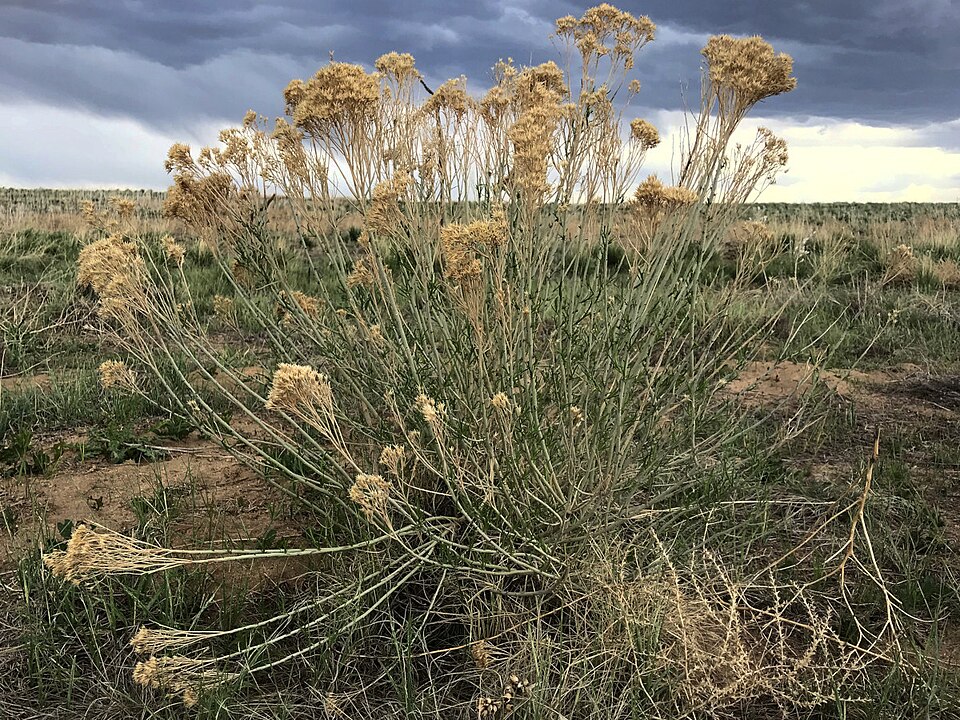
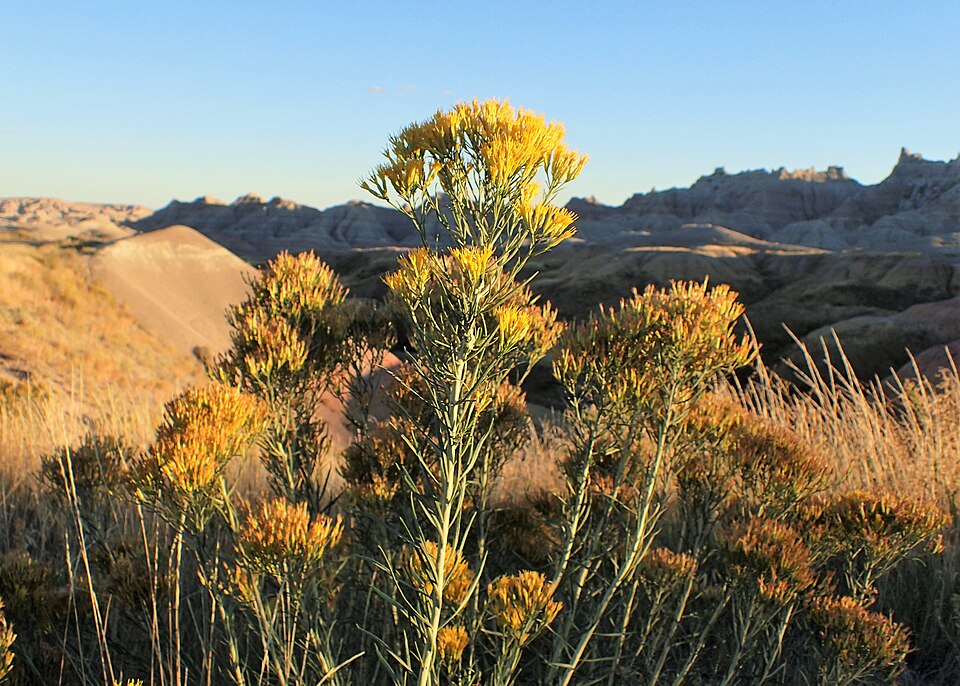
Ericameria nauseosa (formerly Chrysothamnus nauseosus), commonly known as Rubber Rabbitbrush, Gray Rabbitbrush, or Chamisa, is one of the most widespread, ecologically important, and visually spectacular native shrubs of western North America. From late summer through October, when much of the sagebrush landscape has turned amber and brown, Rubber Rabbitbrush erupts in brilliant golden-yellow bloom — great mounding clouds of thousands of tiny yellow flowers that transform entire hillsides and valley floors into glowing fields of gold. Few late-season spectacles in all of North American nature can match the sight of a hillside of Rubber Rabbitbrush in full bloom against a blue autumn sky.
The species name nauseosa — nauseous, or strong-smelling — refers to the distinctive pungent, rubber-like aroma of the foliage and stems, which contain real latex rubber compounds. During World War II, when natural rubber supplies from Southeast Asia were cut off, the U.S. government funded extensive research into Rubber Rabbitbrush as a potential domestic rubber source; the plant does contain extractable rubber compounds, though not in economically viable commercial quantities. This chemical character also makes the plant unpalatable to livestock, contributing to its increase on overgrazed rangeland where palatable species have been removed.
For native plant gardeners in the Intermountain West, Rubber Rabbitbrush is a foundational species — versatile, drought-hardy, wildlife-valuable, and strikingly beautiful in its autumn flowering season. Its gray-green, aromatic foliage provides year-round interest, and its combination of drought tolerance, wildlife value, and seasonal color spectacle makes it one of the most rewarding native shrubs available for western landscapes. It is also among the most adaptable, growing successfully in a wider range of soil and climate conditions than almost any other western native shrub.
Identification
Rubber Rabbitbrush is a medium to large rounded shrub, typically growing 2 to 7 feet tall with numerous flexible, whitish-hairy stems arising from a woody base. The overall form is rounded to broadly domed, and mature plants can be considerably wide — often as wide as they are tall or wider. The stems are flexible and spring-like, giving the plant a distinctive elasticity when touched or pushed by wind.
Leaves
The leaves are narrow, linear, 3/4 to 2.5 inches long, and covered with fine white hairs that give the foliage its characteristic gray-green color — the defining visual difference from Green Rabbitbrush, which has smooth, shiny, bright green leaves without hair. The leaves are aromatic when crushed, releasing the characteristic rubber-like scent. The stems are similarly hairy and whitish. The felt-like covering on leaves and stems is an adaptation to reduce water loss in hot, dry conditions and to reflect intense desert sunlight away from the photosynthetic tissue.
Flowers & Seeds
The flowers are brilliant golden yellow, produced in dense, flat-topped clusters (corymbs) at the tips of the branches. Individual flower heads contain 5 tubular disk flowers each, with no ray flowers, giving each head a small, cylindrical appearance. When grouped in large corymb clusters, the overall floral display is spectacular and unmistakable from a considerable distance. Bloom typically occurs August through October, with peak bloom in September in most of the range. The flowers produce abundant pollen and nectar that attract enormous numbers of native bees and butterflies during autumn. Seeds are small achenes with a fluffy pappus, dispersed by wind in late fall and winter.
Quick Facts
| Scientific Name | Ericameria nauseosa (syn. Chrysothamnus nauseosus) |
| Family | Asteraceae (Daisy) |
| Plant Type | Deciduous Shrub |
| Mature Height | 2–7 ft |
| Sun Exposure | Full Sun |
| Water Needs | Low to Moderate |
| Bloom Time | August – October |
| Flower Color | Dark yellow (golden) |
| USDA Hardiness Zones | 3–9 |
Native Range
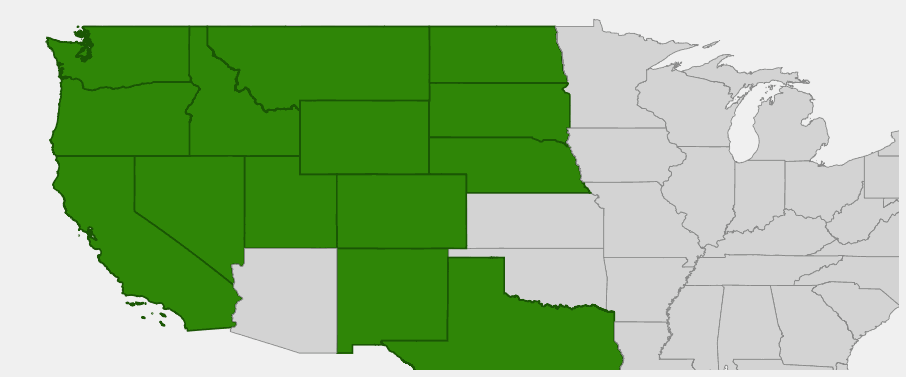
Rubber Rabbitbrush has one of the largest native ranges of any western shrub, extending from British Columbia south through the entire western interior of the United States to Texas and northern Mexico. It occurs in Washington, Oregon, California, Idaho, Nevada, Utah, Arizona, Montana, Wyoming, Colorado, New Mexico, Nebraska, North Dakota, South Dakota, Kansas, and Texas — essentially covering the entire drylands of the American West and portions of the Great Plains. Within this enormous range, it grows from near sea level in the Columbia Basin to over 9,000 feet in the Rocky Mountains.
The species is highly variable across its range, with 22 recognized subspecies differing in stem pubescence, leaf width, flower head structure, and ecological associations. This variability reflects the species’ extraordinary ability to adapt to local conditions — from the hot Mojave Desert to the cold sagebrush steppe of central Idaho and the shortgrass plains of eastern Colorado. In general, Rubber Rabbitbrush occurs on dry, well-drained soils — sandy, gravelly, loamy, or clay-based — and is notably tolerant of alkaline soils and the seasonal drought conditions characteristic of the continental interior West.
In disturbed habitats — roadsides, overgrazed pastures, dry creek beds, cleared land — Rubber Rabbitbrush often increases dramatically and can become the dominant plant in the landscape. This pioneer character makes it invaluable for habitat restoration and revegetation projects but can also make it challenging to manage in contexts where it outcompetes slower-establishing native vegetation on highly disturbed ground. Understanding its tendency to colonize disturbed ground is important for using it effectively in restoration projects while maintaining space for other target species.
📋 Regional plant lists featuring Rubber Rabbitbrush: Intermountain West
Growing & Care Guide
Rubber Rabbitbrush is among the easiest and most rewarding native shrubs to grow in the Intermountain West. Its tolerance of poor soils, drought, alkaline conditions, and temperature extremes make it suitable for landscapes that challenge most other plants.
Light
Full sun is required. Rubber Rabbitbrush is a plant of open, exposed terrain that does not tolerate shade. Give it the sunniest position available in your landscape. In full sun, its autumn floral display is maximized and its characteristic gray-green, silvery foliage shows at its best throughout the growing season.
Soil & Water
Rubber Rabbitbrush is extraordinarily adaptable in terms of soil. It tolerates sandy, gravelly, clay, silty, rocky, and alkaline soils as long as drainage is reasonable. It is highly tolerant of alkaline pH (7.5–9.5), making it one of the best native shrubs for the naturally alkaline soils of the Great Basin and Colorado Plateau. Once established, it requires minimal to no supplemental irrigation in most western climates. Water deeply during the first growing season to establish the root system, then reduce watering to occasional deep drinks during prolonged drought. The plant is remarkably resilient to summer heat combined with drought.
Planting Tips
Container-grown stock is widely available from native plant nurseries throughout the Intermountain West. Plant in fall or spring. No soil amendment or fertilizer is needed. Rubber Rabbitbrush establishes quickly and vigorously. Space plants 4–6 feet apart for a mass planting, or 6–8 feet if the goal is individual specimen plants. It can also be established from unrooted cuttings or direct seeding in fall. For revegetation projects, broadcast seeding with a native seed drill on prepared soil can provide excellent establishment rates.
Pruning & Maintenance
Light pruning in late winter can maintain compact form and promote vigorous flowering wood. Cutting back by one-third to one-half in early spring produces denser growth and more abundant autumn flowers. The plant tolerates hard pruning if needed for size control, regenerating vigorously from its woody crown. Remove dead branches at the base as needed. Rubber Rabbitbrush is virtually maintenance-free once established and essentially pest-free in appropriate conditions.
Landscape Uses
- Large-scale xeriscape plantings — dramatic golden autumn display with minimal water
- Fall pollinator habitat — the most important late-season native pollinator plant in the West
- Revegetation and restoration — ideal for stabilizing and revegetating disturbed soils
- Informal hedges and screens using its naturally rounded, dense form
- Roadside plantings with excellent tolerance of road salt, dust, and compaction
- Wildlife landscape foundation paired with Big Sagebrush for complete sagebrush habitat
Wildlife & Ecological Value
Rubber Rabbitbrush is one of the most wildlife-valuable native shrubs in the American West, providing food, cover, and critical late-season nectar resources for an extraordinarily diverse community of species.
For Birds
The dense, year-round stem structure of Rubber Rabbitbrush provides nesting and foraging cover for numerous songbirds. Brewer’s Sparrow, Sage Sparrow, and other sagebrush-associated birds nest directly in rabbitbrush. The seeds are consumed by finches, sparrows, and other seed-eating birds throughout fall and winter. The massive insect communities attracted to autumn flowers support the final foraging of migratory birds building fat reserves before their departure south. Sage-grouse use rabbitbrush as foraging and loafing cover throughout their range.
For Mammals
Pronghorn browse Rubber Rabbitbrush foliage throughout the year but especially in fall and winter. Mule deer, bighorn sheep, and elk consume foliage during lean winter months. Jackrabbits and cottontails eat young stems and foliage. Small rodents — mice, voles, kangaroo rats — harvest seeds and shelter beneath the shrubs. Pygmy Rabbits require dense rabbitbrush stands for both shelter and winter forage, making rabbitbrush habitat quality directly linked to Pygmy Rabbit conservation in the Great Basin.
For Pollinators
The autumn bloom of Rubber Rabbitbrush is ecologically critical. Hundreds of native bee species visit the flowers for pollen and nectar, including numerous specialist bees of the tribe Astereae. Monarch butterflies, in declining populations, depend heavily on rabbitbrush as a major nectar source during their fall migration across the Great Basin. Multiple bumble bee species, bumble bee mimic flies, and parasitic wasps also visit in large numbers. The sheer scale of insect activity on a blooming rabbitbrush plant in September is one of the most impressive ecological spectacles of the western fall season.
Ecosystem Role
Rubber Rabbitbrush plays an important structural and functional role in sagebrush ecosystems. Its extensive root system stabilizes soil, and its dense canopy moderates soil temperature and moisture. After disturbance, it is one of the first native shrubs to establish, beginning the process of ecosystem recovery. Its rapid growth and prolific seed production allow it to quickly provide cover and food for wildlife on recovering landscapes. Over time, as sagebrush and other slower-establishing species mature, rabbitbrush co-exists as a co-dominant component of the stable sagebrush shrubland community.
Cultural & Historical Uses
Rubber Rabbitbrush was used extensively by Indigenous peoples throughout its vast native range. Shoshone, Paiute, Navajo, Hopi, and numerous other peoples used different parts of the plant for practical and medicinal purposes. The Navajo used rabbitbrush to produce a range of yellow dyes for wool and other fibers — different parts of the plant and different mordants produced colors from pale yellow through bright gold to deep olive green. These dyes were important in the development of the Navajo weaving tradition that continues to thrive today.
Medicinally, Rubber Rabbitbrush was used by various tribes to treat diverse conditions. Decoctions from the stems and leaves were applied to ease toothache pain. The plant was sometimes smoked for ceremonial purposes. Poultices from the plant material were applied to skin rashes and wounds. The bitter, resinous compounds that give the plant its strong smell were recognized to have some healing properties, and indeed modern chemical analysis has confirmed the presence of terpenoids with documented anti-inflammatory and antimicrobial properties.
During World War II, the U.S. Emergency Rubber Project investigated Rubber Rabbitbrush along with other native plants as potential domestic sources of natural rubber, since Southeast Asian rubber supplies were cut off by Japanese occupation. The plant does contain a low-molecular-weight rubber latex in its stems and leaves. Extensive research was conducted, but the rubber content was found to be insufficient for commercial extraction given the technology of the time. The project was abandoned after the war, but interest in bio-based rubber has revived in recent decades as concern about petroleum-based synthetic rubber and supply chain vulnerabilities has grown. Research into Rubber Rabbitbrush as a potential sustainable rubber crop continues in a modest way today.
Frequently Asked Questions
What is the difference between Rubber Rabbitbrush and Green Rabbitbrush?
Rubber Rabbitbrush (Ericameria nauseosa) has gray-green, hairy, non-sticky foliage and grows 2–7 feet tall. Green Rabbitbrush (Chrysothamnus viscidiflorus) has bright green, shiny, sticky foliage and stays under 3 feet tall. Both bloom in fall with yellow flowers, but Rubber Rabbitbrush tends to be showier due to its larger size and denser flower clusters.
Is Rubber Rabbitbrush invasive?
No — it is a native plant throughout western North America. However, it does increase rapidly on disturbed or overgrazed land because most browsers find it unpalatable and it colonizes bare soil effectively. This can make it seem “weedy” on degraded rangeland, but it is filling an important ecological gap left by the loss of more palatable plants. In a garden context, it is well-behaved and does not spread aggressively beyond what you plant.
Does Rubber Rabbitbrush smell bad?
The species name nauseosa (nauseous) refers to the strong, rubber-like smell of the foliage when crushed. Some people find the smell unpleasant; others find it characteristically pleasant and western. The smell is not noticeable unless the plant is disturbed. In the garden, it is an aromatic presence that many native plant enthusiasts associate positively with the smell of the desert.
How long does it take Rubber Rabbitbrush to reach full size?
Very quickly — it is one of the fastest-growing native shrubs of the West. In good growing conditions, plants can reach 3–4 feet in the first growing season from container stock. Full mature size (5–7 feet) is typically reached within 3–5 years, making it an excellent choice when rapid establishment is desired.
Can Rubber Rabbitbrush handle heavy clay soils?
Better than most native shrubs. It tolerates clay as long as the drainage is not so poor that water stands on the surface for extended periods. Amended clay (with gravel mixed in) works well. Avoid planting in areas where water ponds after rain for more than a day or two, as standing water will eventually cause root problems.