‘Ama’u (Sadleria pallida)
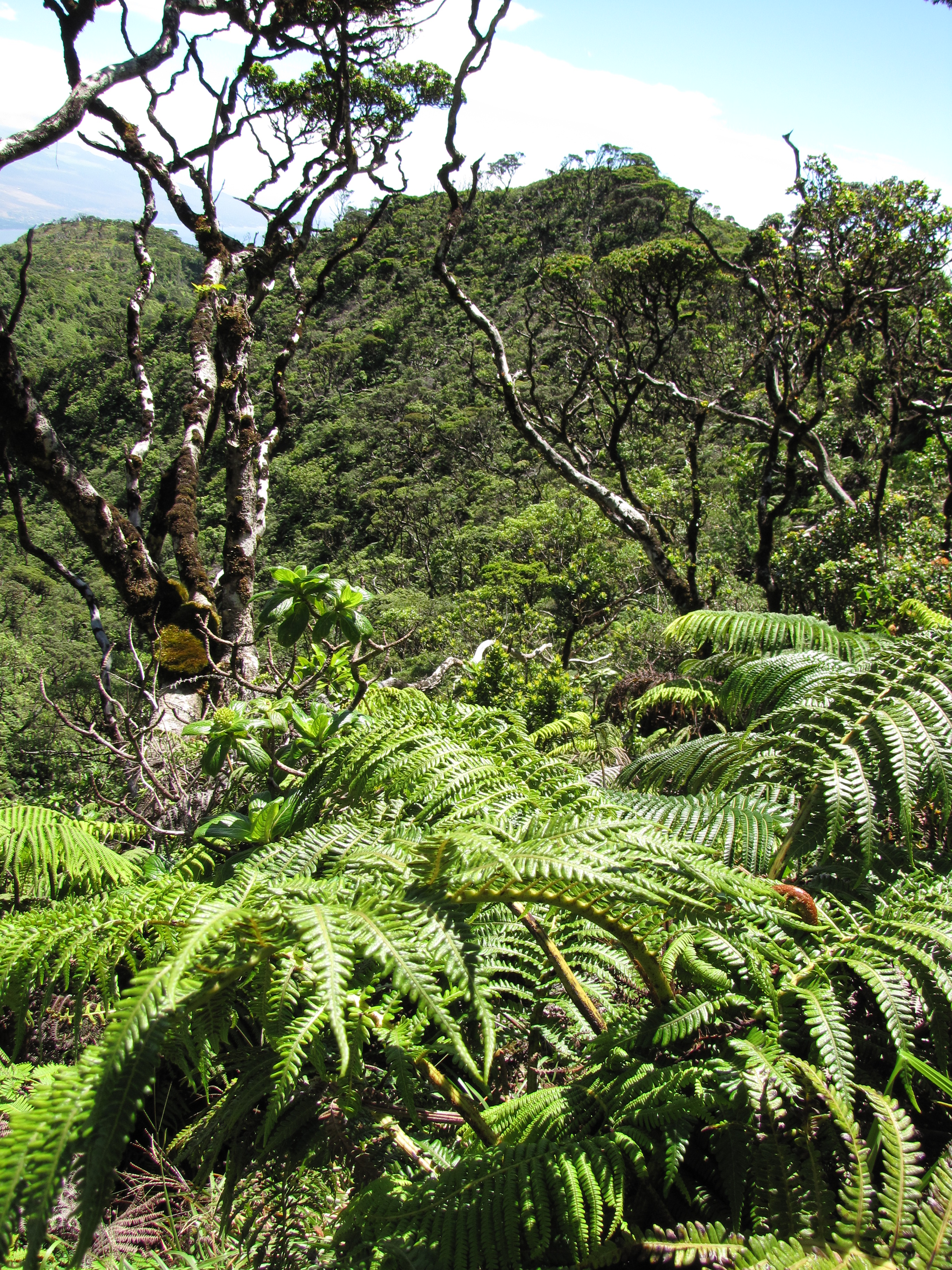
Sadleria pallida, known in Hawaiian as ‘Ama‘u, is a striking native Hawaiian fern endemic to the Hawaiian Islands. A member of the Blechnaceae family, this graceful fern is celebrated for one of its most remarkable features: its young fronds emerge in vivid shades of bronze, orange, and red before gradually maturing to a deep, lush green — a color progression that makes it one of the most visually dynamic native plants in the Hawaiian landscape. The name “‘ama‘u” is deeply embedded in Hawaiian culture, appearing in traditional hula, chant, and proverb.
This fern is commonly found in the montane wet forests and bogs of Hawaii, thriving in the cool, moist conditions that characterize Hawaii’s higher-elevation landscapes. Its fronds typically reach 2 to 3 feet in length, arching outward in a graceful rosette pattern from a short, stout trunk. Unlike the closely related ‘ama‘u (Sadleria cyatheoides), which tends to colonize open, disturbed areas and lava flows, Sadleria pallida is more typically associated with established native forest understory, particularly on Maui and Kauai.
‘Ama‘u ferns play an important ecological role in Hawaii’s native forests. Their broad fronds provide shelter and microhabitat for forest-floor invertebrates, and the dense mat of dead fronds at the base of the plant creates a nutrient-rich mulch that supports soil health. As restoration plantings for native Hawaiian forest ecosystems, ‘Ama‘u species are increasingly valued by conservationists and native plant enthusiasts alike.
Identification
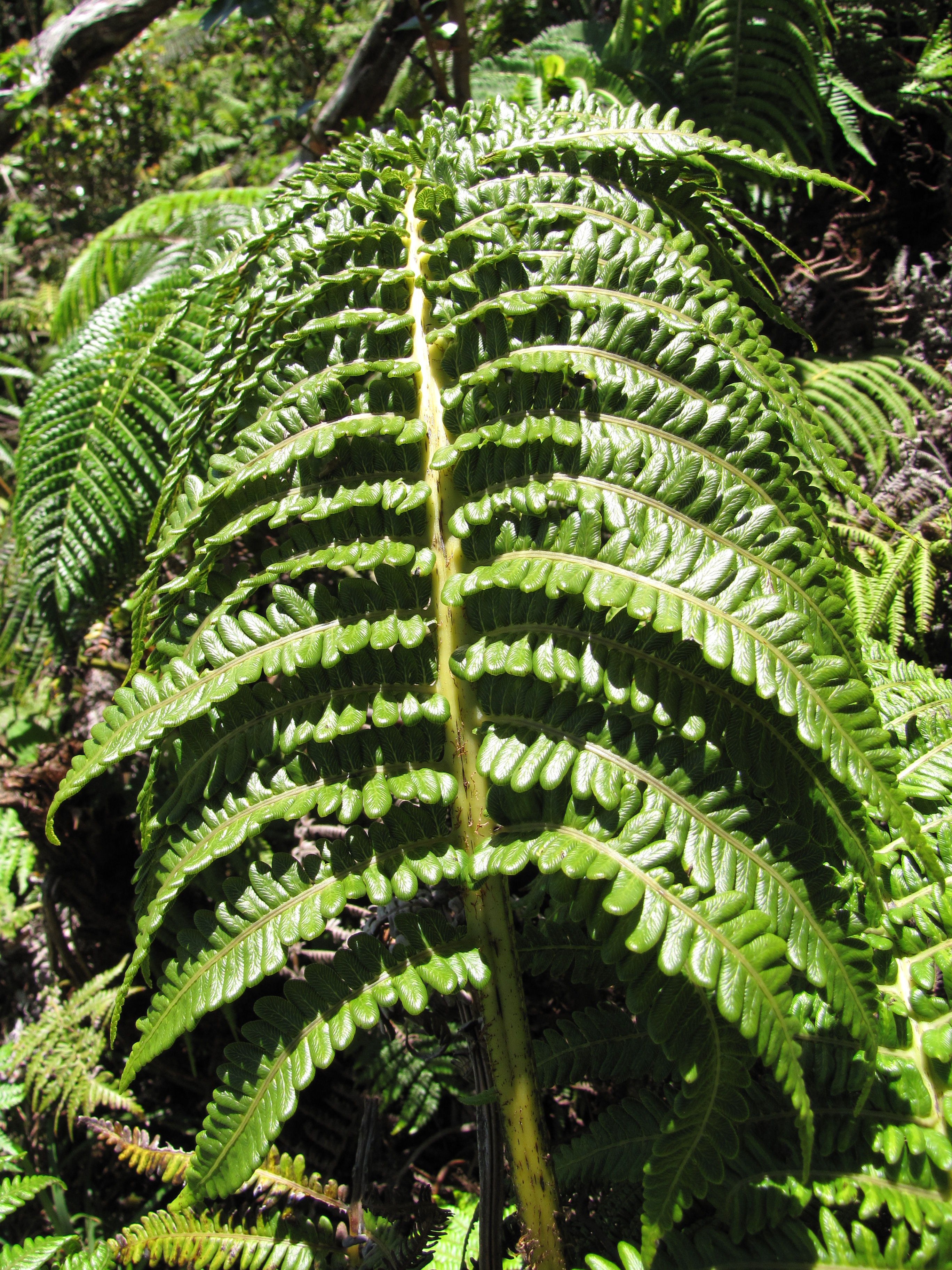
Sadleria pallida grows from a short, fibrous trunk — sometimes described as semi-arborescent — and produces arching fronds from a central crown. The overall rosette shape is distinctive and immediately recognizable. The fronds are pinnate to bipinnate in form, with individual segments (pinnae) that are elongate, slightly toothed, and arranged alternately along the rachis (central frond stalk). The entire plant has a balanced, symmetrical quality that gives it considerable ornamental appeal.
Fronds
The fronds are the most attention-grabbing feature of ‘Ama‘u. New growth emerges in shades of red, orange, bronze, and tawny-gold — a distinctive coloration caused by anthocyanin pigments that protect the tender tissue as it unfurls. As fronds mature, they transition through russet tones before settling into a medium to dark green color. This color change occurs over several weeks and can be observed at any time, as the plant continuously produces new fronds throughout the growing season. Mature fronds reach 2 to 3 feet (60–90 cm) in length, with a leathery, somewhat stiff texture.
Pinnae & Sori
The pinnae (individual leaflets) are narrowly oblong to linear, with slightly wavy to finely toothed margins. They are attached directly to the rachis without stalks (sessile). The undersides of fertile fronds bear elongated sori (spore-bearing structures) that run in a continuous line along either side of the central vein (midrib) of each pinna — a characteristic feature of the Blechnaceae family. The sori are covered by a protective indusium when young, turning dark brown to black as spores mature.
Trunk & Base
The trunk of ‘Ama‘u is short and stout, composed of tightly compressed leaf bases and fibrous material. Old frond bases persist on the trunk, giving it a rough, fibrous texture. The trunk is rarely more than 1 to 2 feet tall in mature plants, keeping the crown of fronds relatively close to the forest floor. The base is surrounded by a thick mat of dead frond material that acts as organic mulch.
Quick Facts
| Scientific Name | Sadleria pallida |
| Family | Blechnaceae (Chain Fern) |
| Plant Type | Evergreen Native Fern |
| Mature Height | 2–3 ft fronds (fronds change color with age) |
| Sun Exposure | Part Shade to Full Shade |
| Water Needs | Moderate to High |
| Bloom Time | None (spore-bearing fern) |
| Spore Production | Year-round on mature fronds |
| USDA Hardiness Zones | 11–13 (Hawaii) |
Native Range
‘Ama‘u (Sadleria pallida) is endemic to the Hawaiian Islands — found nowhere else on Earth. Within Hawaii, it is most commonly encountered on the islands of Maui and Kauai, where it inhabits the native montane wet forest zones typically found at elevations above 2,000 feet. It is associated with the cloud forest belt where persistent fog, high rainfall, and cool temperatures create the lush, moist conditions these ferns require.
In its native range, Sadleria pallida grows in the understory of forests dominated by native trees such as ʻŌhiʻa lehua (Metrosideros polymorpha), tree ferns (Cibotium spp.), and kōpiko (Psychotria spp.). It is less aggressive than its sister species Sadleria cyatheoides, which colonizes open lava fields and disturbed areas. Sadleria pallida is more closely associated with intact or recovering native forest habitats, where it fills important gaps in the understory structure.
Like all Hawaiian endemic plants, ‘Ama‘u faces significant threats from invasive species — particularly invasive grasses, ferns, and browsing mammals (pigs, deer, goats) that damage native forest understory. Conservation and restoration plantings are underway on multiple islands, with ‘Ama‘u species being primary targets for reforestation efforts in degraded native forest zones.
📋 Regional plant lists featuring ‘Ama‘u: Hawaii
Growing & Care Guide
‘Ama‘u is an excellent choice for Hawaiian native plant gardens, restoration projects, and shaded landscape settings. With the right conditions, it is a rewarding and visually dramatic fern that provides year-round interest through its color-changing fronds.
Light
This fern thrives in partial to full shade, mimicking its natural forest understory habitat. Avoid direct midday sun, which can scorch the fronds and bleach out the rich green coloration. Morning sun or dappled light filtered through a tree canopy is ideal. In deeper shade, fronds will be longer and more graceful; in brighter light, they will be shorter but more vividly colored when young.
Soil & Water
‘Ama‘u prefers consistently moist, well-draining soil rich in organic matter. In Hawaii’s wet forest zones, it naturally grows in soils with high humus content derived from decomposing plant material. In cultivation, amend garden beds with compost or leaf mold. Avoid waterlogged conditions — good drainage is important even though moisture is required. Water regularly during dry periods. Mulching with shredded leaves or wood chips helps retain moisture and mimics the natural forest floor.
Planting Tips
Plant in fall or spring when temperatures are mild. Container-grown plants transplant well; bare-root divisions can be planted during cooler months. Space plants 3–4 feet apart for a naturalistic planting that allows fronds to spread without crowding. ‘Ama‘u integrates beautifully with other native Hawaiian plants such as ʻŌhiʻa lehua, hapuʻu tree ferns, and native sedges. It is particularly effective as a groundcover or mid-layer planting beneath taller native trees.
Pruning & Maintenance
Remove dead or brown fronds at the base to keep the plant tidy and encourage new growth. This is best done in late winter or early spring. The fibrous trunk does not require trimming. ‘Ama‘u is relatively pest-resistant in its native range, though slugs and snails may damage young fronds — hand-pick or use iron phosphate bait if necessary. New fronds are especially vulnerable during unfurling; protect from physical damage at this stage.
Landscape Uses
‘Ama‘u is a versatile landscape fern with multiple uses:
- Native Hawaiian forest garden — a cornerstone understory species
- Shaded garden beds — dramatic texture and color beneath trees
- Erosion control on slopes in wet forest zones
- Restoration planting in degraded native Hawaiian forest
- Container planting in large pots on shaded lanaʻi or courtyards
- Focal specimen — the color-changing fronds create year-round visual interest
Wildlife & Ecological Value
Like all native Hawaiian plants, ‘Ama‘u plays a role in supporting the web of life in Hawaii’s native forest ecosystems. Its contributions are most significant at the microhabitat and invertebrate community level.
For Birds
The dense rosette of fronds provides shelter and nesting microhabitat for native forest birds, including endangered honeycreepers such as the ʻākepa (Loxops coccineus) and various native thrushes. The cool, shaded microclimate created by fern colonies is preferred foraging habitat for native birds seeking forest-floor invertebrates.
For Insects & Invertebrates
The fibrous base and dead frond material at the base of ‘Ama‘u plants provides essential habitat for native Hawaiian invertebrates, including endemic beetles, flies, and spiders. These invertebrates in turn support native bird populations and contribute to forest nutrient cycling.
For Pollinators
As a fern, ‘Ama‘u does not produce flowers or nectar, so it does not directly support pollinators. However, by contributing to forest understory structure and shade, it indirectly supports the native flowering plants that pollinators depend on.
Ecosystem Role
‘Ama‘u plays a significant structural role in Hawaii’s native forest ecosystems. The thick mat of decaying frond material at the base of each plant creates a sponge-like organic layer that retains moisture, moderates soil temperature, and supports mycorrhizal fungi networks. As a mid-layer understory plant, it fills a structural gap between the ground layer and the tree canopy, increasing habitat complexity and biodiversity in native forest stands.
Cultural & Historical Uses
‘Ama‘u ferns hold deep significance in Hawaiian culture. The young, colorful fronds — emerging in brilliant shades of red and bronze — were observed and celebrated in traditional Hawaiian chant and hula. The color of ‘ama‘u fronds was associated with the volcanic fire of Pele, the goddess of volcanoes, and the ferns appear in several traditional oli (chants) and mele (songs) that describe the native landscape of Hawaii.
The fibrous material from ‘ama‘u trunks was used practically in traditional Hawaiian life. The starchy pith from the trunk of related Hawaiian ferns was reportedly consumed in times of famine, prepared by roasting or cooking in an imu (earth oven). The frond material was used for bedding, thatching, and packing materials. The silky, golden-brown fiber from the emerging frond (called ʻahu) was used in some island traditions for stuffing and padding.
In contemporary Hawaiian cultural practice, ‘ama‘u remains a recognized symbol of the native Hawaiian landscape. Restoration of ‘ama‘u ferns in degraded forest areas is seen not only as ecological work but as cultural reclamation — restoring the living landscape that underpins Hawaiian identity, language, and spiritual practice. Native plant nurseries in Hawaii regularly cultivate ‘ama‘u for both restoration and home garden use, and the plant is featured in interpretive gardens at national parks and nature reserves across the island chain.
Frequently Asked Questions
What makes ‘Ama‘u different from other Hawaiian ferns?
The most distinctive feature is the dramatic frond color change: new fronds emerge in vivid red, orange, or bronze and gradually mature to deep green. This is unique among Hawaiian ferns and makes ‘ama‘u immediately recognizable. Sadleria pallida in particular is associated with intact native forest rather than open disturbed areas.
How much water does ‘Ama‘u need?
‘Ama‘u requires consistently moist soil, reflecting its wet forest origins. In cultivation, water regularly to maintain moisture, but ensure the soil drains well — standing water at the root zone will cause rot. Mulching helps maintain the soil moisture it prefers.
Can ‘Ama‘u grow in full sun?
No — this fern is adapted to shaded conditions. Direct intense sun, especially midday sun, will scorch the fronds and stress the plant. Partial to full shade is strongly preferred, ideally beneath the canopy of native trees or in a sheltered garden spot that receives only morning light.
Is ‘Ama‘u endangered?
Sadleria pallida is not currently federally listed as endangered, but like all Hawaiian endemic species, it faces significant threats from habitat loss, invasive species, and feral ungulates. Conservation plantings and habitat restoration are ongoing to protect wild populations and restore this species to degraded areas.
Where can I buy ‘Ama‘u for my garden?
‘Ama‘u is available at specialty native plant nurseries in Hawaii. Look for it at nurseries that focus on Hawaiian endemic and indigenous plants. It is occasionally available at native plant sales organized by conservation organizations such as the Hawaiian Plant Society and native plant restoration programs.

Looking for a nursery that carries ‘Ama‘u?
Browse our native plant nursery directory: Hawaii