
‘Uki ‘Uki (Dianella sandwicensis)
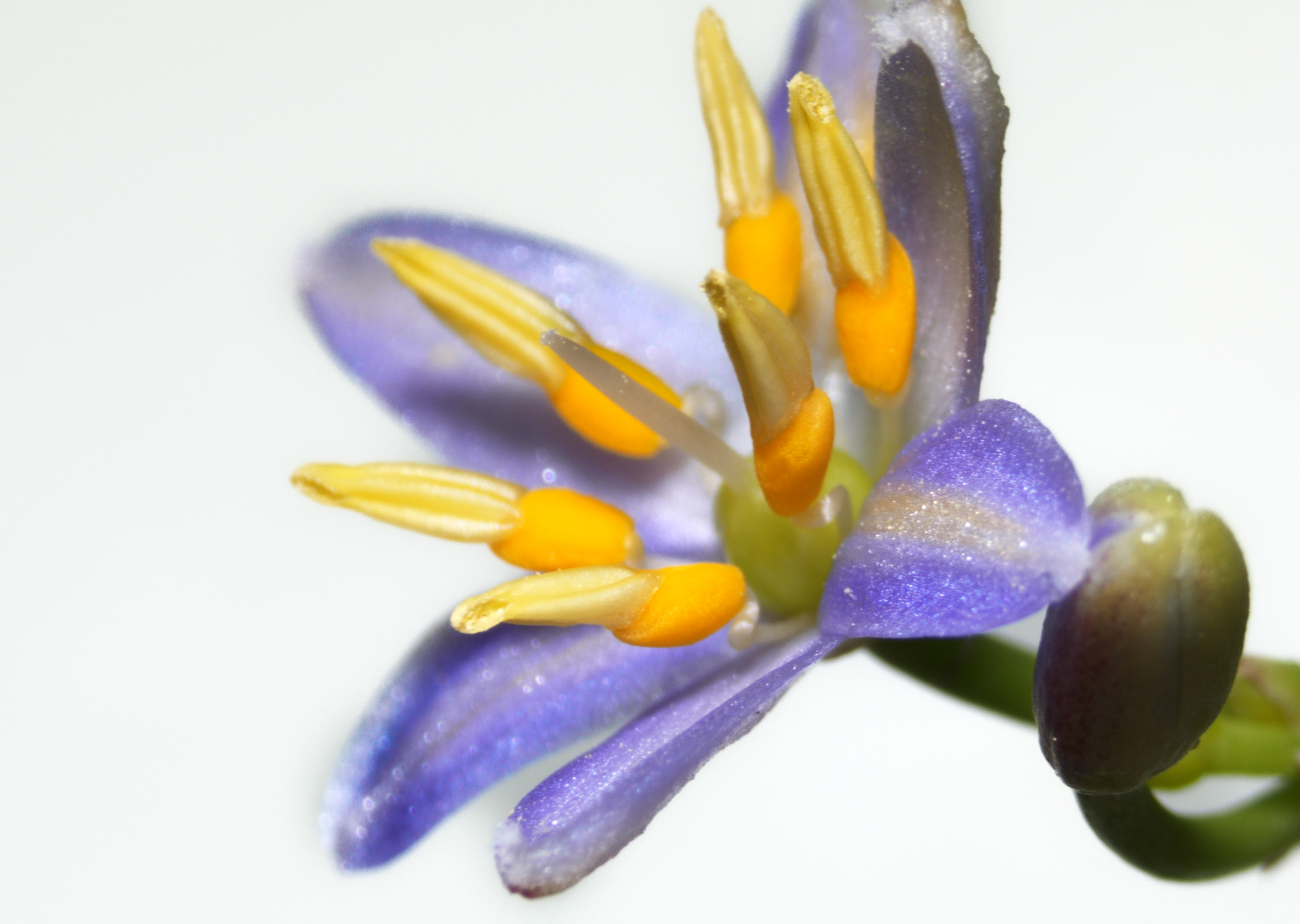
Dianella sandwicensis, known in Hawaiian as ʻUki ʻUki, is a durable and ornamentally attractive native Hawaiian lily. A member of the Asphodelaceae family (formerly Phormiaceae), this strap-leaved perennial produces clusters of small, star-shaped blue-violet flowers followed by striking dark blue to deep purple berries that were historically prized by Hawaiian craftspeople as a source of natural dye. The name “ʻuki ʻuki” is onomatopoetic in origin and also appears in traditional Hawaiian chants, reflecting the plant’s longstanding cultural significance.
ʻUki ʻUki is one of the most widely distributed native plants in Hawaii, found on all the main islands from near sea level to mid-elevation forests and dry to mesic scrublands. Its adaptability, tidy growth form, and ornamental berries make it an increasingly popular choice for native Hawaiian garden designs and restoration plantings. The plant’s toughness — thriving in a range of light and moisture conditions — has earned it a reputation as one of the most “garden-ready” of Hawaii’s native plants.
Despite facing pressure from invasive plants and habitat loss across its range, ʻUki ʻUki remains relatively common in suitable habitats throughout Hawaii. Its resilience, cultural significance, and ecological value to native birds (which consume the berries) have made it a priority for native plant restoration and propagation programs. Growing ʻUki ʻUki in home gardens directly supports the preservation of this culturally and ecologically important species.
Identification
ʻUki ʻUki forms clumping rosettes of linear, strap-like leaves that arise from a fibrous rootstock. The overall plant appearance resembles a grass or small flax, though it belongs to the lily family alliance. Mature plants typically reach 2 to 4 feet in height, with leaf blades arching slightly outward. The plant spreads slowly by rhizomes, forming loose colonies over time.
Leaves
The leaves are the plant’s most prominent vegetative feature: linear to sword-shaped, 1 to 3 feet long and 0.5 to 1 inch wide, with a tough, leathery texture and smooth margins. The leaves are a glossy, medium to dark green on the upper surface and slightly paler below. They arise from a somewhat flattened, fibrous base and arch outward attractively, particularly in older plants. Leaf tips are sharp and pointed — handle with care when planting.
Flowers
Flowers are produced on branching, upright panicles that rise above the leaf clump, typically 2 to 4 feet tall. Each small, star-shaped flower is about ¼ to ½ inch across, with six spreading tepals (perianth segments) in shades of blue-violet, pale blue, or occasionally white. The flowers are attractive to native bees and other pollinators. Blooming typically occurs in spring through summer, though plants may bloom at various times of year in Hawaii’s mild climate.
Fruit & Berries
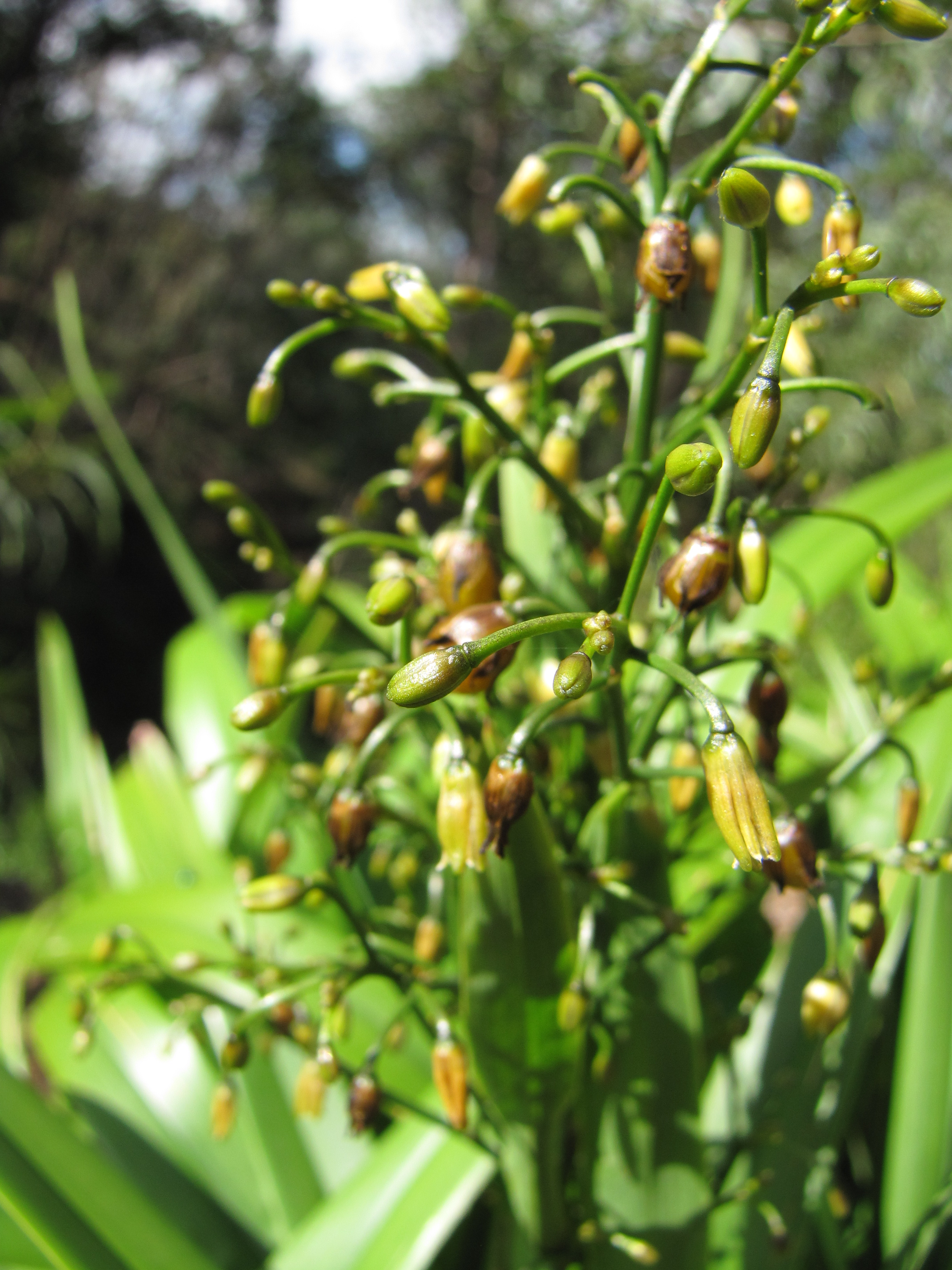
The berries are ʻUki ʻUki’s most distinctive feature — globose to ellipsoid, approximately ¼ to ⅓ inch in diameter, and maturing from green to a lustrous, deep navy-blue or dark purple-blue. They are produced in clusters along the branching flower stalk (now a fruiting panicle) and persist on the plant for many weeks, providing extended wildlife value. The deep blue pigment in the berries was historically used as a natural dye for kapa (bark cloth) and other fiber arts.
Quick Facts
| Scientific Name | Dianella sandwicensis |
| Family | Asphodelaceae (Lily family alliance) |
| Plant Type | Evergreen Perennial; Lily-like |
| Mature Height | 2–4 ft |
| Sun Exposure | Part Shade to Full Sun (adaptable) |
| Water Needs | Moderate |
| Bloom Time | Spring – Summer (intermittent year-round) |
| Flower Color | Blue-violet to pale blue |
| Berry Color | Deep navy-blue to dark purple (used for dye) |
| USDA Hardiness Zones | 10–13 (Hawaii) |
Native Range
ʻUki ʻUki (Dianella sandwicensis) is endemic to the Hawaiian Islands, found on all the main islands including Niʻihau, Kauaʻi, Oʻahu, Molokaʻi, Lānaʻi, Maui, and Hawaiʻi Island. It is one of the more widely distributed and ecologically flexible of Hawaii’s native plants, occurring in a broad range of habitats from sea level to approximately 7,000 feet in elevation.
The species grows in dry to mesic (moderately moist) scrublands, open forest understories, forest margins, grasslands, and disturbed areas where native vegetation has a foothold. It is most commonly found in open to semi-open settings where light is available, though it can tolerate moderate shade. On leeward (dry) slopes, it often grows in low shrubland communities; on windward (wetter) slopes, it transitions into mesic forest understory settings. This ecological flexibility is one of the keys to its persistence across the islands.
While ʻUki ʻUki remains relatively common compared to many Hawaiian endemic plants, it faces ongoing pressure from invasive grasses, browsing ungulates, and competition from introduced ornamental plants. Active propagation and restoration planting programs have helped maintain populations, and the plant is regularly found in conservation gardens, botanical gardens, and native landscape restoration projects across Hawaii.
📋 Regional plant lists featuring ʻUki ʻUki: Hawaii
Growing & Care Guide
ʻUki ʻUki is one of the most garden-adaptable native Hawaiian plants, making it an excellent starting point for anyone building a Hawaiian native plant garden. Its combination of attractive foliage, blue-violet flowers, and ornamental berries provides year-round interest with minimal maintenance.
Light
One of ʻUki ʻUki’s key strengths is its flexibility with light. It grows well in everything from partial shade to full sun, adapting its growth habit accordingly. In shadier conditions, leaves are longer and more arching; in full sun, the plant is more compact and may produce more flowers and fruit. In Hawaii’s strong tropical sun, afternoon shade is appreciated, particularly in hotter, lower-elevation settings.
Soil & Water
ʻUki ʻUki is adaptable to a range of soil types, from well-drained sandy soils to heavier clay soils with adequate drainage. It prefers moderate moisture but is reasonably drought-tolerant once established, reflecting its natural occurrence in Hawaii’s dry to mesic habitats. Water regularly during the establishment period (first 1–2 years), then reduce to supplemental irrigation during extended dry periods. Avoid waterlogged conditions.
Planting Tips
Plant in spring or fall for best establishment. Container-grown plants are most readily available and transplant easily. Space plants 2–3 feet apart for a natural clumping effect, or 18 inches apart for a denser mass planting used as a groundcover or border. ʻUki ʻUki works beautifully as an accent plant paired with other native Hawaiian plants — try it alongside pukiawe (Leptecophylla tameiameiae), ʻaʻaliʻi (Dodonaea viscosa), and native grasses for an authentic Hawaiian garden.
Pruning & Maintenance
Remove old or damaged leaves at the base to maintain a tidy appearance and encourage new growth. Spent flower stalks can be removed after fruiting if desired, or left in place — birds will consume any remaining berries. Divide overgrown clumps every 3–5 years by splitting the fibrous rootball and replanting divisions. ʻUki ʻUki has minimal pest and disease issues in its native range.
Landscape Uses
- Native Hawaiian gardens — a foundation plant for authentic Hawaiian landscapes
- Borders and edging — the strap-like foliage provides clean, architectural lines
- Mass planting for groundcover on slopes or open areas
- Container planting on lanaʻi or courtyards
- Restoration planting in dry to mesic native Hawaiian habitats
- Wildlife garden — berries attract native birds
Wildlife & Ecological Value
ʻUki ʻUki provides important food resources for native Hawaiian wildlife through both its flowers and its distinctive berries.
For Birds
The deep blue-purple berries of ʻUki ʻUki are consumed by native Hawaiian birds including the ʻŌmaʻo (Hawaiian thrush), and several introduced fruit-eating birds also utilize them. Native forest birds that forage in the understory habitat where ʻUki ʻUki grows benefit from the microhabitat structure the plant provides. The dense clumps offer nesting cover for ground-nesting species.
For Pollinators
The blue-violet flowers attract native Hawaiian bees, particularly the endemic yellow-faced bees (Hylaeus spp.) that are among Hawaii’s most important native pollinators. These specialized bees collect pollen from the flowers, which are also visited by introduced honeybees and native carpenter bees. The flowering period provides an important nectar and pollen resource during spring and summer.
For Mammals
ʻUki ʻUki is occasionally browsed by feral ungulates (pigs, goats, deer), which unfortunately are also responsible for habitat damage in its native range. Native Hawaiian mammals historically had little direct interaction with the plant, as most native Hawaiian land mammals were bats or the endemic monk seal. The plant plays a more important role in supporting the invertebrate community through litter and microhabitat provision.
Ecosystem Role
In Hawaiian dry to mesic shrubland communities, ʻUki ʻUki contributes to structural complexity and ground-layer diversity. Its fibrous root system helps stabilize soil and reduce erosion on slopes. As a native perennial in an ecosystem threatened by invasive grasses and other introduced plants, ʻUki ʻUki helps maintain native plant community structure and resilience in the face of ongoing disturbance.
Cultural & Historical Uses
ʻUki ʻUki has a rich place in traditional Hawaiian culture, most notably as a source of natural dye. The deep blue-purple berries were crushed and used to dye kapa (bark cloth made from wauke, or paper mulberry) and other fiber materials. The resulting blue-violet to dark purple dye was used decoratively in traditional textile arts, and knowledge of its preparation and use was passed through generations of Hawaiian craftspeople.
The plant also appears in Hawaiian oli (chant) and traditional place names, reflecting its prominence in the native landscape and Hawaiian cultural geography. The name “ʻuki ʻuki” itself appears in traditional accounts of the Hawaiian forest environment, often in the context of describing the characteristic vegetation of dry to mesic shrublands and forest understories that Hawaiians navigated and utilized extensively.
In contemporary Hawaiian cultural practice, ʻUki ʻUki is experiencing a revival of interest as part of the broader movement to preserve and revitalize traditional Hawaiian plant knowledge and natural dyeing traditions. Native plant practitioners, cultural educators, and restoration ecologists all value the plant highly — both for its tangible cultural uses and as a living connection to the pre-contact Hawaiian landscape. It is regularly featured in native plant demonstrations, cultural education programs, and community restoration projects across the islands.
Frequently Asked Questions
Are ʻUki ʻUki berries edible?
The berries of Dianella sandwicensis are not recommended for consumption. While some Dianella species in Australia and the Pacific have been used as minor food sources, the berries of the Hawaiian ʻuki ʻuki should be left for wildlife and their ornamental and dye value. Their best use is as a natural blue-purple dye source in traditional Hawaiian textile arts.
How long does it take ʻUki ʻUki to flower?
Container-grown plants typically begin flowering within 1–2 years of planting in the landscape. Plants grown from seed may take 2–3 years to reach flowering size. Once established, plants flower regularly in spring and summer and often produce some flowers year-round in Hawaii’s mild climate.
Can ʻUki ʻUki grow in containers?
Yes — ʻUki ʻUki grows well in large containers and is an excellent choice for lanaʻi or courtyard plantings where native plants are desired. Use a well-draining potting mix and ensure the container has adequate drainage. Repot every 2–3 years or divide when the plant becomes root-bound.
Is ʻUki ʻUki deer resistant?
Not reliably. Feral deer and goats in Hawaii will browse ʻUki ʻUki foliage, particularly in areas with high ungulate pressure. In garden settings with ungulate access, protective fencing may be necessary for newly planted specimens until they are established.
How do I propagate ʻUki ʻUki?
ʻUki ʻUki can be propagated by division of established clumps in spring, or from fresh seed sown as soon as berries ripen. Division is the most reliable method for home gardeners. Seed germination can be inconsistent and may take 3–6 weeks in warm, moist conditions.

Looking for a nursery that carries ʻUki ʻUki?
Browse our native plant nursery directory: Hawaii