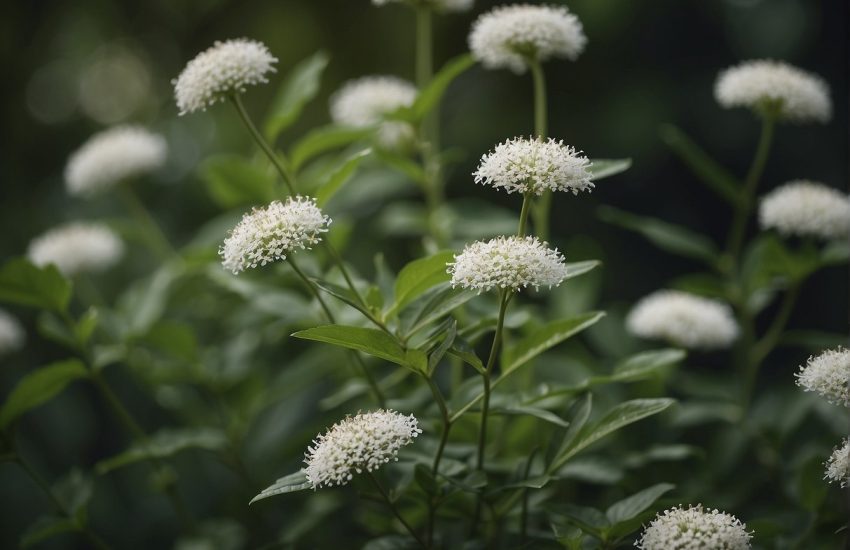
Canada Rush (Juncus canadensis)
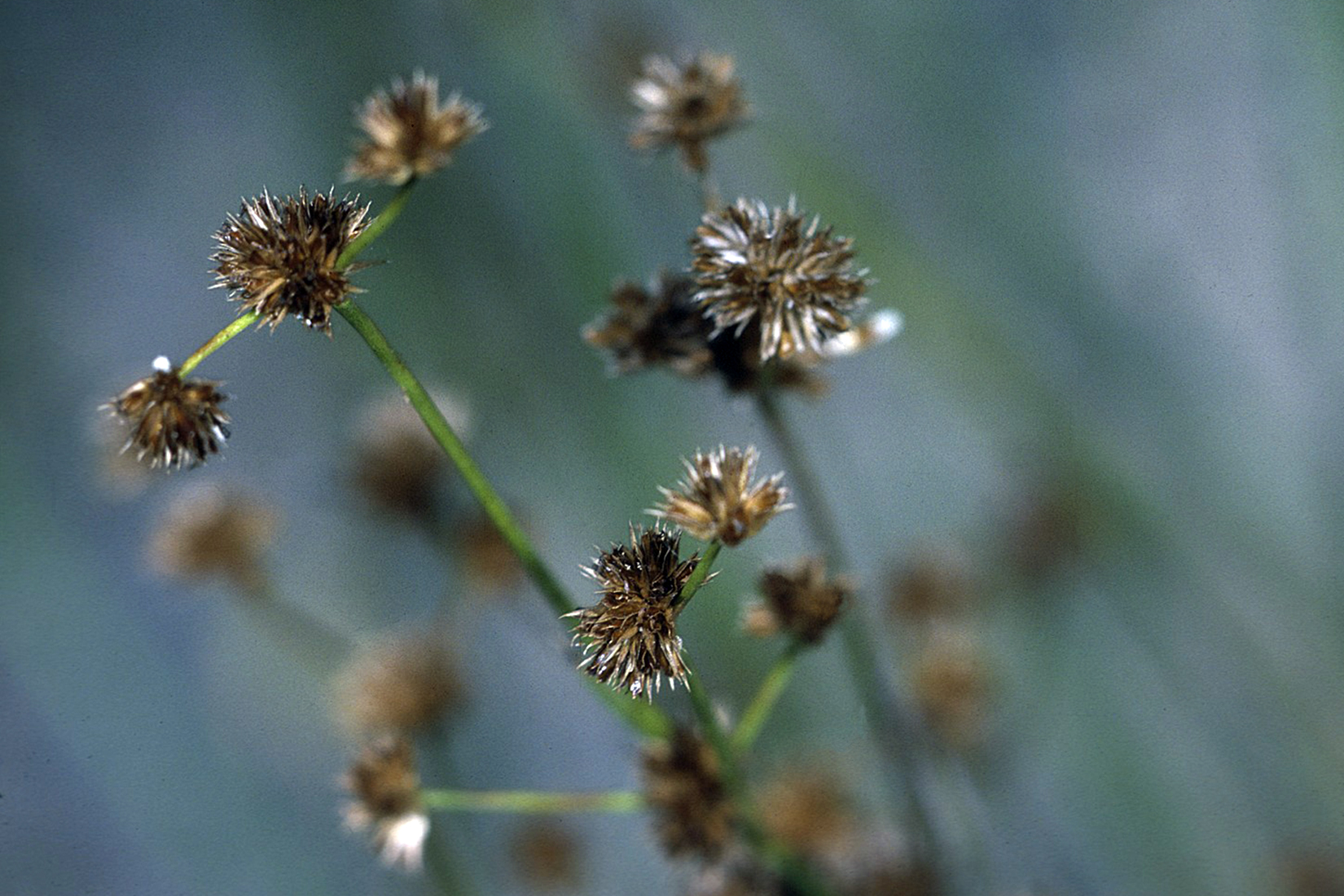
Juncus canadensis, commonly known as Canada Rush, is a robust, rhizomatous native rush (family Juncaceae) that grows in wetlands, stream margins, pond edges, and other permanently or seasonally wet habitats. Reaching 3 feet in height with bright green, cylindrical stems and compact inflorescences of small brownish-green flowers and seed capsules, Canada Rush is a workhorse of the native wetland garden — ecologically productive, rapid-growing, and highly adaptable. It is one of the most useful native plants available for rain gardens, bioswales, wetland restoration, and pond-edge plantings throughout much of eastern and central North America, as well as in Hawaii.
Canada Rush grows rapidly once established, forming dense, weed-suppressing clumps that spread gradually by rhizome to colonize wet areas. The dense stems slow water flow in flooded areas, trapping sediment and removing nutrients — making Canada Rush a valuable plant for natural water quality improvement. The clumps also provide excellent cover and nesting habitat for a wide variety of wetland birds, small mammals, and invertebrates, including many species of dragonflies and damselflies that use the stems as perches and emerging sites for their aquatic larvae.
In Hawaii, Canada Rush is a native component of freshwater wetland habitats, growing alongside other native wetland plants in the islands’ limited but ecologically critical freshwater ecosystems. Hawaiian freshwater wetlands support critically endangered native birds including the Hawaiian stilt (‘Ae’o), Hawaiian coot (‘Alae ke’oke’o), and Hawaiian duck (Koloa maoli), all of which depend on native wetland vegetation. Planting Canada Rush in Hawaiian wetland gardens and restoration sites directly supports the recovery of these endangered waterbirds.
Identification
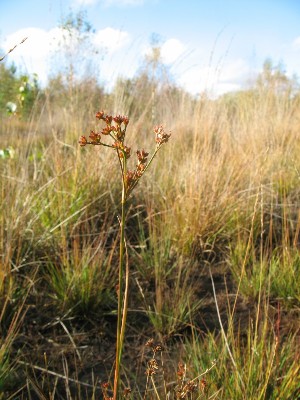
Canada Rush grows as a dense, erect clump of cylindrical stems rising 1.5 to 3 feet (45–90 cm) tall from a spreading rhizomatous base. The plant has a fresh, bright green color throughout the growing season, making it visually distinctive in wetland settings. It spreads steadily by rhizome to form expanding colonies over time.
Stems & Leaves
The stems of Canada Rush are cylindrical, smooth, dark green, and appear leafless to the casual observer — though the plant does have leaves at the base. The basal leaves are grass-like, round in cross-section (terete), and channeled on the upper surface. The stems themselves are the photosynthetic organs, remaining green and functional throughout the growing season. This stem-based photosynthesis is typical of rushes and distinguishes them from grasses and sedges.
Flowers & Seed Heads
The inflorescence of Canada Rush is a dense, compact, spherical to ovoid cluster of small flowers that appears to grow from the side of the stem — technically a false lateral inflorescence produced by a leaf-like bract that extends beyond the flower cluster. Flowers are tiny, with six greenish-brown tepals, and are wind-pollinated. After flowering, the plant produces small, three-chambered seed capsules (3-angled, pointed at the tip) that ripen from green to brown as the season progresses. The seed clusters remain on the plant into winter and are an important food source for seed-eating birds. Flowering occurs from mid-summer through early fall.
Quick Facts
| Scientific Name | Juncus canadensis |
| Family | Juncaceae (Rush) |
| Plant Type | Perennial Rush / Wetland Grass-like Plant |
| Mature Height | 3 ft |
| Sun Exposure | Full Sun to Part Shade |
| Water Needs | Moderate to High |
| Bloom Time | July – September |
| Flower Color | Greenish-brown (inconspicuous) |
| USDA Hardiness Zones | 3–9 |
Native Range
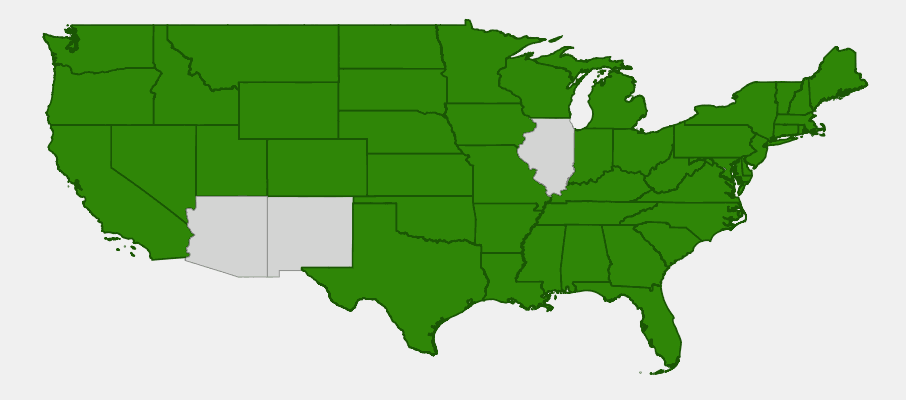
Canada Rush is native to a broad swath of eastern, central, and Pacific North America, as well as Hawaii. In the continental United States, it ranges from the Atlantic Coast west to the Great Plains and south to the Gulf Coast states, with its core distribution in the eastern deciduous forest region. It is also native to much of eastern Canada, from Nova Scotia west to Ontario and Manitoba. In Hawaii, it occurs in freshwater wetland habitats on several of the main islands.
Within its range, Canada Rush grows in a variety of freshwater wetland habitats: marshes, swamps, wet meadows, stream banks, pond margins, bogs, and the margins of slow-moving streams and rivers. It tolerates standing water and can grow in up to 6 inches (15 cm) of standing water, though it also grows in seasonally wet soils that dry out somewhat in summer. In Hawaii, it occupies similar freshwater wetland niches, growing in taro (lo’i kalo) irrigation systems, stream margins, and natural freshwater marshes.
Canada Rush grows best in full sun but tolerates partial shade — a valuable trait for wetland plantings beneath riparian trees. It is tolerant of seasonal flooding and drought, making it adaptable to the dynamic water level fluctuations typical of natural wetlands and rain gardens. The species is not significantly threatened across most of its range and is considered a locally common to abundant component of native wetland vegetation.
📋 Regional plant lists featuring Canada Rush: Hawaii
Growing & Care Guide
Canada Rush is one of the easiest native wetland plants to grow — once you understand its one fundamental requirement: consistently moist to wet soil. Given adequate moisture, it is a vigorous, low-maintenance plant that spreads to fill available space and provides years of ecological benefit.
Light
Canada Rush performs best in full sun, where it grows most vigorously and produces the most abundant seed heads. It tolerates partial shade and can grow adequately with 4 to 6 hours of direct sun daily, which makes it useful under riparian trees or in partially shaded rain garden settings. In deep shade, growth is weak and the clumps remain sparse.
Soil & Water
Moist to consistently wet soil is the key requirement for Canada Rush. It grows naturally in saturated soils and will thrive in rain gardens with standing water, pond margins, bog gardens, and seasonally flooded areas. In conventional garden settings, it needs regular irrigation to keep the soil consistently moist. It can tolerate brief periods of drying but will show stress (yellowing, tip browning) if the soil dries out for more than a week or two during the growing season. Standing water of up to 6 inches is well-tolerated.
Planting Tips
Plant Canada Rush in spring or fall. Container plants establish quickly in consistently moist conditions. Space plants 18 to 24 inches apart for a naturalistic wetland planting — they will spread by rhizome to fill in gaps over 2 to 3 years. For rain garden or bioswale plantings, position Canada Rush in the lowest, wettest zones of the feature. In pond-edge plantings, it can be planted with the crown at or just below the water surface.
Pruning & Maintenance
Canada Rush requires minimal maintenance. Cut the clumps back to 3 to 4 inches in late winter before new growth begins. This prevents the accumulation of dead stems, encourages fresh green growth, and allows you to clear away the previous year’s seed heads (which may have already distributed their seeds to wildlife). Divide overgrown clumps every 3 to 5 years in spring or fall to reinvigorate growth and propagate new plants. Canada Rush is essentially pest- and disease-free in appropriate growing conditions.
Landscape Uses
- Rain gardens and bioswales — excellent for the wet zone of stormwater management features
- Pond and stream margins — creates beautiful, naturalistic wetland edges
- Wet meadow restoration and native freshwater wetland plantings
- Wildlife habitat — seeds feed waterfowl, stems shelter invertebrates and amphibians
- Water quality improvement — dense stands filter runoff and remove excess nutrients
- Erosion control along stream banks and pond edges
Wildlife & Ecological Value
Canada Rush is a foundational species for freshwater wetland wildlife across its range, providing food, shelter, and habitat structure for an extraordinary diversity of animals.
For Birds
The seeds of Canada Rush are consumed by a variety of wetland and seed-eating birds, including American Bittern, Sora, Virginia Rail, Common Snipe, various dabbling ducks (Mallard, Teal), and sparrows that frequent wetland margins. In Hawaii, the seeds are consumed by native waterbirds including the Hawaiian coot and Hawaiian stilt. The dense clumps provide nesting and roosting cover for wetland birds, and the stems are used by Red-winged Blackbirds and Common Yellowthroats as song perches during the breeding season.
For Mammals
Muskrats eat the rhizomes and stems of Canada Rush, sometimes creating open water channels through dense stands — a phenomenon that actually increases habitat diversity. Beavers use the stems in dam and lodge construction. Various small mammals including meadow voles and shrews use the dense clumps as cover from predators and as thermal shelter during cold periods.
For Pollinators
While Canada Rush is wind-pollinated and not a significant nectar source, the standing stems provide critical habitat for aquatic invertebrates — particularly dragonflies and damselflies. The nymphs of many odonate species crawl up rush stems to emerge as adults, and the upright stems serve as perching and territorial display sites for adult dragonflies. Maintaining stands of Canada Rush in or near water dramatically increases local dragonfly and damselfly populations, which in turn are important predators of mosquitoes and other pest insects.
Ecosystem Role
Canada Rush is a primary productivity contributor in freshwater wetland ecosystems. Its abundant above-ground biomass decomposes to form the rich organic substrate that supports aquatic invertebrate communities. The root system and rhizome network stabilize soft wetland sediments and help prevent bank erosion. In water quality terms, Canada Rush is an effective natural filter: its roots and rhizomes absorb excess phosphorus and nitrogen from agricultural and urban runoff, and the dense stems slow water flow and allow suspended sediment to settle out. These ecosystem services make Canada Rush a valuable tool in constructed wetland water treatment systems.
Cultural & Historical Uses
Rushes have been used by indigenous peoples across North America for thousands of years, and Canada Rush was among the plants used by Native American tribes throughout the eastern United States and Canada. The long, flexible stems were woven into baskets, mats, and other household items. In some regions, rush mats were a standard floor covering in longhouses and other traditional dwellings, providing insulation from cold and damp. The stems were also used for chair seat weaving and as packing material for delicate goods.
In Hawaii, native wetland rushes including Canada Rush played a role in traditional wetland management. The traditional Hawaiian system of lo’i kalo (wetland taro cultivation) was one of the most sophisticated aquaculture systems in the Pacific world, managing water flow, sediment, and plant communities across entire valley systems. Rush species were part of the managed wetland plant community, providing thatching material, basket weaving fiber, and fish habitat in lo’i systems. The maintenance of traditional lo’i kalo systems today, practiced by Hawaiian cultural practitioners and restoration organizations, often incorporates native rushes as part of ecologically appropriate wetland management.
Medicinally, various rush species have been used in traditional medicine systems, primarily as diuretics and to treat urinary tract conditions. In folk medicine traditions from North America and Europe, rush pith (the soft inner material of dried stems) was used as lamp wicks and fire starters. Modern ecological research has focused on rushes’ role in constructed wetland water treatment systems, where Canada Rush and related species are used in engineered “living machines” that biologically treat wastewater using plants and microorganisms.
Frequently Asked Questions
How do I tell Canada Rush apart from Soft Rush (Juncus effusus)?
Canada Rush and Soft Rush look quite similar at first glance. The key differences are in the seed capsule: Canada Rush has a pointed, three-angled capsule distinctly longer than the surrounding tepals, while Soft Rush’s capsule is rounded at the tip and shorter. Canada Rush also tends to have more compact, tighter inflorescences than Soft Rush, which has more open, spreading flower clusters. Height is similar for both species.
Will Canada Rush take over my garden?
Canada Rush spreads by rhizome and can expand steadily over time in moist conditions. In a rain garden or pond-edge setting with limited space, dividing the clumps every few years will keep it from spreading too far. In a wetland restoration planting, its spreading nature is actually desirable — it colonizes the wet area and provides increasing ecological value over time.
Can Canada Rush grow in a pot or container?
Yes, with adequate moisture. Use a large container with no drainage holes (or plug the holes), fill with a mix of regular potting soil and compost, and keep the container sitting in a tray of water to maintain consistent moisture. This works well for water garden containers and small patio bog gardens.
Is Canada Rush deer-resistant?
Canada Rush is generally not preferred by deer — most rushes and grass-like plants are low on deer preference lists due to their texture and low palatability. However, in areas with very high deer pressure, some browsing can occur. In Hawaiian settings, introduced ungulates (pigs, goats) may damage stands.
How do I propagate Canada Rush?
The easiest method is division — dig up a clump in spring or fall, separate it into sections with several rhizome sections and stems each, and replant immediately in moist soil. Seeds can also be sown, though they require moist conditions and take longer to produce garden-sized plants than division does.

Looking for a nursery that carries Canada Rush?
Browse our native plant nursery directory: Hawaii