Narrowleaf Cottonwood (Populus angustifolia)
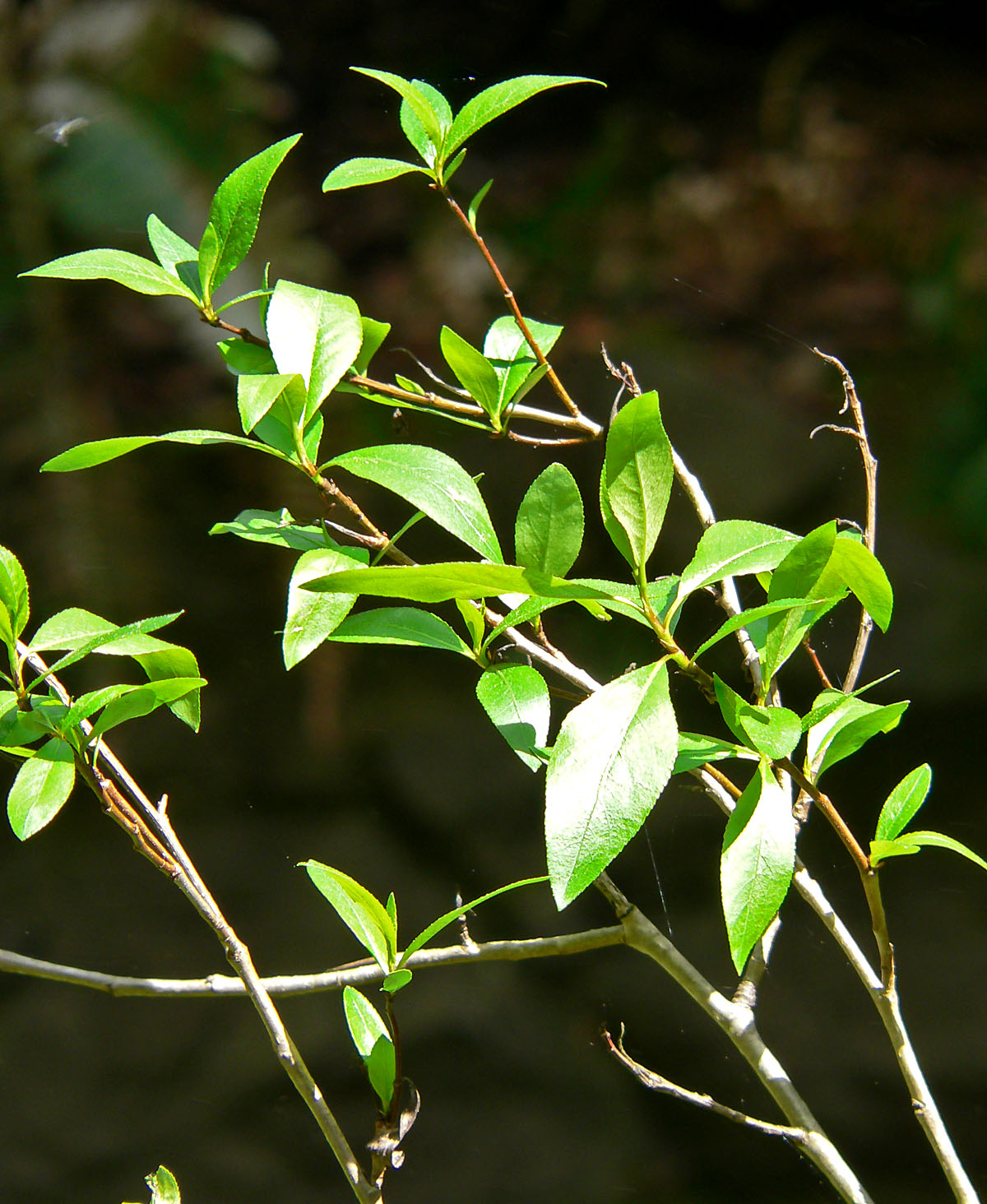
Populus angustifolia, commonly known as Narrowleaf Cottonwood, is a graceful, medium-sized native tree that defines the riparian corridors of the Rocky Mountains and Intermountain West. Unlike its close relative the plains cottonwood (Populus deltoides), with its broad, triangular leaves, the Narrowleaf Cottonwood bears slender, willow-like leaves that shimmer and flutter in mountain breezes — creating the iconic golden-autumn streamside spectacle of Montana, Wyoming, Colorado, and Utah river valleys. This tree is as beautiful as it is ecologically essential.
Growing to about 40 feet tall with a narrow, upright crown, Narrowleaf Cottonwood is a medium-size shade tree ideally suited to riparian plantings, stream restoration, and moist garden settings throughout the Mountain West. It grows naturally in dense stands along mountain streams, rivers, and canyon bottoms, where its soft wood readily develops the natural cavities sought by dozens of cavity-nesting bird species — from mountain bluebirds and tree swallows to American kestrels and Lewis’s woodpeckers. This characteristic makes it one of the most important nesting trees for cavity-dependent wildlife in Rocky Mountain riparian zones.
Narrowleaf Cottonwood is a fast-growing, water-loving tree that thrives in full sun with consistent moisture. Its combination of rapid establishment, wildlife value, beautiful seasonal foliage display, and adaptability to disturbed streambanks makes it an excellent choice for riparian restoration, wildlife gardens, and native landscape projects throughout Montana, Wyoming, Colorado, and Utah. It is an outstanding companion plant for other native riparian species like red-osier dogwood, water birch, and willows.
Identification
Narrowleaf Cottonwood is distinguished from other cottonwoods primarily by its remarkably narrow, lanceolate (lance-shaped) leaves — much more willow-like than the broad, triangular leaves of other cottonwood species. The tree has a narrowly columnar crown, smooth greenish-gray bark on young trees aging to furrowed gray-brown bark, and the characteristic cottony white seeds of the cottonwood family, released in profusion in late spring and early summer.
Leaves
The leaves are the most distinctive feature: narrow and lance-shaped, 2 to 4 inches long and only 0.5 to 1.5 inches wide — much narrower than any other cottonwood in the region. The leaf margins are finely toothed. The upper surface is bright green and shiny; the underside is pale green. The petiole (leaf stalk) is slender and flattened, allowing leaves to quiver and flutter in the slightest breeze — the classic cottonwood movement. In autumn, the foliage turns a brilliant golden yellow before dropping, creating the spectacular fall color display that makes cottonwood-lined river corridors so striking in the Mountain West.
Bark & Wood
Young Narrowleaf Cottonwood bark is smooth, thin, and greenish-gray to whitish-gray — similar in appearance to quaking aspen. As the tree ages, the bark becomes rough, gray-brown, and deeply furrowed with flat-topped ridges. The wood is soft, light, and relatively weak — subject to breakage in storms and rapid decay when dead. This soft wood and tendency toward branch breakage is an ecological feature rather than a flaw: it creates the hollow trunks and cavities that provide nesting habitat for an exceptional diversity of wildlife. The comments in the native plant list note this quality explicitly: “Soft wood for nest cavities.”
Flowers & Seeds
Narrowleaf Cottonwood is dioecious — male and female flowers are on separate trees. Flowers appear in early spring before the leaves, as dangling catkins 2 to 4 inches long. The female catkins mature into the distinctive cottony seed masses that give cottonwoods their name — each tiny seed attached to long, silky white hairs that carry it on the wind. Seed release in late spring to early summer produces the “cottonwood snow” familiar to anyone living near these trees. Seeds are tiny, short-lived, and must land on moist, bare soil immediately to germinate.

Quick Facts
| Scientific Name | Populus angustifolia |
| Family | Salicaceae (Willow) |
| Plant Type | Deciduous Tree |
| Mature Height | 40 ft |
| Sun Exposure | Full Sun |
| Water Needs | High (Riparian / Moist Soils) |
| Bloom Time | March – April (before leaves) |
| Flower Type | Catkins (wind-pollinated) |
| Fall Color | Brilliant golden yellow |
| USDA Hardiness Zones | 3–7 |
Native Range
Narrowleaf Cottonwood is native to the mountain stream corridors of the Rocky Mountains and Intermountain West, from southern Montana and Wyoming south through Colorado, Utah, Nevada, Idaho, Arizona, New Mexico, and into northern Mexico. It is the characteristic cottonwood of mountain canyons and riparian zones at elevations from about 3,500 to 10,000 feet — zones where the plains cottonwood gives way to this more cold-tolerant, narrower-leaved species.
In Montana and Wyoming, Narrowleaf Cottonwood forms dense groves along the Yellowstone, Bighorn, Wind, and Powder rivers and their mountain tributaries. It replaces or hybridizes with plains cottonwood at lower elevations and overlaps with black cottonwood (Populus trichocarpa) in the Pacific Northwest portion of its range. The species hybridizes readily with both black cottonwood and plains cottonwood wherever their ranges meet, creating hybrid individuals with intermediate leaf shapes. In Colorado and Utah, it is the dominant cottonwood along most mountain stream systems.
The riparian forests anchored by Narrowleaf Cottonwood are among the most productive wildlife habitats in the Rocky Mountain West — linear oases of dense vegetation in an otherwise arid landscape. These corridors function as wildlife movement routes connecting mountain and lowland habitats, allowing species to migrate seasonally and colonize new areas. The loss of cottonwood riparian forests along western rivers — due to channelization, groundwater depletion, and invasive species — is one of the most significant conservation issues in the Mountain West.
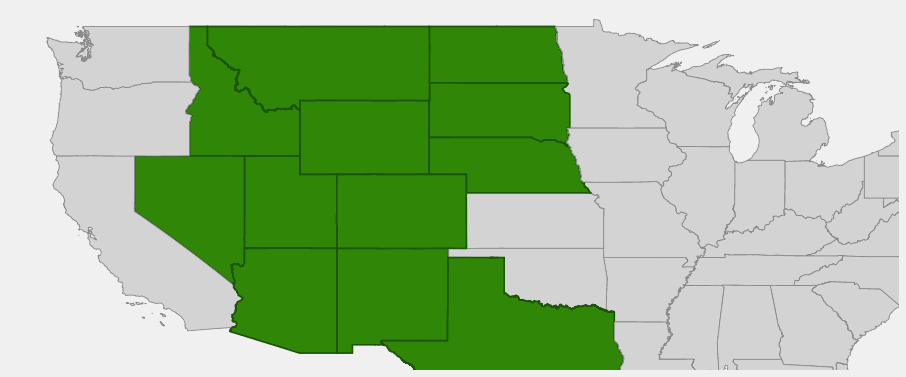
📋 Regional plant lists featuring Narrowleaf Cottonwood: Montana & Wyoming
Growing & Care Guide
Narrowleaf Cottonwood is an excellent choice for riparian restoration, wildlife gardens, and moist native landscape plantings throughout the Rocky Mountain West. It is fast-growing, easy to establish from cuttings or container stock, and provides immediate visual impact and wildlife value.
Light
Narrowleaf Cottonwood requires full sun for vigorous growth. It is naturally a tree of open streambanks and floodplains where it receives unobstructed sunlight. While young trees can tolerate partial shade, mature trees need full sun to develop properly. It does not perform well in shaded understory situations.
Soil & Water
This tree is naturally adapted to moist, fertile, well-aerated riparian soils — streambanks, floodplains, and areas with a high or fluctuating water table. It thrives in sandy, gravelly, or silty soils deposited by streams, but also grows in clay and loam. Consistent soil moisture is essential; Narrowleaf Cottonwood does not tolerate prolonged drought once established, though it can survive brief summer dry periods if it has access to subsurface moisture. In garden settings without natural stream access, regular deep watering is necessary.
Planting Tips
Narrowleaf Cottonwood propagates easily from hardwood cuttings — simply cut dormant branches in late winter, insert them vertically in moist soil, and water regularly. Container-grown transplants are also widely available. Plant in fall or early spring near water features, along streams, or in any garden area with reliable moisture. Narrowleaf Cottonwood grows very rapidly once established — often 3 to 5 feet per year under good conditions — making it one of the fastest-establishing native trees for mountain riparian settings. Plant away from structures, water pipes, and paved surfaces, as the roots aggressively seek water sources.
Pruning & Maintenance
Cottonwoods are inherently messy trees — they drop cotton in late spring, shed twigs and branches in storms, and produce suckers from the roots. In naturalistic settings, this mess is ecological richness (wood debris for insects, cotton for bird nests, etc.), but in formal landscapes it requires management. Prune to maintain a single leader in young trees for best form. Remove dead or broken branches as needed. The shallow, aggressive root system means this tree is best suited to large, open sites rather than small urban lots or near infrastructure.
Landscape Uses
- Riparian restoration — the signature tree for Rocky Mountain stream corridor planting
- Wildlife habitat gardens — outstanding value for cavity-nesting birds
- Streambank stabilization — deep, fibrous roots prevent erosion
- Fast-growing shade tree for large properties with reliable water
- Golden fall color display — spectacular autumn foliage along watercourses
- Windbreak and screen in moist, low-lying settings
- Traditional ecological restoration of historic cottonwood gallery forests
Wildlife & Ecological Value
Narrowleaf Cottonwood stands are among the most productive wildlife habitats in the Mountain West, providing food, shelter, and nesting sites for an extraordinary array of species.
For Birds
The soft wood of Narrowleaf Cottonwood decays relatively quickly once standing dead, creating abundant natural cavities sought by dozens of cavity-nesting species. Mountain bluebirds, tree swallows, violet-green swallows, American kestrels, Lewis’s woodpeckers, downy woodpeckers, hairy woodpeckers, flickers, nuthatches, and chickadees all nest in cottonwood snags and cavities. The dense canopy of live trees supports additional nesting for herons, eagles, hawks, and numerous songbirds. Yellow warblers, MacGillivray’s warblers, and Song sparrows breed in the dense shrubby understory that develops beneath cottonwood canopy. The catkins provide early-spring pollen for pollinators that in turn support insectivorous birds during the breeding season.
For Mammals
Beaver (Castor canadensis) are perhaps the most important mammal in Narrowleaf Cottonwood riparian ecosystems — they rely heavily on cottonwood as both food and dam-building material, and their pond-building activities create the wetland habitats that expand cottonwood seedling establishment. Moose, mule deer, and elk browse the foliage and twigs heavily in winter when other food is scarce. Porcupines eat the bark. Muskrats, river otters, and mink use the streamside habitat year-round.
For Pollinators
Cottonwood catkins are among the earliest spring pollen sources available to bees emerging from winter dormancy. Native bees, honeybees, and various flies visit the catkins for pollen before most other flowers are available. The large, shady canopy also provides protected foraging habitat for a diversity of native bee species that nest in the ground beneath the tree.
Ecosystem Role
Narrowleaf Cottonwood riparian forests are ecological anchors in the Mountain West landscape. They stabilize streambanks, reduce flood peaks by slowing and spreading floodwaters, filter nutrients and sediment from runoff, and maintain the water quality essential for native fish populations including cutthroat trout. The dense vegetation corridor provides thermal cover, keeping stream temperatures cooler in summer than they would be without riparian shade — critical for cold-water fish. Leaf litter from cottonwood fuels aquatic invertebrate production that is the foundation of stream food webs.
Cultural & Historical Uses
Narrowleaf Cottonwood was a vital resource for Indigenous peoples throughout the Rocky Mountain region. The Shoshone, Bannock, Ute, Crow, Blackfeet, and other mountain and plains nations used virtually every part of the tree. The inner bark was eaten as an emergency food — sweet, starchy, and nutritious — particularly in late winter and spring when other foods were scarce. The bark was also fed to horses when grass was covered by snow, earning the tree the alternate name “horse food” in some cultures.
The soft, easily worked wood was used for many purposes including fuel, roasting sticks, lodge poles, and small implements. The large, flexible bark strips were used for containers, canoe building, and shelter materials. Catkin and bud resins were used medicinally as a topical antiseptic, wound dressing, and treatment for skin conditions. The cottony seed fluff was used as insulation, fire starter, and stuffing for pillows and bedding. The spring emergence of cottonwood leaves was an important seasonal calendar marker — a signal to move camps to lower elevations and begin gathering spring plant foods.
European-American settlers valued cottonwood groves as landmarks, shelter belts, and building material in the nearly treeless mountain valleys of the Rockies. The cottonwood groves along the Green, Platte, Powder, and Bighorn rivers were important waypoints and camping sites on the Oregon, California, and Mormon trails. Today, the loss of cottonwood riparian forest along western rivers is recognized as a major ecological crisis — driven by river channelization, dams that eliminate natural flood cycles needed for cottonwood regeneration, groundwater depletion, and overgrazing that prevents seedling establishment. Restoration of Narrowleaf Cottonwood communities is a priority in conservation efforts throughout Montana, Wyoming, Colorado, and Utah.
Frequently Asked Questions
How is Narrowleaf Cottonwood different from Plains Cottonwood?
Plains Cottonwood (Populus deltoides) has broad, triangular leaves with a flat or heart-shaped base and is the dominant cottonwood of Great Plains rivers and lowland valleys. Narrowleaf Cottonwood has much narrower, lance-shaped leaves resembling a willow, and is the dominant cottonwood of Rocky Mountain stream corridors at higher elevations. Where the two species’ ranges overlap, they hybridize freely, producing trees with intermediate leaf shapes.
Will the cotton from Narrowleaf Cottonwood be a problem?
The cottony seed release in late spring lasts 2 to 4 weeks and can be significant near female trees. If this is a concern, male trees are available from some native plant nurseries. The cotton itself is not harmful — it doesn’t cause allergies (the pollen is wind-released weeks earlier) — but it can accumulate against structures. In restoration plantings and natural garden settings, the cotton is simply part of the ecological character of the species.
How fast does Narrowleaf Cottonwood grow?
Narrowleaf Cottonwood is one of the fastest-growing native trees in the Mountain West. Under optimal conditions (full sun, moist soil), it typically grows 3 to 5 feet per year, reaching 20 to 30 feet within 10 years. This rapid growth makes it excellent for restoration projects where quick cover is needed.
Will cottonwood roots damage my foundation or pipes?
Yes, cottonwood roots aggressively seek water sources and can infiltrate cracks in pipes, foundations, and pavement. Plant at least 50 to 100 feet from structures, water mains, and sewer lines. This tree is best suited to large, open riparian or rural settings rather than small residential lots near infrastructure.
Can I plant Narrowleaf Cottonwood from a cutting?
Yes — cottonwoods are among the easiest trees to propagate from hardwood cuttings. Cut 12 to 18 inch sections of dormant branches in late winter, plant them with about half their length in moist soil, and water regularly. Success rates are typically very high. This is the traditional method used in riparian restoration projects throughout the Mountain West.