Compass Plant (Silphium laciniatum)
Silphium laciniatum, commonly known as Compass Plant, is one of the most architecturally dramatic native wildflowers of the North American tallgrass prairie. This massive herbaceous perennial — reaching heights of 3 to 12 feet in exceptional conditions — commands attention from the moment it pushes its enormous, deeply cut basal leaves from the ground in spring to the moment its towering flower stems collapse after the first hard frost of autumn. Named for a remarkable botanical phenomenon, the Compass Plant earns its common name from the tendency of its large, deeply lobed basal leaves to orient themselves in a north-south plane, with their faces pointing east and west to regulate sun exposure — nature’s own compass.
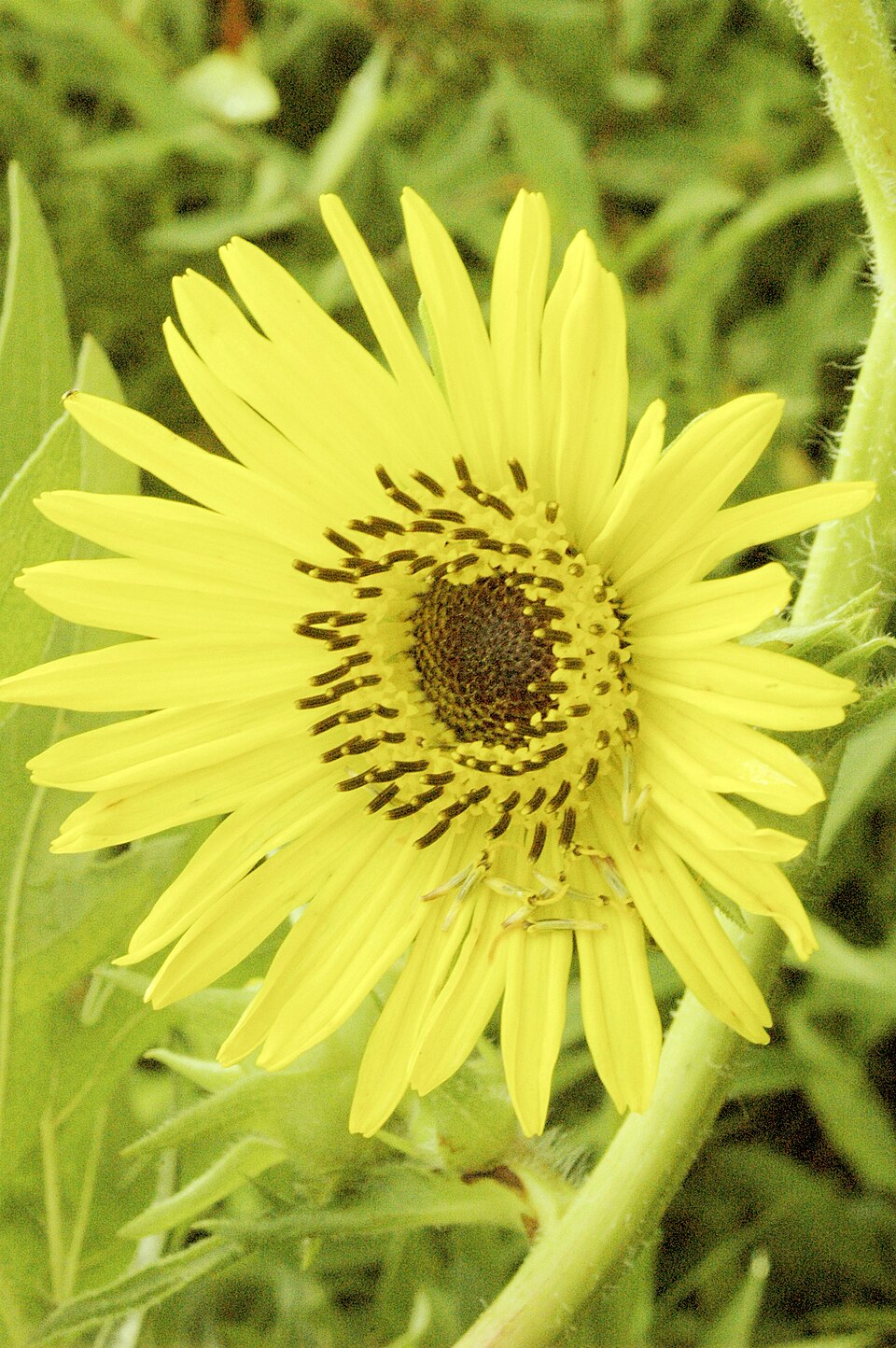
Blooming from July through September, Compass Plant produces a succession of large, sunflower-like flowers with bright yellow ray petals surrounding a dome-shaped yellow disc. The flowers are borne on tall, resin-producing stems that were historically chewed like chewing gum by both Indigenous peoples and early European settlers, who called the resinous sap “prairie gum.” The deeply cut, pinnately lobed leaves — some exceeding 18 inches in length — give the plant a bold, architectural quality that sets it apart from virtually every other prairie species and makes it unmistakable at 30 paces.
For gardeners and restorationists in Michigan, Minnesota, and Wisconsin seeking to recreate the grandeur of the native tallgrass prairie, Compass Plant is an essential species. It takes several years to bloom from seed (the deep taproot must establish before energy is diverted to flowering), but once established, it is extremely long-lived, drought resistant, and essentially maintenance-free. A mature specimen in full bloom is one of the most spectacular sights in the native plant garden.
Identification
Compass Plant is a large, coarse-textured, deep-rooted herbaceous perennial that emerges from a massive taproot reaching 12 or more feet into the soil. Its imposing size, deeply cut leaves, and resinous character make it essentially unmistakable among prairie wildflowers.
Leaves
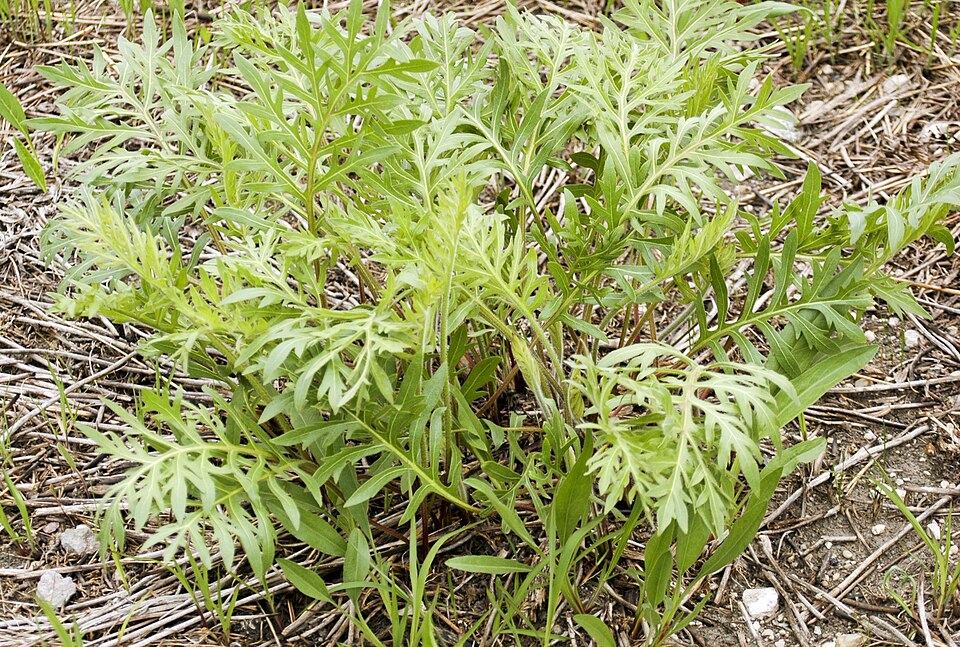
The basal leaves of Compass Plant are among the most dramatic of any North American prairie wildflower. They are large — 12 to 18 inches or more in length — deeply pinnately lobed (cut nearly to the midrib), with each lobe further divided and toothed, giving the leaf an almost fern-like or deeply cut oak-leaf appearance. The leaves are rough and bristly on both surfaces, covered with stiff hairs that make them feel like coarse sandpaper. Stem leaves are alternate and progressively smaller toward the top of the plant. Critically, the large basal leaves orient their faces east-west and their edges north-south, acting as a sun compass — a phenomenon observed and used by early prairie travelers to orient themselves.
Stems & Flowers
Flowering stems rise 4 to 12 feet tall (commonly 6–8 feet in garden conditions), covered with stiff hairs and producing a sticky, aromatic resin when cut. Flower heads are 2 to 4 inches across, borne in the upper portion of the branching stem. Each head has 18 to 28 bright yellow ray florets surrounding a dome-shaped central disc of small tubular flowers. The ray florets are fertile (producing seeds), while the central disc flowers are sterile — opposite the arrangement in most sunflowers. Bloom season extends from July through September.
Roots
The taproot is Compass Plant’s most remarkable underground feature — an enormous, carrot-like structure that may penetrate 12 or more feet into deep prairie soils. This massive root system stores vast quantities of water and nutrients, giving the plant exceptional drought resistance and the ability to survive prairie fire, harsh winters, and summer drought that would kill most garden plants. It also makes Compass Plant essentially impossible to move once established — choose its planting location carefully.
Quick Facts
| Scientific Name | Silphium laciniatum |
| Family | Asteraceae (Daisy / Sunflower) |
| Plant Type | Herbaceous Perennial Wildflower |
| Mature Height | 3–12 ft |
| Sun Exposure | Full Sun |
| Water Needs | Moderate |
| Bloom Time | July – September |
| Flower Color | Bright yellow (sunflower-like) |
| USDA Hardiness Zones | 3–9 |
Native Range
Compass Plant is native to the tallgrass and mixed-grass prairies of central North America, with its core range extending from the Central Plains eastward through the Midwest and into the eastern states where remnant prairie and savanna communities persist. Its native range closely parallels the historic extent of the great North American prairie, and its dramatic decline in many states directly reflects the conversion of prairie to agriculture that began in the 19th century.
In the Upper Midwest, Compass Plant occurs naturally in remnant prairies and savannas throughout Wisconsin, Minnesota, and Michigan, where it is considered a prairie indicator species — its presence signals high-quality, undisturbed or minimally disturbed native habitat. It grows on well-drained to moderately dry upland prairie soils, rocky hillsides, and savanna openings, typically in full sun. It does not tolerate shade and declines rapidly when woody vegetation encroaches on prairie remnants.
Once abundant across millions of acres of prairie, Compass Plant has been eliminated from much of its historical range by plowing. The species’ deep taproot — which made it virtually impossible to plow with early equipment — actually protected it from early agricultural conversion, but modern deep-tillage equipment can now uproot even mature specimens. Today, Compass Plant is absent from much of its former range and considered a conservative species in many states, found only in high-quality prairie remnants and restored prairies.
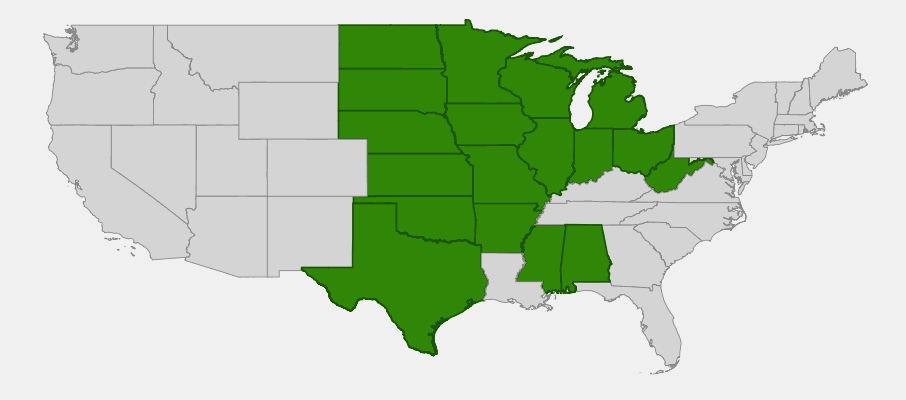
📋 Regional plant lists featuring Compass Plant: Michigan, Minnesota & Wisconsin
Growing & Care Guide
Compass Plant is a long-lived, deeply rooted native perennial that takes patience to establish but rewards the gardener with decades of dramatic, low-maintenance performance. Understanding its requirements — particularly its need for full sun, well-drained soil, and undisturbed root space — is the key to success.
Light
Compass Plant requires full sun — at minimum 6 hours of direct sunlight per day, with more being better. It evolved in the open prairie, and shading from trees or buildings will cause weak, floppy stems and poor blooming. Choose a site with unobstructed southern or western exposure. This is not a plant for shady or woodland settings.
Soil & Water
Compass Plant grows best in average to slightly dry, deep, well-drained soils. Its massive taproot — which can reach 12 feet or more — extracts water from deep in the soil profile, making it extremely drought tolerant once established. Avoid rich, amended soils or consistently moist sites, which encourage lush, floppy growth rather than the compact, sturdy form natural in prairie conditions. Poor to average soil quality actually suits Compass Plant better than fertile garden beds. Sandy loam, clay loam, and silty prairie soils all work well.
Planting Tips
Start Compass Plant from seed for best results — direct sow in fall or cold-stratify seed for 60 days before spring sowing. Plants from seed take 3–5 years to bloom, but the wait is worthwhile. Alternatively, plant container-grown nursery stock in spring or fall. Choose the planting site carefully — once established, Compass Plant’s deep taproot makes it extremely difficult to move without killing the plant. Space plants 3–4 feet apart; give them room to grow to their full dramatic height without crowding.
Pruning & Maintenance
Compass Plant requires essentially no maintenance once established. Do not cut it back — the dried flower stalks provide winter interest and seed for birds. Remove old stalks in late winter before new growth begins. Weeding around young plants is important for the first 2–3 years before the taproot establishes fully. After that, the plant outcompetes most weeds on its own. No fertilizing is needed or desirable.
Landscape Uses
- Prairie restorations and meadow plantings — the signature tall species of the tallgrass community
- Back-of-border specimens — its towering height anchors large garden designs
- Wildlife gardens — seeds attract finches; resin supports specialist insects
- Roadside naturalization — tolerates mowing-free roadsides and rights-of-way
- Educational and demonstration gardens — the leaf compass phenomenon fascinates visitors
Wildlife & Ecological Value
Compass Plant is an ecological cornerstone of the tallgrass prairie, supporting an impressive community of specialized insects, birds, and mammals.
For Pollinators
The large, pollen-rich flowers of Compass Plant are magnets for native bees, including bumble bees, long-horned bees, and specialist mining bees that evolved alongside Silphium species over millennia. The flowers produce abundant pollen and nectar during July through September, a critical mid-summer period when other prairie blooms may be waning. Monarch butterflies, native butterflies, and many native wasps and beetles also visit the flowers regularly.
For Birds
The large, flat-faced seed heads of Compass Plant are favored by seed-eating birds, particularly American Goldfinch, which clings to the stalks and systematically extracts the large achene seeds in late summer and fall. Purple Finches, Pine Siskins, and various sparrows also consume Compass Plant seeds. The resin produced by the stems has been observed being used by some bee species to waterproof nest cells.
For Mammals
Deer and bison historically grazed on Compass Plant foliage and stems. The resinous sap was chewed by various animals. The massive taproot creates habitat for soil organisms and provides structure for the prairie soil ecosystem.
Ecosystem Role
Compass Plant’s deep taproot performs a critical ecological function in prairie ecosystems — it penetrates deeply into the subsoil, accessing water and minerals that shallow-rooted species cannot reach, and through its decomposition cycle, it slowly adds organic matter to lower soil horizons. Its tall stature creates structural habitat complexity in the prairie, and its long bloom season supports an extended succession of insect visitors. As a prairie indicator species, Compass Plant is used by ecologists to assess the quality and integrity of native grassland remnants.
Cultural & Historical Uses
Compass Plant holds a prominent place in the ethnobotany of the Great Plains and Midwest. The aromatic resin produced by the stems was chewed as a natural chewing gum by multiple Indigenous peoples, including the Pawnee, Omaha, Ponca, and Dakota, who also used it medicinally. The resin has antimicrobial properties and was used to treat sore throats and mouth sores. The Pawnee are documented as using Compass Plant smoke in fumigation ceremonies, and the leaves were used to prepare ceremonial medicines.
Early European settlers and explorers quickly learned the compass property of the large basal leaves — that they orient themselves in a north-south plane — and used the plant as a navigational aid when traveling through the seemingly featureless ocean of grass that once covered the American interior. The naturalist John Muir wrote movingly about Compass Plant in his memoir of growing up in Wisconsin, describing the excitement he felt as a child learning that a prairie plant could serve as a natural compass. The species became something of a symbol for the beauty and sophistication of the tallgrass prairie ecosystem.
The resinous stems were also burned by early settlers to repel insects, and the dried roots were used in some folk traditions as a diuretic and expectorant. Modern herbalists note that Silphium species were used in ancient Greece (though those were different Mediterranean species unrelated to the North American genus), lending the genus a somewhat romantic aura in the history of plant medicine. Compass Plant is now grown primarily as an ornamental and restoration species, celebrated for its architectural drama and ecological value rather than its medicinal properties.
Frequently Asked Questions
Do Compass Plant leaves really act as a compass?
Yes! The large basal leaves of Compass Plant have a documented tendency to orient their flat faces east and west (and their edges north and south) to regulate their exposure to intense midday sun. This behavior is most pronounced on mature plants in open prairie settings. While not as precise as a mechanical compass, the orientation is reliable enough that prairie travelers historically used the plant to orient themselves.
How long does it take Compass Plant to bloom from seed?
Compass Plant is famously slow to bloom from seed — expect 3 to 5 years before the first flowers appear. During this time, the plant is building its massive taproot rather than putting energy into reproduction. Container-grown plants may bloom somewhat sooner. The wait is worthwhile — once blooming begins, the plant continues for decades.
Can Compass Plant be moved once established?
Moving Compass Plant is essentially impossible once it is established, because its taproot can extend 12 or more feet into the ground. Attempts to dig and transplant mature plants almost always fail. Choose your planting site carefully before installing young plants.
Is Compass Plant deer-resistant?
Compass Plant has some deer resistance due to its rough, bristly texture and resinous character, but hungry deer will browse it, especially on young plants. Once established and tall, deer damage is typically limited to lower foliage. In high deer pressure areas, protection may be needed for young plants.
How far does Compass Plant spread?
Compass Plant spreads slowly by seed (the large seeds don’t travel far from the parent plant) and does not spread by runners or rhizomes. Individual plants may slowly enlarge their basal rosette over years, but the species does not form thickets or spread aggressively. In restoration settings, plant spacing of 3–4 feet is appropriate.