
5 Best Top Rated Worm Composter for Large-Scale Farming Efficient and Durable Solutions Reviewed
We independently select all products and services. If you click through links we provide, Plant Native may earn a commission with no extra cost to you.
Last updated: November 8, 2026
Vermicomposting offers a smart way to recycle organic waste. Worms break it down into rich compost that’s great for the soil.
For large-scale farms, this process can boost soil health and crop yields. It also helps cut down on chemical fertilizer use.
Worm composters for big operations focus on capacity and durability. They’re built for easy harvesting, too.
You’ll see different designs out there—continuous flow bins, modular systems, and flow-through setups. These need to handle lots of worms, plus they have to manage air and moisture well.
The type of worm you pick matters. Red wigglers and European nightcrawlers are popular choices for commercial composting.
Capacity is a big deal when choosing a composter. You want something that can take on your farm’s daily waste.
Material quality matters, too. Corrosion-resistant steel or tough plastic will last longer and hold up to the elements.
You’ll want easy access for harvesting castings and keeping tabs on temperature and moisture. We checked out several models to find the best worm composters for large-scale farming.
Best Top Rated Worm Composter for Large-Scale Farming
We researched a bunch of worm composters made for big farms. Our list highlights models that are tough, efficient, and can handle serious volume.
These picks should help anyone looking to compost more and waste less. They’re tried-and-true tools for sustainable farming.
Our top pick

- V-board lid and coconut mat help manage airflow, moisture and odor
- Worm-saver tray keeps worms out of the liquid collection area
- Liquid tray and base molded as one piece, so fewer parts to assemble
- Water-fillable feet help keep ants out
Cons
- Trays stack rather than lock together
- About 50 liters of capacity, so a large operation will need several units
The VermiHut Plus is designed for simple setup. The V-board vent and coconut fiber mat help manage moisture and keep smells down.
The worm-saver tray stops worms from dropping into the liquid collector while keeping air moving, and the integrated base and liquid tray mean fewer parts to deal with. The “shoes” under the base are there to keep ants and other crawling pests out, so it can work through kitchen scraps steadily.
The trays stack rather than snap together, and the compact 50-liter size suits most home setups; larger farms will need multiple bins. Still, it is a solid pick if you want efficiency without a giant footprint.
Best runner-up

- Vented lid and stacking trays for good airflow control
- Small 16 x 16-inch footprint
- Worm-saver tray and spigot base for collecting worm tea
Cons
- Needs a flat, stable surface
- About 50 liters of capacity limits it to household-scale volumes
The five-tier design lets worms move up on their own, leaving nutrient-rich castings below.
Air circulation is a highlight here. The vented lid helps keep bedding healthy and odors in check.
The worm-saver tray helps collect worm tea without losing worms, and the bin can be used indoors or outdoors.
Best budget option
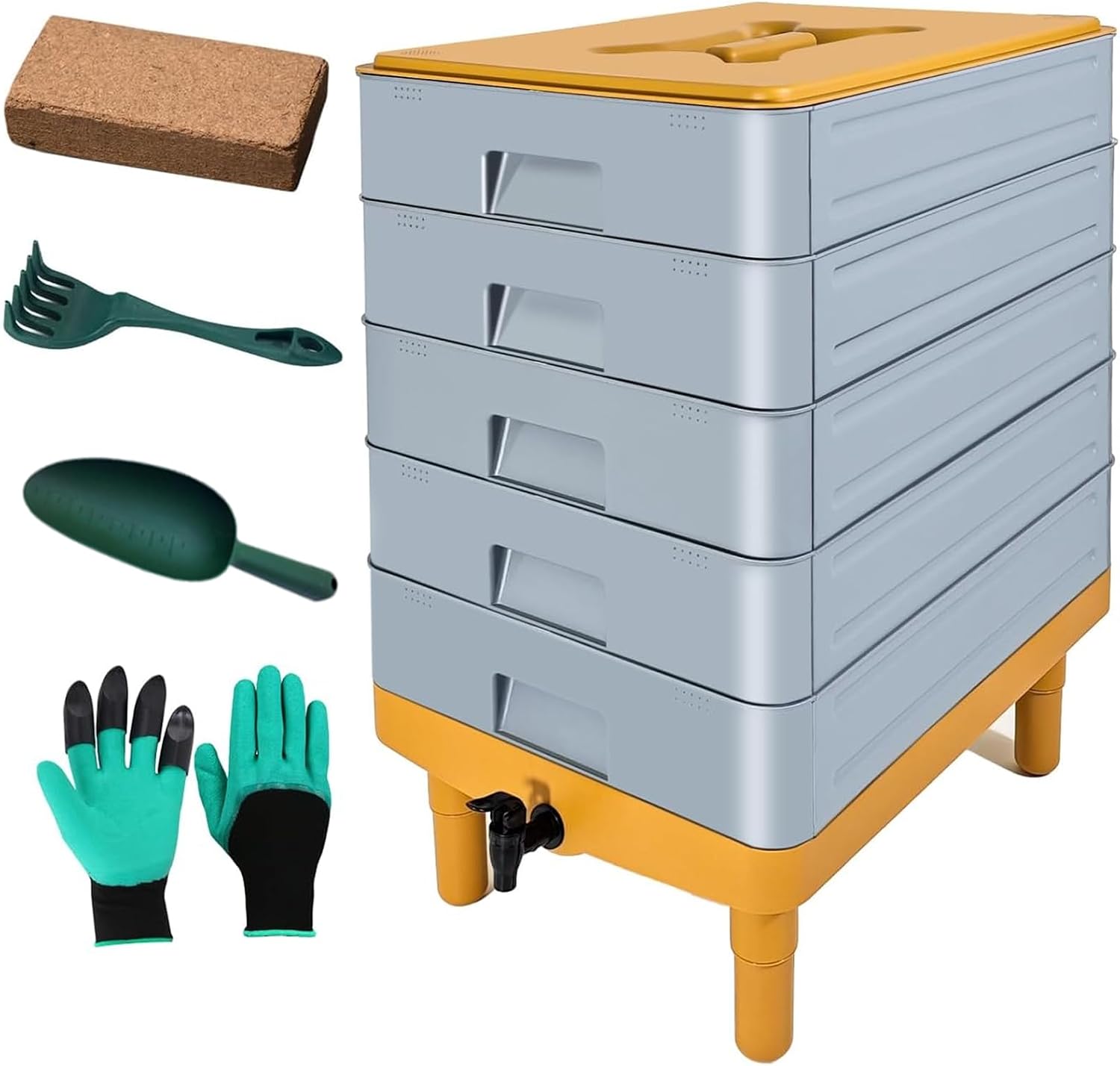
- About 100 liters across five trays, double the VermiHut bins
- Built-in faucet for draining worm tea
- Comes with coir bedding brick, gloves, shovel and scraper
- Closed design with ventilation to limit odor
Cons
- Worms are not included
- Fewer ratings than the long-established brands
The stacked five-tray design makes composting in stages straightforward: add waste to the top tray and remove lower trays to harvest nutrient-rich castings.
At about 100 liters it holds more than the other tray systems here, and the coir brick and tools in the box mean you only need to add worms to get started.
You will have to get worms separately. For a massive operation you would need several units, but for the price it offers the most tray capacity on this list.
Best premium choice
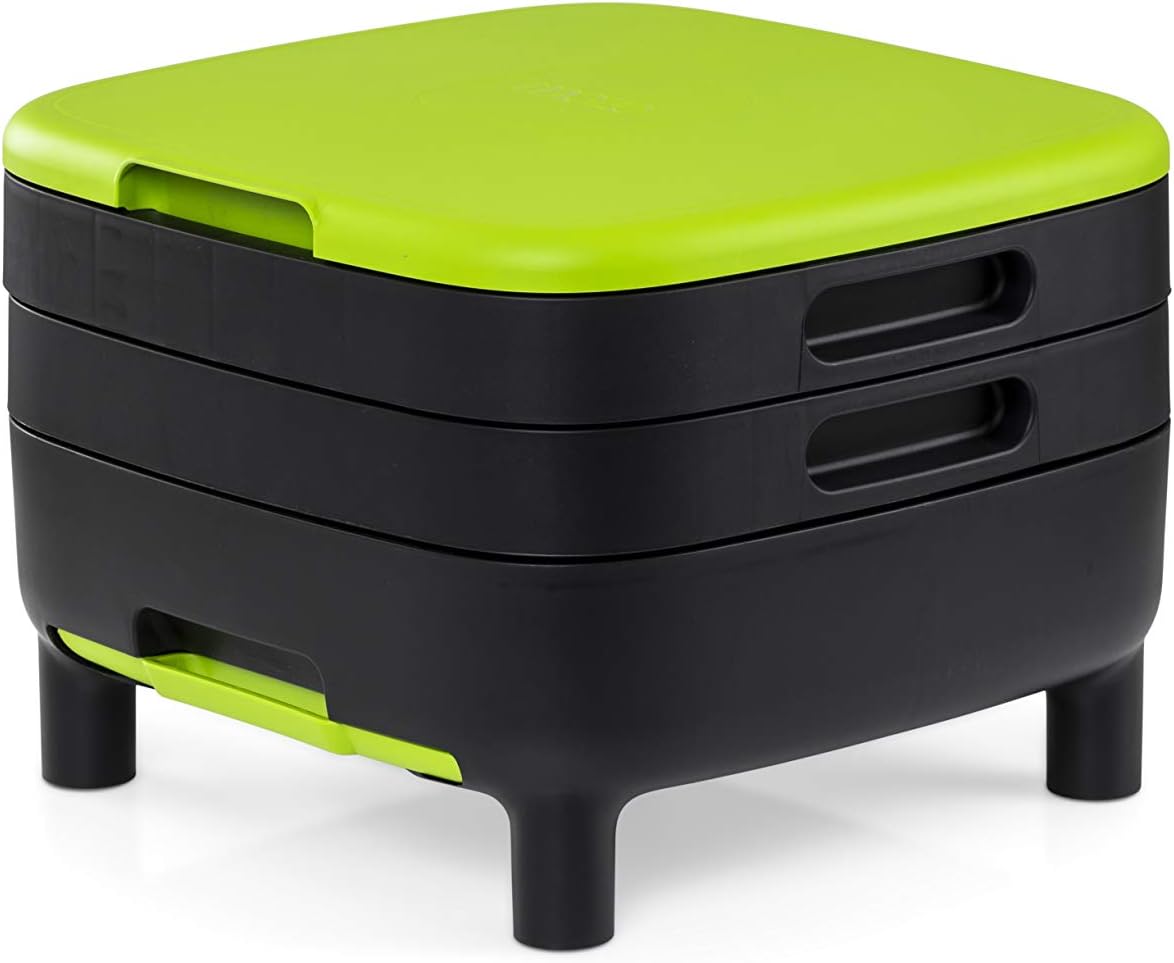
- Made from recycled material diverted from landfill
- Two working trays rotate for continuous composting
- Sliding worm-saver tray and separate liquid collection tray
- Coconut peat bedding included
Cons
- Only two working trays, so capacity is smaller than the 5-tray bins
- Higher price than the larger tray systems
The Maze Worm Farm is built from recycled plastic and kept simple: fill one working tray, then rotate in the second when it is full.
The sliding worm-saver tray and separate liquid collection tray make it easy to drain liquid without losing worms, and the lid lifts off and hangs on the side while you feed.
Its compact footprint suits patios and garages, but with two working trays it holds less than the five-tray bins here.
Also great

- Large ~150-liter continuous-flow capacity
- Harvest from the bottom without disturbing the worms
- Breathable 900D oxford fabric; the top can be left open or closed to control moisture
- Tool-free assembly in under five minutes
Cons
- Fabric needs moisture monitoring in very dry climates
- Takes several months before the first harvest if starting fresh
The Urban Worm Bag’s tough, breathable fabric keeps airflow steady for healthy worms.
Feeding from the top and harvesting from the bottom makes things easy, with no need to disturb the worms to get the castings.
Assembly takes just a few minutes with no tools required. Moisture control takes a little attention, especially in a dry climate. If you start with some existing vermicompost, you’ll get results faster.
With about 150 liters of capacity, it is the largest system on this list and handles kitchen scraps and cardboard in volume.
Buying Guide
When you’re picking out a worm composter for large-scale farming, capacity comes first. The system needs to handle all that organic waste your farm churns out every day, so you don’t end up emptying it constantly.
Check if the model matches your farm’s daily volume. Some bins just can’t keep up with bigger operations.
Durability and material quality matter a lot too. Look for composters built from tough, weather-resistant materials that can survive the outdoors.
That kind of build lasts longer and means less maintenance down the road. No one wants to replace a composter every season.
Ventilation—yeah, that’s another big one. Good airflow keeps worms happy, controls moisture, and helps avoid those nasty odors or mold.
Adjustable vents or layered designs really help with aeration. It’s not just a bonus; it’s almost essential if you ask me.
Don’t forget about how you’ll harvest the castings. Systems with easy separation features save a ton of time.
If you can quickly access the finished compost, that’s a win. Look for setups with trays or drawers you can actually get to without wrestling the whole thing apart.
| Feature | Importance | What to Look For |
|---|---|---|
| Capacity | Matches farm waste volume | Large bin size; scalable options |
| Material Quality | Withstands environmental elements | Heavy-duty plastic or metal |
| Ventilation | Maintains worm health and moisture | Adjustable air vents; layered trays |
| Harvesting Ease | Saves time on compost collection | Removable trays; slide-out drawers |
Temperature control deserves a mention. Worms do best between 55-77°F (13-25°C), so composters with insulation or ways to add shade can really help.
And then there’s the setup and footprint. Make sure the system fits your available space and doesn’t mess with your workflow.
Compact or stackable designs? They can be a lifesaver when ground space is tight.
We independently select all products and services. If you click through links we provide, Plant Native may earn a commission with no extra cost to you. As an Amazon Associate I earn from qualifying purchases.

Glad I found this.
Needed this today.