Rattlesnake Master (Eryngium yuccifolium)
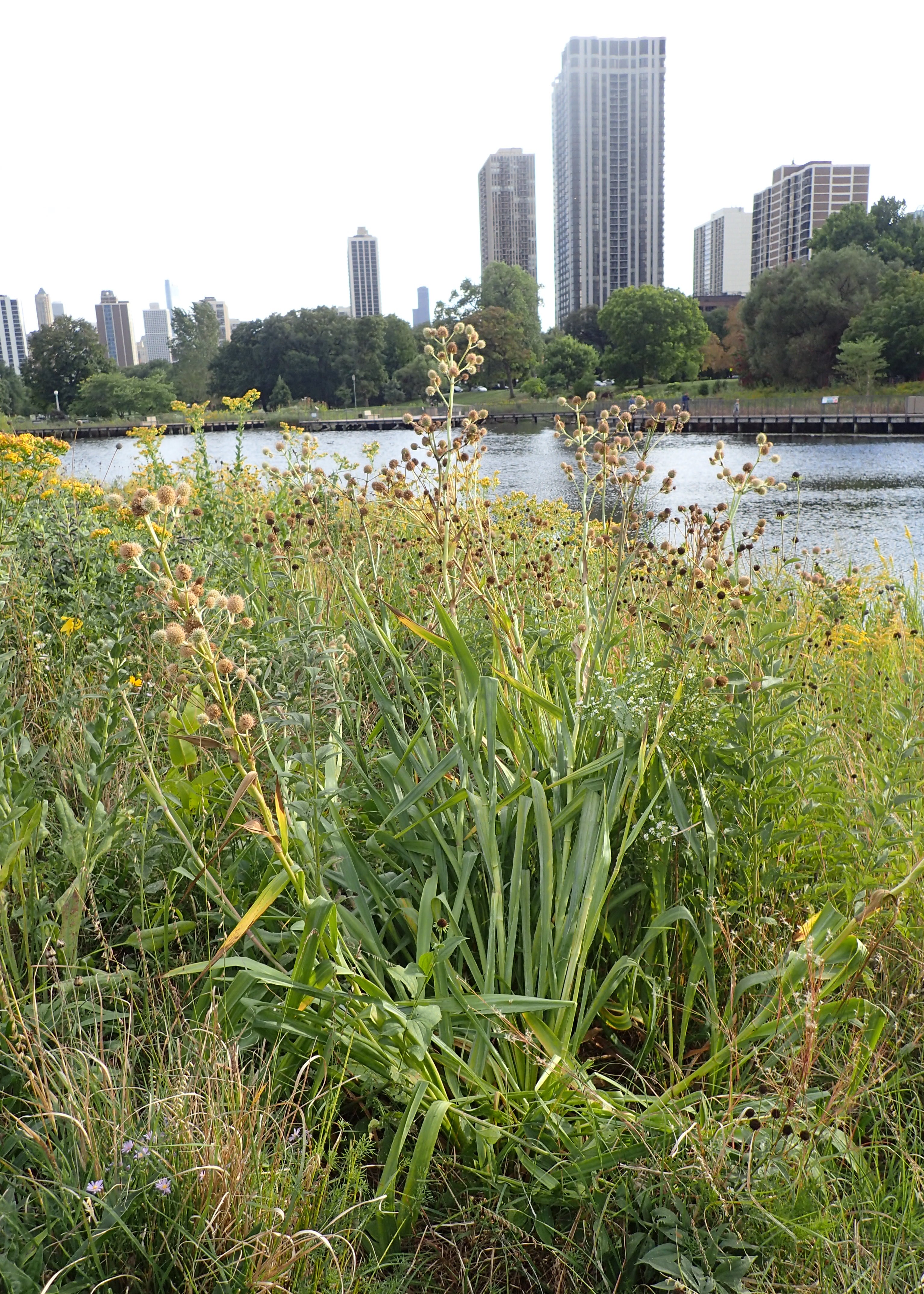
Eryngium yuccifolium, known as Rattlesnake Master, Button Snakeroot, or Bear Grass, is one of the most architecturally distinctive native wildflowers of North American prairies. This bold perennial of the Apiaceae (carrot) family looks nothing like its relatives — instead of delicate, flat-topped flower clusters, it produces dramatic spherical heads of tiny white flowers reminiscent of a sea holly or thistle, rising on stiff, branching stems above a rosette of long, sword-shaped, blue-green leaves that immediately evoke the form of a yucca plant. The visual drama of Rattlesnake Master in full bloom — 4–6 feet tall, with multiple silvery-white globes catching the summer light — is unlike any other native prairie plant.
The common name “Rattlesnake Master” reflects a long history of Indigenous and folk medicinal use as a supposed treatment for rattlesnake bites — a belief that, while medically unfounded, speaks to the plant’s prominent role in the pharmacopoeias of eastern North American cultures. The species name “yuccifolium” (yucca-leaved) is entirely apt: the tough, linear basal leaves, edged with soft spines and reaching 2–3 feet long, genuinely resemble those of yucca plants — an unusual family resemblance across very different plant lineages.
For native plant gardeners in Michigan, Minnesota, and Wisconsin, Rattlesnake Master offers extraordinary value as a drought-tolerant, low-maintenance prairie perennial with dramatic architectural form, long-season interest, and exceptional wildlife value. Once established in full sun and well-drained soil, it is essentially self-sustaining — a true plant-it-and-forget-it native for the midwest prairie garden.
Identification
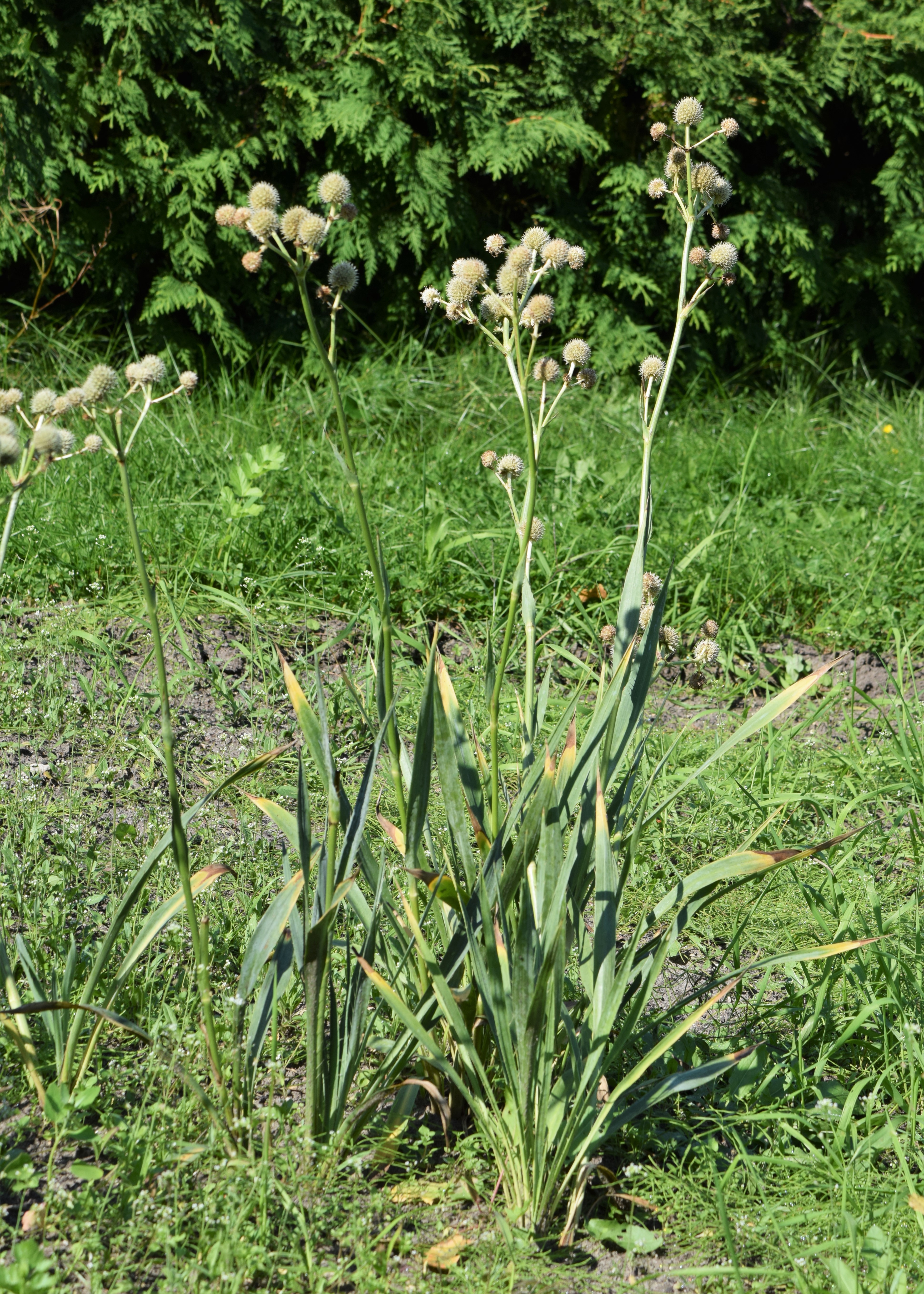
Rattlesnake Master is unmistakable once you know it. The combination of yucca-like basal leaves and spherical white flower heads on tall, rigid, branching stems is unique among Great Lakes prairie wildflowers. Mature plants form impressive clumps 4–6 feet tall at peak bloom in midsummer.
Leaves
The basal leaves are perhaps the most immediately striking feature: long, linear, and sword-like, reaching 1–3 feet in length and ½ to 1½ inches wide, with parallel veins and margins fringed with soft, widely-spaced teeth or bristles. The leaf color is distinctive — a silvery blue-green that gives the plant its yucca-like appearance even when not in bloom. The stem leaves are smaller and clasping. The entire leaf surface has a somewhat stiff, tough texture unlike most prairie wildflowers.
Flowers
The flower heads are dense, spherical clusters (resembling a golf ball) about ¾ to 1½ inches in diameter, composed of dozens of tiny white to creamy flowers, each subtended by rigid, pointed bracts that give the head a spiny appearance. Multiple flower heads are borne on tall, stiff, branching stems reaching 4–6 feet in height. Bloom time is July through August in the Great Lakes region. The dried flower heads persist through fall and winter, providing structural interest and food for birds.
Roots
Rattlesnake Master develops a deep, fibrous root system with thick, starchy roots that can reach several feet deep — a prairie adaptation for drought tolerance and survival through fire. This deep root system makes established plants very difficult to transplant but also makes them long-lived and highly drought resistant once established.
Quick Facts
| Scientific Name | Eryngium yuccifolium |
| Family | Apiaceae (Carrot / Parsley) |
| Plant Type | Herbaceous Perennial Prairie Wildflower |
| Mature Height | 4–6 ft |
| Sun Exposure | Full Sun |
| Water Needs | Moderate |
| Bloom Time | July – August |
| Flower Color | White to creamy white |
| Soil Preference | Well-drained; tolerates clay, loam, and sandy soils |
| Deer Resistance | High (spiny foliage deters deer) |
| USDA Hardiness Zones | 3–9 |
Native Range
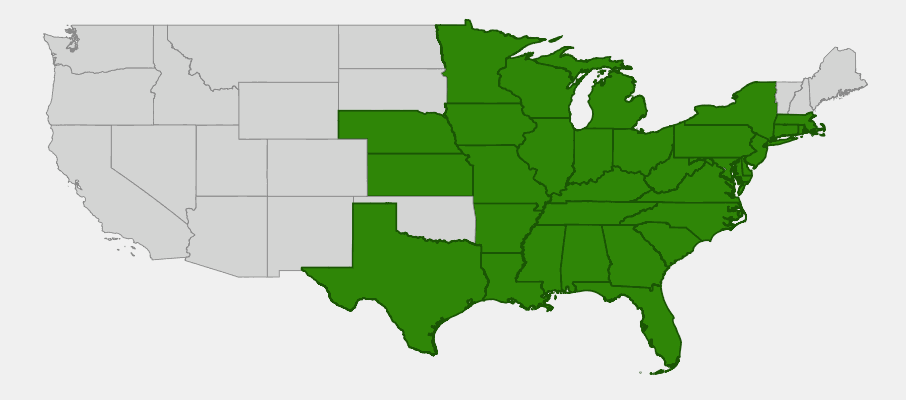
Rattlesnake Master is native to the eastern and central United States, with its core range in the prairies and savannas of the midwest and central states. It is found from Nebraska and Kansas east through Illinois, Indiana, Ohio, and Pennsylvania, and south to Florida and Texas, with scattered populations in the Great Lakes states of Michigan, Minnesota, and Wisconsin at the northern edge of its range. In the Great Lakes region, it is characteristic of remnant dry and mesic prairies, oak savannas, and prairie restorations.
In its native habitat, Rattlesnake Master grows in full sun in well-drained to moderately moist soils. It is a characteristic plant of tallgrass prairie ecosystems, where it often grows alongside other prairie giants such as Big Bluestem (Andropogon gerardii), Prairie Dropseed (Sporobolus heterolepis), Compass Plant (Silphium laciniatum), and Purple Coneflower (Echinacea purpurea). Its deep root system makes it fire-adapted — it survives periodic prairie burns and regrows vigorously from the root crown.
Much of Rattlesnake Master’s historical range has been converted to agriculture, dramatically reducing wild populations. The survival of this plant is intimately tied to the conservation of remnant prairie and savanna ecosystems — some of the most threatened habitats in North America. In Michigan, Minnesota, and Wisconsin, it persists in remnant prairies and is increasingly planted in prairie restorations, where it serves as a visual anchor and ecological keystone of the midsummer bloom.
📋 Regional plant lists featuring Rattlesnake Master: Michigan, Minnesota & Wisconsin
Growing & Care Guide
Rattlesnake Master is an excellent plant for patient gardeners — it is slow to establish (spending its first year or two building its deep root system) but once settled, it is one of the most drought-tolerant, deer-resistant, and self-sufficient native plants available for the midwest prairie garden.
Light
Full sun is essential for Rattlesnake Master. It requires at least 6–8 hours of direct sunlight daily to perform well. In even moderate shade, the stems become floppy and weak, flowering is greatly reduced, and the plant’s health gradually declines. Plant it only in genuinely full-sun locations.
Soil & Water
Rattlesnake Master grows in a wide range of soil types — from sandy to clay — as long as drainage is reasonable. It performs best in moderately dry to moderately moist, well-drained soils and tolerates dry conditions once established. Avoid waterlogged or consistently wet soils, which can cause root rot. Once its deep root system is established (typically by year 2–3 from transplanting), Rattlesnake Master needs no supplemental watering in most Great Lakes summers. In its first year, water weekly during dry spells to support establishment.
Planting Tips
Plant container-grown specimens in spring or early fall. Space plants 2–3 feet apart for prairie planting; 3–4 feet apart if used as a specimen or accent plant. Rattlesnake Master is best not disturbed once established due to its deep taproot — choose its permanent location carefully. It is slow from seed (typically 2–3 years to bloom), but direct seeding in fall (stratified seed sown on soil surface) can be cost-effective for large-scale prairie restorations.
Pruning & Maintenance
Rattlesnake Master requires essentially no maintenance once established. The dried flower heads and stems provide exceptional fall and winter structure — leave them in place through winter for maximum visual interest and wildlife value (birds eat the seeds from the dried heads). Cut back to the ground in late winter before new growth emerges. The plant does not require division. It is pest- and disease-free in appropriate growing conditions.
Landscape Uses
Rattlesnake Master delivers architectural drama in:
- Prairie and meadow gardens — a bold structural accent in the mid-to-back border
- Dry native landscape borders — exceptional drought tolerance and visual impact
- Contemporary native gardens — architectural form works well with modern design
- Pollinator gardens — outstanding late-season pollinator magnet
- Four-season gardens — dried heads provide winter structure and wildlife food
- Deer-challenged gardens — spiny foliage provides strong deer deterrence
Wildlife & Ecological Value
Rattlesnake Master is a keystone species of tallgrass prairie ecosystems, providing food, habitat, and ecological services for a remarkable array of native wildlife.
For Birds
The dried seed heads of Rattlesnake Master persist through fall and winter, providing food for seed-eating birds including American Goldfinch, Dark-eyed Junco, and various sparrows. The plant’s tall, stiff stems also provide perching sites and song posts for prairie birds including Meadowlarks, Dickcissels, and various sparrows. In prairie restoration settings, Rattlesnake Master is an essential structural component of functional songbird habitat.
For Mammals
The spiny, tough foliage of Rattlesnake Master provides very effective deer resistance — a major landscape advantage in the Great Lakes region where deer browsing pressure is intense. The deep root system and resprouting capacity make it resilient to any browsing that does occur. Small mammals use the dense basal rosette as shelter and cover.
For Pollinators
Rattlesnake Master is one of the most exceptional native pollinator plants of the tallgrass prairie, attracting an extraordinary diversity of native bees, wasps, beetles, and flies to its nectar-rich flower heads. The prairie specialist bee Tetralonia (or related genera) collects pollen almost exclusively from Eryngium flowers. Monarch butterflies nectar heavily on Rattlesnake Master during their late-summer migration, and multiple swallowtail butterfly species (which belong to the Apiaceae-specialist group) use the plant as a host and nectar source. The flower heads are “bee motels” — dozens of individual insects may be foraging on a single head simultaneously.
Ecosystem Role
In tallgrass prairie ecosystems, Rattlesnake Master is an indicator species — its presence signals high-quality remnant prairie with intact soil biota and hydrology. It supports a specialized community of prairie insects, including solitary bees that nest in the sandy soils beneath and around prairie stands, beetles that develop in the stem pith, and wasps that provision nests with prey caught in the prairie. Its fire adaptation — deep roots that resprout vigorously after burning — makes it an important component of fire-maintained prairie ecosystems.
Cultural & Historical Uses
Rattlesnake Master holds an important place in the ethnobotany of eastern North American Indigenous cultures. The plant’s most famous use — as a supposed treatment for rattlesnake bites — was documented by multiple early European naturalists and explorers who observed Indigenous peoples rubbing the root on snake bite wounds or administering root preparations internally. While modern medicine has established that Rattlesnake Master has no specific antivenom properties, the plant does contain saponins and other bioactive compounds with anti-inflammatory and astringent effects that may have provided some relief from symptoms.
Multiple Indigenous nations used various parts of the plant medicinally. The Cherokee used root preparations to treat urinary and kidney problems. The Meskwaki (Fox) used it for skin conditions. The Omaha and Ponca peoples of the Great Plains used the plant ceremonially and medicinally. The tough, fibrous leaves were also used by some Indigenous peoples for basket weaving and for making ropes and cordage — “bear grass” is one of its common names, reflecting this practical use. The starchy root was eaten by some cultures during times of food scarcity.
In the era of early American frontier medicine, Rattlesnake Master was widely traded and used as a patent medicine for snakebite, its reputation spreading far beyond its native range. European settlers also used it as a general tonic, diuretic, and treatment for various ailments. Today, the plant is of scientific interest for its bioactive saponins — compounds that have been studied for potential pharmaceutical applications. But its greatest contemporary value lies in prairie restoration and native plant gardening, where its dramatic form and exceptional ecological value make it one of the most sought-after native prairie plants.
Frequently Asked Questions
Why is it called Rattlesnake Master?
The name derives from a long Indigenous and folk tradition of using the plant’s root as a supposed treatment for rattlesnake bites. Multiple early European observers documented Native Americans rubbing the root on bite wounds. Modern science has established no specific antivenom properties, but the plant does have bioactive compounds with some anti-inflammatory effects. The name reflects the importance of snakebite treatment in pre-modern frontier medicine.
How long does Rattlesnake Master take to establish?
Rattlesnake Master is famously slow to establish — spending its first 1–2 years building an extensive deep root system before producing flowers. Most transplanted container plants bloom for the first time in their second or third year in the garden. The wait is worth it: once established, plants are essentially permanent, requiring no intervention and providing decades of spectacular summer bloom.
Is Rattlesnake Master drought tolerant?
Yes — once established, Rattlesnake Master is highly drought tolerant due to its deep root system. It is a plant of full-sun, well-drained to dry prairie sites in its natural range and thrives in the kind of hot, dry summer conditions that challenge many other perennials. In its first year, water weekly during dry spells to support root establishment; after that, rainfall alone is typically sufficient in the Great Lakes region.
Will deer eat Rattlesnake Master?
Deer generally avoid Rattlesnake Master due to its tough, spiny foliage — making it an excellent choice for gardens with heavy deer pressure. It is one of the most reliably deer-resistant native perennials for the midwest prairie garden. Rabbits also tend to avoid the tough, spiny leaves.
Can I grow Rattlesnake Master in clay soil?
Yes — Rattlesnake Master tolerates clay soils reasonably well as long as drainage is adequate. It will not thrive in waterlogged, perpetually wet conditions. In heavy clay, amend the planting area with compost and ensure the site does not pond water after rain. Sandy and loamy soils are also suitable. The plant’s tolerance of various soil types makes it versatile for challenging site conditions.