Greasewood (Sarcobatus vermiculatus)
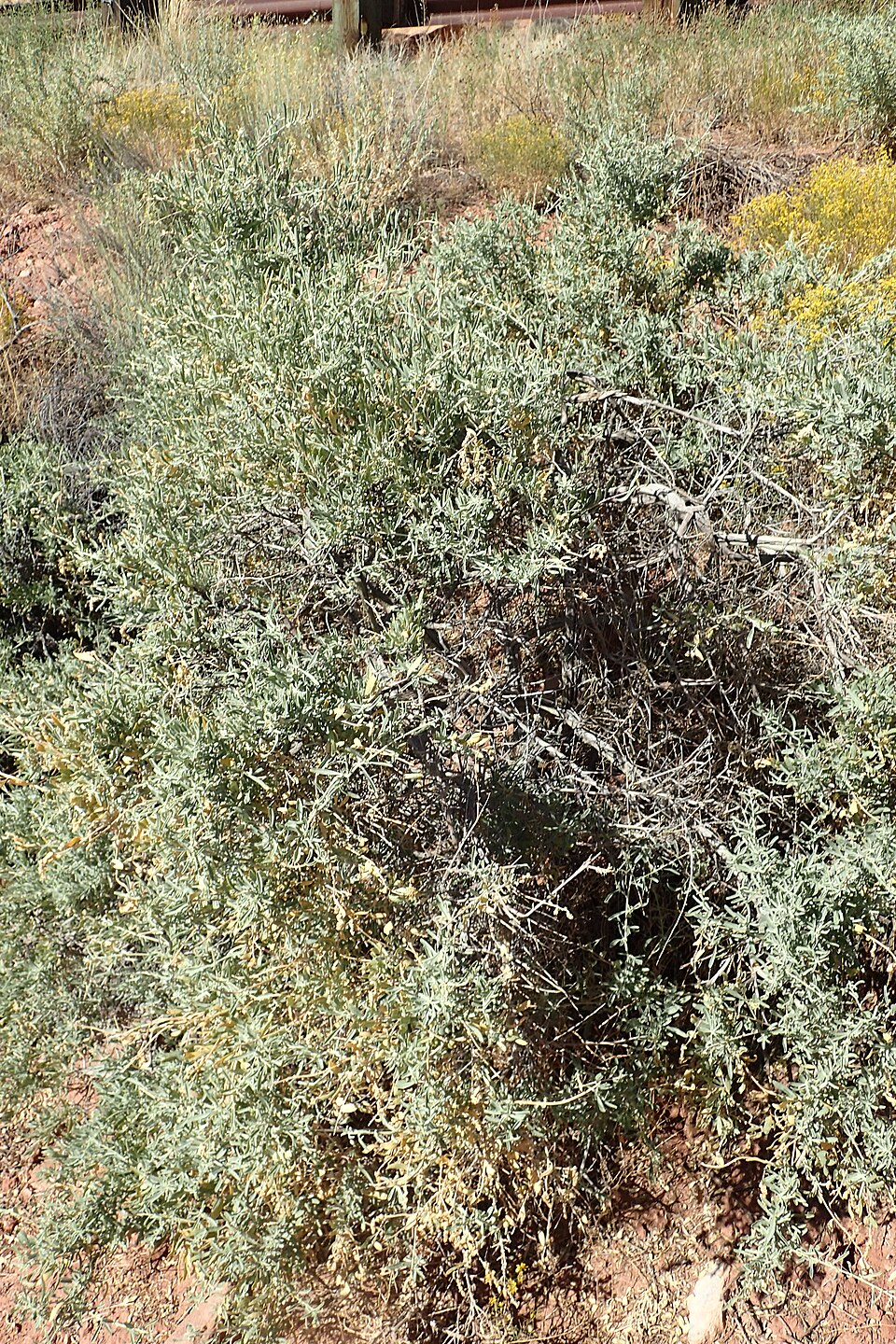
Sarcobatus vermiculatus, commonly known as Greasewood or Black Greasewood, is one of the most ecologically specialized and salt-tolerant shrubs in all of North America. Found across the Great Basin and surrounding desert regions wherever soils are saline, alkaline, or seasonally waterlogged, Greasewood is the undisputed indicator plant of the saltbush community — its presence signals soils too salty for most other woody plants. The name “greasewood” derives from the plant’s high oil content; the wood burns with a greasy, hot flame, and Indigenous peoples valued it for this very reason.
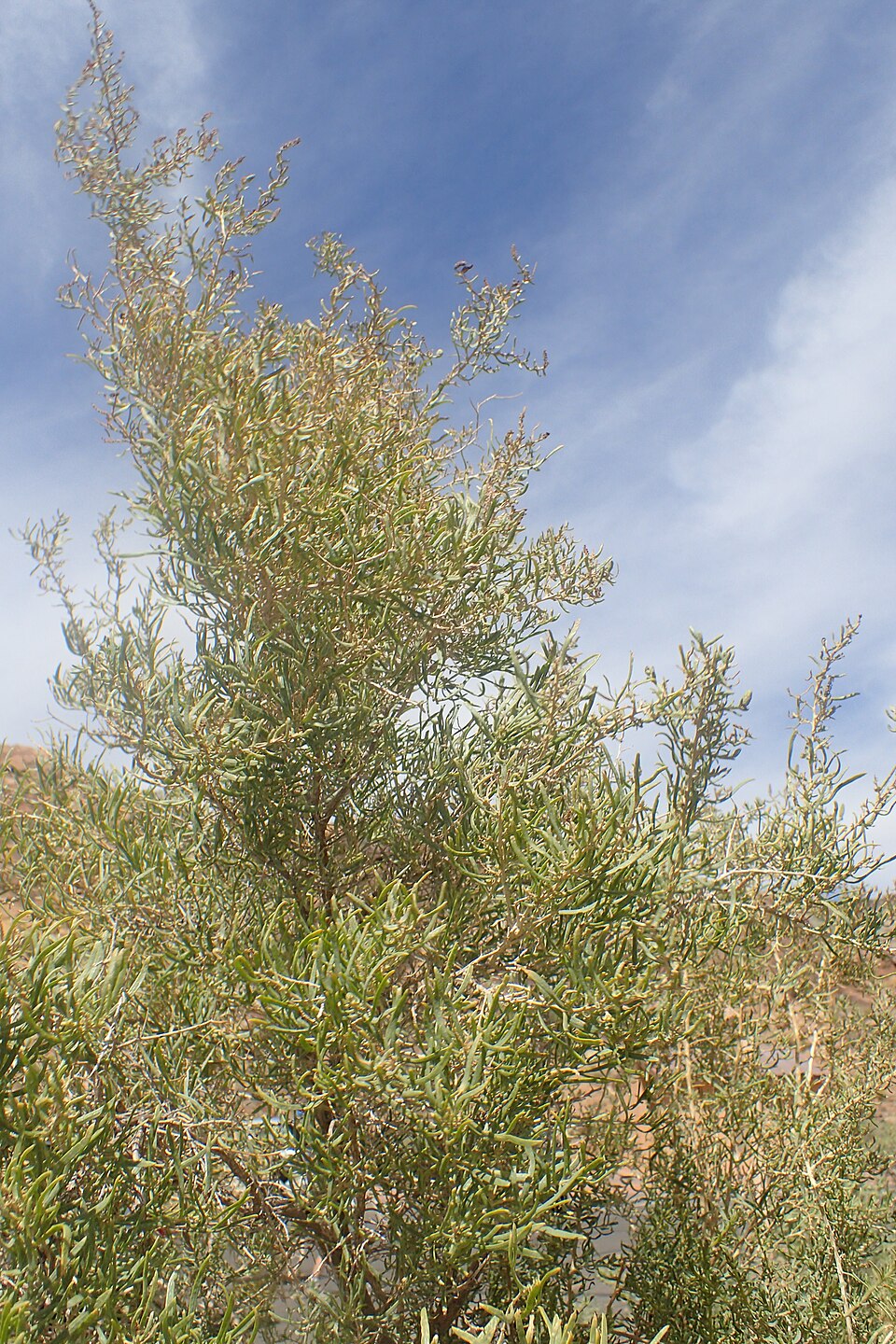
Greasewood is a deciduous to semi-evergreen shrub reaching 2 to 6 feet in height, with stiff, spiny branches, succulent bright green cylindrical leaves, and a striking light green color that stands out vividly against the white alkaline soils and gray-green sagebrush that surrounds it. Though its saline, alkaline habitat may seem inhospitable, Greasewood is actually a cornerstone of the salt desert shrub ecosystem — providing year-round cover for small mammals and birds, producing nutritious foliage browsed by pronghorn and mule deer (with appropriate management), and building the organic matter and structure of otherwise degraded soils.
For Utah specifically, Greasewood is a characteristic plant of the Great Salt Lake basin, Bonneville Salt Flats, and the saline flats and dry lake beds scattered across the Great Basin. It is one of the few native woody plants capable of growing on these challenging sites, making it invaluable for reclamation, restoration, and habitat creation in saline environments where most plants fail completely.
Identification
Greasewood is a rounded to spreading deciduous shrub, 2 to 6 feet (0.6–1.8 m) tall, with multiple stiff, intricately branched stems. The branches are rigid and often tipped with sharp spines that can be quite painful. The overall texture is rough and twiggy, with an appearance distinctly different from the softer outlines of sagebrush and saltbush that share its habitat.
Leaves
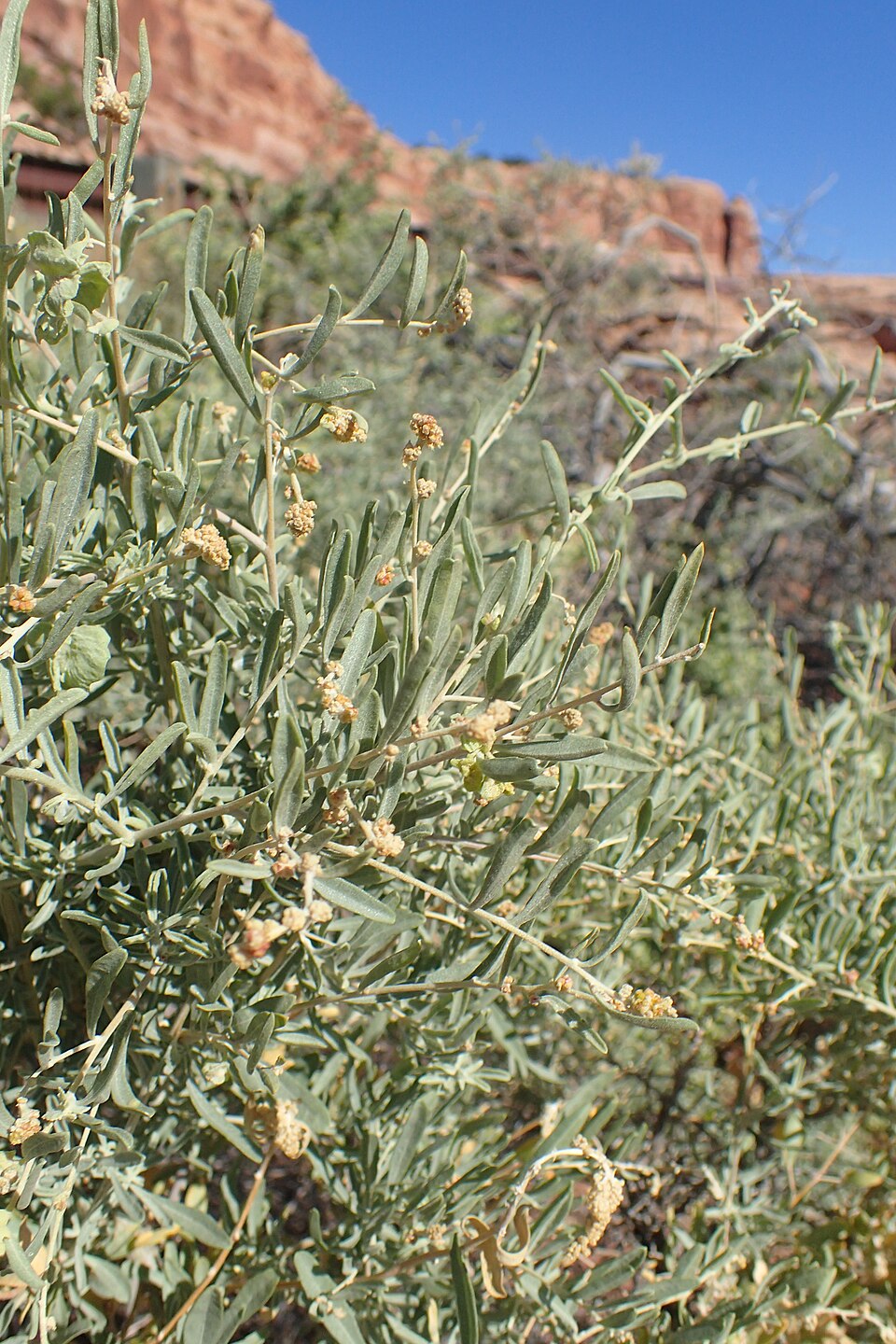
The leaves are succulent, cylindrical, and fleshy — about ½ to 1 inch (1–2.5 cm) long and barely ¼ inch wide, resembling miniature green pickles. This succulent leaf form is a direct adaptation to salt stress: by accumulating water in their tissues, the leaves dilute the high salt concentrations absorbed from the soil. The leaves are bright, vivid green — much brighter and more saturated than the gray-green of sagebrush or saltbush — which makes Greasewood stands instantly identifiable from a distance across the salt flats.
Flowers & Fruit
Greasewood is wind-pollinated with separate male and female plants (dioecious). Male flowers are borne in slender, finger-like catkins at the tips of branches; female flowers are solitary in leaf axils. The fruit is distinctive: a tiny, flat-winged nutlet surrounded by a papery, fan-shaped wing about ¾ inch (2 cm) in diameter, resembling a small wheel or circular sail. These winged fruits ripen in late summer and early fall and are dispersed by wind across the salt flats. The dried fruiting structures persist on the plant through winter, rattling in the wind and adding textural interest to the winter landscape.
Bark
Older bark is gray-white, smooth to slightly rough, with prominent spines at branch tips. The spines are stiff, sharp, and up to an inch long, providing effective protection from browsing pressure and creating secure cover habitat for small birds and mammals that nest and shelter in the dense interior of the shrub.
Quick Facts
| Scientific Name | Sarcobatus vermiculatus |
| Family | Sarcobataceae (Greasewood Family) |
| Plant Type | Deciduous to Semi-Evergreen Shrub |
| Mature Height | 2–6 ft |
| Sun Exposure | Full Sun |
| Water Needs | Xeric (Extremely Drought Tolerant); halophyte adapted to saline soils |
| Bloom Time | May – July |
| Flower Color | Greenish (wind-pollinated catkins) |
| Fruit | Small winged nutlets; papery, circular |
| USDA Hardiness Zones | 4–9 |
Native Range
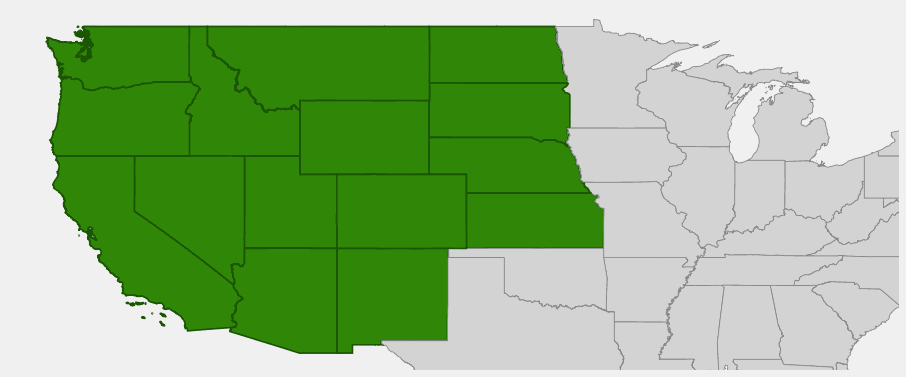
Greasewood has one of the broadest distributions of any salt desert shrub in North America, ranging from the Pacific Coast states east to the central Great Plains and from southern Canada south into northern Mexico. In the United States, it is native to California, Nevada, Utah, Arizona, New Mexico, Colorado, Wyoming, Idaho, Montana, Oregon, Washington, North Dakota, South Dakota, Nebraska, and Kansas — essentially wherever saline, alkaline soils occur in the arid and semi-arid West. Its distribution closely tracks the distribution of saline soils derived from ancient lake beds and marine deposits.
In Utah, Greasewood is widespread throughout the Great Basin portion of the state, particularly around the Great Salt Lake basin, the west desert, and in valley bottoms throughout the Colorado Plateau where saline soils have developed. It is a common and sometimes dominant plant in the salt desert shrub community, which also includes Shadscale, Fourwing Saltbush, and Gardner’s Saltbush. These communities occupy millions of acres across the Great Basin and form important winter range for pronghorn, mule deer, and many bird species.
Greasewood typically grows where other plants cannot — in soils with very high sodium and/or chloride concentrations, high water tables that bring dissolved salts to the surface through capillary action, and in seasonally flooded playas. It is one of the deepest-rooted shrubs in the Great Basin, with roots extending 15 to 20 feet or more to reach the saline water table.
📋 Regional plant lists featuring Greasewood: Utah
Growing & Care Guide
Greasewood is one of the toughest and most specialized native shrubs in the West. It thrives in conditions that defeat most plants — extreme salinity, periodic flooding, alkaline soils, and intense summer heat. It is the natural choice for reclamation of degraded saline sites, salt-affected soils, and difficult desert environments where other natives struggle.
Light
Full sun is required. Greasewood is completely intolerant of shade and grows only in open, exposed conditions. It is perfectly adapted to the intense radiation of the Great Basin desert and requires maximum direct sunlight for healthy development.
Soil & Water
Greasewood is highly adapted to saline, alkaline soils and actually performs poorly in rich, fertile garden soils. It tolerates soil salinity levels that would kill most plants, including ECe (electrical conductivity) values up to 12 dS/m or higher. While it can grow in relatively dry conditions once established, it naturally occurs where the water table is relatively shallow (within 10–20 feet of the surface), and will tolerate seasonal flooding with brackish or saline water. In reclamation plantings, no soil amendment is needed or desired — plant directly into native site conditions.
Planting Tips
Greasewood is challenging to propagate and not widely available at standard nurseries; seek it from specialty native plant nurseries or reclamation seed suppliers. It can be established from seed sown directly in fall, or from container plants in early spring. Plant density of 3–5 feet on center is appropriate for wildlife cover plantings. Minimal irrigation during the first growing season will help establishment, but avoid over-watering.
Pruning & Maintenance
Greasewood requires essentially no maintenance once established on appropriate sites. The spiny branches create effective wildlife cover that does not need pruning. If tidying is required, prune in late winter. The plant is naturally resistant to most insects and diseases due to its specialized chemical compounds. It is best treated as a low-maintenance native shrub and left largely undisturbed once established.
Landscape Uses
- Saline site reclamation — unmatched for restoring vegetation on salt-affected soils
- Wildlife cover in Great Basin and salt desert environments
- Erosion control on alkaline slopes and valley floors
- Windbreak component on difficult alkaline sites
- Habitat restoration for salt desert shrub communities
- Screening for industrial sites with challenging soil conditions
Wildlife & Ecological Value
In the salt desert shrub community, Greasewood plays an essential role as one of the few woody plants capable of providing year-round cover and structural habitat on highly saline soils.
For Birds
The dense, spiny interior of Greasewood shrubs provides secure nesting and roosting habitat for desert birds. Sage Sparrow (Sagebrush Sparrow), Brewer’s Sparrow, Loggerhead Shrike, and Black-throated Sparrow are commonly associated with Greasewood-dominated shrub communities. The light green foliage color provides excellent camouflage for ground-nesting species, and the spines deter nest predation by larger birds and mammals. Horned Larks, Vesper Sparrows, and Meadowlarks forage extensively in the openings between Greasewood plants during fall and winter.
For Mammals
Pronghorn browse Greasewood foliage extensively during winter when other forage is scarce — despite its high oxalate content, pronghorn have adaptations that allow them to consume it without ill effects. Mule deer also browse the plant, though they are more cautious given the oxalate risk. Jackrabbits, cottontail rabbits, kangaroo rats, and ground squirrels all use Greasewood stands for cover. The dense canopy provides critical shade and thermal cover for these animals during the intense summer heat of the Great Basin.
For Pollinators
As a wind-pollinated plant, Greasewood does not produce nectar-rich flowers. However, the pollen of male plants provides an early-season protein source for specialist native bees that collect pollen rather than nectar. The structural complexity and shaded microclimate under Greasewood canopy supports populations of ground-nesting bees and other arthropods that would not otherwise be able to survive on the exposed salt flats.
Ecosystem Role
Greasewood is a keystone species in the salt desert shrub ecosystem, providing the structural foundation for habitat in environments that would otherwise be essentially bare. Its deep root system reaches saline groundwater and redistributes it through the hydraulic lift mechanism, bringing moisture from depth to the surface soil where shallower-rooted plants can access it — a fascinating ecological service that supports the entire shrub community. Greasewood stands also slow wind erosion, reducing salt crust disturbance and helping stabilize the fragile salt desert soil surface.
Cultural & Historical Uses
Indigenous peoples of the Great Basin — including the Shoshone, Paiute, and Ute — had extensive knowledge of Greasewood and its uses. The most important practical use was as firewood: Greasewood has one of the highest energy values per unit weight of any desert shrub due to its high resinous oil content, burning hot, fast, and with a bright, greasy flame that gave the plant its English name. It was used for cooking fires, particularly for situations requiring intense, sustained heat such as pottery firing, stone boiling, and roasting large quantities of food.
The wood was also fashioned into digging sticks, gaming pieces, and arrow shafts in some communities. The ashes of burned Greasewood were mixed with tobacco or other plant materials to create a soda-like alkali powder used in processing certain foods, particularly corn hominy — a practice common across many Great Basin and Southwestern Indigenous cultures. In some communities, the ashes were also used as a lye source for cleaning and as a mordant in dyeing fibers.
Caution is warranted: Greasewood foliage and seeds are high in calcium oxalate, which can cause fatal oxalate poisoning in sheep and cattle if consumed in large quantities, particularly in spring when new growth is most toxic and when animals may be hungry and lack alternative forage. Livestock managers in the Great Basin have long recognized the risk, managing grazing to prevent animals from consuming dangerous quantities, particularly in early spring when new growth appears.
Frequently Asked Questions
Is Greasewood the same as Sagebrush?
No. Greasewood (Sarcobatus vermiculatus) and Sagebrush (Artemisia tridentata) are entirely different plants in different families. They often grow in nearby habitats but are easily distinguished: Greasewood has succulent, cylindrical bright green leaves and spiny branches; Sagebrush has soft, gray-green aromatic leaves and no spines. Their preferred soils also differ — Greasewood prefers saline/alkaline soils; Sagebrush prefers well-drained, non-saline soils.
Is Greasewood toxic?
Greasewood foliage contains high concentrations of calcium oxalate, which is toxic to sheep, cattle, and other livestock if consumed in large quantities, especially in spring. It is less toxic to pronghorn, which have physiological adaptations to process oxalates. The plant is generally not palatable to humans, though Indigenous peoples used it medicinally and for firewood rather than as food.
How can I tell if my site is appropriate for Greasewood?
If native Greasewood grows anywhere nearby, your site is likely appropriate. Look for other indicators of saline/alkaline conditions: white salt crusts on the soil surface, other halophytes like Saltbush, Pickleweed, or Iodine Bush nearby, or soils that are gray-white in color and taste salty when moistened. A simple soil conductivity test can confirm salinity levels.
Can Greasewood be used to reclaim degraded saline lands?
Yes — Greasewood is one of the most valuable tools for reclaiming severely salt-affected soils. It establishes on soils too saline for most vegetation, stabilizes the surface, and over time (as it adds organic matter and its root channels change soil structure) begins to create conditions more hospitable to other halophytes, gradually building soil health and habitat complexity.
Does Greasewood attract wildlife?
Despite its uninviting appearance, yes. The spiny, dense interior provides highly secure cover for ground-nesting birds and small mammals in habitats that otherwise have little cover. Pronghorn and mule deer browse the foliage in winter. The winged seeds are eaten by sparrows and other seed-eating birds. In the stark environment of the salt desert, Greasewood stands are genuine wildlife oases.

Looking for a nursery that carries Greasewood?
Browse our native plant nursery directory: Utah