Larger Blue Flag Iris (Iris versicolor)
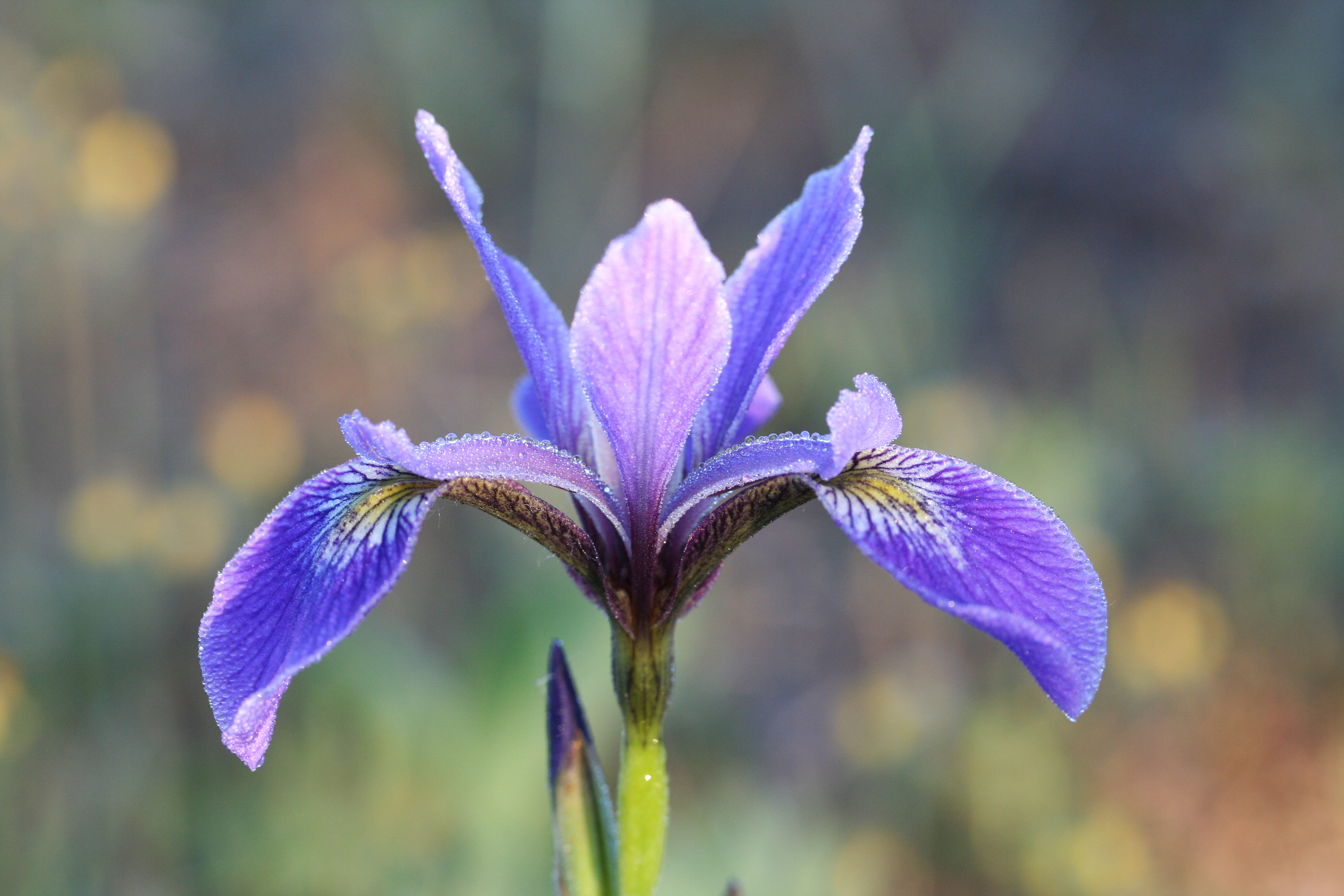
Iris versicolor, commonly called Larger Blue Flag Iris or simply Blue Flag Iris, is one of the most stunning native wildflowers of the northeastern and north-central United States. This robust, rhizomatous perennial emerges from the edges of marshes, ponds, streams, and wet meadows in spring, producing spectacular violet-blue flowers with intricate patterns of white and yellow veining on the falls. Standing 2 to 3 feet tall and blooming in May and June, it transforms wet edges into breathtaking garden spectacles.
The Larger Blue Flag Iris is both a botanical treasure and an ecologically significant wetland plant. Its deep roots stabilize streambanks and pond margins, preventing erosion. Its flowers serve as important nectar sources for bumblebees and other large-bodied pollinators. Its tall, sword-like foliage provides shelter and nesting material for wetland birds and insects. And its structural presence — dramatic clumps of upright, blue-green leaves persisting through summer and fall — gives wetland edges a formal, architectural quality that no other native plant quite replicates.
For gardeners with a pond, rain garden, stream edge, or consistently moist low area, Larger Blue Flag Iris is an essential plant. It requires little care once established and spreads slowly into impressive clumps that flower more prolifically with each passing year. It combines beautifully with other moisture-loving natives including Cardinal Flower, Swamp Milkweed, Blue Vervain, and Pickerelweed, creating a rain garden or wetland edge planting of exceptional wildlife value and visual appeal.
Identification
Larger Blue Flag Iris forms dense clumps of upright, sword-like leaves from a robust rhizomatous root system. It grows 2 to 3 feet tall in bloom, with flowers held on sturdy, somewhat branched scapes. The plant’s overall appearance is architectural — bold, upright, and structural throughout the growing season, even when not in bloom.
Leaves
The leaves are linear, flat, and sword-shaped — the classic iris form — reaching 1 to 3 feet long and ½ to 1 inch wide. They are bluish-green to medium green and have a pale midrib. The leaves emerge from the base of the plant in a fan-like arrangement (equitant), with each successive leaf alternating on opposite sides of the midrib. In late fall, the leaves die back to the ground in northern parts of the range but may remain green through winter in milder climates.
Flowers
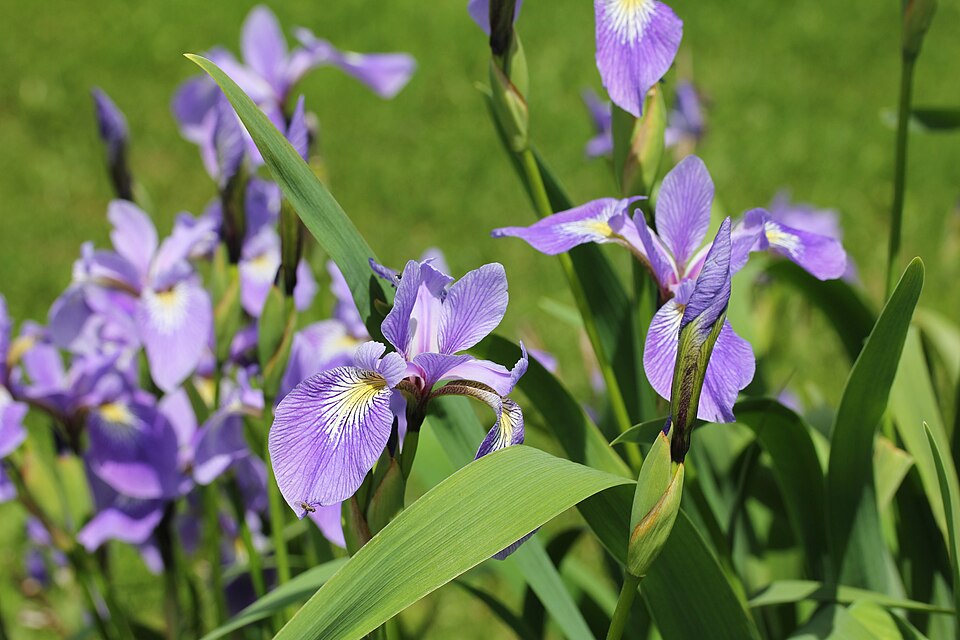
The flowers are the defining feature — large, 3 to 4 inches across, and constructed in the typical iris pattern of three upright petals (standards) and three reflexed or spreading petals (falls). In Iris versicolor, the standards are violet to purple, somewhat smaller and more upright than the falls. The falls are the larger, spreading or drooping sepals — violet to blue-violet with a prominent signal patch of white veined with yellow and purple toward the base. This signal patch serves as a nectar guide for visiting bumblebees.
Flower color varies considerably within the species, ranging from pale lavender to deep violet-blue, sometimes with reddish-purple tints. Rarely, white-flowered forms occur in natural populations. Plants typically produce 2 to 4 flowers per stem in succession, extending the bloom period.
Fruit & Seeds
The seed capsule is a large, 3-parted, prominently ribbed pod that ripens to brown in late summer. Each section contains numerous flat, corky seeds that float on water — an adaptation for water-mediated seed dispersal. The persistent seed capsules add architectural interest to the plant through fall and winter.
Quick Facts
| Scientific Name | Iris versicolor |
| Family | Iridaceae (Iris family) |
| Plant Type | Herbaceous perennial; rhizomatous wetland wildflower |
| Mature Height | 2–3 ft |
| Sun Exposure | Full Sun to Part Shade |
| Water Needs | Moderate to High |
| Bloom Time | May – July |
| Flower Color | Violet-blue with yellow and white signal patch on falls |
| USDA Hardiness Zones | 3–9 |
Native Range
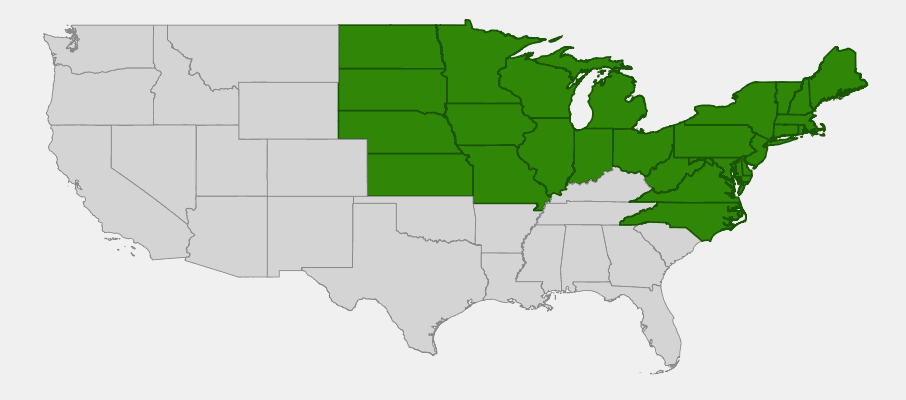
Larger Blue Flag Iris is native to a broad swath of northeastern North America, from Newfoundland, Nova Scotia, and Quebec south through New England and the Mid-Atlantic states to North Carolina and Virginia, and west through the Great Lakes region to Minnesota, Iowa, and Nebraska. It is most abundant in the northeastern states and adjacent Canadian provinces, where it is a common and conspicuous component of freshwater marsh and wet meadow communities.
Throughout its range, Blue Flag Iris is strongly associated with freshwater wetlands — it grows at the margins of ponds, lakes, streams, rivers, marshes, fens, bogs, and roadside ditches. It is typically found at the water’s edge or in shallow standing water up to 6 inches deep. In the northeastern United States, it is often one of the most visible wetland wildflowers, its blue-violet flowers visible from considerable distances during its May–June bloom period.
In New England (Connecticut, Massachusetts, Rhode Island — the rpl-nes states), Blue Flag Iris is a native species found in freshwater marshes and pond margins throughout the region. It is moderately common in appropriate habitats and is not considered threatened at the regional level, though individual wetland sites that support it may warrant protection for their overall biodiversity value.
📋 Regional plant lists featuring Larger Blue Flag Iris: Southeastern U.S.
Growing & Care Guide
Larger Blue Flag Iris is a relatively easy plant to grow in the right conditions. Its key requirement is consistent moisture — it performs poorly in dry garden beds but thrives with wet feet.
Light
Blue Flag Iris grows well in full sun to part shade. It flowers most abundantly in full sun (6+ hours per day), but also performs well in dappled shade or a site with morning sun and afternoon shade. In deep shade, the plant survives but rarely flowers well. At water garden edges with full sun reflection off the water’s surface, it can be particularly spectacular.
Soil & Water
This iris is a wetland plant that demands consistently moist to wet conditions. It grows naturally at water’s edge, in shallow water up to 6 inches deep, and in seasonally flooded soils. In garden settings, it excels in rain gardens, at pond margins, along stream banks, in wet swales, and in low areas that collect runoff. It tolerates periodic flooding. Do not plant it in typical well-drained garden soil — it will decline without consistent moisture. The ideal soil is rich, mucky wetland loam, but it adapts to various soil types as long as moisture is consistent.
Planting Tips
Plant Blue Flag Iris from container stock or bare-root rhizomes in spring or fall. Set rhizomes just at the soil surface or very shallowly — planting too deep inhibits flowering. In water garden settings, plant in aquatic planting baskets filled with heavy soil and submerge to 2–4 inches of water depth. Space plants 18–24 inches apart. The plant spreads by rhizome and will slowly form impressive clumps; divide clumps every 3–4 years in late summer (after flowering) if they become congested.
Pruning & Maintenance
Remove faded flower stalks to keep plants tidy, but leave the seed pods if birds and visual interest are desired. Cut back foliage in late fall or early spring. Divide overcrowded clumps every few years to maintain vigor — replant divisions immediately with rhizomes at the soil surface. Blue Flag Iris is generally pest- and disease-free, though iris borers can occasionally be a problem; remove and destroy infected leaves immediately if you see the telltale entry holes and sawdust-like frass at the leaf base.
Landscape Uses
- Pond and water garden margins — the classic and most natural use
- Rain garden specimens — thrives in the wet zone of a rain garden
- Stream and creek banks — excellent for naturalizing wet edges
- Bog gardens — compatible with pitcher plants, sundews, and other bog natives
- Wet meadow plantings — spectacular combined with Cardinal Flower and Swamp Milkweed
- Erosion control — deep rhizomes stabilize wet slopes and stream banks
Wildlife & Ecological Value
Larger Blue Flag Iris is an ecologically productive wetland plant that supports wildlife across multiple seasons and trophic levels.
For Pollinators
The flowers of Blue Flag Iris are pollinated primarily by large bumblebees (Bombus species), which are the only insects large enough to properly work the flower’s architecture. The bee enters the flower by pushing between the standard and fall petals, brushing against both the anther and stigma as it moves in and out — a sophisticated mechanism that ensures cross-pollination. The yellow and white signal patch on the falls functions as a nectar guide, directing the bee toward the nectar spurs. Various other large bees visit the flowers for nectar and pollen, but bumblebees are by far the most effective pollinators.
For Birds
The large seed pods of Blue Flag Iris are consumed by dabbling ducks and other waterfowl in fall and winter. The upright foliage provides valuable perching, nesting, and hiding cover for marsh and wetland birds including Red-winged Blackbirds, Common Yellowthroats, and Marsh Wrens. The dense clumps are important structural elements of freshwater marsh communities.
For Wetland Ecology
Blue Flag Iris contributes significantly to wetland ecosystem function. Its robust rhizomes hold wetland soils and prevent bank erosion. The dying leaves and stems contribute organic matter to wetland sediments. In water garden and constructed wetland contexts, Blue Flag Iris uptakes nutrients (phosphorus and nitrogen) from water — making it valuable for water quality improvement in bioswales, constructed wetlands, and rain gardens designed for runoff treatment.
Ecosystem Role
In marsh communities, Blue Flag Iris occupies a distinct ecological niche — the wet margin zone between open water and upland vegetation. This ecotonal habitat is among the most biologically diverse in freshwater ecosystems, and Blue Flag Iris is a characteristic and often dominant species defining this zone.
Cultural & Historical Uses
The Blue Flag Iris has a rich history of use by Indigenous peoples of northeastern North America. The Haudenosaunee (Iroquois) used the roots medicinally as a treatment for liver ailments, for reducing swelling, and as a diuretic. However, all parts of the plant — particularly the roots and leaves — contain significant concentrations of irisin, a glycoside that is toxic to humans and animals. The dried, powdered root was used in small doses as a powerful laxative and emetic in traditional medicine, but it must be used with great caution as overdose causes severe gastrointestinal distress and potentially worse symptoms.
The Potawatomi used root preparations topically for skin diseases, and various other Great Lakes nations used different preparations for different ailments. The plant was studied extensively by 19th-century American botanists and physicians as a potential commercial medicinal plant, and irisin was isolated as the active compound in the 1800s. However, the narrow therapeutic window (the line between effective dose and toxic dose) and the development of safer alternatives limited its adoption in formal medicine.
In Louisiana and the Gulf Coast states, Blue Flag Iris and its southern relatives were historically used by Cajun and Creole traditional healers. The striking flowers made Blue Flag Iris a popular ornamental plant from the earliest days of American horticulture, and it was among the first North American wildflowers exported to European gardens in the 17th century. The fleur-de-lis — the iconic symbol of French royalty — is believed by many historians to be stylized from the European Yellow Flag Iris (Iris pseudacorus), a close relative of Blue Flag, reflecting the deep cultural significance of irises in European and American history.
Today, Blue Flag Iris is a popular wetland garden plant widely available at native plant nurseries. It is used in constructed wetlands and bioswales for water quality improvement, and in rain garden design as a signature wetland indicator plant. Conservation agencies use it extensively in freshwater wetland restoration projects throughout the northeastern United States.
Frequently Asked Questions
Is Blue Flag Iris poisonous?
Yes — all parts of Iris versicolor, especially the roots and leaves, are toxic to humans and most animals. The compound irisin is a glycoside that causes severe gastrointestinal distress if ingested. Keep children and pets away from the plant, and wash hands after handling it. Do not confuse it with edible plants growing nearby in wetland areas.
Can Blue Flag Iris grow in standing water?
Yes — it grows naturally in shallow water up to about 6 inches deep and thrives at the water’s edge. In water garden settings, plant it in aquatic baskets at the water’s margin or in very shallow water. It can also grow in consistently wet soil that is not actually flooded.
How do I tell Blue Flag Iris from Yellow Flag Iris?
Yellow Flag Iris (Iris pseudacorus) is a highly invasive European species that has colonized wetlands throughout North America. The most obvious difference is flower color: Blue Flag Iris has violet-blue flowers, while Yellow Flag has bright yellow flowers. Yellow Flag also tends to form denser, more massive monocultures and has been declared invasive in many states. Always choose Blue Flag (or other native irises) over Yellow Flag for wetland plantings.
When should I divide my Blue Flag Iris?
Divide clumps in late summer (August or September) after flowering has finished and foliage has begun to die back, or in early spring as new growth is just beginning. Cut the rhizomes into sections, each with several growing points, and replant immediately at the soil surface in moist conditions.
Does Blue Flag Iris grow in shade?
It tolerates part shade quite well and will grow in dappled shade, but flowers most abundantly in full sun. In deep shade, the plant produces mainly foliage with sparse flowering. A site with morning sun and afternoon shade provides a good compromise between moisture retention and flowering.

Looking for a nursery that carries Larger Blue Flag Iris?
Browse our native plant nursery directory: Virginia · North Carolina · Georgia