Yellow Stargrass (Hypoxis hirsuta)
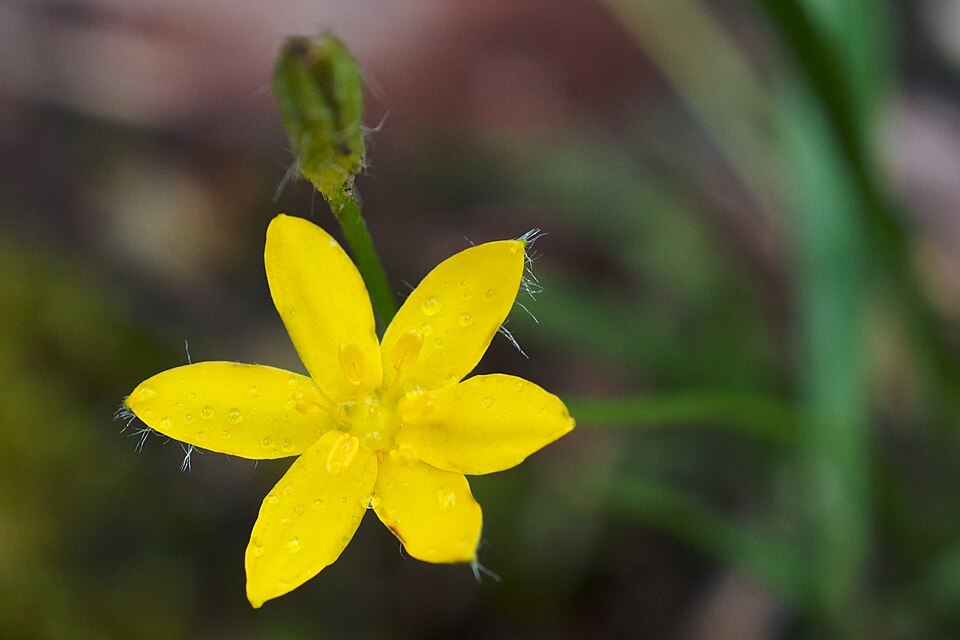
Hypoxis hirsuta, commonly known as Yellow Stargrass or Common Goldstar, is one of North America’s most charming and overlooked native wildflowers. Standing only 4 to 6 inches tall, it produces brilliant golden-yellow, six-petaled star-shaped flowers that sparkle in open meadows, dry prairies, and woodland edges from spring through summer. Despite its diminutive stature, Yellow Stargrass is extraordinarily widespread — found in appropriate habitats across a broad swath of the eastern and central United States from Maine to Florida and west to the Great Plains.
The family Hypoxidaceae — sometimes called the Yellow Stargrass family — is represented in North America almost entirely by Hypoxis hirsuta, making this a distinctly North American contribution to temperate wildflower diversity. The species name hirsuta means “hairy” in Latin, referring to the distinctive long, soft hairs on the narrow, grass-like leaves — a characteristic that helps distinguish it from actual grasses growing in the same habitats. Despite looking like a grass, Yellow Stargrass is actually a monocot in a family related to the Amaryllis family (Amaryllidaceae), not to the true grasses at all.
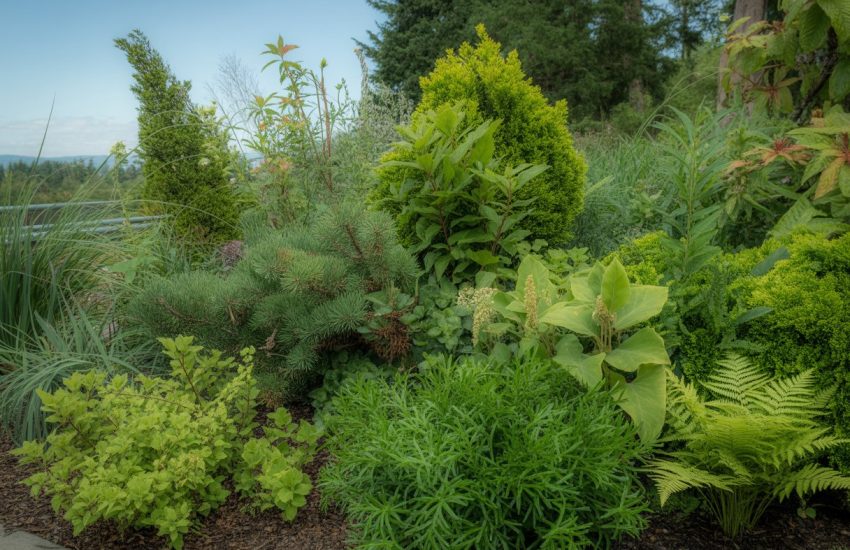
For naturalistic garden design, Yellow Stargrass is an outstanding choice for dry to moderately moist open sites, meadow gardens, and rock gardens. It combines beautifully with Little Bluestem, Bird’s-foot Violet, and Wild Lupine in open, sunny plantings. Its tiny size and unpretentious appearance often cause gardeners to overlook it, but in the right setting — particularly when drifted in masses through a native meadow — its golden flowers create a brilliant, long-lasting display that belies its modest individual size.
Identification
Yellow Stargrass is a small, grass-like perennial herb, typically only 4 to 6 inches tall, with narrowly linear leaves and bright yellow flowers on slender scapes. It grows from a small corm (a compact underground storage organ) and forms small clumps that slowly expand over time.
Leaves
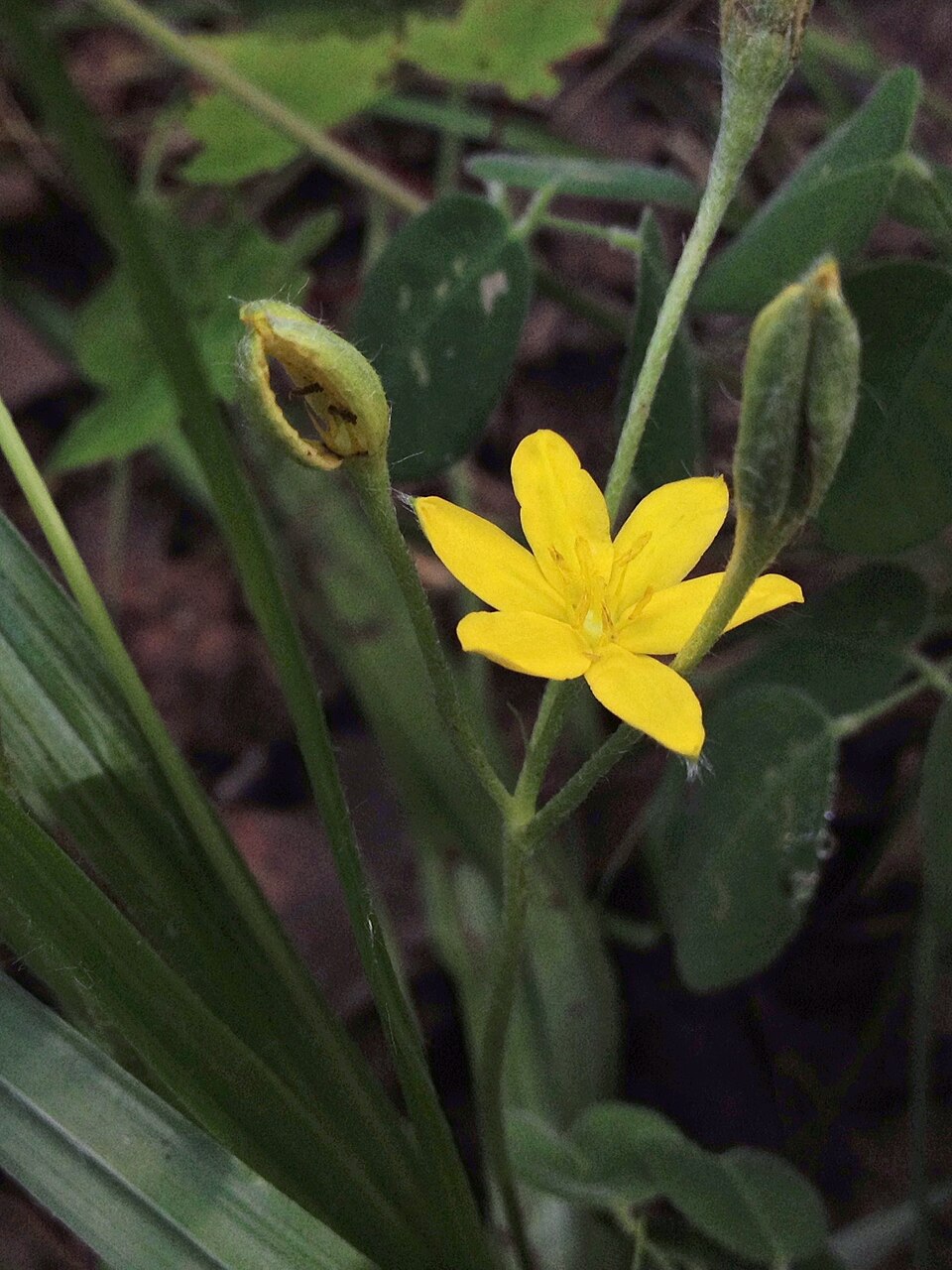
The leaves are the most grass-like feature: narrow, linear, grasslike, 4 to 12 inches long and only ¼ inch or less wide, with parallel venation and a pointed tip. The critical diagnostic feature distinguishing Yellow Stargrass from grasses is the covering of long, soft, spreading white hairs on the leaf surface — grasses rarely have this type of hairy covering. The leaves are medium green above, paler below. They emerge from the base of the plant in a tuft and lack any distinct stem.
Flowers
The flowers are disproportionately showy for such a small plant — bright, saturated golden-yellow, about ¾ inch across, with six spreading perianth segments (three petals and three petal-like sepals that are virtually identical) arranged in a perfect star shape. The center of the flower shows six yellow stamens and a single pistil. Flowers are borne singly or in small clusters of 2–3 on slender, leafless scapes that emerge among the leaves and often exceed the foliage height slightly. The outside of the perianth segments (visible in bud) is typically greenish to yellowish-green. The bloom period is long — from April through late summer in most of its range.
Fruit & Seeds
The fruit is a small, club-shaped capsule that matures in late summer, splitting open to reveal small, round, black seeds with a distinctive crested or warty surface — a diagnostic feature of the genus. The corm (underground storage organ) is small, ½ to 1 inch in diameter, dark-skinned, and firm — it enables the plant to survive drought and fire by retreating underground.
Quick Facts
| Scientific Name | Hypoxis hirsuta |
| Family | Hypoxidaceae (Yellow Stargrass family) |
| Plant Type | Herbaceous perennial; cormous wildflower |
| Mature Height | 4–6 in |
| Sun Exposure | Full Sun to Part Shade |
| Water Needs | Low to Moderate |
| Bloom Time | April – August |
| Flower Color | Bright golden yellow |
| USDA Hardiness Zones | 3–9 |
Native Range
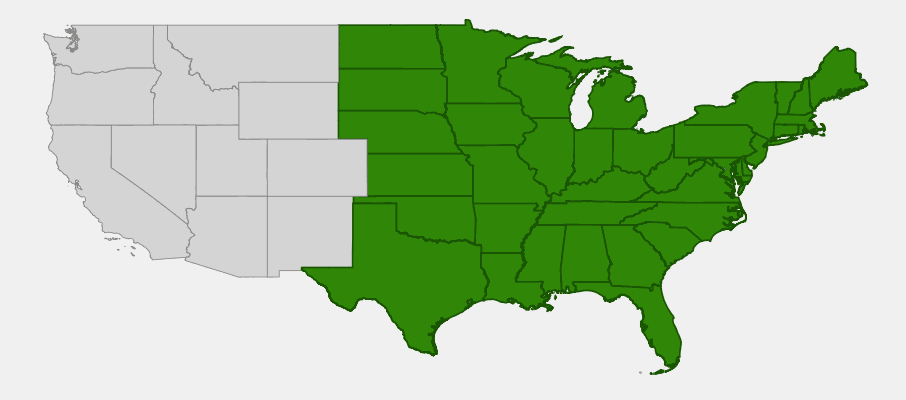
Yellow Stargrass has one of the widest distributions of any native eastern wildflower, ranging from Maine and southern Canada south to Florida and west to the eastern Great Plains from North Dakota to Texas. It is among the most common small wildflowers across this enormous range, occurring in virtually every eastern state and in a remarkable diversity of open habitats from sea level to over 4,500 feet elevation in the Appalachians.
Despite this broad range, Yellow Stargrass is often overlooked in plant surveys because of its small size and grass-like appearance. It can be abundant in dry meadows, open woodlands, prairies, and road cuts throughout the East and Midwest without attracting much attention from passersby. However, botanists and careful observers who get down to ground level to look for it often find it to be one of the most consistently present wildflowers in open, disturbed, and semi-natural habitats across the eastern United States.
In New England — Connecticut, Massachusetts, and Rhode Island — Yellow Stargrass is native to dry to moderately moist open habitats, particularly sandy meadows, dry hillsides, and open oak woodland edges. It is relatively uncommon in the denser forest cover typical of much of New England but finds niches in the open sandy habitats of the coastal plain and in rocky upland glades. Like Birdsfoot Violet, it is an indicator of unplowed, undisturbed grassland and meadow habitats in the region.
📋 Regional plant lists featuring Yellow Stargrass: Southeastern U.S.
Growing & Care Guide
Yellow Stargrass is an easy, rewarding plant for the right garden conditions. Its requirements are simple: open sun, well-drained soil, and freedom from crowding by aggressive neighbors.
Light
Full sun to light part shade is ideal. Yellow Stargrass grows in open meadows, prairies, and lightly shaded woodland edges — it needs good light to flower well. In full sun, it will produce the most flowers over the longest period. In light dappled shade (under open-canopied trees), it grows well but flowers somewhat less freely. Avoid planting in dense shade.
Soil & Water
Well-drained to moderately dry soil is preferred. Yellow Stargrass is adapted to the lean, dry, sandy, or rocky soils of open meadows and prairies — it is noticeably drought-tolerant once established. It grows poorly in consistently wet or poorly drained soil. In garden settings, average to lean, well-drained soil works well. Do not over-fertilize — nutrient-rich soil encourages aggressive weedy plants that can crowd out Yellow Stargrass. Once established, supplemental watering is rarely needed except during extended drought.
Planting Tips
Plant from container stock or bare corms in spring in a sunny, well-drained site. The plants are small and can be difficult to establish in competition with larger, more aggressive plants. Plant in groups of 5–10 for visual impact — individual plants are tiny and easily overlooked. Yellow Stargrass integrates beautifully into dry meadow gardens with Little Bluestem, Wild Lupine, Bird’s-foot Violet, and other small-scale, fine-textured native plants. It also works well in rock gardens, gravel gardens, and between stepping stones.
Pruning & Maintenance
Yellow Stargrass requires essentially no maintenance. Leave the dying foliage and seed heads in place — they contribute little visual mess and provide modest wildlife value. The corms are dormant underground from late fall through early spring. Do not disturb the planting area during dormancy. Weeding around young plants is the primary maintenance task — Yellow Stargrass is not competitive and can be overrun by more aggressive plants if weeds are not removed promptly.
Landscape Uses
- Native meadow or prairie — a quintessential small-scale meadow wildflower
- Rock garden — perfectly scaled for the lean, well-drained conditions
- Dry slope planting — naturalizes beautifully on sunny, dry hillsides
- Between pavers or stepping stones — the small size is ideal for paving gaps
- Lawn alternative patches — can be mixed into dry, open native lawn plantings
- Pollinator garden — spring and early summer flowers support native bees
Wildlife & Ecological Value
Despite its small size, Yellow Stargrass plays a meaningful role in supporting native wildlife, particularly during the critical spring and early summer period when other wildflowers are still establishing.
For Pollinators
Yellow Stargrass flowers from April through August, providing a long season of nectar and pollen for native bees. The open, star-shaped flowers are accessible to a wide range of small to medium-sized native bees including sweat bees (Lasioglossum and Halictus species), small mining bees (Andrena species), and various small solitary bees. The long bloom season — from early spring when few other plants are flowering through midsummer — makes it particularly valuable as a sustained resource for native bee communities. Bumblebees also visit the flowers regularly.
For Birds
The small, black seeds are consumed by granivorous birds including sparrows, finches, and ground-feeding songbirds. The tiny size of the plant makes it relatively minor as a bird habitat plant individually, but in mass plantings within native meadow communities, it contributes to the diverse seed mix that supports seed-eating bird communities through fall and winter.
Fire Ecology
Yellow Stargrass is remarkably fire-adapted — the underground corm survives fire readily, and the plant resprouts vigorously after fire events. In the historically fire-maintained dry meadow and prairie communities of the eastern United States, Yellow Stargrass was likely more abundant than it is today, as fire suppression has allowed woody vegetation to close in on many open habitats. Controlled burns in prairie and meadow restorations consistently produce increased populations of Yellow Stargrass in the years following fire.
Ecosystem Role
Yellow Stargrass is a characteristic and often abundant component of the dry meadow, barrens, and open woodland floor communities of eastern North America. Its widespread distribution and presence across diverse habitats makes it an important element of the fine-scale plant mosaic in these communities. As a corm-forming plant, it contributes to soil structure and organic matter. Its long bloom season provides ecological continuity between early spring wildflowers and later-blooming summer forbs.
Cultural & Historical Uses
Yellow Stargrass was used medicinally by several Indigenous nations of eastern North America. The Cherokee used a decoction of the roots for treating muscle weakness and as a tonic. The Iroquois (Haudenosaunee) used root preparations for treating rheumatic pain. Various other nations used preparations from the corm for different ailments. The corms contain starch and were reportedly eaten by some nations in times of food scarcity, though they are small and not particularly nutritious.
Early American botanists and naturalists took note of Yellow Stargrass as an interesting and distinctive small wildflower. Its grass-like appearance but non-grass identity made it a subject of botanical curiosity. Peter Kalm, the Finnish-Swedish explorer who traveled through North America in the mid-18th century, noted plants of the Yellow Stargrass family in his journal of American plants. The genus Hypoxis is actually pantropical in distribution — most of its approximately 100 species are found in Africa, Asia, and tropical America — making the North American Yellow Stargrass an interesting link to tropical plant diversity.
In contemporary botanical medicine and supplement culture, Hypoxis species — particularly the African Hypoxis hemerocallidea (African Potato) — have been promoted as immune-stimulating supplements, particularly in connection with traditional African medicine and, controversially, as a purported treatment for HIV/AIDS in South Africa. While the North American Hypoxis hirsuta contains some of the same compounds (hypoxoside and rooperol), it has not been specifically studied for medicinal use and no health claims can be made for it. The plant should be appreciated primarily for its ecological value and ornamental beauty rather than any purported medicinal properties.
Frequently Asked Questions
Is Yellow Stargrass actually a grass?
No — despite its common name and grass-like appearance, Yellow Stargrass is not related to grasses at all. It belongs to the family Hypoxidaceae, related to the Amaryllis family. The grass-like leaves are a case of convergent evolution (looking similar to grasses without being closely related). The easiest way to confirm it’s not a grass: look for the distinctive long white hairs on the leaf surfaces, and of course, the brilliant yellow six-petaled flowers.
How do I tell Yellow Stargrass from actual grasses?
Several features distinguish Yellow Stargrass from grasses: (1) the distinctive long, soft white hairs on the leaf surfaces; (2) the leaves lack the ligule (a flap or fringe at the leaf-stem junction) characteristic of most grasses; (3) and most obviously, the star-shaped yellow flowers — no grass produces flowers remotely like these.
Why don’t my Yellow Stargrass plants come back after transplanting?
Yellow Stargrass is sensitive to root disturbance and may go dormant or fail to establish if the small corms are damaged during transplanting. Always handle plants carefully, plant at the proper depth (corms 1–2 inches deep), and ensure excellent drainage. Plants that appear to die after transplanting may actually be dormant — wait until the following spring before declaring them lost.
Does Yellow Stargrass spread on its own?
Yes, slowly, by seed and gradual corm offset. It is not aggressive but will slowly expand a clump over time and occasionally establish seedlings nearby. In appropriate conditions (dry, open, well-drained), it can naturalize into small colonies over several years. It is not considered weedy or invasive.
Can Yellow Stargrass grow in containers?
Yes — it’s quite effective in terracotta containers and shallow stone troughs with excellent drainage and lean, gritty soil mix. Use a very well-drained potting mix and water sparingly. Container plants may be smaller than in-ground plants but will flower well in full sun.

Looking for a nursery that carries Yellow Stargrass?
Browse our native plant nursery directory: Virginia · North Carolina · Georgia