Rhodora (Rhododendron canadense)
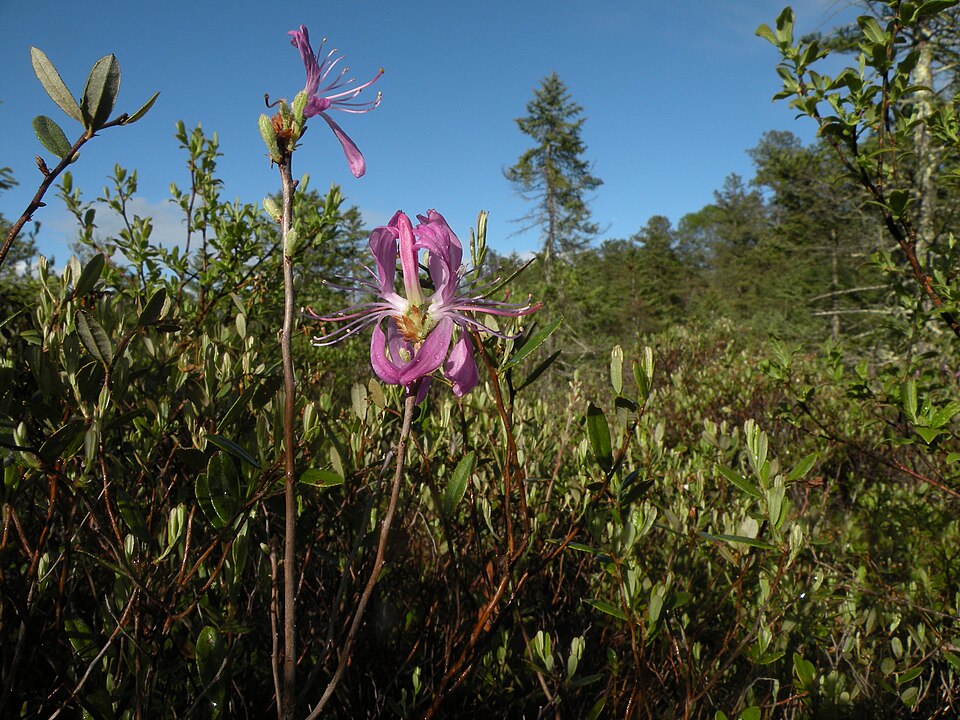
Rhododendron canadense, commonly known as Rhodora or Canada Rosebay, is one of the most spectacular native flowering shrubs of northeastern North America. A member of the heath family and a true rhododendron, Rhodora erupts into breathtaking bloom each spring — not gradually, as most shrubs do, but all at once, covering itself in vivid magenta to rose-purple flowers before a single leaf has unfolded. The timing is startling: while the surrounding landscape is still brown and bare from winter, Rhodora’s branches blaze with color against the dark edges of a bog or wet heath, announcing spring with extraordinary visual drama.
Rhodora grows in the bogs, fens, wet heaths, and peaty shores of the northeastern United States and adjacent Canada, where it is often a dominant shrub in the acidic wetland communities alongside Labrador Tea, Leatherleaf, and Bog Laurel. It is a characteristic plant of the New England spring landscape — particularly in Maine, New Hampshire, and Vermont — and its emergence is eagerly anticipated each year by naturalists, birders, and gardeners who know where to find it. The plant inspired one of Ralph Waldo Emerson’s most celebrated poems, “The Rhodora,” published in 1847, in which he used the flower’s beauty in an unseen bog as a meditation on the nature of beauty and divine purpose.
For native plant gardeners, Rhodora offers a rare combination of gifts: spectacular early spring flowers in vivid colors unusual in the native shrub palette, attractive blue-green summer foliage, adaptability to moist and wet conditions, and genuine wildlife value. It requires acidic, moist soil, and in those conditions it is a long-lived, low-maintenance shrub that rewards its grower with one of the most dazzling spring flower displays of any native plant in the Northeast.
Identification
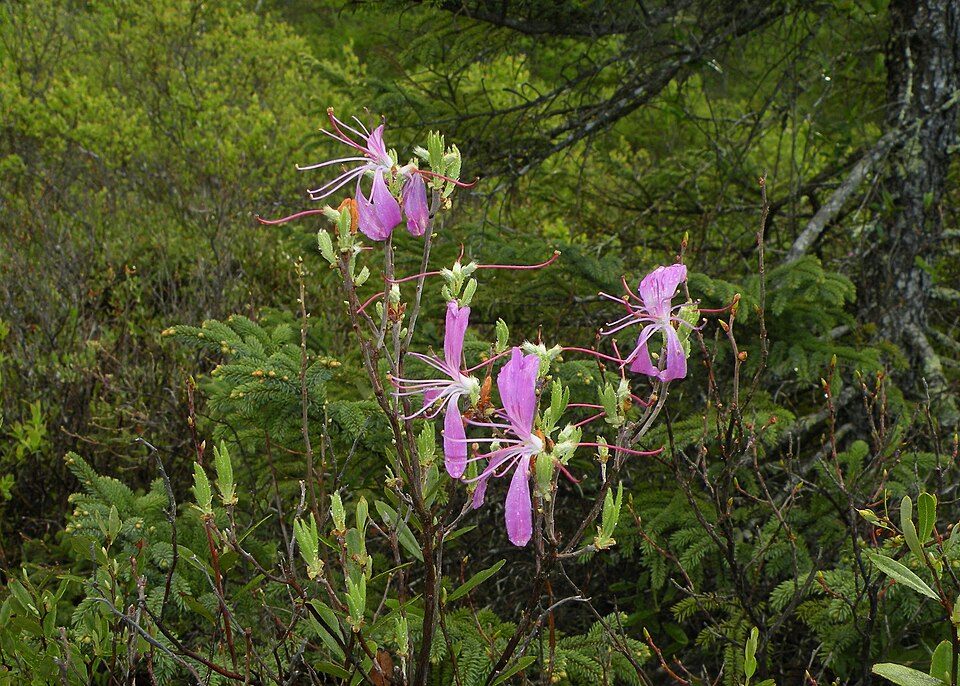
Rhodora is a low to medium deciduous shrub, typically 1 to 3 feet (30–90 cm) tall, occasionally reaching 4 feet in ideal conditions. The plant has an upright, open growth habit with multiple slender branches arising from the base, giving it a loose, somewhat airy form when not in bloom. In winter the bare branches are grayish-brown and slender; in spring they become dramatically transformed by the flowers. In summer the plant is attractive but relatively inconspicuous — pleasant blue-green foliage without the showiness of bloom time.
Stems & Structure
The stems are slender, upright, and grayish-brown to reddish-brown, covered with fine, short grayish hairs. The branching pattern is somewhat irregular, creating an open, naturalistic form. Young twigs are finely hairy and flexible; older stems are woody and smooth. The plant produces multiple stems from the base and spreads slowly by layering and short stolons to form loose colonies. The winter buds are small and pointed, covered with overlapping scales.
Leaves
The leaves are simple, alternate, and deciduous, unfolding after the flowers have opened. They are elliptic to oblong, 1 to 2½ inches (2.5–6 cm) long and ¾ to 1 inch wide, with a rounded or slightly notched tip and smooth margins. The upper surface is dull blue-green; the underside is paler and covered with fine, short white hairs. The leaf edges are slightly rolled under. The blue-green color of the summer foliage is attractive and distinctive, providing a pleasing contrast with the surrounding bog vegetation. The leaves turn yellowish to reddish in fall before dropping.
Flowers & Fruit
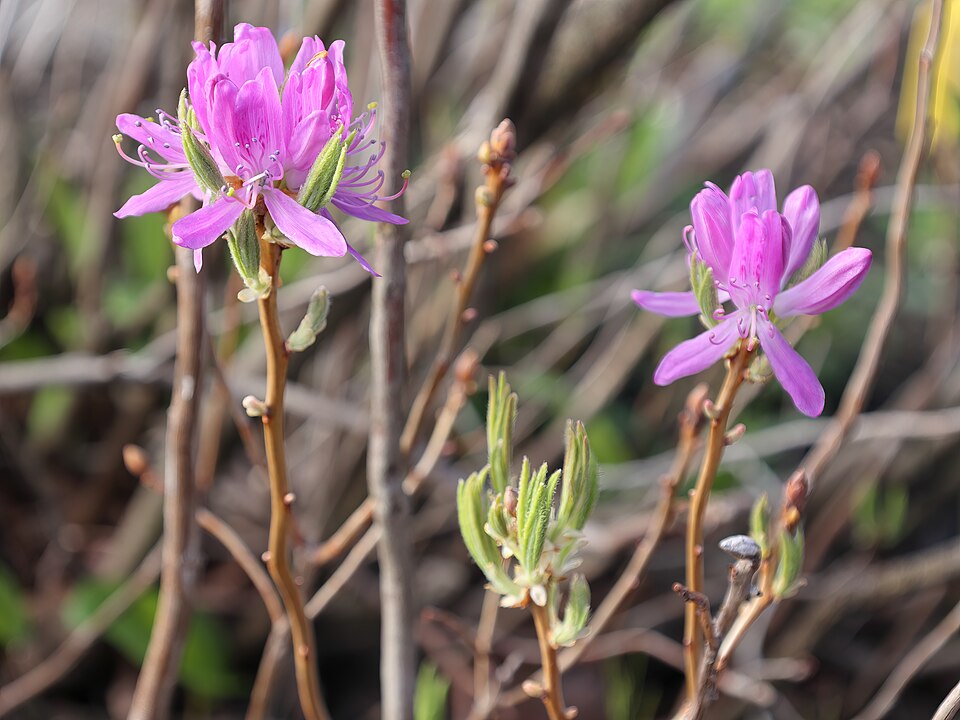
The flowers are Rhodora’s defining glory. They appear in early spring — April to May in New England — in clusters of 3 to 7 at the branch tips, before the leaves emerge. Each flower is about 1 inch (2.5 cm) across, with two very unequal lobes: the upper lobe is broadly three-lobed and spread flat, while the lower two lobes are narrower and sweep downward and forward. This unusual shape, sometimes described as “butterfly-like,” is distinctive among northeastern shrubs. The color is vivid magenta, rose-purple, or occasionally pale pink, varying between plants. The ten stamens extend beyond the petals, adding to the floral display. The flowers have a faint, sweet fragrance.
The fruit is a small, dry, elongated capsule about ½ inch (12 mm) long, covered with rust-colored hairs, that splits to release numerous tiny, winged seeds. The capsules persist on the branches through summer and into fall, creating interest even after flowering. As in all rhododendrons, the nectar and pollen can be toxic if consumed in large quantities — this is particularly relevant for honey made from areas with large Rhodora populations.
Quick Facts
| Scientific Name | Rhododendron canadense |
| Family | Ericaceae (Heath Family) |
| Plant Type | Deciduous Shrub |
| Mature Height | 3 ft |
| Sun Exposure | Full Sun to Part Shade |
| Water Needs | Moderate to High |
| Soil Requirements | Acidic, moist to wet; pH 4.5–5.5 required |
| Bloom Time | April – May (before leaves) |
| Flower Color | Magenta to rose-purple |
| Fall Color | Yellow to reddish |
| Special Notes | Magenta flowers in spring; best in acidic soil |
| USDA Hardiness Zones | 3–6 |
Native Range
Rhodora is native to northeastern North America, ranging from Newfoundland and Labrador south through the Maritime Provinces, Quebec, and Ontario into New England and the Mid-Atlantic states. In the United States, its range extends from Maine south through New Hampshire, Vermont, New York, Pennsylvania, New Jersey, Massachusetts, Connecticut, and Rhode Island. It is most abundant and characteristic of the northern part of this range, where cool, moist, acidic soils are common.
The species is strongly associated with sphagnum bogs, poor fens, wet heaths, and acidic lake margins throughout its range. It grows from near sea level in coastal bogs to moderate elevations in mountain bogs and wet heath communities in the White Mountains and Green Mountains. On mountain slopes it grows in the open, wet, windswept heath communities above treeline, often with Labrador Tea, Bog Laurel, and Sheep Laurel. In the Maritime Provinces of Canada, Rhodora is common in lowland bogs and barrens, forming extensive blooming communities each spring.
Rhodora’s range is limited by its need for cool temperatures and highly acidic, moist to wet soils. It does not grow in the warmer, drier parts of its potential range, and is absent from most of the Mid-Atlantic south of New Jersey. Climate change poses a significant threat to Rhodora populations, as warming temperatures and changes in hydrology may alter the sphagnum bog and wet heath communities on which the species depends.
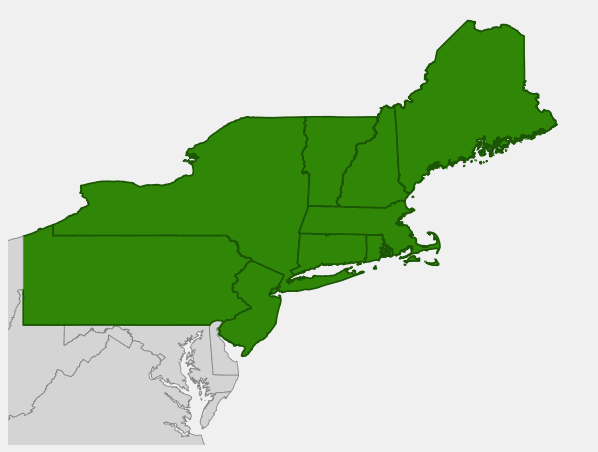
📋 Regional plant lists featuring Rhodora: New England
Growing & Care Guide
Rhodora is a specialist plant that performs magnificently in the right conditions. It is much easier to grow than its exotic rhododendron relatives when planted in genuinely acidic, moist soil. The key is soil acidity and consistent moisture — get those right and Rhodora is a remarkably tough and long-lived shrub.
Light
Rhodora grows naturally in conditions ranging from full sun (on open bog surfaces) to partial shade (at bog edges under sparse spruce canopy). For maximum flowering, full sun or very light dappled shade is ideal. In full shade, the plant becomes leggy and produces fewer flowers. Morning sun with afternoon shade is a good compromise in warmer growing locations (zones 5–6). In the cooler northern part of its range, full sun is ideal year-round.
Soil & Water
Acidic soil is the non-negotiable requirement. Rhodora requires soil pH between 4.5 and 5.5 — genuinely acidic conditions such as those found in sphagnum peat bogs or well-weathered, acidic forest soils. Sulfur amendments, pine bark mulch, and acidifying fertilizers can help lower soil pH in average garden soils, but the most reliable approach is to create a raised bed with a mix of 50-60% sphagnum peat moss and 40-50% native soil. The soil should remain consistently moist to moderately wet throughout the growing season. Rhodora will not tolerate drought or dry soils. Rainwater irrigation is preferred; tap water with high pH and mineral content should be avoided or acidified.
Planting Tips
Plant Rhodora in spring or early fall for best establishment. Container-grown nursery stock is the most reliable starting point. Prepare the site with a deep layer of acidic planting mix and mulch with sphagnum peat or shredded pine bark to maintain moisture and acidity. Avoid planting near concrete foundations, driveways, or other alkaline materials that can leach lime into the soil. Space plants 2–3 feet apart for a naturalistic grouping; Rhodora looks most striking in clusters of 3 or more. Water consistently for the first two growing seasons while roots are establishing.
Pruning & Maintenance
Rhodora requires very little pruning. Remove any dead or damaged branches in late spring after flowering is complete. Light tip pruning after flowering can improve the compactness of the plant if desired, but is generally not necessary. Avoid heavy pruning. Replenish the organic mulch layer each autumn. Fertilize sparingly if at all — use only acid-forming fertilizers formulated for ericaceous plants (rhododendrons, azaleas, blueberries) and at half the recommended rate. Over-fertilization promotes soft, disease-susceptible growth.
Landscape Uses
- Bog garden centerpiece — the most spectacular spring flowering plant for acidic wet gardens
- Wet heath planting — outstanding in combination with Labrador Tea, Bog Laurel, and wild cranberry
- Pond and stream margins — excellent in consistently moist, acidic conditions
- Rain garden feature — in zones with regular rainfall and acidic soil
- Native plant garden specimen — the spring flower display is without parallel among native shrubs
- Woodland edge planting — under light pine or birch canopy in acidic soils
- Conservation plantings — restoration of degraded bog and wet heath habitats
Wildlife & Ecological Value
Rhodora provides significant ecological value within the specialized acidic wetland communities where it grows. While its habitat requirements limit its range, within that range it contributes importantly to the food web and habitat structure of bogs and wet heaths.
For Birds
The dense, multi-stemmed growth of Rhodora colonies provides important nesting cover for birds that use bog habitats. Palm Warblers — the characteristic warbler of New England bogs — nest in sphagnum bogs and frequently use Rhodora as song perches and foraging sites. Common Yellowthroats nest in wet thickets where Rhodora grows. Hermit Thrushes and White-throated Sparrows use Rhodora stands for cover during migration. The early spring flowers attract insects that in turn attract early-season warblers moving through. Yellow-rumped Warblers, one of the earliest spring migrants, frequently forage in flowering Rhodora for insects attracted to the blooms.
For Mammals
Like most members of the heath family, Rhodora contains grayanotoxins that make it toxic if consumed in large quantities, which limits its direct value as forage. However, the shrub layer it creates in bogs and wet heaths provides important cover for Snowshoe Hares, Meadow Voles, and other small mammals. Bog Lemmings, Short-tailed Shrews, and Star-nosed Moles use the vegetative cover of Rhodora colonies in their wet habitat. Moose are known to forage in bogs and may browse Rhodora despite mild toxicity.
For Pollinators
Rhodora’s early spring flowers are among the most important early-season pollinator resources in the New England bog landscape. The vivid magenta flowers attract queen bumblebees — the most important pollinators in cold, northern bog habitats — as soon as they emerge from winter dormancy. The flowers require cross-pollination to produce viable seeds, and bumblebees are the primary vector. Early-emerging mining bees (Andrena species) also visit the flowers for pollen. The early bloom time — when few other flowers are available — makes Rhodora flowers exceptionally valuable to early-season pollinators.
Ecosystem Role
Rhodora is an important structural component of northern bog and wet heath communities. Its multi-stemmed, spreading colonies add vegetative complexity to what would otherwise be a relatively structurally simple sphagnum moss surface, creating habitat niches for a range of insects, spiders, and small vertebrates. As a member of the Ericaceae, it participates in the specialized ericoid mycorrhizal network that enables plants to extract nutrients from highly acidic, nutrient-poor peat environments. Its root system helps stabilize sphagnum mat surfaces. The persistent seed capsules provide minor seed resources for granivorous birds and small mammals.
Cultural & Historical Uses
Rhodora’s most celebrated appearance in human culture is Ralph Waldo Emerson’s 1847 poem “The Rhodora: On Being Asked, Whence Is the Flower?” — one of the great short lyric poems of the 19th century. Emerson discovered Rhodora in bloom in a New England bog and was struck by the paradox of its extraordinary beauty in such an unseen, inaccessible location. He used the flower as a meditation on beauty existing for its own sake, independent of any human observer. The final lines — “Beauty is its own excuse for being” — became one of the most quoted lines in American poetry. The poem helped establish Rhodora’s place in the popular imagination as the quintessential New England wildflower, and it remains one of the most evocative botanical references in American literature.
Indigenous peoples of the Northeast, including the Penobscot and other Wabanaki nations of Maine and the Maritime Provinces, were familiar with Rhodora in its bog habitats. There is limited documentation of specific ethnobotanical uses, but the plant’s toxic properties (shared with all rhododendrons) meant it was generally not used as food or medicine. The striking flowers were noted and appreciated as markers of spring. The plant’s occurrence in bogs was understood as an indicator of wet, peaty conditions and high soil acidity — ecological knowledge that guided land use and resource gathering.
In horticulture, Rhodora has been cultivated since the 18th century, when specimens were introduced to European gardens. It was one of the first American rhododendrons to be grown in British and French gardens, where its spring bloom and unusual flower shape attracted considerable attention. It was used in early breeding programs for hardy azaleas and rhododendrons. In modern horticulture it remains a specialty plant, prized by collectors of native plants and ericaceous plants for its uniquely early bloom time and striking color. It is sometimes used in breeding programs for northern-hardy azalea hybrids, contributing its cold hardiness and early bloom time to hybrid offspring.
The common name “Rhodora” comes from the botanical genus name, itself derived from the Greek rhodon (rose), referring to the rose-colored flowers. The species name canadense means “of Canada,” reflecting where early botanical specimens were collected. The alternative common name “Canada Rosebay” similarly reflects both its origin and its rosy flowers. The genus Rhododendron — to which it belongs along with azaleas and all other rhododendrons — contains over 1,000 species and is one of the largest genera in the plant kingdom.
Frequently Asked Questions
Is Rhodora the same as an azalea?
Yes and no — technically, all azaleas are rhododendrons (genus Rhododendron), and Rhodora (Rhododendron canadense) is botanically an azalea (a deciduous rhododendron). Horticulturally, plants in the genus that are deciduous and have tubular flowers with 5 or fewer visible stamens are often called azaleas. Rhodora fits this general description but has an unusually irregular (zygomorphic) flower shape with separated petals that distinguishes it from most azaleas. Technically it’s classified in subgenus Pentanthera alongside the native deciduous azaleas.
Why does Rhodora flower before its leaves come out?
This is a strategy for increasing pollination success. By flowering before leaves emerge, the flowers are more visible to pollinators and are not hidden or shaded by foliage. The timing also allows the plant to take advantage of early-emerging queen bumblebees, which are active before many other plants are in bloom. This “precocious” flowering (before leaves) is characteristic of several other early-spring shrubs, including serviceberries and cornelian cherry dogwood.
Is Rhodora toxic?
Yes — like all rhododendrons, Rhodora contains grayanotoxins (andromedotoxins) in all parts of the plant, including nectar and pollen. These compounds can cause illness in humans and animals if consumed. Honey made primarily from rhododendron nectar can cause “mad honey disease” — a temporary but serious illness. Do not allow children or pets to eat any part of Rhodora. For most people, simply growing and enjoying the plant poses no risk — the toxins are only dangerous if ingested.
Can I grow Rhodora in a container?
Yes — Rhodora can be grown in a large container using a mix of sphagnum peat moss and coarse acidic bark. Use an acidifying fertilizer formulated for rhododendrons at half the recommended rate. Keep the container consistently moist by setting it in a saucer of water or in a bog garden feature. Bring indoors (to an unheated but frost-free space) in zones where temperatures fall below -10°F (-23°C). Container growing allows precise control of soil pH and moisture, which can be challenging in in-ground plantings outside the plant’s native habitat zone.
When is the best time to see Rhodora in bloom in New England?
In northern New England (Maine, New Hampshire, Vermont), Rhodora typically blooms from late April through late May, with peak bloom varying by elevation and latitude. At lower elevations and in coastal areas, expect bloom in late April; at higher elevations and in northern Maine, peak bloom may be in late May. The timing shifts 1–2 weeks earlier in warmer years and can be delayed in cold, late springs. Some of the most spectacular natural Rhodora displays in New England can be found at Moose Bog in Victory, Vermont, at various Maine boglands, and in White Mountain bog communities in New Hampshire.

Looking for a nursery that carries Rhodora?
Browse our native plant nursery directory: Maine · New Hampshire · Vermont · Connecticut