Virginia Rose (Rosa virginiana)
Rosa virginiana, commonly known as Virginia Rose, is a robust, thorny native rose of the eastern United States — a tough, adaptable shrub that combines the timeless beauty of the wild rose with the practical landscape virtues of a barrier plant and coastal garden staple. A member of the Rosaceae (Rose) family, Virginia Rose is native to the eastern seaboard from Newfoundland south to Georgia, thriving in the dry, sandy, salt-tolerant conditions of coastal environments where many other plants struggle. Its cheerful pink flowers, brilliant red rosehips, and dense thorny stems make it a multifunctional choice for gardens where both beauty and utility are desired.
In New England, Virginia Rose is a familiar sight along coastal dunes, sandy roadsides, thickets, and dry open fields — often forming dense, impenetrable colonies by root-suckering. The batch data notes that it is “good in dry and seaside landscape; good barrier,” which perfectly captures its two primary landscape roles: as a tough, drought-tolerant shrub for challenging dry or coastal sites, and as a formidable, wildlife-friendly barrier planting. Standing about 5 feet tall, it occupies a useful middle-ground between low ground covers and tall shrubs, providing dense structure, seasonal interest, and exceptional wildlife value in all four seasons.
Unlike many native roses, Virginia Rose is notably heat and drought tolerant, performing well in full sun on sandy or rocky soils with little supplemental water once established. Its large, deeply colored pink flowers are followed by persistent, bright red rosehips that remain on the shrub well into winter, providing critical food for birds during the lean months. The foliage turns a vivid orange-red to scarlet in autumn, adding yet another season of ornamental interest. For gardeners seeking a tough, beautiful, wildlife-rich native rose for the northeast, Virginia Rose is the premier choice.
Identification
Virginia Rose is a multi-stemmed, colony-forming deciduous shrub typically growing 3–5 feet (1–1.5 m) tall and spreading by root suckers to form dense thickets. The stems are erect to arching, armed with straight to slightly curved prickles (thorns) of varying sizes. The overall form is dense and impenetrable — a characteristic that makes it valuable as a barrier or security hedge. Virginia Rose is one of the taller native roses in the northeastern US, rivaling Swamp Rose in height but occurring in drier habitats.
Bark & Stems
Stems are reddish-brown to brown, armed with numerous prickles — both larger, straight thorns and smaller, bristle-like prickles on younger growth. Older canes become woody and gray-brown, with the prickles persisting and often becoming stouter with age. The stems are round in cross-section. New growth is reddish and somewhat bristly. Virginia Rose spreads by root suckers produced from the lateral roots, which allows it to form colonies over time without the trailing stems or stolons of some other rose species.
Leaves
The leaves are pinnately compound, alternately arranged, with 7–9 leaflets per leaf. Each leaflet is elliptic to obovate, 3/4 to 1 3/4 inches (2–4.5 cm) long, with sharply toothed margins. The upper surface is dark green and glossy; the lower surface is paler and glabrous (smooth) or slightly hairy along the midrib. The stipules at the base of each leaf stalk are prominent and glandular-toothed. Fall foliage color is outstanding — Virginia Rose develops brilliant orange, red, and scarlet tones in September and October, rivaling ornamental maples in color intensity. This fall color is one of the species’ most underappreciated ornamental features.
Flowers & Fruit
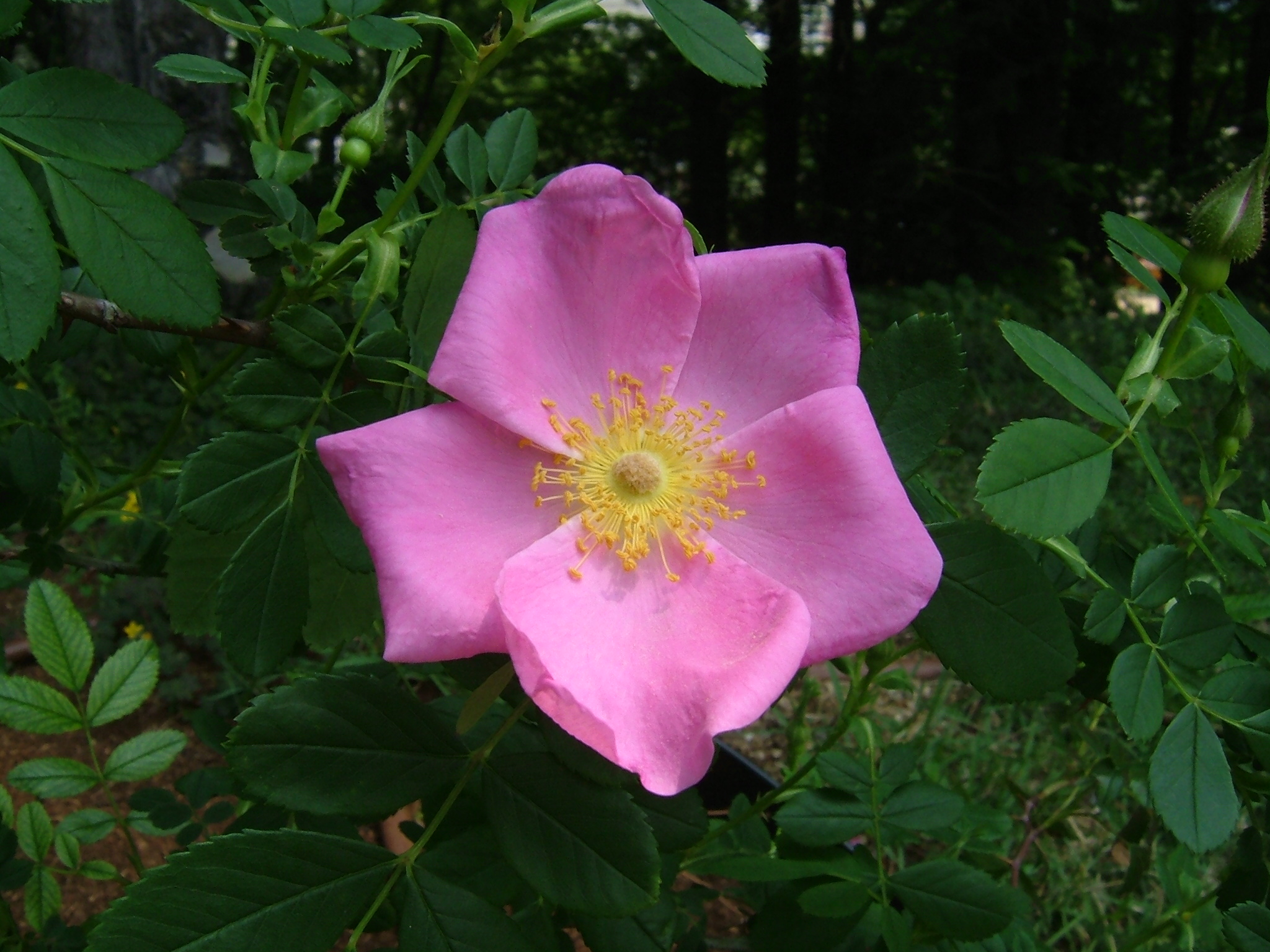
The flowers are the quintessential wild rose form: 5 broad, overlapping pink petals surrounding a prominent cluster of yellow stamens, typically 2–3 inches (5–7.5 cm) across. The deep, warm pink color is intense and beautiful. Flowers are borne singly or in small clusters at the ends of branches in June–July, lasting approximately 2–3 weeks. A single flower lasts only 1–2 days, but abundant new buds open continuously through the bloom period. The flowers are fragrant — the clean, classic rose scent that has been beloved for millennia.
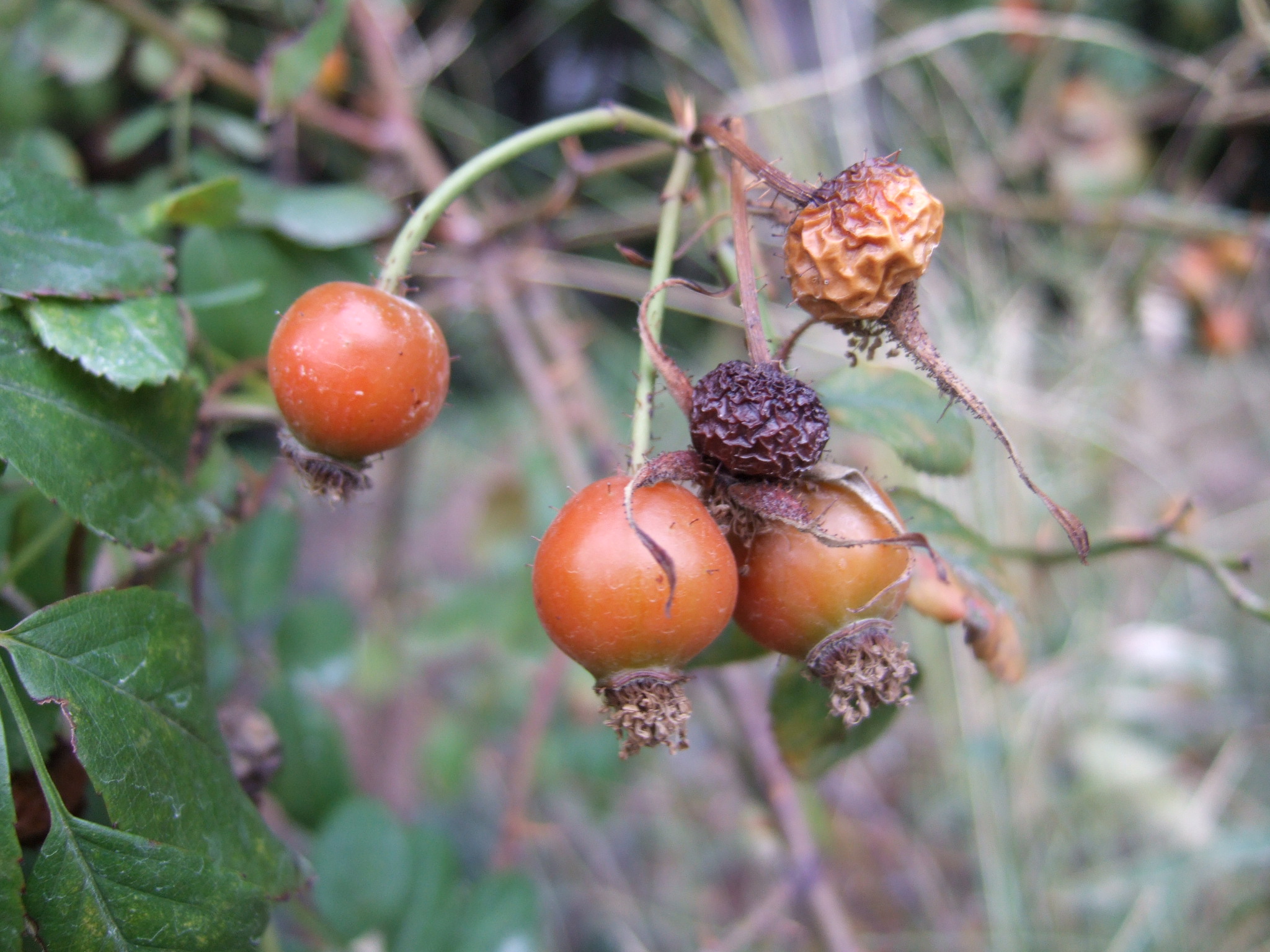
The fruit (rosehips) are round to egg-shaped, 1/2 to 3/4 inch (12–18 mm) in diameter, ripening from green to brilliant red-orange in September. The persistent sepals at the base of the hip are a distinguishing feature of Virginia Rose — they remain upright and spreading after the flower falls, giving the developing hips a distinctive “crowned” appearance. The hips are fleshy, rich in Vitamin C, and highly attractive to birds. They persist on the shrub well into winter, providing food for birds when other resources are scarce.
Quick Facts
| Scientific Name | Rosa virginiana |
| Family | Rosaceae (Rose family) |
| Plant Type | Deciduous Shrub (thorny, colony-forming) |
| Mature Height | 5 ft |
| Sun Exposure | Full Sun |
| Water Needs | Moderate |
| Soil Type | Sandy, rocky, or well-drained loam; tolerates poor soils |
| Soil pH | 5.5–7.0 (moderately acidic to neutral) |
| Bloom Time | June – July |
| Flower Color | Deep pink (5 petals) |
| Fruit | Bright red rosehips, September through winter |
| Fall Color | Brilliant orange to scarlet-red |
| Special Notes | Drought and salt tolerant; excellent barrier plant; coastal gardens |
| USDA Hardiness Zones | 3–7 |
Native Range
Virginia Rose is native to eastern North America, ranging from Newfoundland and Nova Scotia south along the Atlantic coastal plain and Piedmont to Georgia, and westward through the interior to the upper Midwest. In New England, it is found throughout Maine, New Hampshire, Vermont, Massachusetts, Rhode Island, and Connecticut, often most abundantly in coastal areas where it thrives in the sandy, salt-tolerant conditions of beaches, dunes, and coastal thickets. It is a common component of coastal shrub communities throughout the northeastern seaboard.
Unlike many native plants with narrow habitat preferences, Virginia Rose is a habitat generalist within its climate range. It occurs in a diverse array of environments including coastal sand dunes, dry rocky hillsides, open fields and meadow edges, roadsides, thicket margins, and the edges of open woods. The consistent threads through its habitat preferences are full sun (or at most light shade), well-drained soils, and disturbance — it is not a deep forest species, but thrives in the sunny, open conditions created by disturbance, grazing, or coastal exposure.
The coastal distribution of Virginia Rose reflects its exceptional salt tolerance. It is one of the few native shrubs that can grow in the salt spray zone of coastal headlands and dunes, where salt-laden winds kill less tolerant plants. This tolerance makes it valuable for coastal landscape restoration projects, where native plant options for the harshest exposed sites are limited. In inland situations, it is equally at home on dry, sunny roadsides, disturbed meadows, and open hillsides throughout the northeastern states.
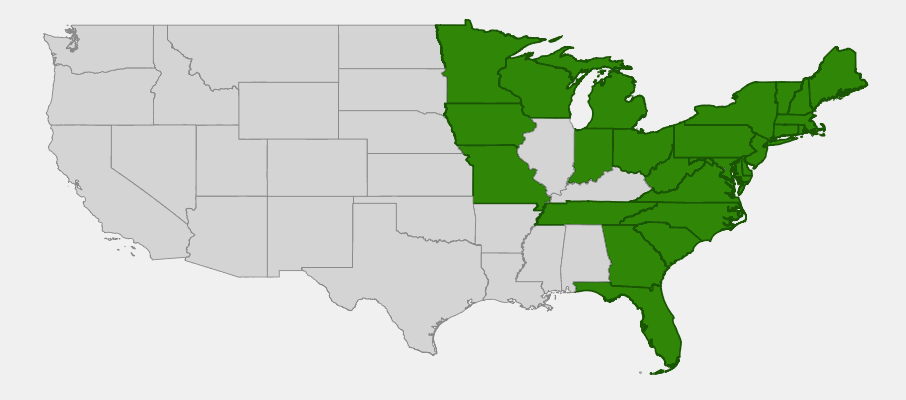
📋 Regional plant lists featuring Virginia Rose: New England
Growing & Care Guide
Virginia Rose is one of the toughest and most adaptable native shrubs for the northeastern landscape. It thrives in conditions that challenge most other plants — full sun, dry sandy soils, coastal salt spray, and wind exposure — while delivering outstanding ornamental value across all four seasons. Once established, it is largely self-sufficient.
Light
Virginia Rose requires full sun for best performance. It needs at least 6 hours of direct sunlight daily to flower and fruit well and to develop its characteristic dense, thorny form. In partial shade, growth becomes open and leggy, flowering is reduced, and the plant loses its landscape effectiveness as a barrier or specimen shrub. Site selection should prioritize the sunniest, most open locations in the garden.
Soil & Water
Virginia Rose is outstanding in its tolerance of dry, poor soils. It thrives on sandy, rocky, or gravelly soils that would stress most shrubs, and tolerates lean soils with low fertility. Good drainage is essential — while moderately drought tolerant when established, Virginia Rose does not tolerate poorly drained or constantly wet soils. It prefers moderately acidic to neutral soils (pH 5.5–7.0). One of its most valuable features is salt tolerance: it withstands salt spray from ocean winds and road salt applications better than almost any other native shrub, making it invaluable for coastal and roadside plantings. Once established (2–3 years), it rarely needs supplemental watering in normal rainfall years.
Planting Tips
Plant Virginia Rose in spring or fall as container-grown stock. Allow adequate space — the spreading root suckers will gradually expand the colony, and a single plant may occupy a 6–8 foot circle within 5–8 years. For a barrier hedge, space plants 3–4 feet apart. For a specimen or naturalistic planting, allow space for the colony to develop. Avoid planting near paths, play areas, or anywhere people might brush against the thorny stems. Virginia Rose establishes quickly on well-drained soils and is surprisingly forgiving of neglect once established.
Pruning & Maintenance
Virginia Rose benefits from renovation pruning every 3–5 years to maintain vigor and prevent the colony from becoming an impenetrable thicket of dead canes. Cut one-third of the oldest, thickest canes to the ground in late winter to allow light and air into the colony and stimulate vigorous new growth. Wear heavy gloves and long sleeves — the thorns are formidable. To control the spread of root suckers into adjacent areas, use a sharp spade to sever and remove the offending stems at the soil surface in spring. The plant is generally resistant to rose diseases and pests, including black spot and rose chafer, which can devastate cultivated roses.
Landscape Uses
- Coastal gardens — one of the best native shrubs for salt spray environments
- Barrier/security hedge — impenetrable thorny wall for property boundaries
- Dry, sunny sites where most shrubs struggle
- Roadside planting — tolerates road salt and exhaust
- Wildlife habitat — flowers for pollinators, hips for winter birds, dense thorny cover for nesting
- Slope stabilization — spreading root system holds sandy or rocky slopes
- Naturalistic meadow planting — creates structure in open meadow edges
- Four-season interest — flowers in summer, colorful hips in fall and winter, brilliant fall foliage
Wildlife & Ecological Value
Virginia Rose is a richly productive wildlife plant across all four seasons — providing nectar and pollen in summer, nutritious rosehips through fall and winter, and year-round nesting cover in its dense thorny thickets.
For Birds
The rosehips of Virginia Rose are among the most valuable native fruits for wintering and migrating birds in the northeastern United States. American Robins, Cedar Waxwings, Eastern Bluebirds, Hermit Thrushes, Yellow-rumped Warblers, and White-throated Sparrows all consume the hips eagerly. Northern Mockingbirds and European Starlings also compete for the fruit. Critically, the hips persist on the stems well into winter — sometimes through February or March if not consumed — providing food when almost nothing else is available. The dense, thorny thickets are also prime nesting habitat for a wide range of shrubland birds: Northern Cardinals, Gray Catbirds, Brown Thrashers, and various sparrow species all nest in rose thickets, where the thorns provide exceptional protection from predators.
For Mammals
White-tailed Deer browse the foliage and twigs, though the thorny stems deter heavy browsing by larger mammals. Rabbits — both Eastern Cottontail and Snowshoe Hare — use rose thickets extensively for cover and browse the stems in winter, particularly gnawing on bark near the base. Raccoons, Red Foxes, and Striped Skunks eat the rosehips in fall. Small mammals including White-footed Mice and Meadow Voles shelter and nest in the dense tangled growth at ground level beneath rose canes.
For Pollinators
Virginia Rose is a valuable pollinator plant, producing flowers that offer abundant pollen and accessible nectar. The open, single-flowered rose form — unlike the densely double-petaled cultivated roses — allows easy access for pollinators. Native bumblebees (Bombus spp.) are among the most enthusiastic visitors, collecting pollen in the large pollen loads on their hind legs. Sweat bees (Halictus and Lasioglossum spp.), leaf-cutter bees, and various small native bees also forage on the flowers. The rose sawfly and other specialist insects that depend on native roses round out the insect community associated with Virginia Rose.
Ecosystem Role
Virginia Rose is a keystone shrub in coastal and dry inland thicket ecosystems of the northeastern seaboard. Its dense, thorny growth creates some of the most secure nesting habitat available for shrubland birds, whose populations have declined substantially as coastal and inland thicket habitats have been lost to development and forest succession. The persistent rosehips are a critical winter food resource, and the complex structure of rose thickets provides thermal cover, nesting sites, and escape cover for a wide array of wildlife. Maintaining and planting Virginia Rose on sunny, dry sites contributes directly to the conservation of declining shrubland bird species.
Cultural & Historical Uses
The roses of the genus Rosa are among the most deeply embedded plants in human culture, and Virginia Rose has been used by Indigenous peoples of eastern North America for centuries. The Wabanaki, Iroquois (Haudenosaunee), Cherokee, and many other nations used rose hips as a food source, eating them raw, cooked, or dried and ground into a powder for storage. Rosehips are one of the richest natural sources of Vitamin C available in the wild, with concentrations reportedly up to 20 times higher than oranges by weight — a fact that made them especially valuable to Indigenous peoples and later to European explorers and colonists as a preventative against scurvy.
Various Indigenous nations also used the bark, leaves, flowers, and roots of native roses medicinally. The Iroquois used rose bark tea as a treatment for intestinal worms and as a general tonic. The Cherokee used rose root preparations for treating sore throats and as a gynecological medicine. The fragrant petals were used in ceremonies and as a cosmetic ingredient. Early European settlers and physicians incorporated native rose hips into their herbal medicines, and rosehip preparations remained in use in North American folk medicine well into the 20th century.
In modern times, Virginia Rose has attracted attention as a native alternative to the widely planted Rugosa Rose (Rosa rugosa), which is non-native and invasive in many coastal areas of New England. Unlike Rugosa Rose — which has escaped cultivation and forms impenetrable monocultures on coastal dunes, displacing native vegetation — Virginia Rose provides similar landscape functions (barrier, salt tolerance, rosehips, beautiful flowers) while supporting rather than degrading the native plant community. Coastal property owners are increasingly encouraged to replace invasive Rugosa Rose with Virginia Rose and other native coastal shrubs as part of dune and coastal habitat restoration efforts.
Frequently Asked Questions
Is Virginia Rose invasive?
No — Virginia Rose is a native plant, not invasive. It does spread by root suckers and can form dense thickets over time, which may require management in a small garden, but it is part of the natural plant community of the northeastern United States and is actively encouraged as a replacement for truly invasive plants like Rugosa Rose (Rosa rugosa), Multiflora Rose (Rosa multiflora), and Japanese Barberry.
How is Virginia Rose different from Rugosa Rose?
Rugosa Rose is a non-native species introduced from eastern Asia that has become invasive on coastal dunes and beaches throughout New England. It forms dense monocultures that crowd out native beach grass, bearberry, and other coastal plants. Virginia Rose is native to the region, supports native wildlife, and does not spread aggressively into natural areas. In terms of appearance, Rugosa Rose has heavily wrinkled (rugose) leaflets and very thorny stems; Virginia Rose has glossy, smooth leaflets and is somewhat less densely armed.
Are Virginia Rose hips edible?
Yes — rosehips are edible and nutritious, rich in Vitamin C and antioxidants. They can be eaten raw (the flesh outside the seeds is sweet but seedy) or processed into jams, jellies, teas, and syrups after removing the seeds and inner hairs. The seeds and inner hairs should be removed before processing, as the hairs can be irritating to the digestive system. Rosehip tea is a traditional remedy and pleasant beverage.
Will Virginia Rose grow in poor, sandy soil?
Virginia Rose is one of the best native shrubs for dry, sandy, poor soils. It naturally grows on coastal sand dunes and rocky roadsides where soil fertility is minimal and drainage is excellent. It will not perform well in wet, heavy clay soils or in shaded conditions, but on sunny, dry sites it thrives with minimal care.
Can Virginia Rose be used as a privacy hedge?
Yes — Virginia Rose makes an excellent informal barrier or privacy hedge, particularly where a dense, impenetrable, wildlife-friendly planting is desired. Its thorny stems make it as effective as any commercial hedge plant for deterring unwanted entry. For a more formal appearance, plants can be lightly pruned annually to maintain even height and density, though this reduces flowering and hip production. For a naturalistic planting with maximum wildlife value, allow the colony to grow freely.

Looking for a nursery that carries Virginia Rose?
Browse our native plant nursery directory: Maine · New Hampshire · Vermont · Connecticut