Inkberry (Ilex glabra)
Ilex glabra, commonly known as Inkberry or Gallberry, is a handsome native evergreen shrub of the eastern and southeastern United States, prized for its year-round glossy foliage, small black berries that persist through winter, and outstanding adaptability to moist, shaded sites where many other shrubs struggle. A member of the holly family (Aquifoliaceae), Inkberry is one of the most versatile and wildlife-valuable native shrubs available for the Mid-Atlantic landscape, thriving in everything from wet swales to the dappled shade beneath mature trees.
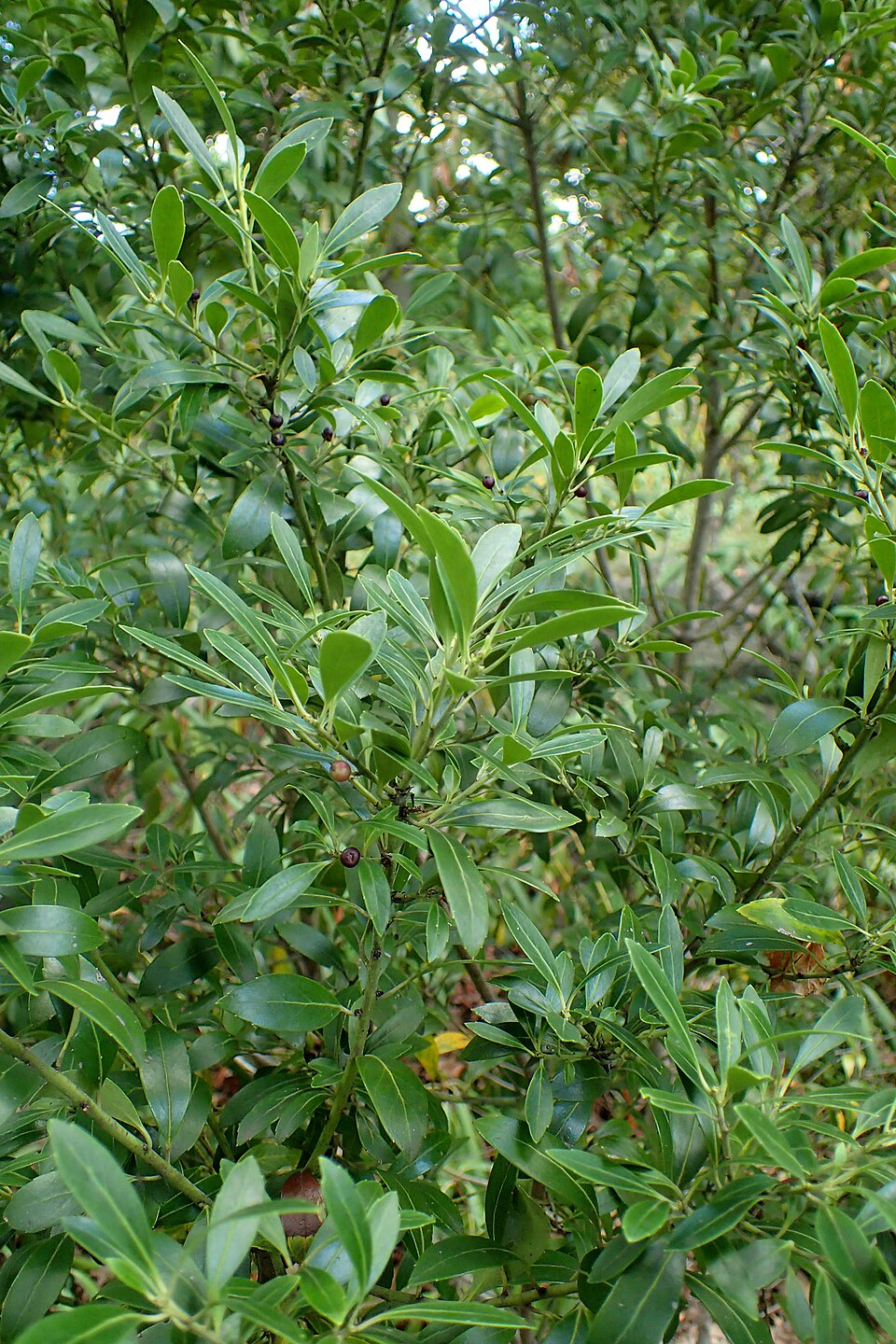
Growing 4 to 8 feet tall and spreading by underground stolons to form dense, suckering colonies, Inkberry provides multi-season interest: clean, lustrous, dark green foliage year-round; small, white flowers in late spring that attract pollinators; and clusters of shiny, jet-black berries (technically drupes) that develop in late summer and persist through winter as critical food for wildlife. Unlike many hollies, Inkberry maintains a generally neat, upright-arching form that integrates well into both naturalistic and structured landscape settings — and several compact cultivars have been selected for more formal uses.
For gardeners dealing with wet or moist soils, shaded areas, or sites where evergreen screening is needed in challenging conditions, Inkberry is an indispensable native shrub. Its tolerance of flooding, shade, and acid soils, combined with its ornamental evergreen foliage and exceptional wildlife value, makes it one of the most recommended natives throughout the Mid-Atlantic and Coastal Plain regions. Its stoloniferous habit also makes it ideal for erosion control and slope stabilization.
Identification
Inkberry is a medium-sized, upright, multi-stemmed evergreen shrub that typically reaches 4 to 8 feet in height, though under ideal conditions it can approach 10 feet. The plant spreads vegetatively by underground stolons (runners), forming dense, multi-stemmed thickets over time — a growth habit that is both a wildlife asset and an important consideration for garden placement. Individual stems are gray-green and relatively smooth, becoming more grayish and somewhat roughened with age.
Leaves
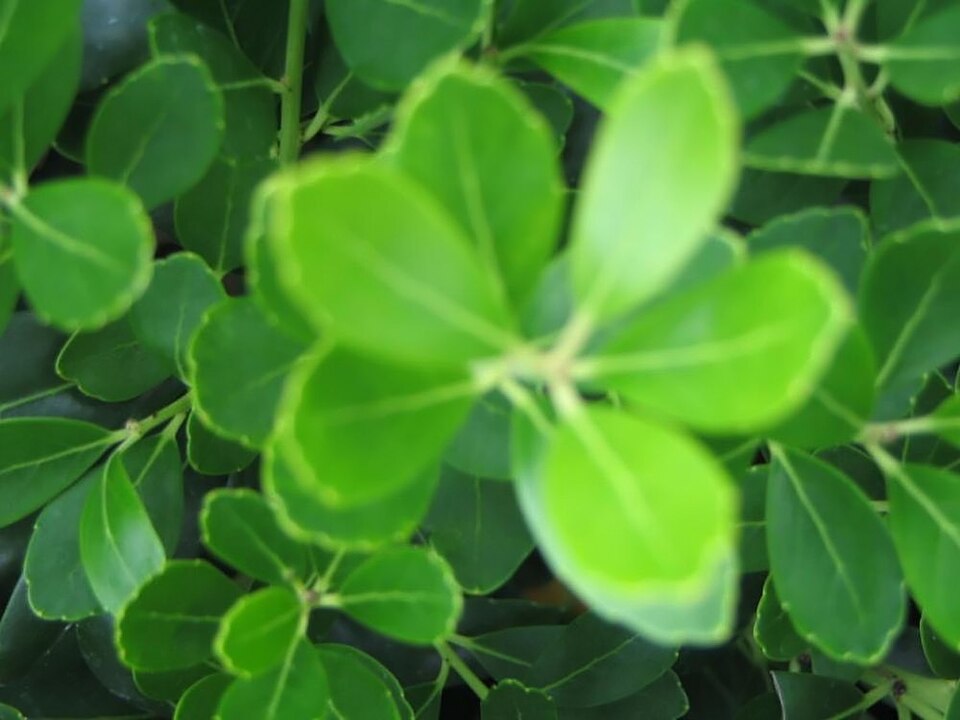
The leaves are a key identification feature: they are simple, alternate, evergreen, and glossy — lustrous dark green on the upper surface, paler below, with a leathery texture. Each leaf is 1 to 2 inches long, narrowly elliptical to oblanceolate in shape, with a few low, blunt teeth near the tip and entire (untoothed) margins on the lower two-thirds. The leaf apex is blunt to notched (retuse), a helpful field mark distinguishing Inkberry from the similar Fetterbush (Lyonia lucida). Unlike the spiny-leaved American Holly (Ilex opaca), Inkberry leaves have no spines and feel smooth and flexible. Crushed leaves have a slightly bitter, resinous scent.
Flowers
The flowers are small — about ¼ inch in diameter — with 5 to 8 white petals. Male and female flowers occur on separate plants (dioecious), so both male and female plants are required for berry production. Flowers bloom in late spring (May–June), appearing singly or in small clusters in the leaf axils along the previous year's stems. Despite their small size, the flowers are highly attractive to native bees, honeybees, and other beneficial insects. The species is an important nectar and pollen source in late spring when few other native shrubs are in bloom.
Fruit
The berries are perhaps Inkberry's most distinctive feature. Round, glossy, and jet-black — about ¼ inch in diameter — they ripen in August–September and persist on the stems well into winter or even the following spring if not consumed by wildlife. The berries contain 4–8 hard seeds. Each berry is technically a drupe with a thin, shiny skin enclosing a mealy, bitter pulp — the bitterness makes them unpalatable to humans but attractive to birds after frost softens the flesh. The name "Inkberry" reflects the dark purple-black juice the berries produce.
Quick Facts
| Scientific Name | Ilex glabra |
| Family | Aquifoliaceae (Holly) |
| Plant Type | Evergreen Shrub |
| Mature Height | 4–8 ft |
| Sun Exposure | Part Shade to Full Shade |
| Water Needs | Moderate |
| Soil Type | Moist to wet; acidic sandy or loamy soils; tolerates flooding |
| Soil pH | 4.5–6.0 (acidic) |
| Bloom Time | May – June |
| Flower Color | White |
| Fruit Color | Jet black (persists through winter) |
| Foliage | Glossy evergreen, dark green year-round |
| Deer Resistant | Yes (generally avoided by deer) |
| USDA Hardiness Zones | 4–9 |
Native Range
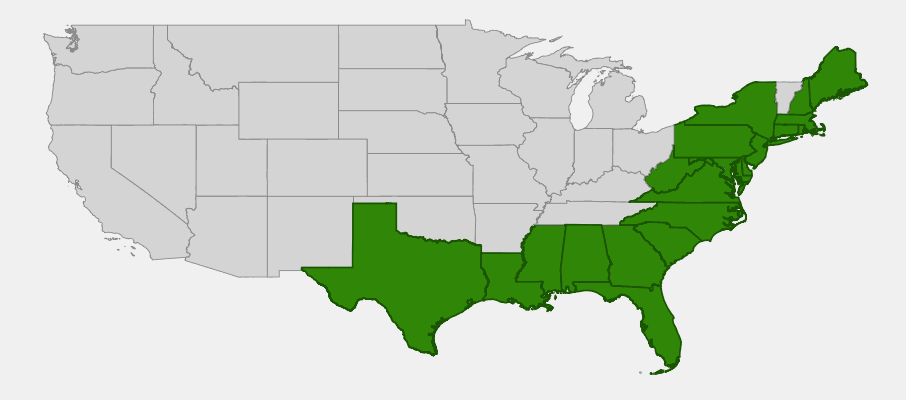
Inkberry is native to the Atlantic Coastal Plain and adjacent Piedmont from Nova Scotia and Maine south through the Mid-Atlantic states to Florida, and west along the Gulf Coast to Texas. It is most abundant and ecologically dominant on the southeastern coastal plain, where it is a characteristic species of pocosins, bay forests, pond pine flatwoods, and wet pine savannas. In the Mid-Atlantic states, Inkberry occurs primarily in the coastal plain and Piedmont provinces, often in association with Atlantic White Cedar swamps, wet pine flatwoods, and shrub swamps.
In Maryland, Virginia, and West Virginia, Inkberry is found throughout the coastal plain and lower Piedmont, growing in wet to moist forest understories, shrub swamps, bog margins, and wet roadside ditches. It is a dependable indicator of moisture-retentive, acidic soils. West Virginia populations are somewhat scattered and occur primarily in the lower elevations and river valleys of the eastern part of the state. The species is also commonly found in garden and restoration plantings throughout the region, as its ecological tolerances closely match the conditions of many challenging landscape sites in the Mid-Atlantic.
Outside the southeastern coastal plain, Inkberry populations become more scattered and disjunct, occurring primarily in suitable wetland habitats embedded in the larger matrix of upland forests. The species is notably frost-hardy for a coastal plain shrub, thriving in USDA Zones 4–9 — a wider cold-hardiness range than many of its coastal plain associates, which makes it a particularly valuable native shrub for gardeners in northern parts of its range and beyond.
📋 Regional plant lists featuring Inkberry: Maryland, Virginia & West Virginia
Growing & Care Guide
Inkberry is one of the most reliable native evergreen shrubs for the Mid-Atlantic region, particularly valued for its adaptability to wet, shaded, and acidic sites. Once established, it requires minimal care while providing maximum ecological return.
Light
Inkberry thrives in part shade to full shade, making it one of the few evergreen native shrubs that performs well beneath the canopy of mature trees. It also grows acceptably in full sun if adequate soil moisture is maintained — the foliage may become slightly lighter green in full sun exposure. In deep shade, berry production is reduced but the evergreen foliage remains attractive year-round. For maximum berry production and densest form, plant in part shade (morning sun with afternoon shade, or dappled shade throughout the day).
Soil & Water
Inkberry is ideally suited to moist to wet, acidic soils — conditions that challenge most landscape shrubs. It tolerates prolonged flooding and grows naturally in sites with saturated soils for extended periods. The optimal soil pH range is 4.5–6.0; avoid alkaline soils, which will cause chlorosis (yellowing of leaves) from iron deficiency. In typical moist garden soils, Inkberry thrives without supplemental irrigation once established. Amend heavy clay soils with organic matter to improve drainage and aeration if planting on sites that don't naturally flood.
Planting Tips
Plant Inkberry in early spring or fall for best establishment. Container-grown specimens transplant readily. Because Inkberry is dioecious — male and female flowers on separate plants — plant at least one male for every 3–5 females to ensure good berry production. Many named cultivars are self-fertile or have been selected for heavy berry set; check with your nursery when purchasing for berrying performance. Space plants 4–6 feet apart for naturalistic screening; allow more room for individual specimens. Mulch with acidic organic mulch (pine bark or pine straw) to maintain moisture and soil pH.
Pruning & Maintenance
Inkberry requires minimal pruning. Renew overgrown specimens by cutting one-third of the oldest stems to the ground each year over three years. Alternatively, rejuvenate by cutting the entire shrub back hard in late winter — Inkberry sprouts vigorously from the base. The suckering habit means that plants will gradually expand into colonies over time; contain spread by removing suckers at the soil line in spring. The shrub is resistant to most pests and diseases, though spider mites can occasionally be problematic in hot, dry conditions (not typical for this moisture-loving species).
Landscape Uses
Inkberry's combination of evergreen foliage, shade and wet-soil tolerance, and exceptional wildlife value makes it one of the most versatile native shrubs:
- Shaded foundation plantings — one of few evergreen natives for deep shade
- Rain gardens and wet swales — outstanding performance in seasonally wet areas
- Woodland edge — ideal transition shrub from open areas to shaded woodland
- Evergreen screening and hedges — compact cultivars create refined year-round screens
- Slope stabilization — suckering habit provides excellent erosion control
- Wildlife habitat — berries and shelter for birds throughout winter
- Naturalistic shrub borders — mixes beautifully with other native shrubs
Wildlife & Ecological Value
Inkberry is one of the most ecologically valuable native shrubs in the eastern United States, providing food, shelter, and nesting habitat for a remarkable diversity of wildlife species across all seasons.
For Birds
The persistent black berries of Inkberry are consumed by more than 30 species of birds, including American Robin, Northern Mockingbird, Gray Catbird, Cedar Waxwing, Hermit Thrush, Yellow-rumped Warbler, Eastern Bluebird, and numerous sparrow species. The berries are particularly valuable in late winter and early spring when other food sources are depleted. The dense, evergreen foliage provides excellent nesting sites for White-throated Sparrow, Yellow Warbler, and Song Sparrow, and the thicket-forming habit offers critical escape cover and thermal protection during harsh winter weather.
For Mammals
The dense, multi-stemmed colonies of Inkberry provide excellent escape cover and denning habitat for rabbits, foxes, and other small to medium-sized mammals. White-tailed deer generally avoid browsing Inkberry due to the somewhat bitter foliage, making it more reliable than many native shrubs in areas with high deer pressure. The berries are consumed by raccoons, opossums, and other small mammals. The thicket habitat supports diverse populations of small mammals including meadow voles, white-footed mice, and short-tailed shrews.
For Pollinators
Inkberry's spring flowers are an important nectar and pollen source for native bees. The flowers are particularly valued by several specialist bee species that collect holly pollen preferentially, including some Andrena (mining bee) species. Honeybees visit the flowers avidly — in the Southeast, Inkberry ("Gallberry") honey is a prized regional specialty, particularly from coastal Georgia and Florida where Inkberry grows in large, almost monospecific stands that produce substantial nectar flows. The honey is characteristically white, fine-grained, and mildly sweet.
Ecosystem Role
In coastal plain ecosystems, Inkberry forms important mid-layer shrub communities that connect the forest canopy to the ground layer, providing structural complexity that supports the high biodiversity characteristic of southeastern pine savannas and bay forests. Its stoloniferous growth habit helps stabilize wet soils and reduce erosion along stream banks and wetland margins. The species also plays a role in succession dynamics — Inkberry thickets are early successional components of recovering wetland communities, helping create the conditions under which Atlantic White Cedar and other canopy species can eventually establish.
Cultural & Historical Uses
Inkberry has been used by Indigenous peoples of the southeastern United States for centuries. The Cherokee and other southeastern tribes used preparations from the roots and leaves medicinally — root bark preparations were used as a purgative and in treatments for fever, and leaf infusions were applied externally for skin conditions. The berries, while not edible for humans (they cause vomiting), were used in some cultures to make a black dye for basket weaving and fabric coloring, which likely contributed to the common name "Inkberry."
In agricultural history, Inkberry (known as "Gallberry" in the Southeast) played a significant role in the beekeeping economy of coastal Georgia and Florida. The plant produces abundant nectar in late spring, and large coastal plain stands of Inkberry — often covering thousands of acres in the Georgia and Florida flatwoods — supported substantial commercial honey production. "Gallberry honey" remains a prized regional specialty to this day, noted for its mild flavor, white color, and fine-grained texture. Some historians have noted that Inkberry honey was an important trade commodity in colonial-era Georgia and Florida.
In contemporary horticulture, Inkberry has become one of the most widely planted native shrubs in the eastern United States. Numerous cultivated varieties have been selected and named, including compact forms such as 'Compacta,' 'Shamrock,' 'Densa,' and 'Nordic' that have transformed the species from a large, sprawling shrub into a refined landscape plant suitable for formal and semi-formal settings. These cultivars are widely available at garden centers throughout the Mid-Atlantic, making native Inkberry increasingly accessible to homeowners seeking ecologically valuable alternatives to non-native evergreen shrubs.
Frequently Asked Questions
Do I need both male and female Inkberry plants to get berries?
Yes — Inkberry is dioecious, meaning male and female flowers occur on separate plants. You need at least one male plant for every 3–6 female plants for good berry production. Many named cultivars have been selected for female characteristics; nurseries can advise on appropriate pollinators. Some compact cultivars like 'Shamrock' have better berry set than others.
Will Inkberry grow in standing water?
Yes — Inkberry tolerates prolonged flooding better than most landscape shrubs. It is native to wet flatwoods and swamp margins where standing water is common for extended periods. It will thrive in rain gardens, wet swales, and pond margins as long as the soil is also acidic.
How do I keep Inkberry from spreading?
Inkberry spreads by underground stolons (runners) to form colonies. To control spread, remove suckers at the soil line in spring or install a physical root barrier around the planting. In naturalistic settings, this suckering habit is an ecological asset that provides dense wildlife cover and erosion control.
Is Inkberry the same as Winterberry?
No — both are native hollies, but they are different species. Winterberry (Ilex verticillata) is deciduous, with bright red berries that are highly visible after leaf drop in winter. Inkberry (Ilex glabra) is evergreen, with small black berries that are less showy but persist longer and are eaten by different bird species. Both are ecologically valuable native shrubs for wet sites.
Can Inkberry grow in a container?
Yes — compact cultivars such as 'Compacta' and 'Nordic' grow well in large containers. Use an acidic potting mix and ensure the container does not dry out. In colder climates, bring containers into an unheated garage or shed during the coldest winter months to protect roots from hard freezes.

Looking for a nursery that carries Inkberry?
Browse our native plant nursery directory: Maryland · Virginia · West Virginia