Cherrybark Oak (Quercus falcata)
Quercus falcata, commonly known as Cherrybark Oak (also Southern Red Oak), is one of the most magnificent native trees of the southeastern United States and Mid-Atlantic region. This impressive member of the Fagaceae (beech) family can grow to enormous size — up to 70 to 90 feet tall with a spreading crown — making it one of the largest oaks of the eastern forest. The common name “Cherrybark Oak” refers to the tree’s distinctive bark, which in mature specimens resembles the dark, flaky, plated bark of Black Cherry (Prunus serotina) — a feature that sets it apart from other red oaks and makes it recognizable even at a distance.
Cherrybark Oak is native to the bottomlands, floodplains, and moist upland slopes of the Mid-Atlantic and Southeast, thriving in the rich, deep soils of river bottoms and lower slopes where it can reach its full majestic size. It is an exceptionally valuable timber tree — producing large quantities of high-quality, straight-grained hardwood — and has long been one of the most commercially important oaks in the South. But its value extends far beyond lumber: Cherrybark Oak produces prolific crops of small acorns that are a critical food source for White-tailed Deer, Wild Turkey, and dozens of other wildlife species, and its massive crown supports an extraordinary diversity of insects, including hundreds of species of native moths and butterflies.
For landscapes with sufficient space, Cherrybark Oak is an outstanding long-lived native tree. Its adaptability as a street and urban tree — noted in its common description as a “good street tree” — combined with its exceptional wildlife value, impressive autumn color, and historic significance make it a top-tier choice for large-scale plantings, parks, and estate landscapes in the Mid-Atlantic region.
Identification
Cherrybark Oak is a large deciduous tree, typically reaching 70 to 90 feet tall (21–27 m) at maturity, with occasional specimens exceeding 100 feet. The crown is broadly rounded to somewhat oval, with large, spreading branches forming an impressive canopy. The trunk can be straight and clear for 30 to 40 feet on mature trees growing in competitive forest stands, making it a prized timber species.
Bark
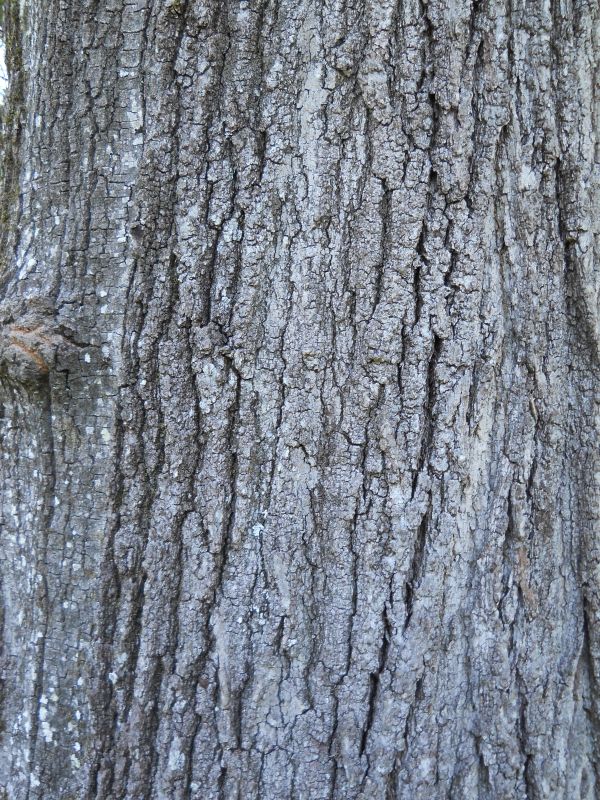
The bark is one of the most distinctive features of Cherrybark Oak and the source of its common name. On young trees, bark is smooth and grayish. As trees mature, the bark becomes dark gray to nearly black-gray, deeply furrowed, and broken into small, flat, plate-like scales with reddish inner surfaces — strikingly similar to Black Cherry bark. This flaky, plated texture is unique among the red oaks of the Mid-Atlantic and provides a reliable identification feature. The inner bark also has a reddish tinge when freshly exposed, another cherry-like characteristic.
Leaves
The leaves are large, 5 to 9 inches (13–23 cm) long, with a characteristic shape: deeply lobed with a distinctive U-shaped sinus at the base, and with 7 to 11 lobes that have pointed bristle-tips typical of red oak group members. The leaf shape is highly variable — leaves near the top of the tree can appear quite different from lower leaves — but the combination of deep sinuses, pointed lobes, and the pale to whitish, hairless lower surface (except for small tufts of hair in vein axils) distinguishes Cherrybark Oak from the closely related Southern Red Oak (Q. falcata var. pagodifolia is sometimes treated as a synonym or variety). Upper leaf surfaces are dark green and lustrous; fall color is russet to reddish-brown.
Acorns
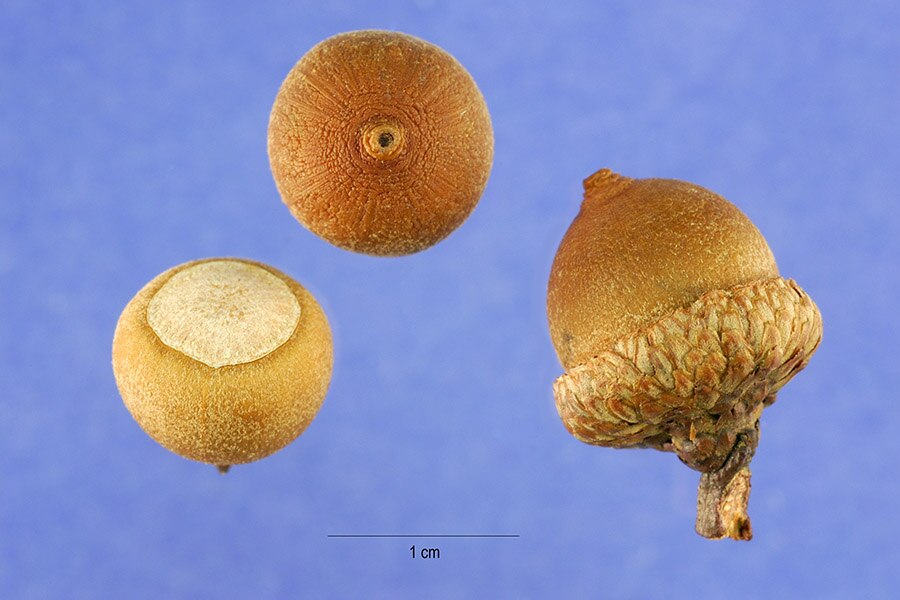
The acorns are relatively small for such a large tree — ½ to ¾ inch (12–18 mm) long, nearly round, with a shallow, flat cap covering only the top quarter of the nut. They are produced in great quantities in mast years, typically maturing in the second year (a characteristic of the red oak group). The small size of the acorns makes them easily swallowed whole by Wild Turkey, Wood Ducks, and many other wildlife species.
Quick Facts
| Scientific Name | Quercus falcata |
| Family | Fagaceae (Beech) |
| Plant Type | Deciduous Tree |
| Mature Height | 70–90 ft |
| Sun Exposure | Full Sun to Full Shade |
| Water Needs | Moderate to High |
| Bloom Time | March – May (inconspicuous catkins) |
| Flower Color | Yellowish-green (catkins) |
| Fall Color | Russet to reddish-brown |
| USDA Hardiness Zones | 6–9 |
Native Range
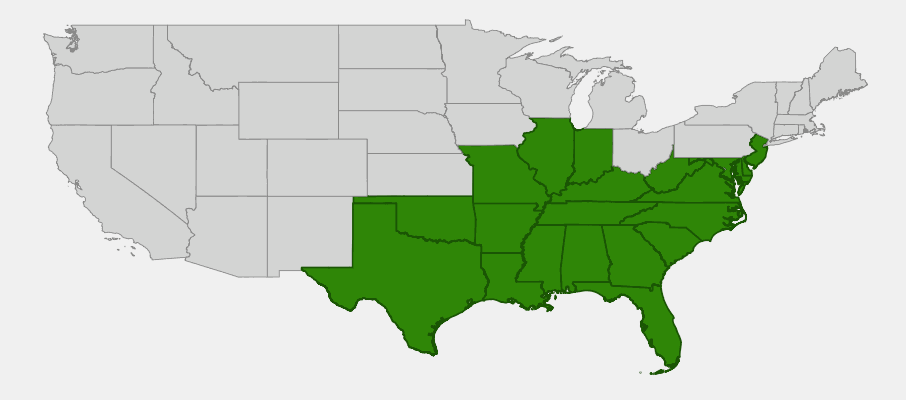
Cherrybark Oak is native to the southeastern and south-central United States, ranging from southern New Jersey and Delaware south through Virginia, West Virginia, and the Carolinas to Florida, and west through Georgia, Alabama, Mississippi, Arkansas, Louisiana, Oklahoma, and Texas, with northern extensions into parts of Indiana and Illinois. It is most abundant and reaches its greatest size in the rich bottomland and floodplain forests of the Mississippi Delta and major river systems of the Coastal Plain and Piedmont.
In Maryland, Virginia, and West Virginia, Cherrybark Oak is a native species of bottomland hardwood forests, lower slopes, and moist upland sites. It is more common in Virginia than in Maryland, where it is near its northern limit, and is found primarily in the Coastal Plain, Piedmont, and lower elevations of the Blue Ridge. In West Virginia, it occurs in bottomland forests and sheltered valley sites at lower elevations in the Ridge and Valley and western counties.
Within its range, Cherrybark Oak is a characteristic species of the Mixed Mesophytic and Southern Mixed Hardwood forest types, growing alongside American Sweetgum, Sycamore, River Birch, American Elm, various hickories, and other bottomland oaks including Water Oak and Willow Oak. It typically occupies the better-drained areas within bottomland complexes — first bottoms and slightly elevated flats — rather than the wettest, most frequently flooded zones.
📋 Regional plant lists featuring Cherrybark Oak: Maryland, Virginia & West Virginia
Growing & Care Guide
Cherrybark Oak is a long-lived, adaptable native tree that rewards careful siting with a lifetime of beauty and wildlife value. It is more flexible in its site requirements than many bottomland species and has proven to be an excellent urban tree, tolerating compacted soils and occasional flooding better than most oaks of its size.
Light
Cherrybark Oak tolerates a wide range of light conditions — from full sun to full shade — though it grows fastest and develops its best form in full sun to light shade. In forest settings, it develops a tall, straight trunk as it grows toward the canopy. In open landscapes, it develops a broad, spreading crown. Young trees are notably shade-tolerant and can establish under a woodland canopy, making them useful for forest understory restoration as well as open landscape planting.
Soil & Water
Cherrybark Oak prefers deep, moist, fertile soils with good drainage — the kind of rich bottomland soil found naturally in river valleys and on lower slopes. It tolerates periodic flooding (up to a few weeks) but does not thrive in permanently waterlogged conditions. It performs well in slightly acidic to neutral soils (pH 5.5–7.0). Established trees are moderately drought tolerant once their deep root systems are fully developed, typically after 3–5 years. For urban use, it tolerates compacted soils, heat, and pollution better than many native oaks.
Planting Tips
Plant Cherrybark Oak as a container-grown or balled-and-burlapped nursery specimen in fall or early spring. Choose a site with at least 30 feet of clearance in all directions — this is a large tree that needs space to achieve its natural form. Stake large specimens for the first two years. Water deeply but infrequently during the first growing season to encourage deep root development. Mulch with 3–4 inches of organic mulch in a wide ring, keeping mulch away from the trunk.
Pruning & Maintenance
Young Cherrybark Oaks benefit from structural pruning in the first few years — selecting a single central leader and removing competing branches develops a strong, wind-resistant crown architecture. Mature trees require minimal pruning beyond removal of dead, damaged, or crossing branches. Prune in late winter or early summer to minimize the risk of oak wilt disease introduction through fresh wounds. Avoid pruning in spring (April–June) when the risk of oak wilt transmission is highest.
Landscape Uses
- Large specimen tree — an architectural focal point in parks and estate landscapes
- Street and urban tree — noted for adaptability to compacted soils and urban conditions
- Bottomland forest restoration — a keystone species for river valley restoration
- Wildlife corridors — prolific acorn producer supporting deer, turkey, and waterfowl
- Riparian buffer plantings — stabilizes streambanks and filters runoff
- Shade tree for large properties — provides deep, cooling shade once mature
Wildlife & Ecological Value
As with all oaks, Cherrybark Oak is one of the most ecologically important trees in the eastern landscape, supporting an extraordinary community of insects, birds, and mammals.
For Birds
The acorns are consumed by more than 100 species of birds, with Wild Turkey, Wood Duck, Mallard, American Crow, Blue Jay, Red-bellied Woodpecker, and many songbirds among the most important consumers. The large, spreading crown provides nesting and roosting habitat for Red-tailed Hawk, Cooper’s Hawk, and Great Horned Owl. Baltimore Orioles and other canopy nesters use the high branches. Cavity-nesting species including Red-headed Woodpecker, Pileated Woodpecker, and Wood Duck use dead snags and cavities in mature specimens.
For Mammals
White-tailed Deer, Gray Squirrel, Fox Squirrel, Eastern Chipmunk, and White-footed Mouse all depend heavily on Cherrybark Oak acorns as a fall and winter food source. Black Bears consume acorns as pre-hibernation fattening food. Raccoons and other omnivores also take acorns. The dense canopy and trunk cavities of large trees provide essential denning habitat for a range of mammals.
For Pollinators
Like all oaks, Cherrybark Oak supports an extraordinary diversity of native moths and butterflies — research by entomologist Doug Tallamy has documented that oaks support more than 500 species of native Lepidoptera larvae, making them the single most important native tree genus for supporting food webs in eastern North America. The catkins (male flowers) provide pollen for many native bee species in early spring when few other pollen sources are available.
Ecosystem Role
Cherrybark Oak is a keystone species in bottomland hardwood forest ecosystems. Its massive acorn production in mast years (every 2–3 years) drives population cycles of many species — the mast failure years are significant stressors for wildlife that have evolved with this feast-or-famine pattern. The tree’s large canopy intercepts rainfall and reduces runoff; its deep root system stabilizes streambanks and captures nutrients from agricultural runoff. As a long-lived tree (often 200–400 years), it accumulates biomass that provides structural habitat for multiple generations of wildlife.
Cultural & Historical Uses
Cherrybark Oak has been one of the most commercially and culturally important native trees of the southeastern and Mid-Atlantic United States for centuries. Its wood is hard, strong, and straight-grained — classified as “red oak” in lumber markets — and has been used extensively for furniture, flooring, cabinetry, railroad ties, and construction. The quality of Cherrybark Oak lumber was recognized early by European colonists, who prized the bottomland forests where the species reached its greatest size. Large specimens from river bottomlands produced logs of exceptional size and quality.
Indigenous peoples used Cherrybark Oak acorns as a food source, leaching the bitter tannins with water before grinding the nuts into flour or meal for breads and porridges. The bark, like other oak bark, was used medicinally — oak bark tannins have astringent properties and were used in poultices and washes for skin conditions, sore throats, and intestinal ailments. Oak bark was also historically an important source of tannin for leather tanning, and Cherrybark Oak bark was among the species used in the tanning industry of the 18th and 19th centuries.
In contemporary horticulture, Cherrybark Oak has gained recognition as an outstanding urban and street tree. Its adaptability to compacted soils, moderate tolerance of flooding, and resistance to pests and disease make it one of the most practical large native oaks for urban plantings. Its use in street tree programs in the Mid-Atlantic and Southeast reflects a growing understanding that native trees provide superior ecological value compared to non-native ornamentals of similar size — and Cherrybark Oak delivers on both fronts, offering magnificent form and unmatched ecological productivity.
Frequently Asked Questions
Is Cherrybark Oak the same as Southern Red Oak?
“Cherrybark Oak” and “Southern Red Oak” are both common names used for Quercus falcata, sometimes creating confusion. Historically, some botanists treated “Cherrybark Oak” as a distinct variety (Q. falcata var. pagodifolia) with more distinct cherry-like bark and a more bottomland-specific habitat. Today most authorities treat them as the same species, though the name “Cherrybark Oak” is often preferred to distinguish it from other “Southern Red Oaks.”
How fast does Cherrybark Oak grow?
Cherrybark Oak has a moderate to fast growth rate — typically 12 to 24 inches per year in favorable conditions with ample water and nutrient availability. It is faster-growing than many upland oaks, which reflects its natural adaptation to the rich bottomland soils where competition for light is intense.
Is Cherrybark Oak good for urban planting?
Yes — it is one of the native oaks most tolerant of urban conditions. It handles compacted soils, pollution, and urban heat islands better than many native oaks. Its fast growth and large eventual size make it ideal for parks, large commercial landscapes, and wide boulevards where overhead clearance is not a limiting factor.
When do Cherrybark Oak acorns ripen?
Cherrybark Oak acorns ripen in October of the second year after pollination (it is a member of the red oak group, which takes two years to mature acorns). Large mast crops are produced every 2–4 years, with lighter crops in intervening years.
How do I identify Cherrybark Oak vs. other red oaks?
The most reliable feature is the bark on mature trees — deeply furrowed with small, flat, dark plates with reddish inner surfaces, resembling Black Cherry bark. The leaves have deep sinuses and a distinctive U-shaped notch at the base. Combined with its bottomland/moist-site habitat preference and range, these features distinguish it from Pin Oak, Scarlet Oak, and other red oaks.

Looking for a nursery that carries Cherrybark Oak?
Browse our native plant nursery directory: Maryland · Virginia · West Virginia