Fairy Duster (Calliandra eriophylla)
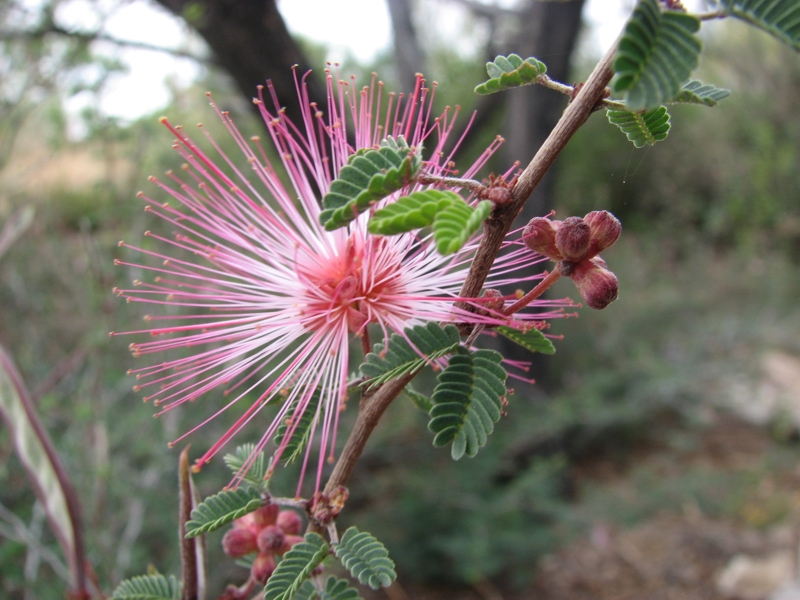
Calliandra eriophylla, known as Fairy Duster, is one of the most enchanting and distinctive native shrubs of the Sonoran and Chihuahuan Deserts. The common name perfectly captures the essence of this plant: its flowers are delicate, airy pom-poms of slender, pink to rose-red stamens, looking for all the world like tiny fairy-made dusting brushes scattered across the fine, feathery foliage. A low-growing evergreen shrub rarely exceeding 3 feet in height, Fairy Duster produces these spectacular blooms primarily in late winter through spring — often as early as January or February when the desert landscape is still largely dormant — providing one of the first and most welcome bursts of color in the desert garden year. The Arizona regional plant list highlights both its ornamental character (“pink, fluffy ball-shaped blossoms”) and its evergreen nature — a valuable combination in desert landscaping.
Beyond its beauty, Fairy Duster is an ecological powerhouse for its modest size. The long-tubed staminate flowers are perfectly adapted for pollination by hummingbirds, whose long bills can reach the nectar at the base of the stamen tube. Hawkmoths, native bees, and butterflies also visit the flowers. The seeds that follow are contained in flat, brown seedpods that split open explosively when dry, flinging seeds several feet from the parent plant — a dramatic and effective dispersal strategy. The dense, twiggy growth provides excellent cover for desert birds and small mammals, while the foliage and seeds are consumed by various wildlife species.
For the desert gardener, Fairy Duster is nearly irreplaceable as a low, spreading groundcover-scale shrub for xeriscape designs. It is one of the most drought-tolerant flowering shrubs in the Southwest, thriving in full sun on rocky, well-drained slopes with virtually no supplemental irrigation once established. Its small size makes it versatile — usable in rock gardens, as a foreground planting in front of larger desert shrubs, as a naturalistic border plant, or as a seasonal groundcover on rocky slopes. As a nitrogen-fixing legume, it also enriches the soils around it, benefiting neighboring plants.
Identification
Fairy Duster is a low, rounded, spreading evergreen shrub typically 1.5–3 feet (45–90 cm) tall and 2–4 feet (60–120 cm) wide, with many slender, twisting stems arising from the base. The overall plant is fine-textured and delicate in appearance, with bipinnately compound leaves and small, paired thorns (stipular spines) at the leaf bases.
Leaves
The leaves are bipinnately compound (twice-divided), giving the plant an airy, feathery appearance — somewhat like a miniature sensitive plant or acacia. Each leaf is 1–2 inches long and composed of 4–10 pairs of pinnae (primary leaflets), each pinna bearing 10–30 pairs of tiny oblong leaflets only 2–4 mm long. This fine leaf texture is one of the plant’s most attractive features and gives it a soft, almost cloud-like appearance. Leaves may fold up at night or during extreme heat, a thigmonastic response similar to that of the sensitive plant. The foliage is evergreen in mild winters but may be partially deciduous after hard freezes, resprouting reliably from the root crown.
Flowers & Fruit
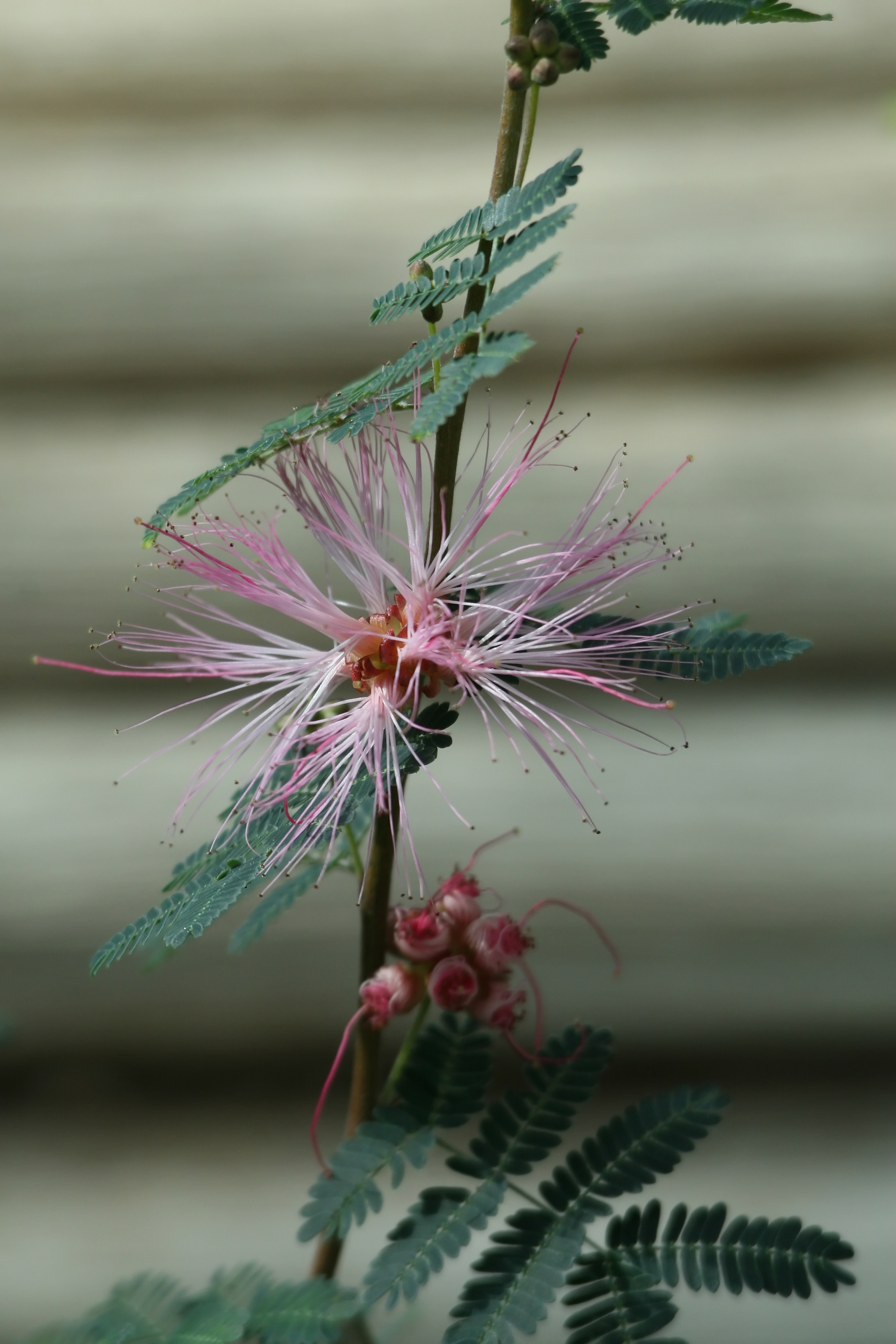
The flowers are the plant’s showpiece — round, pom-pom-like heads 1–2 inches in diameter composed entirely of long, slender stamens that are white to pale pink at the base and deep rose-pink to magenta at the tips. There are no visible petals — the visual display comes entirely from the colorful stamens. The flowers are arranged in heads of 10–30 individual flowers, each contributing its stamens to the overall pom-pom effect. Bloom peaks from January through April, with occasional repeat bloom in late summer to fall after monsoon rains. The fruit is a flat, narrow, brown seedpod 2–3 inches (5–7 cm) long with a hairy margin. Pods split explosively when fully dry in summer, catapulting seeds up to 6 feet from the parent plant — a dramatic and effective dispersal strategy.
Quick Facts
| Scientific Name | Calliandra eriophylla |
| Family | Fabaceae (Legume Family) |
| Plant Type | Evergreen Shrub |
| Mature Height | 3 ft |
| Sun Exposure | Full Sun |
| Water Needs | Low (Drought Tolerant) |
| Bloom Time | January – May; occasionally fall |
| Flower Color | Pink to rose-red (stamens) |
| USDA Hardiness Zones | 8–11 |
Native Range
Fairy Duster is native to the Sonoran and Chihuahuan Deserts of the southwestern United States and adjacent Mexico. In the US, it occurs in southern and central Arizona, southern New Mexico, the Big Bend region of Texas, and portions of inland southern California (particularly in San Diego and Riverside counties). It extends south through Sonora and Chihuahua in Mexico into the northern reaches of the Sierra Madre Occidental.
Throughout its range, Fairy Duster is strongly associated with rocky slopes, desert bajadas (gently sloping plains at the foot of mountains), and gravelly desert flats where drainage is excellent. It occurs from near sea level in coastal southern California to elevations of about 5,000 feet in Arizona and New Mexico. It is most commonly found in the upper Sonoran Desert life zone, where it grows alongside brittlebush, saguaro cactus, palo verde, and various agaves and yuccas. In Arizona, it is particularly common in the rocky foothills surrounding Tucson and throughout the Sonoran Desert National Monument.
The species is closely related to several other Calliandra species in the Southwest and Mexico, including the somewhat larger Calliandra californica (Baja Fairy Duster), which is also sometimes grown in southwestern gardens. The native range of C. eriophylla is centered in the Sonoran Desert, reflecting its dependence on mild temperatures and its intolerance of prolonged hard freezes. The genus name Calliandra comes from the Greek for “beautiful stamens” — an apt description of the showy, colorful stamen bundles that give Fairy Duster its characteristic pom-pom appearance.
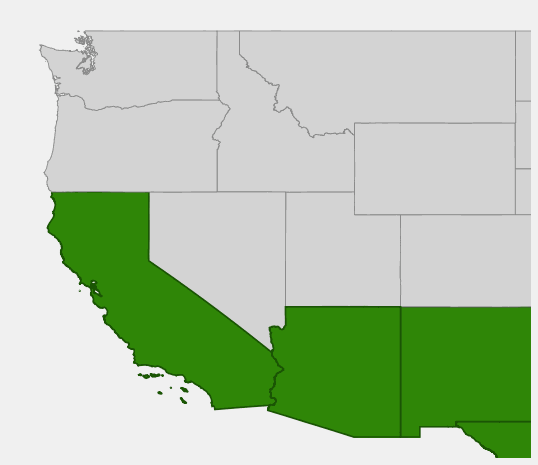
📋 Regional plant lists featuring Fairy Duster: Arizona
Growing & Care Guide
Fairy Duster is one of the most rewarding native plants for low-water desert gardens. It establishes quickly, blooms reliably in late winter through spring when little else is flowering, and requires virtually no maintenance once established. Its primary needs are full sun and excellent drainage.
Light
Fairy Duster must have full sun for the best flowering and compact growth. In full sun, it blooms prolifically and develops its characteristic dense, low mound form. In part shade, it becomes leggy, flowers less, and is more susceptible to disease. Choose the sunniest, hottest spot in your garden — it handles intense reflected heat from walls and pavements without stress.
Soil & Water
Perfect drainage is essential — Fairy Duster will not survive in heavy clay or waterlogged soils. Plant it in native desert soil, decomposed granite, or amended sandy loam with excellent drainage. Once established (after one full year in the ground), Fairy Duster survives on rainfall alone throughout most of Arizona. During establishment, water deeply every 2 weeks in summer, then monthly or less through winter. Supplemental irrigation during dry spells encourages fall reblooming.
Planting Tips
Plant in fall (October–November) or late winter (February–March). Choose a south or west-facing slope if possible to replicate its natural habitat. Space plants 3–4 feet apart for a mass planting, or use individually in a mixed desert shrub border. Small container plants (1-gallon) establish more readily than larger specimens. Mulch with coarse gravel rather than organic material.
Pruning & Maintenance
Fairy Duster requires minimal pruning. Avoid heavy shearing, which removes flowering wood and destroys the natural form. If needed, thin out old stems in late winter before spring bloom begins. After the spring bloom season, the plant can be lightly trimmed to maintain a tidy appearance. Seedpods can be left on the plant — the explosive dispersal is part of the plant’s character and helps it self-seed into nearby areas. Fairy Duster is naturally pest-resistant in dry conditions.
Landscape Uses
- Rock garden specimen — stunning in front of large boulders
- Low xeriscape border — perfect foreground planting
- Hummingbird garden — an essential early-season nectar source
- Desert slope stabilization
- Wildlife habitat thicket for cover and food
- Container plant on a hot, sunny patio
Wildlife & Ecological Value
For Birds
Fairy Duster is a premier hummingbird plant for the Sonoran Desert. Costa’s Hummingbirds, Anna’s Hummingbirds, and Broad-billed Hummingbirds are all attracted to the long-tubed flower heads, and the winter-to-spring bloom period coincides with peak hummingbird activity in southern Arizona. The dense, twiggy growth also provides excellent shelter and nesting material for small desert birds including Verdins, House Finches, and Black-tailed Gnatcatchers. These birds prize the dense structure for its protection from both predators and weather extremes.
For Mammals
Desert cottontails and jackrabbits may nibble on Fairy Duster foliage, particularly during dry periods. The dense, spiny growth provides escape cover for small mammals. Various rodents collect and cache the seeds after pod dehiscence. The deep taproot creates an anchor point for burrowing by small rodents who use the root system as shelter.
For Pollinators
The flowers attract a wide variety of native bees, including carpenter bees, bumble bees, and various solitary bees seeking both nectar and pollen. Long-tongued bee species are best adapted to reach the nectar at the base of the stamen tube. Butterflies, particularly sulphurs and blues, also visit the flowers. Because Fairy Duster blooms in late winter through early spring, it provides a critical early-season nectar source when few other desert plants are flowering.
Ecosystem Role
As a nitrogen-fixing legume, Fairy Duster enriches the soils around it, providing nutrients that benefit neighboring plants. On rocky desert slopes, its fine root system helps stabilize loose gravel and thin soils, reducing erosion. The explosive seed dispersal mechanism enables it to colonize suitable rocky habitats around established plants, gradually expanding the area of native cover. It is an important early succession plant in desert restoration projects, often one of the first natives to establish after fire.
Cultural & Historical Uses
Fairy Duster has a long history of use among Indigenous peoples of the Sonoran Desert. The Tohono O’odham and Seri people used the roots medicinally, making decoctions that were used to treat various ailments. The Seri people of the Sonoran Desert coast of Mexico used the seeds as a food source during times of scarcity, though the seeds require preparation to remove compounds that can cause digestive upset if eaten raw in large quantities. The finely divided foliage was sometimes used as material for weaving fine baskets by desert peoples who valued its strong, flexible stems.
In contemporary native plant horticulture, Fairy Duster has become one of the most popular and widely grown native shrubs for southwestern gardens. Its combination of winter-to-spring color (at a time when little else blooms in the desert), hummingbird attraction, drought tolerance, and manageable size has made it a garden staple throughout the Sonoran Desert region. It is available at most native plant nurseries in Arizona, New Mexico, and southern California, and is frequently used in commercial xeriscape designs and urban habitat corridors throughout the Southwest.
The species epithet eriophylla means “woolly-leaved,” referring to the fine, hair-like texture of the bipinnately compound foliage. Together with the genus name “Calliandra” (beautiful stamens), the botanical name perfectly captures the defining aesthetic qualities of this lovely desert plant. Modern conservation organizations frequently include Fairy Duster in pollinator garden recommendations and urban wildlife habitat plantings throughout the Southwest.
Frequently Asked Questions
When does Fairy Duster bloom in Arizona?
Fairy Duster blooms primarily from January through April in the Sonoran Desert, with peak bloom typically in February and March. At higher elevations, bloom may be delayed until March–May. With late monsoon rains, a second flush of bloom sometimes occurs in October–November. This late-winter bloom period makes it especially valuable as a hummingbird plant when little else is flowering in the desert.
Is Fairy Duster truly evergreen?
Fairy Duster is evergreen in mild winters (typical for Tucson and Phoenix), retaining its fine, feathery foliage year-round. After an unusually hard freeze, it may drop its leaves and appear dead, but it typically resprouts vigorously from the base or from buds on the stems. It is root-hardy to about 10–15°F (-12°C to -9°C). In USDA Zone 8, expect some winter dieback in severe years, with spring recovery.
Can Fairy Duster grow in a container?
Yes — Fairy Duster grows well in containers, making it an excellent choice for patios, balconies, and courtyards. Use a well-draining potting mix (50% native soil or sand, 50% potting mix) in a terra cotta or other well-draining container. Water more frequently than in-ground plants during summer but allow the soil to dry between waterings.
How do I encourage fall reblooming?
After the spring bloom season, deep water Fairy Duster every 2–3 weeks through summer. When monsoon rains begin in July, the combination of increased moisture and slightly cooler temperatures often triggers a secondary bloom flush. Lightly trim the plant in late July to stimulate new growth that will carry fall flowers.
Does Fairy Duster have thorns?
Fairy Duster has small, paired stipular spines at the base of each leaf — not as large or dangerous as the thorns of many desert plants, but sharp enough to deter casual browsing by mammals. These spines are much smaller and finer than the thorns of palo verde or mesquite. Wear gloves when pruning, but the plant is generally not considered a hazard in the landscape.

Looking for a nursery that carries Fairy Duster?
Browse our native plant nursery directory: Arizona