Butterfly Mist (Eupatorium greggii)
Eupatorium greggii, popularly known as Butterfly Mist or Gregg’s Mistflower, is a delightful native perennial of the Chihuahuan Desert and Trans-Pecos regions that earns its evocative common name every year with an extraordinary display of soft, hazy, lavender-blue flower clusters from late summer through fall. This low, spreading subshrub — typically growing just 1 to 2 feet tall but spreading considerably wider — covers itself with dense, fluffy heads of small, blue-violet flowers at the end of the monsoon season, creating a misty cloud of color in the garden that proves irresistible to an astonishing diversity of butterflies and other pollinators.
Native to rocky slopes, canyon edges, and desert grassland margins in Arizona, New Mexico, and western Texas — typically at elevations between 2,500 and 5,500 feet — Butterfly Mist thrives in the same monsoon-driven summer rainfall that characterizes the Chihuahuan Desert. In cultivation, it proves adaptable to a surprisingly wide range of conditions, growing in full sun or partial shade in any well-drained soil. Its moderate water needs (supplemented nicely by monsoon rains) and its extraordinary value for pollinators make it one of the most celebrated native wildflowers for the Southwest garden.
What sets Butterfly Mist apart from many other late-season bloomers is the sheer concentration of pollinator activity it supports during its bloom period. Queen Butterflies and Monarchs (on migration), Swallowtails, Skippers, Checkered Whites, and many other butterfly species converge on Butterfly Mist in remarkable numbers during late summer and fall — sometimes covering individual plants so densely that the blue flowers beneath them are nearly hidden. For native butterfly gardeners in the Southwest, no plant list would be complete without this exceptional species.
Identification
Butterfly Mist is a low, mounding, somewhat woody-based perennial that grows from a persistent root system, dying back to the ground in cold winters but resprouting reliably in spring. It is similar in growth form to several related mistflower species but distinguished by its characteristic leaf shape and its range in the Chihuahuan Desert borderlands of the Southwest.
Stems & Habit
Stems are slender, green to reddish-green, and somewhat branching, arising from a woody base. The plant forms a rounded, somewhat sprawling mound 1 to 1.5 feet tall and 2 to 3 feet wide. In warmer parts of its range (USDA Zone 9 and warmer), the plant may remain semi-evergreen through mild winters; in colder areas (Zone 8 and below), it dies back to the ground each winter and resprouts in spring. The stems become slightly woody near the base after several years of growth.
Leaves
Leaves are simple, opposite, and triangular to somewhat ovate in shape, 1 to 2.5 inches long and roughly as wide, with coarsely toothed margins and a slightly wrinkled, rough texture. The upper surface is deep green; the underside is paler with glandular dots visible under magnification that give the crushed foliage a distinctive aromatic scent. Leaves are arranged oppositely on the stems and become progressively smaller toward the branch tips where flowering occurs.
Flowers
The flower heads are small and tightly clustered in flat-topped or slightly rounded corymbs at the branch tips. Each individual flower head contains 35 to 40 tiny disc flowers — there are no ray (petal) flowers, which is characteristic of the genus Eupatorium. The individual flowers are tubular, 5-lobed, and lavender to blue-violet, with conspicuous pinkish-lavender style branches that extend beyond the petals, creating the soft, feathery “mist” texture that gives the plant its common name. The overall effect of many flower heads together is a rich, soft, bluish-purple haze covering the tops of the plant from late summer through fall, often persisting into November in warm years. Seeds are small achenes with a pappus of white hairs that aid in wind dispersal.
Quick Facts
| Scientific Name | Eupatorium greggii |
| Family | Asteraceae (Aster / Composite) |
| Plant Type | Herbaceous Perennial / Subshrub |
| Mature Height | 1.5 ft |
| Sun Exposure | Full Sun to Part Shade |
| Water Needs | Moderate |
| Bloom Time | Late summer – Fall (August – October) |
| Flower Color | Lavender-blue to violet |
| USDA Hardiness Zones | 8–11 |
Native Range
Butterfly Mist (Eupatorium greggii) is native to the Chihuahuan Desert region of the American Southwest, primarily occurring in southern Arizona, southern New Mexico, and the Trans-Pecos region of western Texas. It also extends south through the Mexican states of Sonora and Chihuahua. Within the United States, it is found in scattered, often disjunct populations associated with desert grasslands, rocky hillsides, and desert scrub communities at the lower margins of the Madrean oak woodland zone.
In its natural habitat, Butterfly Mist occupies well-drained, rocky or gravelly slopes, canyon edges, and roadsides between 2,500 and 5,500 feet elevation. It thrives in the monsoonal climate of the Chihuahuan Desert, where summer rainfall provides the moderate moisture the plant needs during its primary growing season. The species tolerates the dry winters and springs that characterize the region, remaining dormant until warmth and monsoon moisture trigger vigorous regrowth in mid-summer.
Although relatively limited in its natural distribution within the United States, Butterfly Mist has become one of the most widely cultivated native wildflowers in the Southwest and beyond. Its adaptability, low water requirements, extraordinary pollinator value, and long fall bloom season have made it a landscape staple from central Texas to the Phoenix metro area and across much of the South and Southeast, where it performs equally well in non-native conditions.
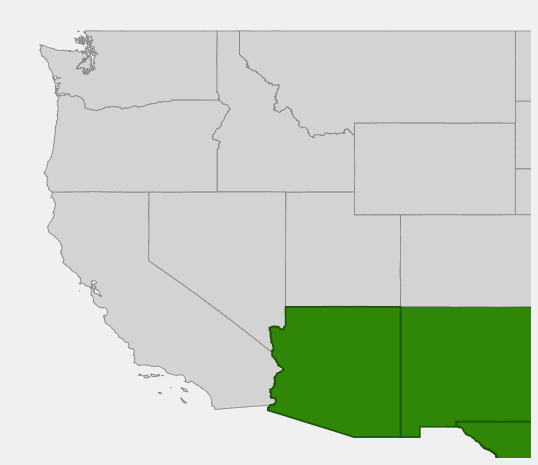
📋 Regional plant lists featuring Butterfly Mist: Arizona
Growing & Care Guide
Butterfly Mist is one of the most rewarding and versatile native wildflowers for the Southwest garden. Easy to grow, tolerant of heat and drought once established, and spectacularly effective at attracting butterflies during its long fall bloom season, it deserves a place in every southwestern wildlife garden. Given reasonable drainage and occasional water, it thrives with minimal attention from the gardener.
Light
Butterfly Mist grows and flowers best in full sun, producing denser, more upright growth and more profuse flowering in bright, sunny conditions. It tolerates partial shade (3 to 4 hours of direct sun) without significant reduction in flowering, making it more versatile than many other sun-loving natives. In very hot desert locations below 2,000 feet, afternoon shade can help prevent heat stress and maintain an attractive appearance through the peak summer period. Above 3,000 feet, full sun is ideal.
Soil & Water
Butterfly Mist is adaptable to a wide range of well-drained soils, including rocky, sandy, or gravelly native soils typical of the Chihuahuan Desert region. It does not require rich soil and may actually produce excessive leafy growth at the expense of flowers if planted in too-fertile conditions. Good drainage is essential — the plant will not tolerate waterlogged soils. Water every 1 to 2 weeks during summer (especially during establishment), tapering to monthly deep watering after the first season. Established plants in areas that receive monsoon rains (8 to 12 inches in July-August) typically need little to no supplemental irrigation during their bloom season.
Planting Tips
Plant in spring after the last frost, or in early fall for winter-hardy areas. Container-grown plants establish quickly and begin flowering in the first season. Give plants ample space — a mature clump spreads 2 to 3 feet wide. In areas where Butterfly Mist dies back to the ground in winter, leave the base undisturbed until new growth emerges in spring (typically April to May). Cut back dead tops in early spring to make way for new growth. In warmer areas where the plant is semi-evergreen, a light trim in late winter or early spring will rejuvenate the plant and encourage more compact growth.
Pruning & Maintenance
Deadheading spent flower heads is optional — the spent flowers transition to fluffy white seed heads that add decorative interest and provide food for seed-eating birds. If you want to encourage the plant to maintain a more compact form and potentially rebloom, cutting stems back by one-third after the first flush of flowering can extend the bloom season. Leave the plant standing through winter in colder areas — the dead stems help protect the root crown from freezing temperatures. Cut back to the ground in early spring. Butterfly Mist may self-seed lightly in the garden under favorable conditions; unwanted seedlings are easily removed.
Landscape Uses
Butterfly Mist is outstanding in multiple landscape settings:
- Butterfly gardens — arguably the single best native plant for attracting migrating butterflies in the fall
- Wildlife habitat plantings — attracts an extraordinary diversity of pollinators
- Water-wise gardens and xeriscapes
- Mixed perennial borders with Salvia, Desert Marigold, and native grasses
- Slopes and disturbed areas that need a low-maintenance groundcover
- Front yards and streetside plantings as a conversation piece during fall butterfly migration
- Containers — large pots allow enjoyment in patios and small spaces
Wildlife & Ecological Value
Butterfly Mist lives up to its name as one of the premier butterfly plants in the western United States, supporting an extraordinary diversity of pollinator species during its fall bloom season.
For Butterflies
No other common native plant in the Southwest attracts as many butterfly species as reliably as Butterfly Mist during its fall bloom period. Migrating Queen Butterflies and Monarch Butterflies are major visitors, using the nectar to fuel their long migration. Swallowtails (including Giant, Two-tailed, and Black Swallowtails), Skippers (many species), Checkered Whites, Painted Ladies, Gulf Fritillaries, and numerous Blues and Hairstreaks all visit the flowers enthusiastically. On warm fall days, it is not uncommon to count 10 or more butterfly species simultaneously nectaring on a single large Butterfly Mist plant.
For Bees & Other Insects
Native bees including Bumblebees, Sweat Bees, and specialist native bees are frequent visitors to the flowers. Honeybees, Wasps (including beneficial species that parasitize pest insects), Hover Flies, and Soldier Beetles also visit in abundance. The combination of accessible, tubular flowers and rich nectar production makes Butterfly Mist a true pollinator magnet that supports beneficial insect populations far beyond just butterflies.
For Birds
The fluffy, white seed heads that follow flowering are eaten by small seed-eating birds including American Goldfinch, Lesser Goldfinch, and various sparrows and warblers during fall migration. The branching stems and dense growth habit provide perching and foraging cover for warblers and other small birds passing through on fall migration.
Ecosystem Role
In the broader ecosystem, Butterfly Mist plays an important role as a fall-season nectar resource that bridges the end of the monsoon bloom season and the onset of winter. By providing abundant nectar late in the season, it supports the late-season reproduction of native bee populations and the fuel needs of migrating butterflies. Its taproot and fibrous root system contribute to soil stability on the rocky slopes it occupies naturally, and its leaf litter enriches the sparse, rocky soils of desert hillsides.
Cultural & Historical Uses
Butterfly Mist is named for Josiah Gregg (1806–1850), a pioneering American explorer, botanist, and writer whose extensive travels through the Chihuahuan Desert and northern Mexico in the 1830s and 1840s resulted in one of the first detailed botanical surveys of the region. Gregg’s plant collections, made during journeys that he documented in his celebrated 1844 book Commerce of the Prairies, provided material for numerous new species descriptions — including this mistflower — by botanist Asa Gray, who named the plant in his honor.
Indigenous peoples of the Chihuahuan Desert and Trans-Pecos regions have traditionally used various species of Eupatorium (including plants now placed in the genus Conoclinium) for medicinal purposes. Infusions of the leaves have been used to treat fevers, and the plant has been employed in various ceremonial contexts. Specific ethnobotanical documentation of Eupatorium greggii in the Southwest is limited, reflecting both the plant’s somewhat limited natural distribution and the historical lack of systematic ethnobotanical recording in this region.
In the modern landscape and gardening world, Butterfly Mist has become one of the most celebrated and widely planted native wildflowers of the Southwest. It gained widespread popularity beginning in the 1990s and 2000s as interest in native plant gardening and butterfly conservation grew. The plant is now commercially produced by numerous native plant nurseries across the Southwest and is routinely featured in public demonstration gardens, botanical gardens, and civic beautification plantings throughout the region. Its extraordinary ability to attract migratory butterflies — a dramatic and visible ecological event — makes it one of the most effective “ambassador” plants for native plant gardening in the Southwest.
Frequently Asked Questions
When does Butterfly Mist bloom?
Butterfly Mist blooms primarily from late summer through fall — typically August through October, and sometimes into November in warm years. The bloom coincides with the height of monarch and queen butterfly migration through the Southwest, making it especially valuable for butterfly gardeners. Plants generally don’t begin blooming until late in the summer growing season, so don’t be alarmed if your new plant doesn’t flower much in its first year.
Does Butterfly Mist come back every year?
Yes — Butterfly Mist is a perennial that returns reliably from the roots each spring. In colder parts of its range (Zone 8 and colder), it dies back to the ground each winter and resprouts in spring. In warmer areas (Zone 9 and warmer), it may remain semi-evergreen through mild winters. Plants typically become larger and more floriferous with each passing year.
How much water does Butterfly Mist need?
Butterfly Mist has moderate water needs — more than many desert cacti and agaves, but much less than most traditional garden perennials. In areas that receive summer monsoon rains (8 to 12 inches from July–September), established plants often need little to no supplemental irrigation. In drier areas or during establishment, water every 1 to 2 weeks during summer. Excellent drainage is essential; the plant will not survive in waterlogged conditions.
Why are so many butterflies attracted to Butterfly Mist?
Butterfly Mist produces abundant nectar that is particularly attractive to a wide range of butterfly species. The timing of its bloom — late summer and fall — coincides with peak butterfly migration through the Southwest, making it a critical fuel stop for monarchs, queens, and many other migrating species. The flower color (lavender-blue) and the flat-topped flower cluster shape are also particularly attractive to butterflies.
Can I grow Butterfly Mist from seed?
Yes — Butterfly Mist produces abundant, lightweight seeds that germinate readily. Sow seeds in spring after the last frost on the surface of moist, well-drained soil, pressing them lightly into the surface (they need light to germinate). Seeds germinate in 7 to 14 days. Plants grown from seed typically bloom in their second year. Butterfly Mist also spreads by underground rhizomes and occasionally self-seeds in the garden.

Looking for a nursery that carries Butterfly Mist?
Browse our native plant nursery directory: Arizona