Silver Beard Grass (Andropogon saccharoides)
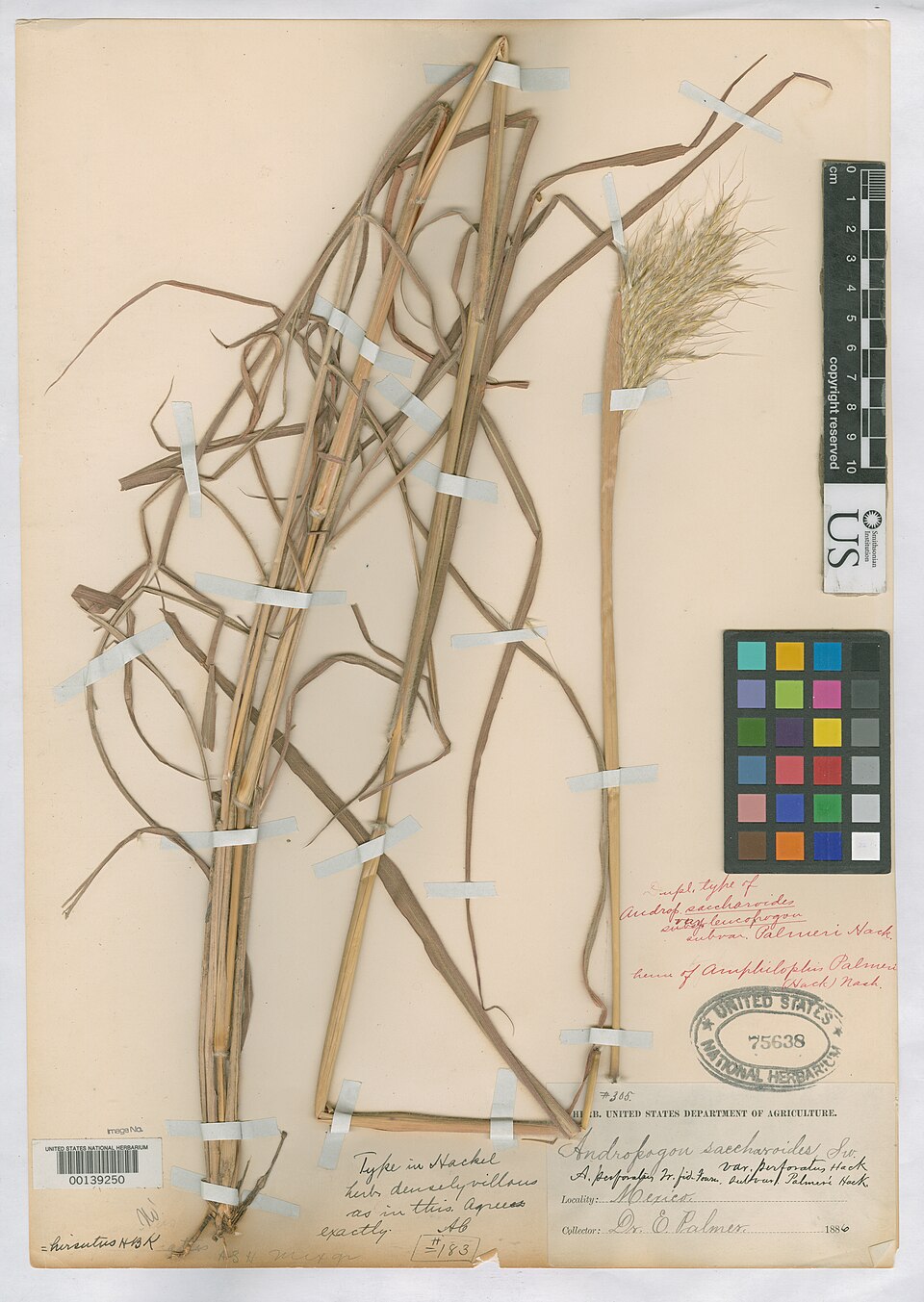
Andropogon saccharoides (syn. Bothriochloa saccharoides), commonly known as Silver Beard Grass or Silver Bluestem, is a warm-season perennial bunchgrass native to the grasslands, desert scrub, and open woodlands of the American Southwest and southern Great Plains. The common names “Silver Beard Grass” and “Silver Bluestem” refer to the plant’s most distinctive ornamental feature: its silky, silvery-white seed plumes, which appear in summer and persist through winter, catching the light and creating a shimmering display that gives the plant an unmistakable identity in the landscape.
Silver Beard Grass grows 1 to 3 feet tall in compact, upright clumps with slender blue-green stems that take on attractive reddish to copper tones in fall. It is closely related to Broomsedge Bluestem (Andropogon virginicus) and King Ranch Bluestem (Bothriochloa ischaemum), but is distinguished by its native origin and its particularly striking silver plume display. The batch notes that it is “Attractive to wildlife” and “Self-seeds freely” — two characteristics that make it both ecologically valuable and something to consider when siting it in the garden, as volunteer seedlings may appear in adjacent areas.
In Arizona and New Mexico, Silver Beard Grass is a component of the desert grassland and dry rocky hillside plant communities, particularly at lower elevations. It co-dominates with other warm-season bunchgrasses including grama grasses, plains lovegrass, and three-awns in its native grassland communities. For gardeners, it offers a native alternative to many ornamental grasses — with showy silver plumes, warm fall color, and the ecological value that comes with using a locally adapted native species. The plant’s ease of establishment, drought tolerance, and wildlife value make it an excellent choice for naturalistic and ecological gardens throughout the Southwest.
Identification
Silver Beard Grass forms erect, upright clumps of narrow stems growing 1 to 3 feet tall. Individual stems are slender, blue-green, often with a glaucous bloom, and they branch in the upper portion to produce the characteristic plume-bearing panicles. In late summer and fall, the stems and leaf blades take on warm reddish, coppery, and bronze tones as the plant matures.
Leaves
The leaf blades are flat to folded, 4 to 12 inches long and about ⅛ to ¼ inch wide, blue-green above and paler beneath. The leaf surface is essentially smooth to slightly hairy. The sheath (the base of the leaf where it wraps around the stem) is rounded, not keeled. The ligule (the membrane or fringe at the junction of blade and sheath) is a short fringe of hairs. In fall, the leaves turn from blue-green to russet, copper, and orange — creating an attractive seasonal display even before the silver plumes fully develop.
Flowers & Seed Heads
The seed heads are the plant’s most striking ornamental feature. In late summer (August–September), the stems produce paired racemes — the signature feature of the Andropogon genus — at each node of the upper portion. Each raceme bears paired spikelets, with the fertile spikelets producing long, silky, white to silver awns (bristles) that together create the plant’s characteristic silver-white plume. As the plumes mature and dry, they take on an even more silvery, silky appearance, shimmering and catching the light in any breeze. The plumes persist well into winter, providing ornamental interest long after the growing season ends.
Quick Facts
| Scientific Name | Andropogon saccharoides (syn. Bothriochloa saccharoides) |
| Family | Poaceae (Grass Family) |
| Plant Type | Warm-Season Perennial Bunchgrass |
| Mature Height | 2 ft |
| Sun Exposure | Full Sun to Part Shade |
| Water Needs | Low (Drought Tolerant) |
| Bloom Time | August – October (plumes persist through winter) |
| Flower Color | Silver-white silky plumes |
| USDA Hardiness Zones | 5–10 |
Native Range
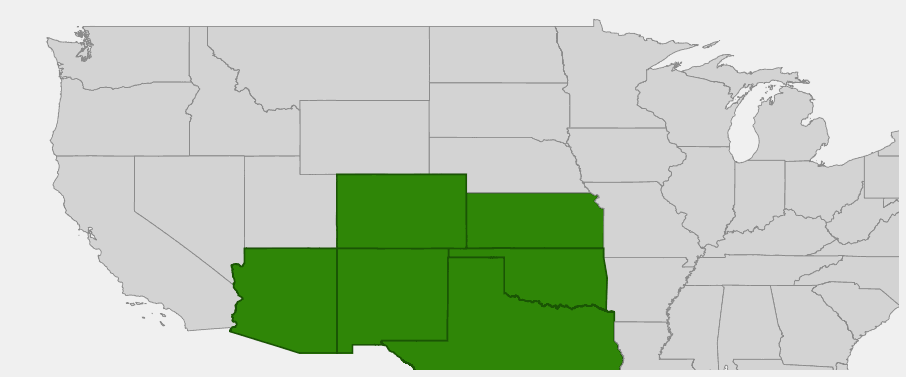
Silver Beard Grass is native to a broad swath of the American Southwest and southern Great Plains, ranging from Arizona and New Mexico east through Texas, Oklahoma, and Kansas, and extending into Colorado at the northern edge of its range. Within this territory, it occurs most consistently in the desert grassland, southern mixed-grass prairie, and dry rocky hillside plant communities at low to moderate elevations.
In Arizona, Silver Beard Grass is most common in the desert grassland zone of the southeastern part of the state — the belt of semi-arid grassland that lies between the Sonoran and Chihuahuan Deserts and the higher-elevation oak woodlands. It grows on rocky slopes, dry hillsides, and disturbed areas alongside other warm-season bunchgrasses including grama grasses, plains lovegrass, and tanglehead. At lower elevations in the Sonoran Desert proper, it becomes less common, replaced by other drought-adapted grasses.
In Texas, Silver Beard Grass is widespread across the western and central portions of the state, where it is a common component of the Edwards Plateau cedar-live oak scrubland, Trans-Pecos desert grassland, and the shortgrass prairie. In Kansas and Oklahoma, it occurs on the drier, southwestern portions of the mixed-grass prairie where it grows on shallow, rocky soils and south-facing slopes that dry out quickly between rain events.
📋 Regional plant lists featuring Silver Beard Grass: Arizona
Growing & Care Guide
Silver Beard Grass is an easy-to-grow, low-maintenance native grass for dry gardens, prairies, and naturalistic landscapes throughout the Southwest and southern Great Plains. Its combination of ornamental silver plumes, good drought tolerance, wildlife value, and ability to self-seed make it both ecologically valuable and potentially spreading — factors to consider when siting it in the landscape.
Light
Silver Beard Grass thrives in full sun and tolerates partial shade. Full sun produces the most vigorous plants with the most abundant silver plume display. In partial shade (3–4 hours direct sun), the plant grows well but may produce fewer plumes. For the most ornamental effect — and to take advantage of the light-catching quality of the silver plumes — plant where it will receive afternoon sunlight that backlights the plumes.
Soil & Water
Silver Beard Grass is adaptable to a wide range of soil types, including rocky, sandy, and gravelly desert soils as well as deeper loamy soils. Good drainage is preferred but not absolutely required. Once established, it is quite drought tolerant — surviving on natural rainfall in most Arizona and New Mexico locations. In garden settings, establishment watering (every 1–2 weeks for the first growing season) is beneficial; after that, the plant typically needs minimal or no supplemental irrigation in the Southwest.
Planting Tips
Plant or seed in spring (April–June) when soil is warm enough to trigger germination of this warm-season grass. Seed can be broadcast and raked in for erosion control or prairie restoration. For individual garden plants, container stock spaced 18–24 inches apart provides the best effect. Be aware that Silver Beard Grass self-seeds freely (as noted in the batch data) — place it where volunteer seedlings can be tolerated or easily removed, or deadhead before seeds fully mature to reduce spread.
Pruning & Maintenance
Cut back to 4–6 inches in late winter (February–March) before new growth begins. This removes the old, dried foliage and plumes, making room for fresh new growth. The silver plumes are ornamentally valuable through winter — a major reason to leave the plant uncut until late winter. After cutting back, the plant re-grows rapidly from its root crown as temperatures warm in spring. Silver Beard Grass is essentially maintenance-free beyond this annual cutback.
Landscape Uses
- Ornamental grass specimen — the silver plumes are exceptionally showy in late summer through winter
- Prairie or meadow restoration — key component of southwestern desert grassland mixes
- Erosion control — fibrous roots stabilize dry slopes and disturbed areas
- Wildlife garden — seeds attract numerous bird species; dense clumps provide small mammal cover
- Naturalistic drifts — plant in mass for a dramatic silver display in fall
- Back-lighting effects — backlit silver plumes are spectacular; site where afternoon sun catches them
Wildlife & Ecological Value
Silver Beard Grass lives up to its batch description of being “Attractive to wildlife” — the dense clumps, nutritious seeds, and open grassland structure it creates support a diverse community of birds, mammals, and insects throughout the year.
For Birds
The seeds of Silver Beard Grass are consumed by numerous seed-eating birds, including Horned Larks, Western Meadowlarks, Grasshopper Sparrows, Cassin’s Sparrows, Scaled Quail, and various finches and sparrows. The dense clumps provide excellent ground-level cover for nesting Grasshopper Sparrows, Scaled Quail, and other ground-nesting birds. During winter, the persistent seed plumes continue to provide food long after many other grass seeds have been consumed or dispersed.
For Mammals
Pronghorn, Mule Deer, and various grassland rodents consume the seeds and foliage. The dense bunches of Silver Beard Grass provide cover and runways for Hispid Pocket Mice, Ord’s Kangaroo Rats, and other small rodents that are critical prey for hawks, owls, and coyotes. Jackrabbits and Desert Cottontails shelter within large clumps during the heat of the day.
For Pollinators
Like most grasses, Silver Beard Grass is wind-pollinated and offers limited direct value to nectar-seeking pollinators. However, the diverse insect community associated with the grasslands it helps create — including grasshoppers, beetles, crickets, and caterpillars — provides critical food for insectivorous birds, lizards, and other wildlife that depend on the productivity of native grassland communities.
Ecosystem Role
Silver Beard Grass is an important component of desert grassland and dry prairie ecosystems, contributing to soil stability through its fibrous root system, building soil organic matter as old stems decompose, and providing structural complexity in the otherwise low-growing grassland layer. Its ability to self-seed freely is both a garden management consideration and an ecological asset — in disturbed desert grasslands, the plant’s tendency to volunteer and spread helps colonize bare ground and restore plant cover after disturbance.
Cultural & Historical Uses
Silver Beard Grass and related bluestem grasses were central components of the great American grasslands that supported the vast bison herds and, through them, the cultures of Plains and Southwestern peoples. While individual grass species were not always distinguished in historical accounts, the grama and bluestem grasses collectively formed the ecological foundation — the “sea of grass” — that made the Great Plains and southwestern grasslands among the most productive grazing ecosystems on Earth.
The dried stems and leaves of Silver Beard Grass and related bluestems were used by various Native peoples for thatching, weaving, and as bedding material. The seeds, while small, were nutritious and were sometimes collected as a wild grain in times of food scarcity. The grass’s ability to cure on the standing plant — maintaining nutritional value through winter — was recognized by Indigenous peoples who managed grasslands through periodic burning to stimulate fresh, nutritious spring growth for both wild game and domestic horses.
Today, Silver Beard Grass is valued primarily for its ecological and ornamental qualities. It is increasingly included in native seed mixes for southwestern grassland restoration projects, particularly in degraded or invaded grasslands where its drought tolerance and self-seeding ability are assets for rapid revegetation. Landscape designers are increasingly discovering its ornamental value — the silver plumes rival those of many cultivated ornamental grasses, while providing far greater ecological benefit and requiring less maintenance.
Frequently Asked Questions
Will Silver Beard Grass become invasive in my garden?
Silver Beard Grass is a native species and technically not “invasive” in an ecological sense, but it does self-seed freely (as noted in the batch description). In garden settings, volunteer seedlings may appear beyond the intended planting area. Deadheading before seeds fully mature, or placing the plant in areas where naturalistic spreading is acceptable, helps manage this. In naturalistic gardens and prairie restorations, the self-seeding behavior is a positive attribute.
When is the best time to enjoy Silver Beard Grass?
The most spectacular display is from late summer through winter (August–February), when the silver plumes reach peak development and persist. The plumes catch the light beautifully, especially when backlit by low-angle afternoon or morning sun. Fall color on the foliage (russet, copper, bronze tones) adds to the display from October onwards. The growing season foliage is attractive in a quieter way — blue-green and upright through summer.
Is Silver Beard Grass the same as Silver Bluestem?
Yes — Silver Beard Grass (Andropogon saccharoides, syn. Bothriochloa saccharoides) is the same plant commonly called Silver Bluestem. Both common names refer to the same species. The name “Silver Beard Grass” emphasizes the silvery plumes; “Silver Bluestem” places it taxonomically with other bluestem grasses. The synonym Bothriochloa saccharoides reflects historical confusion about its generic placement.
How does Silver Beard Grass compare to Broomsedge Bluestem?
Broomsedge Bluestem (Andropogon virginicus) is a closely related eastern species that has become invasive in parts of the Southwest where it was introduced. Native Silver Beard Grass is preferable to Broomsedge in southwestern gardens because it is locally adapted, supports native insects and wildlife more effectively, and is not spreading aggressively beyond its native range. When sourcing seed or plants, be sure to obtain native Silver Beard Grass rather than Broomsedge.
Does Silver Beard Grass tolerate foot traffic?
No — Silver Beard Grass is not suited to lawn or foot-traffic areas. It is best used as a background plant, in mass plantings, or in naturalistic areas where foot traffic is minimal. The clumping form and delicate plumes are easily damaged by repeated trampling. Use it in borders, prairie plantings, or naturalistic edges rather than open lawn areas.

Looking for a nursery that carries Silver Beard Grass?
Browse our native plant nursery directory: Arizona