Purple Aster (Machaeranthera bigelovii)
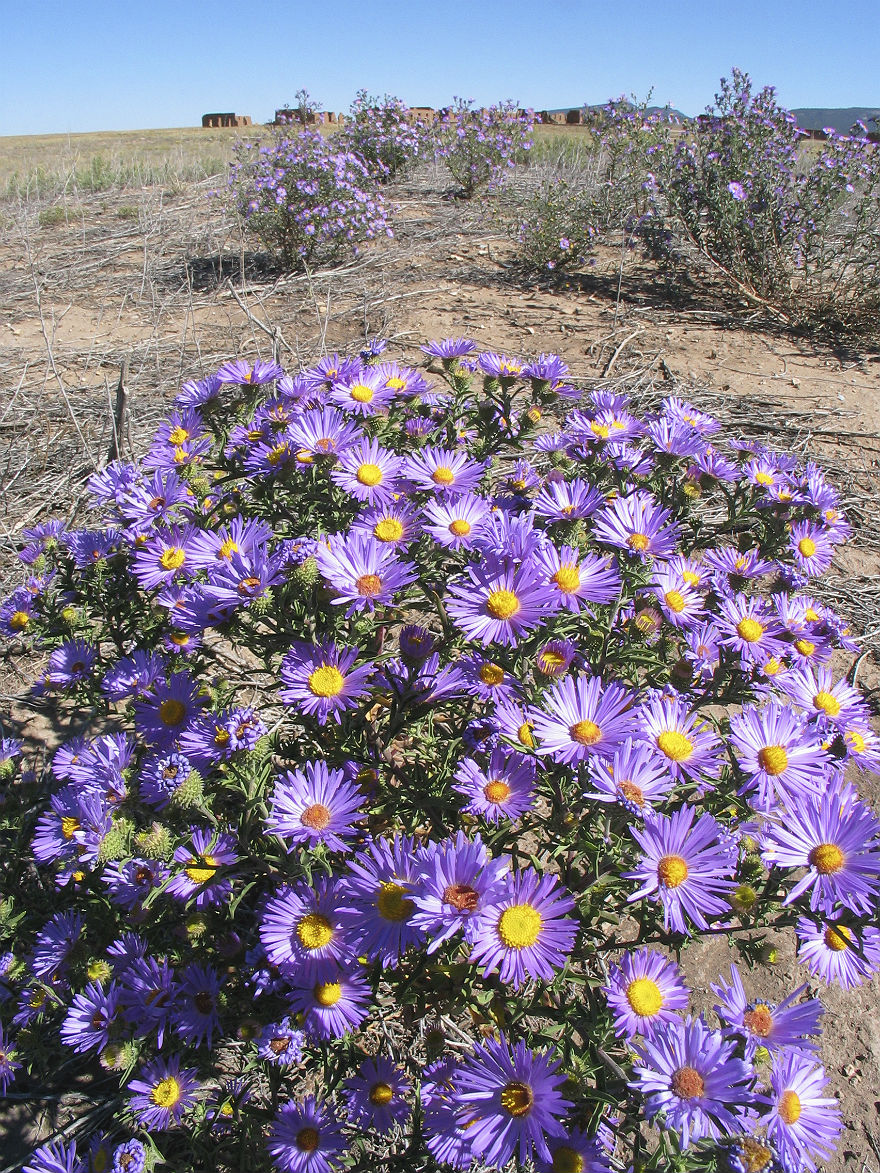
Machaeranthera bigelovii (syn. Aster bigelovii), commonly known as Purple Aster, Bigelow’s Aster, or Bigelow’s Tansyaster, is a cheerful and prolific native wildflower of the desert Southwest that transforms desert meadows and open hillsides into waves of lavender-purple from late summer through fall. Named in honor of Dr. John Milton Bigelow (1804–1878), a physician and botanist who participated in the Pacific Railroad Survey and collected specimens throughout the Southwest in the 1850s, this native aster is a vital late-season nectar and pollen source for migrating butterflies, native bees, and other pollinators preparing for winter.
Purple Aster grows about 2.5 feet tall, forming a bushy, upright plant covered with small, daisy-like flowers with lavender to purple ray petals surrounding a golden-yellow central disk. The plant blooms from August through October — primarily in response to the summer monsoon rains that drench the desert Southwest each summer — and reseeds prolifically, naturalizing readily across open, disturbed, and rocky desert grassland habitats. In years with good monsoon rainfall, Purple Aster can carpet open areas with a spectacular purple haze that rivals any cultivated garden display.
For desert gardeners in Arizona, New Mexico, Colorado, and Texas, Purple Aster is an exceptional and underutilized native wildflower. Its willingness to self-sow, its long bloom season, its heat and drought tolerance, and its extraordinary value to late-season pollinators make it an ideal component of native plant gardens, pollinator habitats, and desert meadow plantings. The plant requires minimal care once established and actually performs best in lean, well-drained desert soils without supplemental fertilization.
Identification
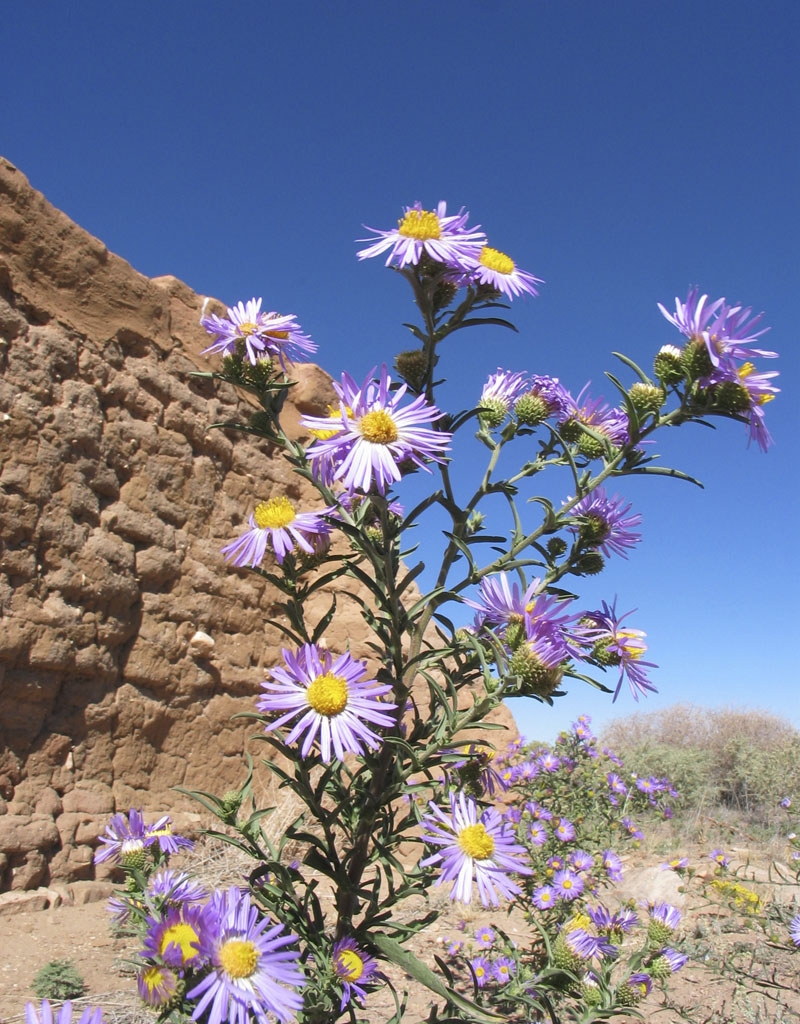
Purple Aster is an upright, branching annual or short-lived perennial herb growing 1.5–2.5 feet tall. The plant has a somewhat glandular, slightly sticky character, with resinous compounds on the stems and leaves giving it a faint distinctive scent. The overall appearance is that of a bushy, well-branched wildflower covered with small daisy flowers.
Leaves
The leaves are narrow to lance-shaped, 1–3 inches long, with toothed or slightly wavy margins. They are somewhat glandular and may have a sticky feel when touched. Lower leaves are often larger and may be slightly clasping around the stem. The leaves are medium green and become smaller and simpler as they ascend the stem. The glandular character is typical of the genus Machaeranthera, distinguishing these tansyasters from true asters (genus Symphyotrichum).
Flowers & Seeds
The flower heads are composite structures, each about ¾–1 inch across. The ray florets (petals) are lavender to purple, numbering 15–25 per head. The central disk florets are bright yellow, creating the classic daisy appearance. Flowers are produced in abundance on well-branched stems, with each plant capable of producing dozens to hundreds of individual flower heads. After pollination, seeds are small achenes with fluffy pappus bristles that allow wind dispersal. Seeds are produced abundantly and the plant reseeds prolifically — one reason it naturalizes so readily and easily in suitable habitats.
Quick Facts
| Scientific Name | Machaeranthera bigelovii (syn. Aster bigelovii) |
| Family | Asteraceae (Daisy / Sunflower Family) |
| Plant Type | Annual or Short-Lived Perennial Herb |
| Mature Height | 2.5 ft |
| Sun Exposure | Full Sun |
| Water Needs | Low (Drought Tolerant) |
| Bloom Time | August – October |
| Flower Color | Lavender to Purple with Yellow Center |
| USDA Hardiness Zones | 5–9 |
Native Range
Purple Aster is native to the semi-arid regions of the southwestern United States, occurring in Arizona, New Mexico, Colorado, and Texas. It grows primarily in the transitional zones between desert grasslands and pinyon-juniper woodlands, at elevations from about 4,000 to 8,000 feet — higher than most true desert plants, reflecting its adaptation to the slightly cooler, moister conditions of the upper Sonoran and lower montane life zones.
In Arizona, Purple Aster is most common in the central highlands, along the Mogollon Rim, and in the sky island mountain grasslands of the southeast. In New Mexico, it ranges widely across the state’s grassland and open woodland zones. In Colorado, it occurs in the southern counties along the New Mexico border. Throughout its range, it grows in open disturbed areas, roadsides, desert grasslands, and rocky slopes where the summer monsoon provides adequate moisture for its late-summer growth and bloom cycle.
Purple Aster thrives in areas that receive 12–20 inches of annual precipitation, with a strong summer monsoon component. It is well-adapted to the dramatic temperature swings of the high desert — tolerating both the extreme summer heat of desert grassland days and the freezing nights that occur even in summer at higher elevations. The plant’s prolific reseeding allows it to rapidly colonize disturbed soils and form impressive wildflower displays in favorable years.
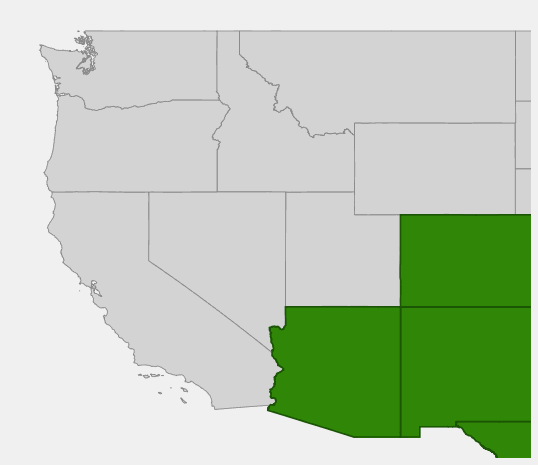
📋 Regional plant lists featuring Purple Aster: Arizona
Growing & Care Guide
Purple Aster is one of the easiest and most rewarding native wildflowers for desert gardens in the Southwest. Plant it once, and it will self-sow and return year after year with minimal effort.
Light
Full sun is required for best flowering. Purple Aster grows on open, exposed desert hillsides and grasslands and performs best with maximum sunlight exposure. In partial shade, the plant becomes leggy and produces fewer flowers. Choose a sunny, open location for this wildflower.
Soil & Water
Purple Aster thrives in rocky, gravelly, or sandy well-drained soils. It actually performs better in lean, dry soils than in rich, amended garden soils — the leaner the soil, the more flowers and the more compact the plant. Once established, it is highly drought-tolerant and will survive on monsoon rainfall alone in most Arizona and New Mexico locations. Supplemental watering in the weeks before blooming can improve flower production but is not necessary. Avoid clay soils and consistently moist conditions.
Planting Tips
Sow seeds directly in fall (October–November) for spring germination, or start indoors 6–8 weeks before the last frost. Plant in well-drained soil in full sun. Space plants 12–18 inches apart, though they will self-sow and fill in naturally. Allow some seed to drop at the end of the season for next year’s display. Container-grown plants can be transplanted in spring. Purple Aster works particularly well in naturalistic wildflower seedings mixed with other native grasses and wildflowers.
Pruning & Maintenance
Deadhead spent flowers to extend the bloom season, or leave flowers to produce seed for natural reseeding. Cut plants back by half in midsummer (July) to encourage a compact, well-branched form and better flowering. If plants become too tall and floppy, pinching back growing tips in early summer promotes bushier growth. Allow seeds to disperse at season’s end for natural naturalization. No fertilization required — Purple Aster actually blooms more prolifically in lean soils.
Landscape Uses
- Desert wildflower meadows — naturalizes beautifully in open areas
- Pollinator gardens — critical late-season nectar source
- Roadside and slope plantings — excellent for naturalistic revegetation
- Cut flower garden — stems hold well in arrangements
- Wildlife gardens — seeds important for birds, flowers for pollinators
Wildlife & Ecological Value
Purple Aster is one of the most ecologically important late-season wildflowers of the desert Southwest, providing critical resources when most other flowers have finished blooming.
For Birds
The fluffy, wind-dispersed seeds of Purple Aster are consumed by American Goldfinches, Lesser Goldfinches, sparrows, and other small seed-eating birds. The seeds persist on the plant into winter, providing a food source after other seed crops have been depleted. Insect-eating birds also benefit from the abundant insects attracted to the flowers.
For Mammals
Small rodents and mice collect Purple Aster seeds as winter food stores. The plant’s low, bushy form provides ground-level cover for small desert mammals and lizards. Deer generally avoid the sticky, slightly aromatic foliage.
For Pollinators
Purple Aster is exceptionally valuable for late-season pollinators. Its August–October bloom period coincides with the southward migration of monarch butterflies through the Southwest, and it is an important nectar source for migrating monarchs and painted ladies. Native bees — including digger bees, sweat bees, bumblebees, and many specialist aster bees — visit the flowers intensively for both nectar and pollen. The flowers are particularly important for building up fat reserves before winter dormancy or migration.
Ecosystem Role
As a prolific reseeder, Purple Aster plays an important role in desert grassland pioneer communities — rapidly colonizing disturbed soils, roadsides, and fire-affected areas. Its dense seasonal growth provides temporary cover that helps stabilize soils and creates conditions favorable for the establishment of longer-lived native plants. In natural communities, it fills an important ecological niche as a late-season flowering species when pollinator demand for nectar and pollen is high and supply from other plants is declining.
Cultural & Historical Uses
Native asters, including species of Machaeranthera, were used by several southwestern Indigenous peoples for both medicinal and ceremonial purposes. Various Pueblo peoples used aster preparations as part of traditional healing ceremonies and herbal medicine. The Navajo used related aster species as life medicine — preparations taken for general health and vitality. Aster flowers were used in ceremonial contexts as decorative elements and offerings, reflecting their cultural significance in southwestern Indigenous traditions.
The species is named for Dr. John Milton Bigelow (1804–1878), a physician and botanist who served as the medical officer on the Whipple expedition of 1853–1854, which surveyed a route for a transcontinental railroad along the 35th parallel from Fort Smith, Arkansas, to Los Angeles. Bigelow collected thousands of plant specimens during this expedition across the Southwest, and many species discovered on the journey bear his name — a lasting tribute to his contributions to the botanical knowledge of the region.
Modern desert botanists and ecologists have recognized Purple Aster’s value in restoration ecology — particularly its ability to rapidly colonize disturbed desert grassland soils and provide immediate pollinator and wildlife value during the establishment phase of restoration plantings. Its prolific self-seeding can actually be exploited in restoration work: broadcasting Purple Aster seed into disturbed desert areas can quickly establish a native wildflower component that persists and spreads over time, improving site quality for both wildlife and eventual native plant community development.
Frequently Asked Questions
Is Purple Aster an annual or perennial?
Purple Aster behaves as an annual or short-lived perennial depending on conditions. In its native range, it often overwinters as a perennial rosette, coming back for several years. In cultivation, it reliably reseeds and naturalizes, so a planting will continue to thrive year after year even if individual plants are short-lived.
When does Purple Aster bloom?
Purple Aster blooms from August through October, with peak flowering in September in most of its range. The bloom timing is closely tied to summer monsoon rains — plants that receive good monsoon moisture produce the most abundant flowering. It is one of the last native wildflowers to bloom in the desert Southwest, making it especially valuable for late-season pollinators.
Why is my Purple Aster floppy?
Floppy, leggy growth in Purple Aster usually results from too much shade, too much water, or too rich soil. This wildflower performs best in full sun with lean, dry, well-drained soil. Pinch back growing tips in early summer to promote more compact, bushy growth. Also, plants in their first year may be more lax than established specimens.
Will Purple Aster come back every year?
Yes — Purple Aster reseeds prolifically and will return year after year in suitable conditions. Allow seeds to drop at the end of the season and some seed will germinate the following spring, maintaining the planting indefinitely. Individual plants may live 1–3 years, but new seedlings continuously replace them.
Is Purple Aster good for monarch butterflies?
Yes! Purple Aster is an important late-season nectar source for migrating monarch butterflies passing through the Southwest in September and October. Its August–October bloom period aligns almost perfectly with monarch migration timing, making it an excellent plant for supporting monarch conservation.

Looking for a nursery that carries Purple Aster?
Browse our native plant nursery directory: Arizona