Dwarf Huckleberry (Gaylussacia dumosa)
Gaylussacia dumosa, commonly called Dwarf Huckleberry or Gopherberry, is a low-growing native shrub that forms spreading mats and colonies across the sandy, acidic soils of the eastern and southeastern United States. A member of the Ericaceae (heath) family, it was named in honor of French chemist Joseph Louis Gay-Lussac, and dumosa refers to its bushy, mat-forming habit. Unlike its taller huckleberry relatives, Dwarf Huckleberry rarely exceeds 4 feet in height, but compensates for its modest stature with reliable spring flowers, edible summer fruit, and spectacular fall foliage.
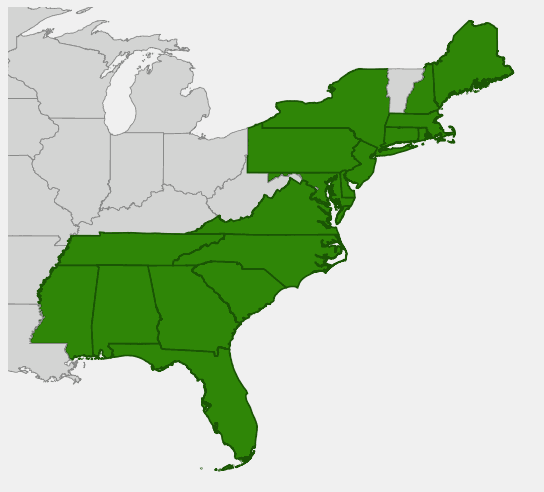
Across its range from Maine to Florida and west to Mississippi and Tennessee, Dwarf Huckleberry is a plant of open, fire-adapted ecosystems — longleaf pine flatwoods, coastal scrub, pine barrens, and the margins of bogs and pocosins. Like many members of the heath family, it thrives in the nutrient-poor, acidic soils where other plants struggle to compete. Its deep root system is fire-resistant, and after periodic burning it resprouts vigorously, making it one of the defining understory species of the great longleaf pine savannas that once swept across the coastal plain from Virginia to Texas.
For gardeners, Dwarf Huckleberry offers a triple season of interest: bell-shaped pink flowers in spring that attract native bees, small black fruits that ripen in midsummer and provide food for birds and wildlife (edible for humans — sweet and tangy, excellent in pies and jams), and brilliant red to scarlet fall color that rivals any ornamental shrub. Its spreading, clonal habit makes it ideal as a groundcover or bank stabilizer, and its adaptability to sandy, acidic soils fills a landscape niche that few other native plants can match.
Identification
Dwarf Huckleberry is a low-growing deciduous shrub, typically reaching 1 to 4 feet tall with an equally wide or wider spread. It spreads by underground rhizomes, forming dense colonies in favorable habitat. The overall form is mounding to spreading, with multiple upright stems arising from the rhizomatous root system. Young stems are covered in gland-tipped hairs — a distinctive feature that immediately separates it from related huckleberries.
Leaves
The leaves are simple, alternate, and deciduous, oval to obovate (wider above the middle), ¾ to 1½ inches long. The surface is covered in distinctive resin dots (glands) visible with a hand lens on both surfaces — a characteristic of the genus Gaylussacia. The upper surface is medium green; the lower surface is paler. In autumn, the foliage transforms to brilliant shades of red, orange, and scarlet, making the plant one of the most colorful fall shrubs in the native plant palette. These resin dots distinguish Gaylussacia species from the closely related blueberries (Vaccinium).
Flowers
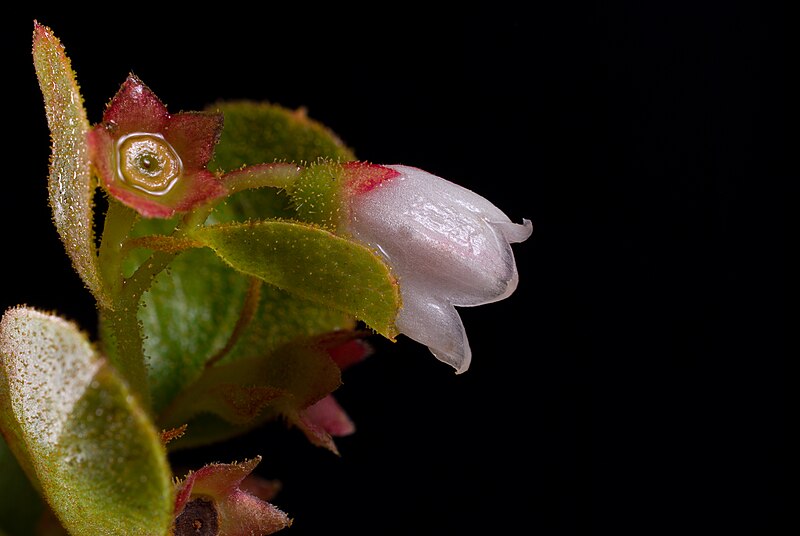
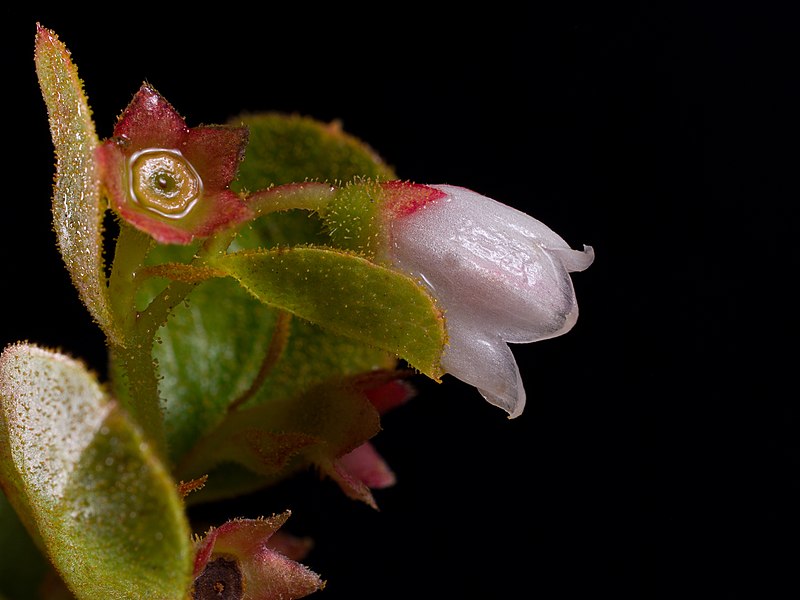
The flowers appear in May and June, borne in drooping racemes on short, leafy branchlets. Each flower is small (¼ inch long), urn- or bell-shaped, and ranges from white to pink or pale red — the five petals are fused into a tube with small reflexed lobes at the tip. The drooping flower clusters are attractive to a range of small native bees, bumblebees, and blueberry bees that specialize in vibratile (buzz) pollination of ericaceous plants.
Fruit
The fruits ripen in July and August as small, round, blue-black berries about ¼ inch in diameter, covered with a slight waxy bloom. The interior contains 10 large, hard seeds — a key distinction from blueberries, which have many tiny, barely perceptible seeds. Despite the seeds, the berries are quite palatable — sweet, tangy, and aromatic. They are consumed eagerly by wildlife including birds, box turtles, bears, foxes, and small mammals. Indigenous peoples harvested the berries as a food source, and they remain perfectly edible today.
Quick Facts
| Scientific Name | Gaylussacia dumosa |
| Family | Ericaceae (Heath) |
| Plant Type | Deciduous Shrub |
| Mature Height | 4 ft |
| Sun Exposure | Full Sun to Part Shade |
| Water Needs | Low to Moderate |
| Bloom Time | April – June |
| Flower Color | White to pink |
| Fall Color | Brilliant red to scarlet |
| Fruit | Black berries; edible |
| USDA Hardiness Zones | 5–9 |
Native Range
Dwarf Huckleberry ranges widely across the eastern United States, from southern Maine and New Hampshire south through the Atlantic Coastal Plain to Florida, and west through the Gulf Coastal Plain to Mississippi and Tennessee. The species is most abundant and diverse in the southeastern states — particularly in the longleaf pine savannas, coastal scrub, and pine flatwoods of the Carolinas, Georgia, Florida, and Alabama — but extends northward into the New England Pine Barrens (especially in New Jersey and Cape Cod, Massachusetts) where similar sandy, acidic habitats occur.
Throughout its range, Dwarf Huckleberry is tightly associated with fire-maintained, open, acidic ecosystems. It is often found growing alongside other characteristic heathland species: Bearberry (Arctostaphylos uva-ursi) in the north, various blueberries (Vaccinium spp.), Gallberry (Ilex glabra), Staggerbush (Lyonia mariana), and Wiregrass (Aristida stricta). In the Piedmont, it occurs more sparsely in rocky outcrops and sandy clearings within mixed oak-hickory forests. The plant is notably absent from the rich, loamy soils of the Interior Plains and most of the Midwest.
Dwarf Huckleberry’s distribution has contracted somewhat from historical levels due to fire suppression, which allows taller shrubs and trees to shade it out. Coastal development and wetland drainage have also reduced habitat in some areas. However, the species remains common and secure across most of its range, benefiting from increasing interest in prescribed burning and longleaf pine restoration throughout the Southeast.
📋 Regional plant lists featuring Dwarf Huckleberry: Alabama, Georgia & Mississippi
Growing & Care Guide
Dwarf Huckleberry is one of the most rewarding native groundcover shrubs for the right site. While it has specific soil requirements, once properly established it is essentially maintenance-free, providing food for wildlife and seasonal beauty for decades. The key to success is providing the acidic, sandy or well-drained soil and open sun conditions that this fire-adapted plant evolved in.
Light
Full sun to part shade are equally suitable, though flowering and fruiting are best in full sun. In partial shade, the plant is less floriferous but still attractive, and the fall color remains spectacular. Avoid dense shade — Dwarf Huckleberry evolved under open pine canopies and requires at least four to six hours of direct sun for best performance.
Soil & Water
Soil acidity is the most critical factor — Dwarf Huckleberry requires pH 4.5 to 5.5 and will slowly decline in neutral or alkaline soils. Sandy, well-drained, and even dry soils are preferred, though the plant also tolerates seasonally moist conditions. Do not plant in heavy clay or regularly irrigated gardens with alkaline water. If your native soil is not acidic, amend with sulfur, pine bark, or acidic peat. Once established, the plant is quite drought-tolerant thanks to its deep, extensive rhizome system.
Planting Tips
Plant Dwarf Huckleberry in fall or early spring from container stock. Mulch with pine straw or acidic bark chips to maintain soil moisture and acidity. For groundcover use, plant 3–4 feet apart and allow to spread naturally via rhizomes. The plant spreads slowly but steadily, eventually forming a dense, weed-suppressing mat. Avoid disturbing the soil around established plants, as this can damage the shallow rhizome system.
Pruning & Maintenance
Dwarf Huckleberry requires very little maintenance. An annual light shearing in late winter or early spring can keep the plant tidy and encourage denser growth. Periodic cutting to the ground in late winter (mimicking natural fire) invigorates older plants and promotes fresh growth with better flowering and fruiting. This “coppicing” technique is highly effective for maintaining vigor in older plantings. No regular fertilization is needed — standard garden fertilizers can harm the plant by raising soil pH.
Landscape Uses
- Acidic soil groundcover — excellent for covering slopes and banks
- Edible landscape — fruit is sweet and wildlife-valuable
- Fire-adapted gardens — ideal for longleaf pine savannas and restoration
- Fall color accent — one of the best native shrubs for red fall foliage
- Pine barrens gardens — authentic to sandy soil ecosystems
- Pollinator gardens — spring flowers attract native bees
Wildlife & Ecological Value
Dwarf Huckleberry is an ecologically critical species in the fire-adapted communities where it grows, providing food for wildlife across three distinct seasons and structural habitat that supports dozens of invertebrate species.
For Birds
The ripe black berries are consumed by dozens of bird species, including Eastern Bluebird, American Robin, Gray Catbird, Brown Thrasher, Eastern Towhee, Prairie Warbler, and various thrushes during fall migration. The dense, low thickets provide excellent nesting habitat for ground-nesting birds and shrub-nesters. In the Southeast, Bachman’s Sparrow — a threatened species closely tied to longleaf pine habitat — uses Dwarf Huckleberry thickets for nesting and foraging.
For Mammals
Black bears are major consumers of Dwarf Huckleberry fruit. White-tailed deer browse the foliage, but the plant’s low stature means it is not a dominant browse plant. Box turtles and gopher tortoises are particularly important fruit consumers in the Southeast. Gray foxes, raccoons, and opossums also consume the berries when available.
For Pollinators
The bell-shaped spring flowers are highly attractive to bumblebees and specialist native bees including blueberry bees (Habropoda laboriosa) and mining bees (Andrena spp.) that use vibratile (buzz) pollination to efficiently collect pollen from ericaceous flowers. Honey bees also visit the flowers. The flowers provide an important early-season nectar and pollen source in the sandy, open habitats where conventional garden plants rarely grow.
Ecosystem Role
Dwarf Huckleberry is a keystone species of the longleaf pine understory. Its extensive rhizome system stabilizes sandy soils and prevents erosion. Its leaf litter, combined with that of wiregrass and other understory plants, creates the fine-fuel load necessary for low-intensity surface fires to carry through the landscape — the very fires that maintain the open, sunlit conditions the plant requires. In this way, Dwarf Huckleberry is part of a self-maintaining ecological system, one of the most elegant examples of mutualistic co-evolution between plants and fire regimes in North American ecology.
Cultural & Historical Uses
Indigenous peoples throughout the eastern seaboard harvested Dwarf Huckleberry berries as an important late-summer food source. The berries were eaten fresh, dried for winter storage, and incorporated into pemmican and other preserved food preparations. Various southeastern nations — including the Cherokee, Catawba, Creek, and Choctaw — had specific terms for huckleberry species and incorporated them into their food cultures and ceremonies. The berries were also used medicinally: preparations from the leaves and berries were used to treat stomach ailments and urinary tract issues.
European settlers quickly adopted huckleberry harvesting from Indigenous peoples and developed their own culinary traditions around the fruit. “Huckleberry pie,” “huckleberry pudding,” and “huckleberry jam” became staples of rural Southern cooking throughout the 18th and 19th centuries. The berries were gathered by the pailful from the abundant pine flatwood stands that covered millions of acres of the Coastal Plain before fire suppression and development dramatically reduced these ecosystems in the 20th century.
The cultural significance of huckleberries is perhaps most memorably captured in American literature — most famously through Mark Twain’s “Huckleberry Finn,” where the character’s name evokes associations with wildness, freedom, and the untamed American landscape. The phrase “I’m your huckleberry,” meaning “I’m just the right person for the job,” reflects the berry’s association with adaptability and toughness. Today, Dwarf Huckleberry is experiencing renewed appreciation as both a valuable native plant for ecological restoration and an underutilized edible fruit plant for the sustainable home landscape.
Frequently Asked Questions
Are Dwarf Huckleberry berries safe to eat?
Yes, the berries are edible and palatable — sweet, tangy, and aromatic, similar to blueberries but with a slightly different flavor and texture due to the 10 hard seeds inside each berry. They can be eaten fresh, cooked into pies and jams, or dried for later use. No toxic look-alikes closely resemble this species in its natural habitat.
What is the difference between huckleberries and blueberries?
The key difference is in the seeds: huckleberries (Gaylussacia spp.) have 10 large, hard, bony seeds per berry, while blueberries (Vaccinium spp.) have many tiny, barely noticeable seeds. The leaves of huckleberries also have distinctive resin dots absent in blueberries. In terms of taste and ecological value, the two genera are very similar.
How do I control Dwarf Huckleberry spreading into unwanted areas?
Dwarf Huckleberry spreads by underground rhizomes and can colonize significant areas over time. To control spread, install a root barrier (8–12 inches deep) along the perimeter of the planting, or simply remove unwanted shoots/sprouts when they appear. The rhizomes are relatively shallow and easy to sever with a flat spade.
Why isn’t my Dwarf Huckleberry fruiting well?
Poor fruiting is usually caused by insufficient sunlight (the plant needs at least 6 hours for good fruiting), soil pH above 5.5, or insufficient cross-pollination. Plant two or more plants from different genetic sources to maximize pollination and fruit set. Buzz-pollinating bees (bumblebees and specialist natives) are most effective at pollinating the flowers — maintaining a diverse native pollinator population in your garden improves yields.
Does Dwarf Huckleberry tolerate wet conditions?
Yes — the species naturally occupies habitats ranging from dry sandy soils to seasonally wet flatwoods and bog margins, making it highly adaptable to variable soil moisture. However, it does not tolerate permanently saturated or anaerobic soil conditions. Brief flooding (days to weeks) is tolerated; permanent standing water is not.

Looking for a nursery that carries Dwarf Huckleberry?
Browse our native plant nursery directory: Alabama · Georgia · Mississippi