Bigleaf Gallberry Holly (Ilex coriacea)
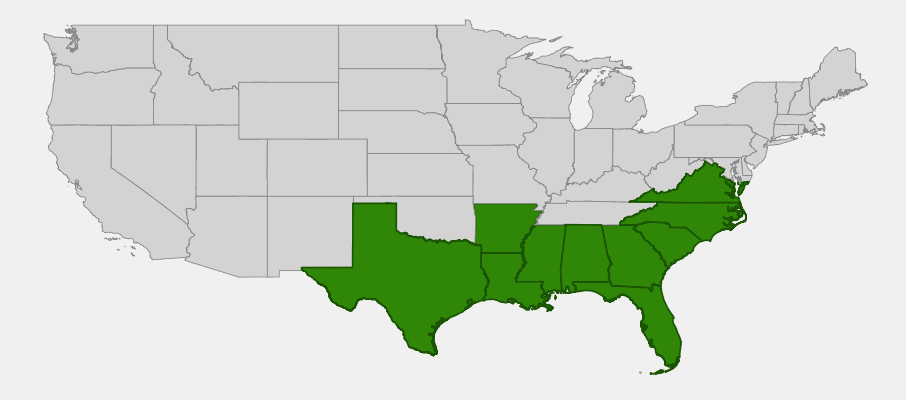
Ilex coriacea, commonly known as Bigleaf Gallberry Holly or Large Gallberry, is a robust native evergreen shrub belonging to the Aquifoliaceae (holly) family. Native to the coastal plain of the southeastern United States, this striking plant grows from Virginia south through the Carolinas, Georgia, Florida, and westward to Texas, thriving especially in wet flatwoods, bays, and pocosins. While its cousin the inkberry (Ilex glabra) gets more garden attention, Bigleaf Gallberry is a powerhouse plant for wildlife — producing abundant large black drupes that are eagerly consumed by songbirds, game birds, and small mammals throughout winter.
Bigleaf Gallberry grows as a dense, multi-stemmed shrub reaching up to 15 feet tall, forming thickets in wet, acidic soils. Its leathery, spine-tipped leaves — larger and more prominently toothed than those of inkberry — give the plant its common names. The small, inconspicuous white flowers bloom in spring, attracting native bees and other pollinators. By fall, the branches are laden with glossy black fruits that persist through winter, providing critical sustenance for wildlife when other food sources are scarce. The plant’s dense structure also offers valuable nesting habitat and thermal cover for birds.
In the native garden, Bigleaf Gallberry serves multiple roles: it functions as a large specimen shrub, a screening hedge, or a naturalistic border plant along the edges of wet areas. It is notably adaptable, tolerating conditions from wet seeps and seasonally flooded depressions to drier upland sites, and it accepts full sun to partial shade with equal grace. For gardeners in the Southeast looking to maximize wildlife value while planting something truly native to the region, Bigleaf Gallberry Holly deserves serious consideration.
Identification
Bigleaf Gallberry is a large evergreen shrub, typically reaching 8 to 15 feet in height, though occasionally taller. It spreads by root sprouts to form dense thickets. The overall form is upright to spreading, with multiple ascending stems arising from the base. It can be distinguished from its close relative inkberry (Ilex glabra) by its larger leaves, more prominent leaf teeth, and the greater size of its fruit.
Bark & Stems
The bark on older stems is gray to dark gray and lightly textured. Young twigs are green to reddish-brown, becoming grayish with age. The stems are moderately stout. When plants form thickets, the dense interlacing of branches provides excellent cover for wildlife.
Leaves
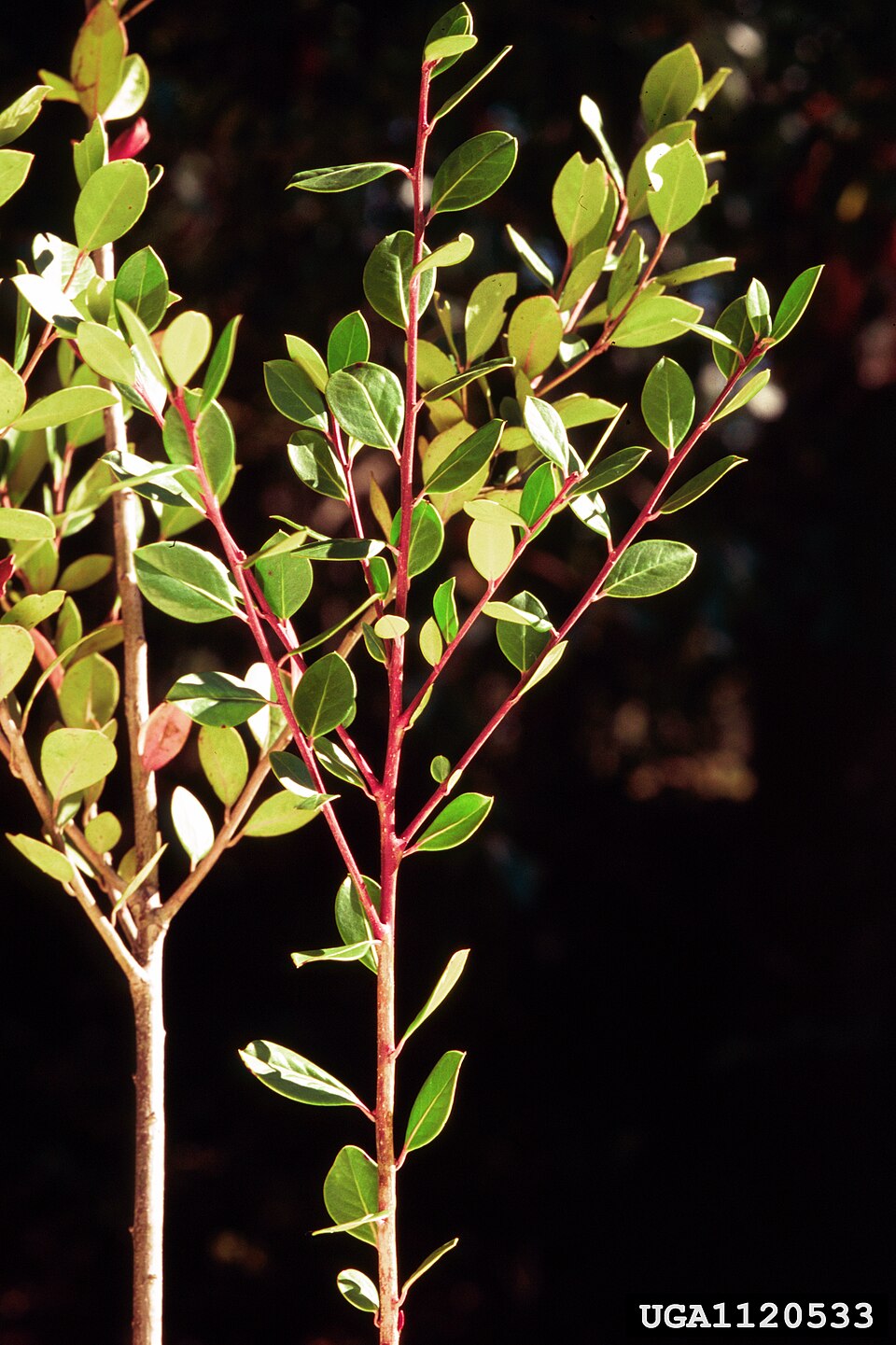
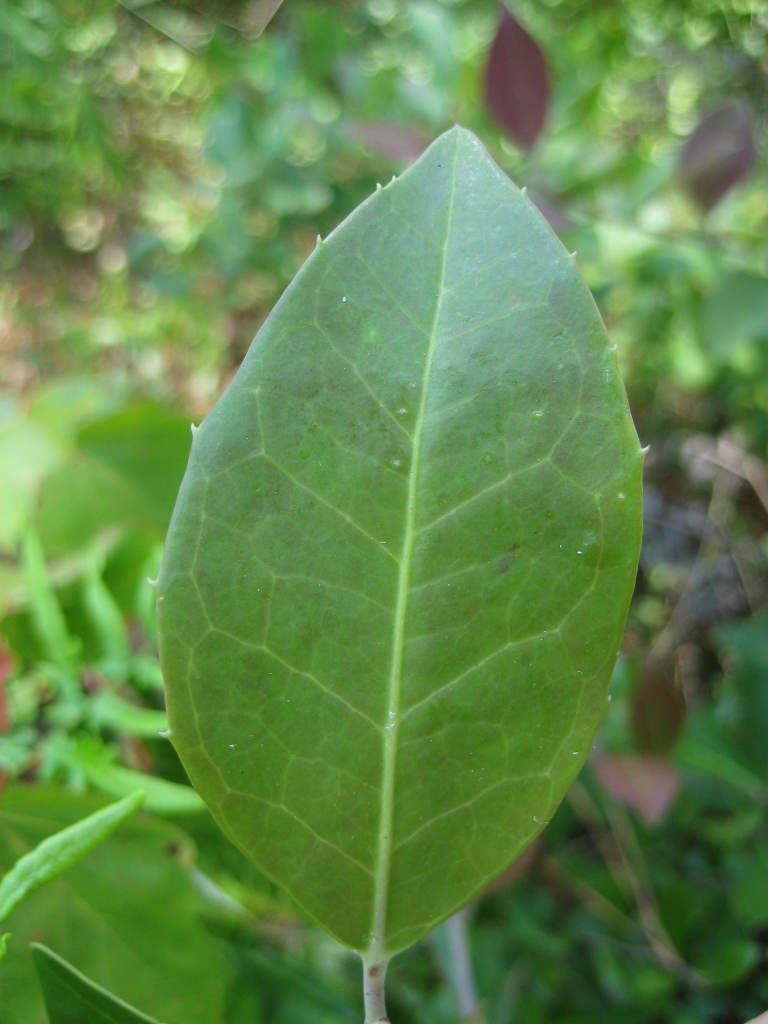
The leaves are the most distinctive feature of this species. They are alternate, simple, evergreen, and notably leathery (coriaceous — hence the species name). Each leaf is 2 to 4 inches long and 1 to 1.5 inches wide, oblong-elliptic in shape, with a lustrous dark green upper surface and a paler underside. The leaf margins bear several coarse, spine-tipped teeth that are more prominent than those of inkberry. This characteristic distinguishes Ilex coriacea at a glance from most other southeastern hollies.
Flowers & Fruit
The flowers are small, white, and four- to five-petaled, appearing in late spring (April–May) in axillary clusters along the current year’s branches. Like all hollies, Bigleaf Gallberry is dioecious — meaning male and female flowers occur on separate plants — so both a male and female plant are needed for fruit production. The fruit is a glossy black drupe, approximately ¼ to ⅜ inch in diameter, appearing in clusters of 3 to 12 along the stems. The fruits are produced abundantly and persist through winter, serving as a critical food source for wildlife.
Quick Facts
| Scientific Name | Ilex coriacea |
| Family | Aquifoliaceae (Holly) |
| Plant Type | Evergreen Shrub |
| Mature Height | 15 ft |
| Sun Exposure | Full Sun to Part Shade |
| Water Needs | High |
| Bloom Time | April – May |
| Flower Color | White |
| USDA Hardiness Zones | 6–9 |
Native Range
Bigleaf Gallberry Holly is native to the Atlantic and Gulf Coastal Plains of the southeastern United States. Its range extends from the Tidewater region of Virginia and the lower Coastal Plain of North Carolina, south through South Carolina, Georgia, and Florida, and westward along the Gulf Coast through Alabama, Mississippi, Louisiana, and into East Texas. The species is most abundant in the lower Coastal Plain, decreasing in frequency inland and at higher elevations.
Within its range, Bigleaf Gallberry is a characteristic plant of wet, acidic habitats. It thrives in wet pine flatwoods, bay swamps, pocosins (shrub wetlands), and pond edges where soils remain saturated or seasonally flooded. It frequently grows alongside other moisture-loving species such as titi (Cyrilla racemiflora), swamp bay (Persea palustris), Virginia willow (Itea virginica), and various sedges and ferns. In longleaf pine savannas, it occurs as a shrubby understory component, often recovering vigorously after fire.
The species is also found on drier upland sites including sandy ridges and pine-oak woodlands, demonstrating considerable adaptability across a range of soil moisture conditions. This ability to succeed in both wet and dry contexts reflects its wide ecological amplitude and makes it a versatile choice for native landscape applications throughout the Southeast.
📋 Regional plant lists featuring Bigleaf Gallberry Holly: Alabama, Georgia & Mississippi
Growing & Care Guide
Bigleaf Gallberry Holly is a tough, adaptable native shrub that thrives with minimal care once established in an appropriate site. Its primary requirement is acidic soil — like most hollies, it strongly prefers soil pH in the range of 4.5–6.0. In neutral or alkaline soils, it may develop chlorosis (yellowing leaves) due to iron deficiency.
Light
Bigleaf Gallberry tolerates conditions ranging from full sun to partial shade. In full sun it tends to grow more compactly with denser foliage and heavier fruiting. In partial shade — under open pine canopy or at forest edges — it develops a more open form but still fruits well. Deep shade reduces fruit production significantly. It is not recommended for heavily shaded sites if maximum wildlife value is desired.
Soil & Water
This species is remarkably adaptable in terms of moisture. In the wild, it grows in habitats ranging from seasonally flooded wetlands to dry sandy ridges. In cultivation, it performs best in consistently moist, well-drained, acidic sandy or loamy soils. Once established, it tolerates brief flooding and moderate drought. Avoid planting in heavy clay or alkaline soils without significant amendment. Mulching with pine bark or pine straw helps maintain soil acidity and moisture.
Planting Tips
Plant Bigleaf Gallberry in fall or early spring. Since it is dioecious, you will need at least one male plant for every 5–6 females to ensure pollination and fruit production. Space plants 6–10 feet apart for a natural thicket effect, or 8–12 feet apart for individual specimens. Container-grown plants transplant readily. The plant spreads by underground rhizomes and will slowly colonize suitable sites, creating the kind of dense wildlife habitat it provides in nature.
Pruning & Maintenance
Bigleaf Gallberry requires minimal maintenance. Prune lightly in late winter to shape or control size — avoid heavy pruning, which reduces fruiting. The plant naturally forms a multi-stemmed thicket; if a more tree-like form is desired, selectively remove some root sprouts over time. It is essentially pest- and disease-free in appropriate conditions. Periodic application of acidic fertilizer (such as azalea/holly fertilizer) in spring benefits plants in neutral soils.
Landscape Uses
Bigleaf Gallberry Holly is an excellent choice for:
- Wildlife gardens — provides winter fruit for songbirds and cover for nesting
- Naturalistic borders and screening along property edges
- Rain gardens and bioswales — tolerates seasonal flooding
- Longleaf pine ecosystem restoration — a native component of these habitats
- Foundation plantings where a large, evergreen shrub is needed
- Coastal and lowland landscapes throughout the Southeast
Wildlife & Ecological Value
Bigleaf Gallberry Holly ranks among the most wildlife-valuable native shrubs of the southeastern coastal plain. Its ecological contributions span multiple seasons and animal groups.
For Birds
The large black drupes are consumed by a wide variety of songbirds and game birds, including Northern Mockingbird, American Robin, Gray Catbird, Brown Thrasher, Cedar Waxwing, Eastern Bluebird, Yellow-rumped Warbler, and Wild Turkey. The persistent fruits provide critical winter food when other berries have been depleted. The dense, thorny thickets offer ideal nesting sites for species such as Northern Cardinal, White-throated Sparrow, Common Yellowthroat, and various wrens. The plant also supports insectivorous birds through the diverse invertebrate community its leaf litter and bark host.
For Mammals
White-tailed deer browse the foliage, especially in winter. Black bears, raccoons, and opossums consume the fruits when available. The dense shrub thickets provide important cover and shelter for rabbits, small rodents, and their predators. In the coastal plain habitats where this species grows, it is a consistent food and habitat provider for the full range of native mammals.
For Pollinators
The small white spring flowers attract native bees — especially native ground-nesting bees — as well as honeybees and various small beneficial insects. Holly pollen is an important resource for bees in the brief window when few other plants are flowering in the coastal plain understory. As a dioecious plant, it supports a more complex pollinator relationship than self-pollinating species.
Ecosystem Role
In the longleaf pine savanna ecosystem — one of the most biodiverse and threatened ecosystems in North America — Bigleaf Gallberry is a keystone shrub species. Its thickets provide structural diversity in an otherwise open, fire-maintained landscape. After prescribed burns or wildfires, it resprouts vigorously from the root crown, helping to stabilize soils and rapidly restore cover. Its leaf litter enriches the sandy, nutrient-poor soils characteristic of these habitats, supporting the rich invertebrate communities that underpin the whole food web.
Cultural & Historical Uses
Indigenous peoples of the southeastern coastal plain recognized the value of Bigleaf Gallberry long before European contact. While specific ethnobotanical records for Ilex coriacea are less documented than for other hollies, the closely related species of the region were used extensively. Gallberry honey — produced by bees foraging on gallberry blossoms — has been a distinctive product of the southeastern coastal plain for centuries. Light-colored, mild-flavored, and slow to crystallize, gallberry honey is produced throughout the Carolinas, Georgia, and Florida, and remains prized by honey producers and consumers today.
Early European settlers in the coastal Southeast learned from Indigenous peoples about the uses of local holly species. The dense, thorny thickets of gallberry were used as natural fences and livestock barriers. The tough, fine-grained wood, while too small for most timber uses, was occasionally used for tool handles and small implements. The black berries, while not palatable to humans, were noted as excellent wildlife forage, and early naturalists documented the extraordinary abundance of birds that flocked to gallberry thickets in winter.
In modern conservation and restoration ecology, Bigleaf Gallberry Holly has gained recognition as a critical component of longleaf pine ecosystem restoration. Conservation organizations across the Southeast now actively promote planting native hollies, including Ilex coriacea, as part of efforts to restore the ecological character and biodiversity of the coastal plain. The species’ tolerance of fire and ability to resprout after disturbance make it an especially valuable tool in restoration burns and fire-managed habitats.
Frequently Asked Questions
What is the difference between Bigleaf Gallberry and Inkberry?
Both are native southeastern hollies, but Bigleaf Gallberry (Ilex coriacea) is larger — reaching 15 feet compared to Inkberry’s (Ilex glabra) 6–8 feet. Bigleaf Gallberry has larger, more prominently toothed leaves and larger fruit. Both produce black berries, but Bigleaf Gallberry’s are noticeably larger. Inkberry is generally more available in the nursery trade, but Bigleaf Gallberry provides greater wildlife value.
Do I need both male and female plants to get berries?
Yes. Like all hollies, Bigleaf Gallberry is dioecious — male and female flowers are on separate plants. You need at least one male plant within pollinator flight distance (ideally within 50–100 feet) of your female plants to get reliable fruit production. Most native plant nurseries can advise on proper ratios.
Will Bigleaf Gallberry Holly grow in my yard if I’m not in the coastal plain?
It can succeed outside its native range in areas with acidic, moist soil — particularly in USDA Zones 6–9. However, it performs best when conditions mimic its native habitat: acidic sandy or loamy soil, adequate moisture, and full sun to partial shade. Avoid heavy clay or alkaline conditions.
Is Bigleaf Gallberry Holly deer resistant?
No — white-tailed deer browse the foliage, especially in winter when other food is scarce. In areas with high deer pressure, protection of young plants may be needed during establishment. Once mature and shrubby, the plant typically tolerates moderate browsing without lasting harm.
Can Bigleaf Gallberry Holly handle flooding?
Yes. It is one of its key adaptations — in the wild it grows in seasonally flooded wetlands and pocosins. It tolerates periods of standing water, making it ideal for rain gardens, stormwater management areas, and wet edges of ponds or streams.

Looking for a nursery that carries Bigleaf Gallberry Holly?
Browse our native plant nursery directory: Alabama · Georgia · Mississippi