Lingonberry (Vaccinium vitis-idaea)
Vaccinium vitis-idaea, known worldwide as Lingonberry, is one of the most culturally significant and ecologically important small shrubs of the circumpolar boreal and arctic zones. A low-growing, evergreen subshrub rarely exceeding 12 inches in height, Lingonberry carpets the floors of boreal forests, bogs, tundra heathlands, and rocky alpine slopes from Alaska to Newfoundland and across Eurasia — forming a near-continuous circumboreal distribution that makes it one of the most widespread shrubs on Earth. Its small, bright red berries, produced in generous clusters each summer and fall, have been a staple food and cultural touchstone for Arctic and subarctic peoples for millennia.
In Alaska, Lingonberry — known locally as “lowbush cranberry” and by many Alaska Native names — is second only to blueberry in importance as a wild-harvested fruit. The berries are tart, slightly bitter, and extraordinarily rich in antioxidants, vitamins C and E, and various phytonutrients. They are harvested in vast quantities each fall for jams, sauces, juices, and traditional fermented preparations. The plant fruits prolifically even at high latitudes and elevations, providing a critical late-season food resource for both humans and wildlife — particularly birds and bears preparing for winter.
Beyond its human importance, Lingonberry is an ecological keystone of northern ecosystems, forming dense, stable mats that stabilize soil against erosion, maintain soil moisture, and create habitat structure for a diversity of invertebrates, small mammals, and ground-nesting birds. Its evergreen leaves remain photosynthetically active throughout the winter under the snow, beginning photosynthesis the moment temperatures permit in early spring — a strategy that gives it a significant competitive advantage in the short growing seasons of the subarctic and arctic.
Identification
Vaccinium vitis-idaea is a low, creeping to mat-forming evergreen subshrub, typically 4 to 12 inches (10–30 cm) tall, though occasionally reaching up to 16 inches in very favorable conditions. It spreads by underground rhizomes to form dense, often extensive mats. The plant has a compact, tidy appearance that makes it immediately attractive for garden use as well as ecologically functional.
Leaves
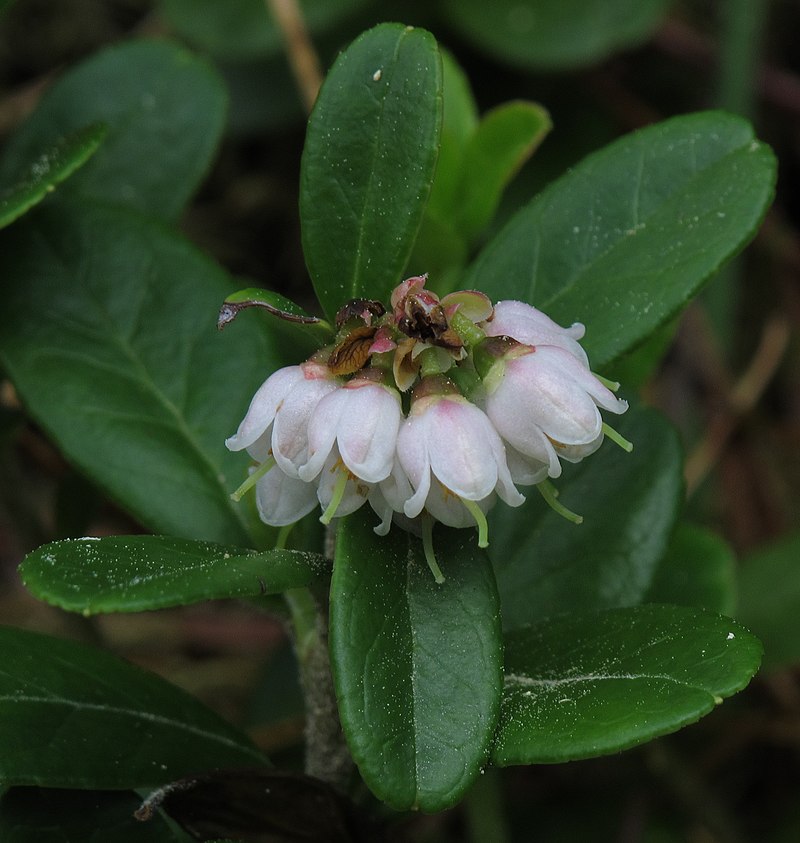
The leaves are the plant’s most immediately recognizable feature in a vegetative state: small (⅓ to ¾ inch or 8–20 mm long), oval, thick, and leathery with a dark, shiny upper surface and a paler, often slightly rolled-under margin. The underside is dotted with small, dark glands that are easily visible with a hand lens. The leaves are evergreen, persisting through winter under the snow, and bronzing slightly in cold temperatures before returning to deep green in spring. This combination — small, shiny, dark evergreen leaves on a low, mat-forming plant — is immediately distinctive in the boreal forest understory.
Flowers
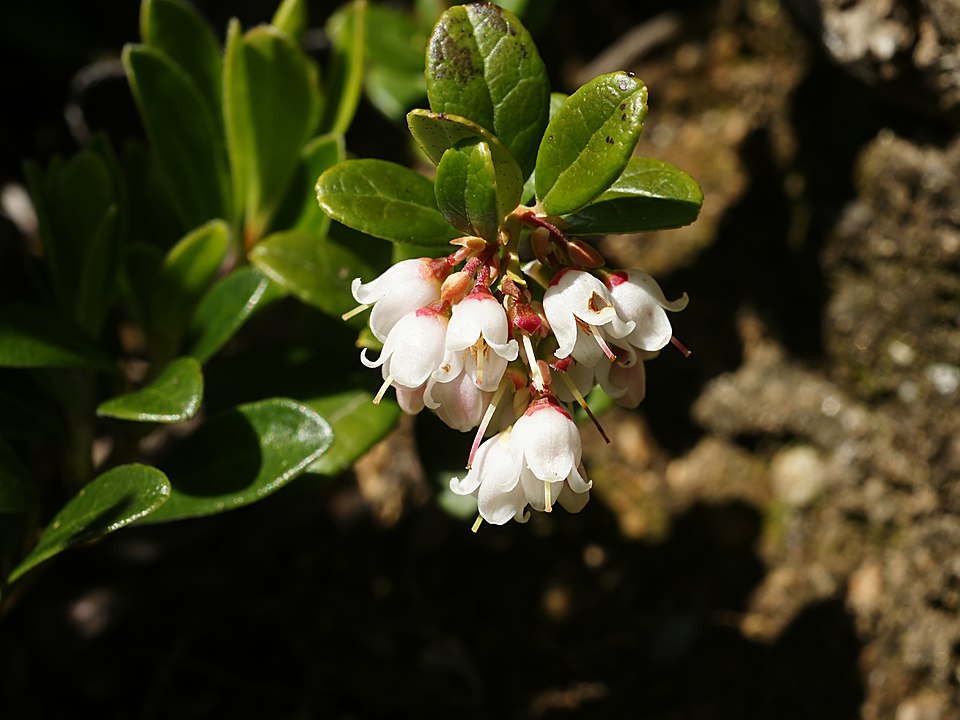
The flowers are small (about ¼ inch or 6–7 mm long), pale pink to white, and urn-shaped with a constricted mouth — the classic bell or urn shape characteristic of the heather family (Ericaceae). They appear in short, nodding terminal clusters (racemes) of 2 to 8 flowers in late spring to early summer (May–June in Alaska), and exude a faint sweet fragrance. The nodding posture protects the pollen from rain and limits access to specialized pollinators capable of vibrating the anthers to release pollen (buzz pollination).
Fruit
The berries are the plant’s most recognized feature: round, glossy, bright red, 6–10 mm (¼ to ⅜ inch) in diameter, produced in clusters of 2–8 at branch tips. They ripen in late summer to early fall (August–September in Alaska), turning from white to red as they mature. The fruit is quite tart and slightly bitter when fresh, with a flavor that intensifies and improves after the first frost. The berries persist on the plant well into winter, providing a critical food source for wildlife during the harshest months.
Quick Facts
| Scientific Name | Vaccinium vitis-idaea |
| Family | Ericaceae (Heather) |
| Plant Type | Evergreen Subshrub / Groundcover |
| Mature Height | 3 ft (typically 4–12 inches in the wild) |
| Sun Exposure | Part Shade |
| Water Needs | Moderate |
| Bloom Time | May – June |
| Flower Color | Pale pink to white |
| Fruit | Bright red berries, edible, ripe August–September |
| USDA Hardiness Zones | 2–6 |
Native Range
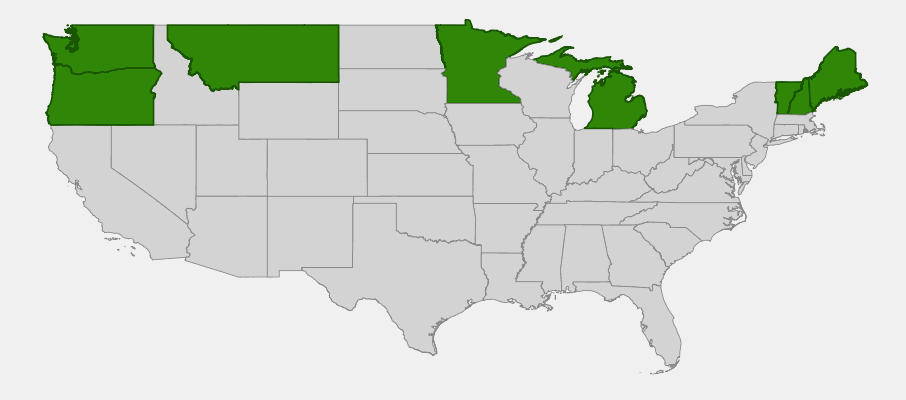
Vaccinium vitis-idaea has one of the widest distributions of any fruit-bearing shrub in the world — it occurs across the entire circumpolar north, covering enormous areas of boreal forest, tundra, and montane habitat in both the Northern Hemisphere’s Old and New Worlds. In North America, it ranges from Alaska east to Newfoundland, south through the Rocky Mountains to Colorado, and into the Great Lakes region and northeastern states including Michigan, Minnesota, Vermont, New Hampshire, and Maine.
In Alaska, Lingonberry is among the most abundant and widespread of all small shrubs, occurring from coastal rainforest to the highest accessible tundra. It grows from sea level to above treeline, adapting to an extraordinary range of temperature, precipitation, and soil conditions. It is particularly dominant in the lichen-heath communities of boreal uplands, the shrub layer of black spruce bogs, and the alpine tundra heathlands of interior Alaska.
The plant’s success across such an extreme range of environments reflects several key adaptations: its rhizomatous growth allows vegetative spread without relying on seed germination; its evergreen leaves enable year-round photosynthesis; and its association with ericoid mycorrhizal fungi allows it to extract nutrients from the very poor, acidic soils of bogs and tundra where other plants cannot compete. These properties have made it dominant across vast areas of northern North America and Eurasia.
📋 Regional plant lists featuring Lingonberry: Alaska
Growing & Care Guide
Lingonberry is a rewarding garden plant that combines ornamental value (attractive evergreen foliage, pretty spring flowers, colorful fall berries) with practical productivity (edible fruit) and low maintenance requirements. The key to success is replicating its preferred soil conditions — acidic, organic, and moist.
Light
Lingonberry performs best in partial shade — dappled light beneath open canopy trees or north-facing exposures that receive bright but indirect light. It can tolerate full sun in cool, moist climates (like coastal Alaska or the Pacific Northwest), but in warmer climates or on hot, dry sites, afternoon shade is essential to prevent heat stress. In deep shade, fruit production is reduced but the plant remains healthy as an evergreen groundcover.
Soil & Water
Acid soil is non-negotiable for Lingonberry. It requires a pH of 4.5–5.5 — similar to blueberries, rhododendrons, and other ericaceous plants. In neutral or alkaline soils, the plant will yellow (chlorosis) and decline, unable to access nutrients through its specialized mycorrhizal fungi. Amend soil generously with peat moss or composted pine bark before planting, and mulch heavily with pine needles or bark to maintain acidity. Water consistently but do not overwater — the soil should be moist but never waterlogged. Drip irrigation is ideal for maintaining consistent moisture without wetting the foliage.
Planting Tips
Plant container-grown plants in early spring or fall. Space 12–18 inches apart for a groundcover effect; the rhizomatous spread will fill in gaps over 2–3 seasons. Do not plant where lime, wood ash, or other alkaline amendments have been applied. Lingonberry is available in several European cultivated varieties (‘Red Pearl’, ‘Koralle’, ‘Sussi’) that have larger berries and more reliable fruiting than the wild type — these can be sourced from specialty nurseries. For Alaska gardeners, wild-collected material from local populations will be most cold-hardy.
Pruning & Maintenance
Lingonberry requires little maintenance. Light shearing every 2–3 years (in late winter before new growth) encourages vigorous new shoots and improved fruit production. Remove any dead or damaged stems. Top-dress annually with acidified compost or pine bark mulch to maintain soil pH. Fertilize sparingly with an acid-formulated fertilizer (for blueberries or azaleas) in early spring — over-fertilization produces excessive foliage at the expense of fruit.
Landscape Uses
- Evergreen groundcover under acid-loving trees and shrubs
- Edible landscape — attractive and productive berry producer
- Rock garden in cool, moist climates
- Heather garden combined with Scotch heather, Labrador tea, and bog rosemary
- Native bog garden or peat bed
- Slope stabilization on shaded, moist banks
Wildlife & Ecological Value
Few small shrubs of the boreal forest provide ecological services comparable to Lingonberry — it is simultaneously a critical food source, a habitat structural element, and a foundation species of northern ecosystem communities.
For Birds
The persistent red berries are consumed by numerous species of birds, including Ruffed Grouse, Spruce Grouse, Ptarmigan (all three Alaskan species), American Robin, Varied Thrush, Hermit Thrush, Cedar Waxwing, and many others. Ptarmigan in particular depend heavily on Lingonberry berries as a winter food source — the plant’s persistence under snow makes the berries available throughout the winter when other food is scarce. Ground-nesting birds including various warblers and sparrows nest in Lingonberry mats.
For Mammals
Grizzly and Black Bears consume Lingonberry berries in enormous quantities in late summer and fall, helping them build fat reserves for hibernation. Red Foxes, Arctic Foxes, Martens, Wolverines, and other carnivores supplement their diets with the berries. Caribou and Reindeer graze the foliage along with associated lichens, particularly in winter. Voles and lemmings eat the berries and the persistent winter leaves. The dense mats provide thermal insulation and cover for small mammals including shrews, voles, and lemmings throughout the year.
For Pollinators
The urn-shaped flowers of Lingonberry require buzz pollination — a specialized technique used by bumblebees and some other native bees in which the bee grabs the flower and vibrates its flight muscles at a specific frequency, shaking loose the pollen. Honeybees cannot buzz-pollinate, making native bumblebees essential for Lingonberry fruit set. In Alaska, several species of bumblebee are the primary pollinators. Planting Lingonberry supports these declining native bee populations.
Ecosystem Role
Lingonberry mats are critical to the water relations, nutrient cycling, and microclimate of boreal and tundra ecosystems. The dense, slow-decomposing leaf litter contributes to peat formation in bogs and acidified soils in upland forest. The mat acts as a thermal buffer, insulating the permafrost beneath in arctic and subarctic settings — a function that becomes increasingly important as climate warming threatens permafrost stability. Loss of Lingonberry and other ericaceous heath plants from northern ecosystems can trigger cascading changes in hydrology, carbon storage, and species composition.
Cultural & Historical Uses
Lingonberry holds a place of cultural importance that is difficult to overstate. Across the circumpolar north — in Alaska, Canada, Scandinavia, Russia, and across northern Eurasia — Lingonberry has been one of the most important wild foods available to northern peoples for thousands of years. In Alaska, virtually every Alaska Native cultural group within the plant’s range has a traditional name for it and centuries of accumulated knowledge about where it grows, when to harvest, and how to prepare and preserve it.
The berries’ natural high acidity and benzoic acid content give them remarkable self-preserving properties — Lingonberries can be stored raw in cool conditions for months without spoiling, or mixed with water to produce a fermented beverage. This self-preservation was invaluable in pre-refrigeration times, allowing berries harvested in fall to provide vitamin C through the long arctic winter. Traditional preparations include water-packed berries (akutaq-style), dried berries mixed with fat and meat, and sauces and relishes served with game. The high vitamin C content was critical for preventing scurvy during the long northern winters when fresh plant foods were unavailable.
In Scandinavian countries — particularly Sweden, Finland, and Norway — Lingonberry (called lingon in Swedish) occupies a cultural position comparable to cranberry in North America. Lingonberry jam is served with virtually every traditional meal, from meatballs to pancakes to game. The plant is so culturally significant that Sweden has enshrined the right to harvest Lingonberries from private land in its Allemansrätten (Freedom to Roam) legislation. Commercial cultivation of improved varieties is now widespread in Europe, and the international demand for Lingonberry products has created significant export markets for wild-harvested Alaskan berries.
Frequently Asked Questions
What is the difference between Lingonberry and Cranberry?
Lingonberry (Vaccinium vitis-idaea) and American Cranberry (Vaccinium macrocarpon) are both members of the genus Vaccinium and both produce tart red berries. In Alaska, Lingonberry is commonly called “lowbush cranberry” because of this similarity. Key differences: Lingonberry is a much smaller plant with smaller berries; Cranberry grows in bogs and is usually found in wetter conditions; and their flavor profiles are similar but distinct. Lingonberry has a higher antioxidant content and a different flavor profile — slightly more bitter and complex than cranberry.
Can I eat Lingonberries raw?
Yes, Lingonberries are edible raw, though they are quite tart and slightly bitter fresh off the plant. Most people prefer them cooked with a little sweetener. After a hard frost, the berries develop a sweeter, more complex flavor as starches convert to sugars. In Alaska, traditional preparations often involve fermenting or water-packing the berries to mellow their tartness.
Why won’t my Lingonberry fruit well?
Poor fruiting is usually caused by one of three issues: insufficient pollinators (Lingonberry requires buzz pollination by native bumblebees), soil pH too high (must be 4.5–5.5 — test and amend if needed), or excessive nitrogen fertilizer which promotes leafy growth at the expense of flowers and fruit. Plant multiple genetically distinct individuals for cross-pollination, avoid synthetic fertilizers, and maintain acid soil conditions.
How cold-hardy is Lingonberry?
Extremely cold-hardy — one of its best qualities. Lingonberry survives temperatures well below -40°F (-40°C) when protected by snow cover, making it suitable for USDA Hardiness Zones 2–6. Even without snow cover, established plants can withstand Zone 3 conditions. It is one of the few fruiting plants that can be grown reliably in Alaska’s extreme interior climate.
Is Lingonberry the same as partridgeberry?
No. Partridgeberry refers to Mitchella repens, a completely different plant in the Rubiaceae family that also produces small red berries and grows as a groundcover in eastern North American forests. Though both plants produce small red berries and form low mats, they are unrelated. In some parts of Alaska and Canada, “partridgeberry” is used as an alternate name for Lingonberry, which can cause confusion.

Looking for a nursery that carries Lingonberry?
Browse our native plant nursery directory: Alaska