Beach Fleabane (Senecio pseudoarnica)
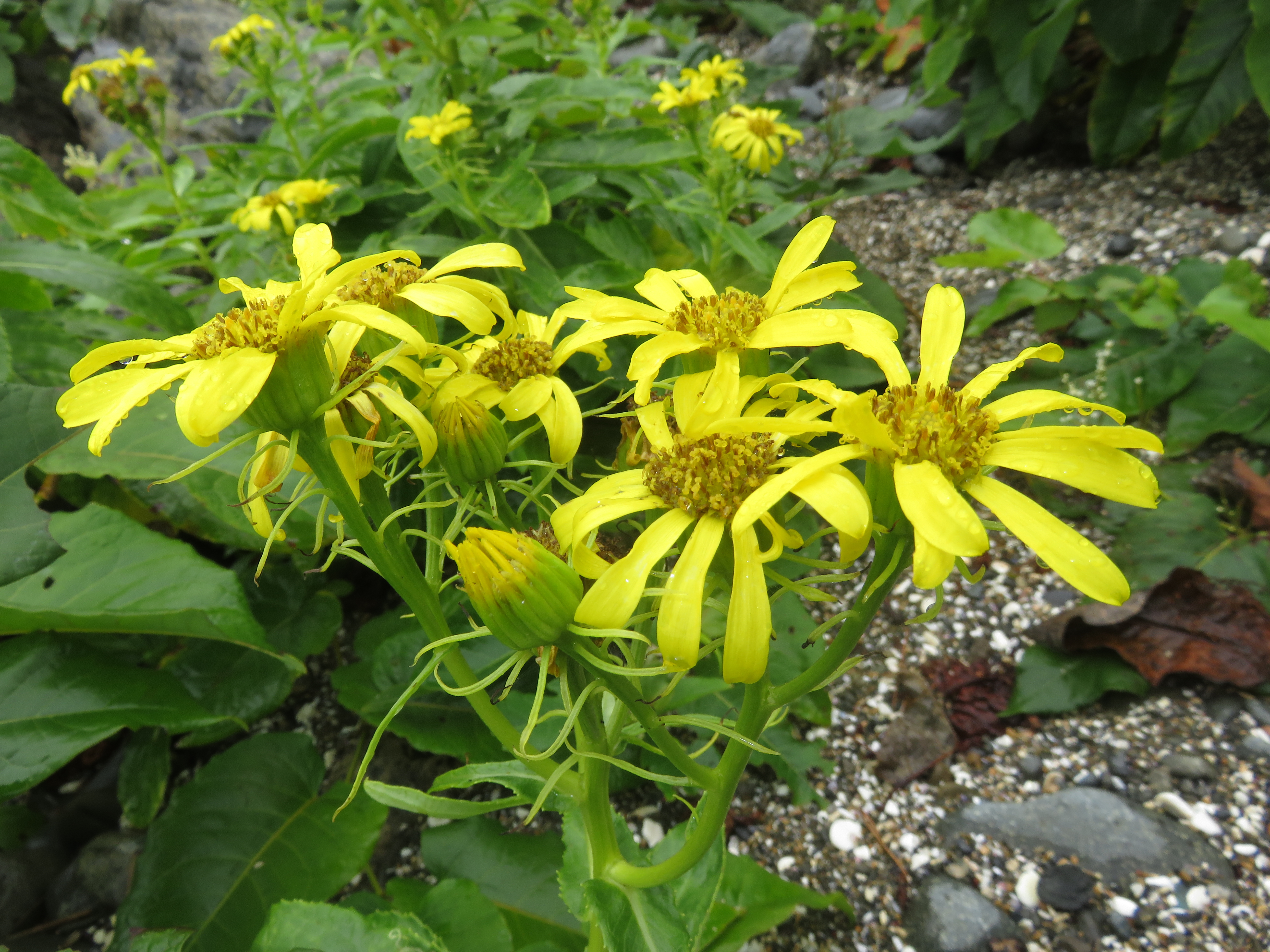
Senecio pseudoarnica, commonly known as Beach Fleabane, Seaside Ragwort, or Beach Groundsel, is a striking coastal wildflower native to the beaches, bluffs, and rocky shores of the North Pacific and North Atlantic coasts. A member of the Asteraceae (daisy) family, this robust perennial produces large, cheerful golden-yellow daisy-like flower heads that bloom in dense clusters atop thick, upright stems — creating vivid splashes of color in some of the most wind-battered, salt-sprayed habitats in Alaska. Its ability to thrive directly at the coastal edge, where few other wildflowers can survive, makes Beach Fleabane one of the most ecologically distinctive native plants of the Alaskan coast.
Beach Fleabane is a specialist of the shoreline zone — it is found growing in beach sand, on coastal bluffs, among driftwood and kelp wrack, and on rocky sea cliffs, always within reach of salt spray. Its thick, somewhat succulent stems and leaves reflect an adaptation to the moisture stress of coastal environments, where salt-laden air can desiccate foliage more rapidly than the eye suggests. The plant forms dense clumps or colonies, and in bloom — typically from late June through August in Alaska — it creates some of the most visually arresting wildflower displays anywhere in the state’s coastal landscape.
Although not as widely grown in cultivation as some native wildflowers, Beach Fleabane is an excellent choice for coastal native plant gardens, beachfront restoration projects, and seaside landscapes where salt tolerance and visual impact are both essential. It is one of the few native plants that truly belongs at the ocean’s edge — and grows there with an exuberance that reflects its perfect adaptation to one of the most challenging environments in Alaska.
Identification
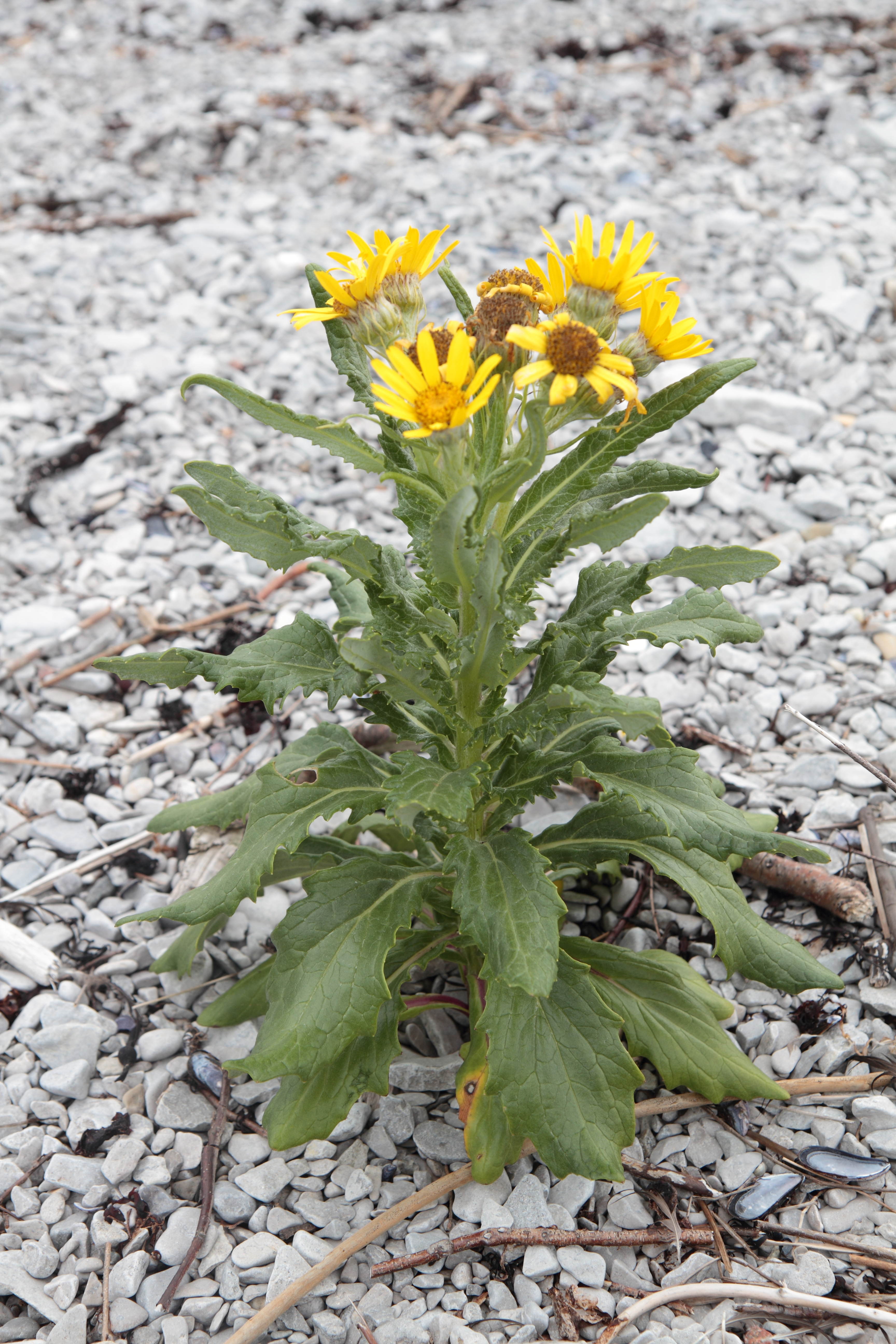
Beach Fleabane grows as a clump-forming perennial herb, typically reaching 1 to 2 feet (30–60 cm) tall with stout, upright stems that may be slightly branched near the top. The overall appearance is robust and somewhat succulent — thick stems, large leaves, and substantial flower heads distinguish it from most other coastal composites. The stems are woolly-hairy when young, becoming less so with age.
Leaves
The leaves are among the most distinctive features of Beach Fleabane. They are large — up to 6 inches (15 cm) long — broadly oval to spatula-shaped, thick and somewhat fleshy in texture, and covered with a fine, cottony or woolly coating of hairs on the undersides. This tomentose (woolly) undersurface helps reflect sunlight and reduce water loss in the salt-spray environment. The upper surface is dark green and smoother. Leaves are alternate along the stem, becoming progressively smaller toward the top.
Flowers
The flower heads are large and showy — 1½ to 2½ inches (4–6 cm) across — with 13 or more bright golden-yellow ray florets surrounding a dense yellow disc center. They are produced in flat-topped or rounded clusters (corymbs) at the tops of stems, with 3 to 15 flower heads per plant. The involucre (ring of green bracts at the base of each flower head) is distinctive — broad and somewhat flat, with a single row of linear green bracts. Blooming occurs from late June through August in Alaska.
Seeds & Spread
Like all members of the Senecio/Packera group, Beach Fleabane produces achene fruits topped with a white pappus (feathery tuft) that allows wind dispersal. Seeds are carried inland and along the coast by coastal winds. The plant also spreads vegetatively via its root crown, forming dense clumps over time in suitable beach and bluff habitats.
Quick Facts
| Scientific Name | Senecio pseudoarnica |
| Family | Asteraceae (Daisy / Composite) |
| Plant Type | Perennial Wildflower / Coastal Herb |
| Mature Height | 1–2 ft |
| Sun Exposure | Full Sun |
| Water Needs | Moderate to High |
| Bloom Time | Late June – August |
| Flower Color | Bright golden yellow |
| USDA Hardiness Zones | 3–8 |
Native Range
Beach Fleabane is a circumpolar coastal species, native to the shores of the northern Pacific and northern Atlantic oceans. In North America, it occurs along the Pacific coast from Alaska southward to Washington and northern Oregon. Its Alaska distribution is particularly extensive — from the Aleutian Islands through southeastern Alaska — wherever sandy beaches, coastal bluffs, rocky shores, and salt marsh margins provide the open, exposed conditions it requires.
Across the Pacific, Beach Fleabane also occurs in coastal Russia (Kamchatka, the Kuril Islands, and Pacific Siberia), Japan (Hokkaido and northern Honshu), and Korea — a distribution pattern that reflects the plant’s affinity for the cool, fog-rich coastal climates of the North Pacific rim. In the Atlantic, related populations occur in the Canadian Maritime Provinces and on Iceland, reflecting this species’ broad adaptation to northern coastal environments worldwide.
Within Alaska, Beach Fleabane is found at sea level in the coastal strand zone — the area between high tide line and the first upland vegetation zone. It grows on gravel and sand beaches, sea bluffs, cliffs, and coastal meadow margins. Inland penetration is minimal, usually limited to the first few hundred meters from shore where salt spray is still significant. Its presence is a reliable indicator of the immediate coastal zone.
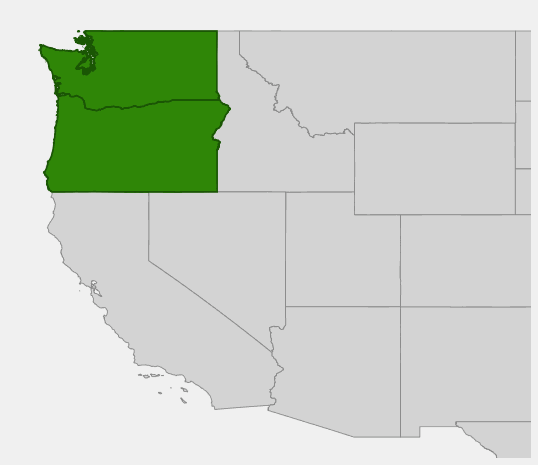
📋 Regional plant lists featuring Beach Fleabane: Alaska
Growing & Care Guide
Beach Fleabane is a specialized coastal plant that performs best when its natural habitat conditions are replicated. It is an exceptional choice for seaside gardens and coastal restoration but requires the open, sun-drenched, salt-tolerant conditions it evolved in.
Light
Beach Fleabane requires full sun and thrives in the open, exposed conditions of the coastal edge. It does not perform well in shade or in sheltered, humid inland conditions. The combination of full sun, salt spray, and wind exposure that most plants find damaging is actually the environment where Beach Fleabane flourishes. In coastal gardens, place it in the most exposed, sun-drenched location available.
Soil & Water
Beach Fleabane is naturally adapted to sandy, gravelly, or rocky coastal soils with excellent drainage. It tolerates — and in fact prefers — poor, low-nutrient soils. While the plant appreciates moderate to high moisture (particularly from coastal fog and mist), it does not tolerate waterlogged or clay soils. In a garden setting, sandy or gravelly, well-drained soil with occasional deep watering is ideal. The plant is remarkably salt-tolerant and can handle direct salt spray without damage.
Planting Tips
Start Beach Fleabane from seed sown directly in fall, or from container-grown plants established in spring. Seeds require cold stratification (60 days at 35°F / 2°C) to germinate reliably. Plant in groups of 3–5 for the most visual impact at the coastal edge. This species is rarely available at general nurseries but can be found through native plant specialists in Alaska and the Pacific Northwest. It is best suited for locations within sight of the ocean where salt spray is a regular presence.
Pruning & Maintenance
Beach Fleabane requires minimal maintenance in appropriate coastal settings. Deadhead spent flower heads after blooming to extend the flowering season and prevent excessive self-seeding if you want to control spread. Cut stems back to ground level in late fall after the first frost. Division every 3–4 years helps maintain plant vigor. The species is naturally pest- and disease-resistant, particularly in properly exposed coastal locations where humidity is moderated by sea winds.
Landscape Uses
- Coastal wildflower gardens and seaside native plantings
- Beach and bluff stabilization with native plant communities
- Pollinator gardens near the coast — attracts native bees and butterflies
- Coastal restoration of disturbed beach and bluff communities
- Salt-tolerant ornamental with dramatic flower display from summer through early fall
Wildlife & Ecological Value
Despite growing in one of the most challenging environments in Alaska, Beach Fleabane supports a surprising diversity of wildlife and plays an important ecological role in the coastal strand community.
For Birds
The seed heads of Beach Fleabane — like those of other members of the Asteraceae — produce nutritious achene seeds consumed by sparrows, finches, and other seed-eating birds. Coastal sparrows including Savannah Sparrows and Song Sparrows forage in the dense coastal herb zone where Beach Fleabane grows. The thick, leafy clumps provide nesting cover and shelter from the persistent coastal winds that characterize the beaches where this plant grows.
For Pollinators
The large, open flower heads of Beach Fleabane provide abundant pollen and nectar for bumblebees — the primary pollinators of many Alaskan coastal wildflowers. Several species of native bumblebee (Bombus spp.) are strongly attracted to Beach Fleabane blooms, and the plant’s summer flowering period overlaps with peak bumblebee activity in coastal Alaska. Hover flies, tachinid flies, and small native bees also visit the flowers regularly.
For Mammals
The woolly, somewhat bitter leaves of Beach Fleabane are not preferred by most mammalian herbivores — an adaptation that may reduce browsing pressure in habitats where few other plant options exist for wildlife like Sitka Black-tailed Deer and Brown Bears along the coast. The plant’s resilience in the face of moderate browsing pressure is one reason it can maintain persistent colonies in heavily used coastal areas.
Ecosystem Role
In the coastal strand community, Beach Fleabane is a mid-successional stabilizer — it colonizes disturbed or freshly deposited beach material after pioneer species like Sea Rocket and Beach Ryegrass have begun to stabilize the substrate. Its dense clumps trap windblown sand and organic debris, building soil organic matter in an environment where soil development is otherwise extremely slow. This soil-building function makes Beach Fleabane an important facilitator for the development of more diverse coastal plant communities over time.
Cultural & Historical Uses
Beach Fleabane has been used by coastal Indigenous peoples of Alaska and the Pacific Northwest, though documentation of its ethnobotanical uses is less extensive than for many other native plants. Among Aleutian and Alutiiq peoples, various coastal plants including Beach Fleabane were used in traditional medicine — particularly for treating skin conditions, wounds, and inflammation. The genus Senecio has a long history of traditional medicinal use worldwide, though modern research has identified toxic alkaloids (pyrrolizidine alkaloids) in many species that make internal use dangerous without expert preparation.
The Tlingit and other southeastern Alaskan peoples recognized Beach Fleabane as a reliable marker of the coastal edge and used its habitat — the high-tide coastal strand — for gathering other beach plants, shellfish, and sea vegetation. The plant’s predictable association with productive coastal foraging zones gave it indirect cultural value as a landscape indicator. Dense stands of Beach Fleabane on a coastal bluff signaled the presence of the rich intertidal and subtidal ecosystems just below.
In contemporary Alaska, Beach Fleabane is increasingly recognized as an important component of coastal restoration seed mixes. As sea-level rise and erosion accelerate along many Alaskan coastlines, the ability of native coastal plants like Beach Fleabane to stabilize and revegetate disturbed shores has gained practical importance for coastal communities and land managers seeking low-cost, ecologically appropriate erosion control solutions.
Frequently Asked Questions
Is Beach Fleabane the same as common ragwort?
No — Beach Fleabane (Senecio pseudoarnica) is a distinct species from common ragwort (Jacobaea vulgaris / Senecio jacobaea), which is a European invasive weed in North America. Beach Fleabane is a native Alaskan coastal plant with large, thick, woolly leaves that grows exclusively on beaches and bluffs; common ragwort has much finer, lobed leaves and grows in meadows and roadsides. Despite belonging to the same general group, they are ecologically very different plants.
Is Beach Fleabane toxic?
Like many plants in the Senecio/Jacobaea group, Beach Fleabane contains pyrrolizidine alkaloids that can cause liver damage if consumed in large quantities by livestock or humans. It should not be used as a food or medicine without expert botanical and medical guidance. However, it poses no danger to humans or animals simply from proximity or normal garden use — the primary risk is from intentional consumption over extended periods.
How do I tell Beach Fleabane apart from other yellow coastal daisies?
Beach Fleabane is distinguished from other yellow composites in the coastal zone by its combination of: large, thick, woolly-hairy leaves; stout, upright stems; large flower heads (1.5–2.5 inches across); and its habitat — it grows directly on beaches and coastal bluffs within reach of salt spray. No other similar-looking plant grows so consistently in the immediate coastal strand zone in Alaska.
Can Beach Fleabane grow in a regular garden?
Beach Fleabane is highly specialized for coastal conditions and generally does not perform well in inland gardens. It requires full sun, salt spray or equivalent drying conditions, excellent soil drainage, and the cool coastal temperatures of its native habitat. If you live within a few miles of the coast in Alaska, Washington, or Oregon, it may succeed in a sunny, exposed, well-drained location. Inland, it tends to become floppy, disease-prone, and short-lived.
Where can I find Beach Fleabane seeds or plants?
Beach Fleabane is rarely available at general nurseries. Look for seeds or plants through Alaska native plant societies, coastal restoration programs, or specialized native seed suppliers that focus on Pacific Northwest coastal species. The Alaska Native Plant Society is an excellent resource for connecting with sources of native coastal plant material.

Looking for a nursery that carries Beach Fleabane?
Browse our native plant nursery directory: Alaska