
Indian Paintbrush (Castilleja coccinea)
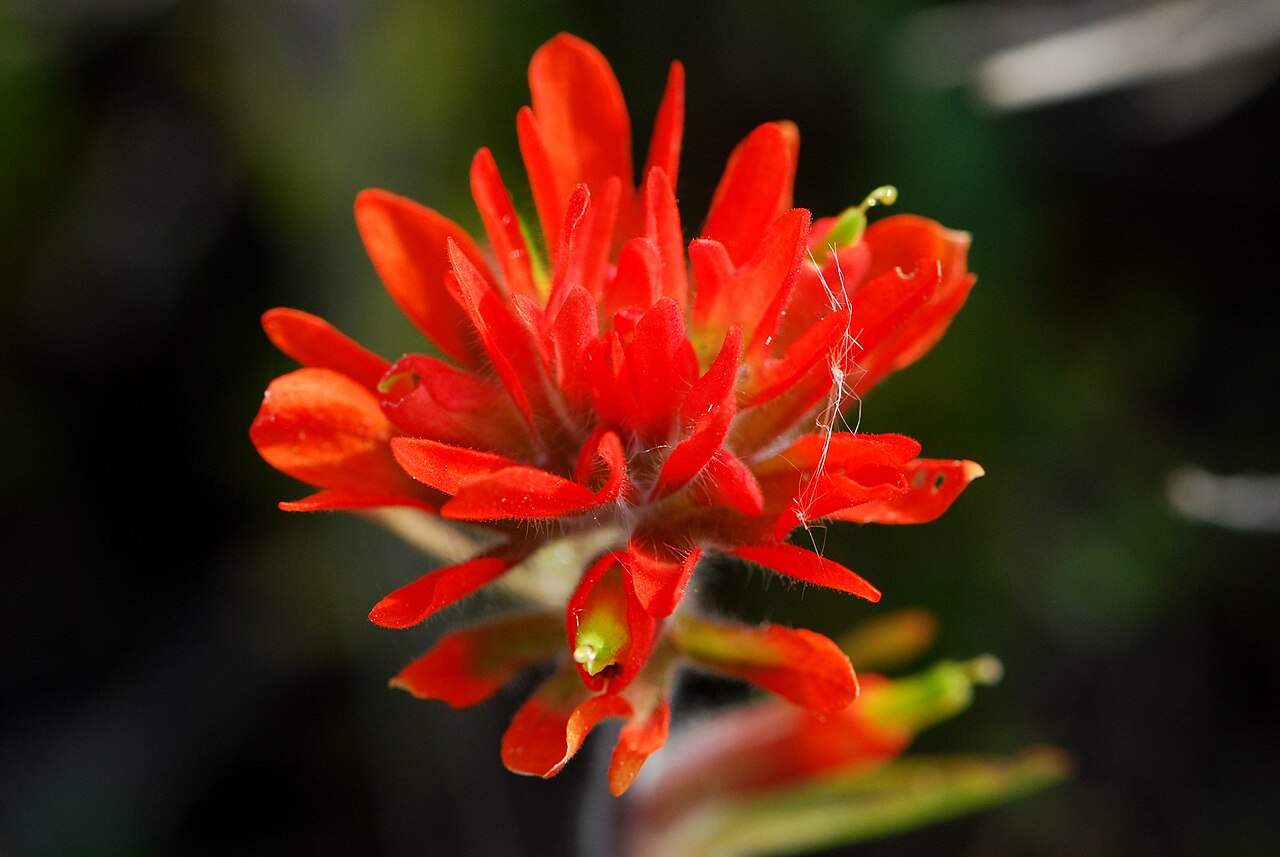
Indian paintbrush brings a distinctive splash of red to an open native planting, but the brightest parts are not the petals. In Castilleja coccinea, colored bracts surround the smaller true flowers, creating the impression that the stem tips have been dipped in paint. Scarlet paintbrush and eastern paintbrush are useful alternative names when distinguishing it from the many western species of Castilleja.
For the Iowa, Illinois, and Missouri regional list, this is a short-lived wildflower rather than a permanent clump to place and forget. It commonly develops a rosette, flowers in a later growing season, and depends on seed for renewal. Its roots also connect with neighboring plants and obtain some resources from them. This combination of life cycle and root relationship makes it a different gardening proposition from a self-contained pot of coneflower.
The regional row describes full sun, dry-to-average moisture, and 10–20 inches of height. Use that as a guide to its place in an open mixed planting, not as a recipe for isolating it in dry bare gravel. A successful patch requires suitable establishment conditions, compatible neighbors, and opportunities for new seedlings. Plan for a changing population rather than expecting every individual plant to return indefinitely.
Identification
Stems & Life Cycle
Flowering plants bear upright, generally hairy stems. Young plants may first appear as low rosettes without the vivid color that makes the mature plant recognizable. Learn that vegetative stage before weeding a seeded plot. Removing every unfamiliar rosette can eliminate the next generation before it flowers, while preserving every rosette without identification can allow aggressive weeds to dominate.
Leaves & Bracts
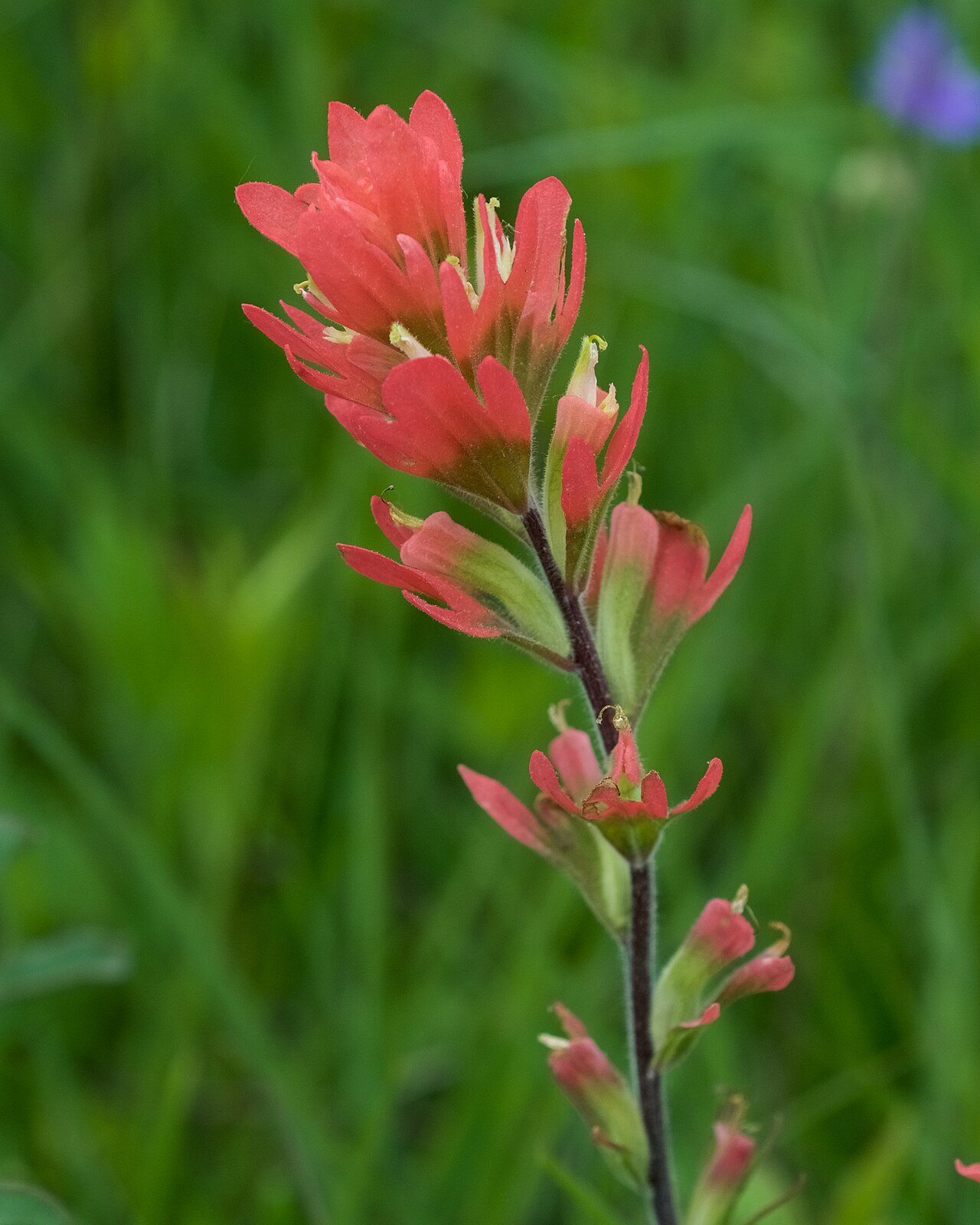
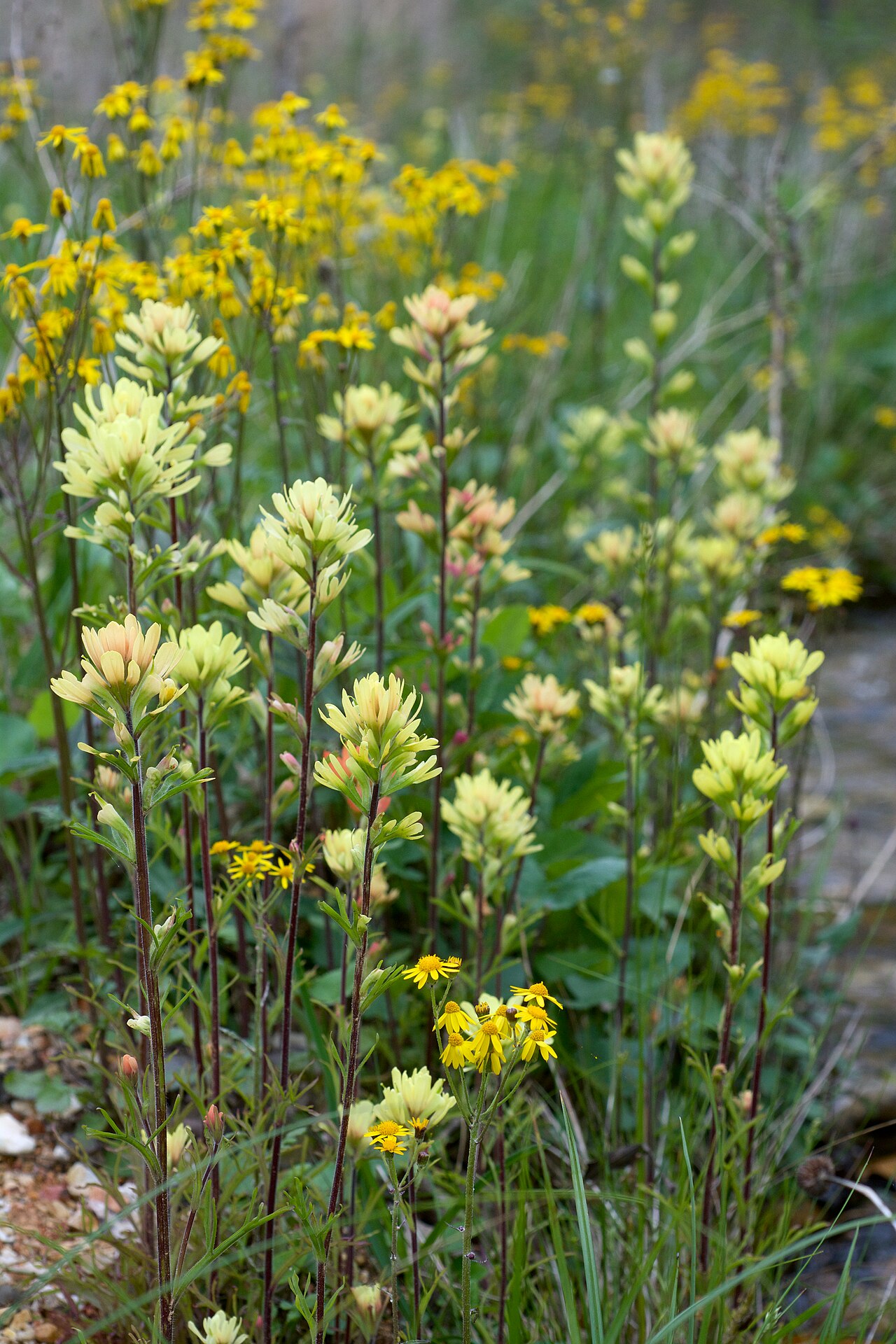
Basal leaves are simpler in outline, while leaves and bracts higher on the stem may be more deeply divided. The colored upper bracts are modified leaves surrounding the flowers. That distinction explains why the display has a leafy, brushlike structure rather than a conventional ring of petals. Color varies among populations, and yellow-bracted plants are not automatically a different species.
Flowers
The actual flowers are relatively small and greenish-yellow, tucked among the brighter bracts. Look closely from the side to distinguish the floral tube from the red or orange surrounding structures. Flowering is typically a spring-to-early-summer event, with timing varying across the range. A plant photographed in southern Missouri and one in northern Wisconsin need not bloom on the same calendar date.
Fruit & Seeds
After flowering, small dry capsules develop. Seed production is important because individual plants are short-lived. Leave selected flowering stems long enough to mature seed if sustaining a patch is the objective. Repeatedly cutting every fading stem for tidiness can interrupt renewal even when the surviving foliage still looks healthy for a time.
Quick Facts
| Scientific Name | Castilleja coccinea |
| Family | Orobanchaceae (broomrape family) |
| Plant Type | Annual or biennial wildflower; root hemiparasite |
| Mature Height | 10–20 inches in the regional list; plants can approach 24 inches |
| Mature Spread | Variable within a mixed host planting |
| Growth Rate | First-year rosette followed by flowering growth in many plants |
| Sun Exposure | Full sun |
| Water Needs | Dry to average, with moisture needed for establishment |
| Soil Type | Well-drained prairie or open-ground soil with compatible neighboring plants |
| Soil pH | Adaptable; use local provenance and habitat guidance |
| Bloom Time | Spring into early summer |
| Flower Color | Small greenish-yellow flowers surrounded by red, orange, or occasionally yellow bracts |
| Fall Color | Not a persistent fall-foliage plant |
| Fruit | Dry capsules containing small seeds |
| Deer Resistant | Do not depend on browsing resistance |
| USDA Hardiness Zones | 4–8 in NC State’s horticultural listing; survival also depends on life cycle and establishment |
Native Range
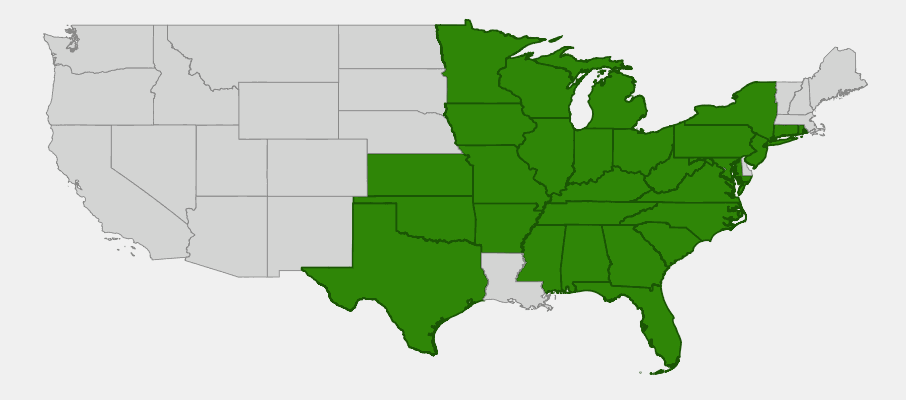
Kew lists Iowa, Illinois, and Missouri within the native distribution of Castilleja coccinea, along with many other central and eastern states and parts of Canada. The map summarizes the states listed as native in that source. It does not depict county-level abundance or imply that suitable habitat is continuous across a shaded state.
Several northeastern and other states are listed by Kew as places where the species is extinct. Those historical areas are not included as present native occurrences in this map. This distinction matters for a short-lived wildflower: a record in an old flora is not evidence that a population persists today. Local restoration projects should rely on current regional information and appropriate provenance.
Open prairie, glade, and woodland-opening settings provide the ecological context for garden use. These habitats contain neighboring roots and a changing herbaceous community, not an isolated paintbrush plant in a sterile ornamental bed. In the three-state region, use the species where its local habitat and seed source make sense, and avoid claiming that every meadow or roadside is an equally suitable site.
📋 Regional plant list: Iowa, Illinois & Missouri
Growing & Care Guide
Light
Choose an open sunny location. The regional table specifies full sun, and a short plant needs enough light at ground level for seedlings as well as mature stems. A tall, dense meadow mixture can shade out the next generation even when established flowering stems briefly rise above the neighboring foliage. Consider the height and vigor of companions before seeding.
Soil & Water
Use well-drained ground with enough moisture for germination and early growth. The dry-to-average regional category should not be interpreted as a demand for a constantly dry seedbed. At the same time, avoid turning a prairie planting into a permanently saturated bed. Watch the actual soil surface and root zone, especially during the first season, and respond to conditions rather than applying a fixed daily irrigation routine.
Planting Tips
Seed into a prepared site where aggressive weeds have been reduced and the intended companion community is understood. The plant’s root hemiparasitism is a reason to seek species-specific guidance from a native seed producer, not to choose an arbitrary host and assume success. If buying nursery-grown plants, ask how the grower maintains host relationships and how to transplant the entire root system with minimal disturbance. Wild plants should remain in place.
Pruning & Maintenance
Do not treat paintbrush as a perennial that benefits from repeated deadheading and division. Its renewal depends on the life cycle being completed. Preserve enough mature capsules to supply seed, and learn to recognize young rosettes during maintenance. Where a patch contains both first-year and flowering plants, indiscriminate mowing can remove more than one stage at once. Schedule management around the actual population rather than a generic flower-bed calendar.
Propagation
Seed is the principal practical route. NC State notes that cultivation can be difficult and that a garden colony may need supplemental seeding. Follow the seed supplier’s instructions for the provenance and lot, including any cold-moist treatment, rather than borrowing a protocol for an unrelated western paintbrush. Keep a small labeled trial area so germination and survival can be observed before sowing a larger site.
Understanding Host Relationships
A hemiparasite still has green leaves and carries out photosynthesis, but it also obtains resources through root connections with neighboring plants. That is why a healthy-looking isolated pot may not behave like a plant in a mixed prairie. Compatible hosts and site conditions matter together. Avoid selling the idea that fertilizer can replace the biological relationship or that any nearby plant will necessarily provide the same benefit.
Keeping a Population Going
Record where flowering plants stood and where seedlings emerge in subsequent seasons. If the patch declines, investigate seed production, seedling recognition, competition, and disturbance before assuming the original adult plants should simply have lived longer. Leave some small open opportunities in the surrounding vegetation without stripping the entire site bare. A shifting patch can be successful even when its exact boundaries change from year to year.
Landscape Uses
- A short-lived color accent in an appropriately managed Iowa, Illinois, or Missouri native planting.
- An educational prairie patch where rosettes, colored bracts, true flowers, and capsules can be observed.
- A species-diverse open planting developed with advice from a regional native seed supplier.
- Small monitored trials before larger restoration or meadow establishment.
- A seasonal component among compatible native host plants, not a solitary long-lived border clump.
Wildlife & Ecological Value
For Pollinators
NC State records visits by hummingbirds and bees. The colored bracts help make the flowering stems conspicuous, while the true flowers provide the relevant floral structures. Observe visitors without assuming every insect perched on a bract is feeding or pollinating. Combine the species with other native flowers to provide resources outside its main season.
For Birds
Hummingbird visitation is one documented attraction, but paintbrush is not a substitute for woody cover, fruiting plants, or seed-rich grasses. Keep its contribution in proportion within a broader habitat plan. A small flowering patch can be valuable while still requiring other plants to provide shelter and year-round structure.
For Mammals
Do not choose this species on the assumption that it is an important forage crop or reliably browse-proof. Protect a small establishment trial if repeated animal disturbance prevents seedlings from developing. Its principal garden interest is botanical and floral, and it should be managed as part of a native plant community rather than as feed.
Ecosystem Role
The root relationship with neighboring plants is part of its ecological identity. A diverse, functioning herbaceous community is more appropriate than trying to maintain paintbrush as an isolated display item. Preserve opportunities for reproduction and avoid routine chemical treatment around the roots or flowers. Population turnover is normal for a short-lived species and should be evaluated differently from the survival of a woody shrub.
Cultural & Historical Uses
The name paintbrush describes the appearance of the colored bracts and has been applied to many species in the genus. That shared name can cause confusion when photographs, seed packets, or garden advice are transferred from one region to another. Castilleja coccinea is the specific eastern and central North American plant covered here.
Its unusual root biology has long made it a useful example of plant relationships that are not obvious aboveground. A garden label explaining the difference between bracts and flowers and the meaning of hemiparasite can make a small patch educational without disturbing it. Accurate interpretation is more useful than attaching broad folklore from unrelated paintbrush species.
For modern native gardening, the lesson is to match the management approach to the plant. A short-lived, host-associated wildflower cannot be expected to behave like a long-lived nursery perennial. Use responsibly sourced seed or propagated plants and preserve existing wild populations, especially where the species has become uncommon.
Frequently Asked Questions
Are the red parts the flowers?
Mostly they are colored bracts, modified leaves surrounding the smaller greenish-yellow true flowers. A close side view makes the distinction easier to see.
Will one plant return forever?
No. The species is generally annual or biennial and relies on seed for population renewal. A successful patch may contain different individual plants in successive years.
Can I grow it alone in a pot?
Cultivation is complicated by its root hemiparasitism. Ask a specialist grower about compatible host plants and establishment rather than assuming an isolated pot will perform like a mixed native planting.
Is it native to all three states in this regional list?
Kew lists Iowa, Illinois, and Missouri in its native range. Local habitat and provenance still determine whether it is suitable for a particular project.
Should I deadhead all the fading stems?
Not if maintaining the population is the goal. Leave enough stems to mature seed and protect the next generation of rosettes during garden maintenance.
Sources & Further Reading
- NC State Extension: Castilleja coccinea
- Kew Plants of the World Online: Castilleja coccinea
- USDA PLANTS: Castilleja coccinea
Find Native Plants
Ask growers about nursery propagation and regional provenance. Browse our Iowa native plant nurseries, Missouri native plant nurseries directory for suppliers.