
Pāpala Kēpau (Ceodes brunoniana)
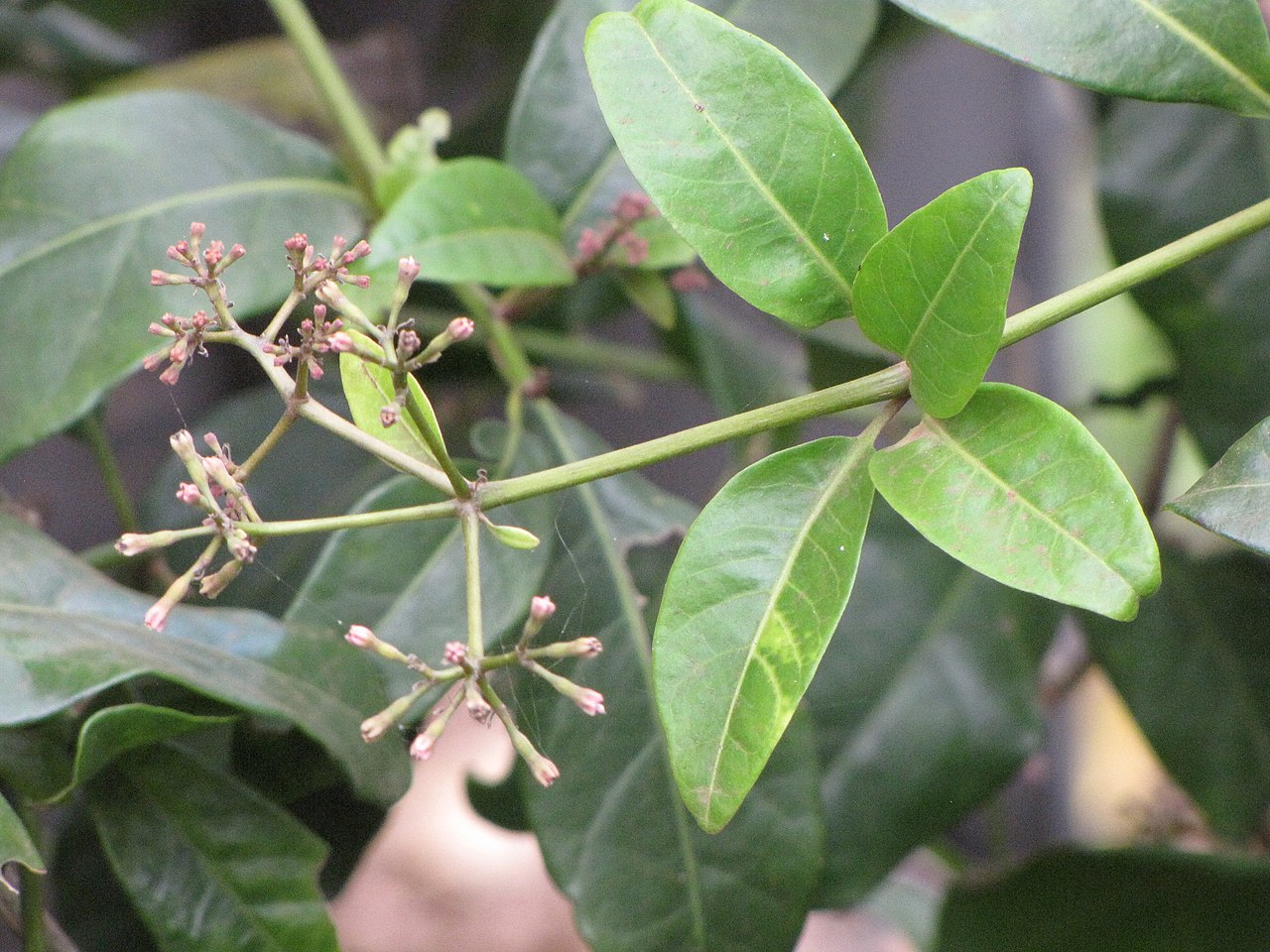
Pāpala kēpau (Ceodes brunoniana, widely known as Pisonia brunoniana) is an indigenous Hawaiian tree with broad foliage and an unusual reproductive strategy. Its elongated fruits are extremely sticky. That feature is botanically interesting and culturally significant, but it also determines where the tree belongs in a garden: away from places where people, pets, or small animals are likely to come into frequent contact with fallen fruit.
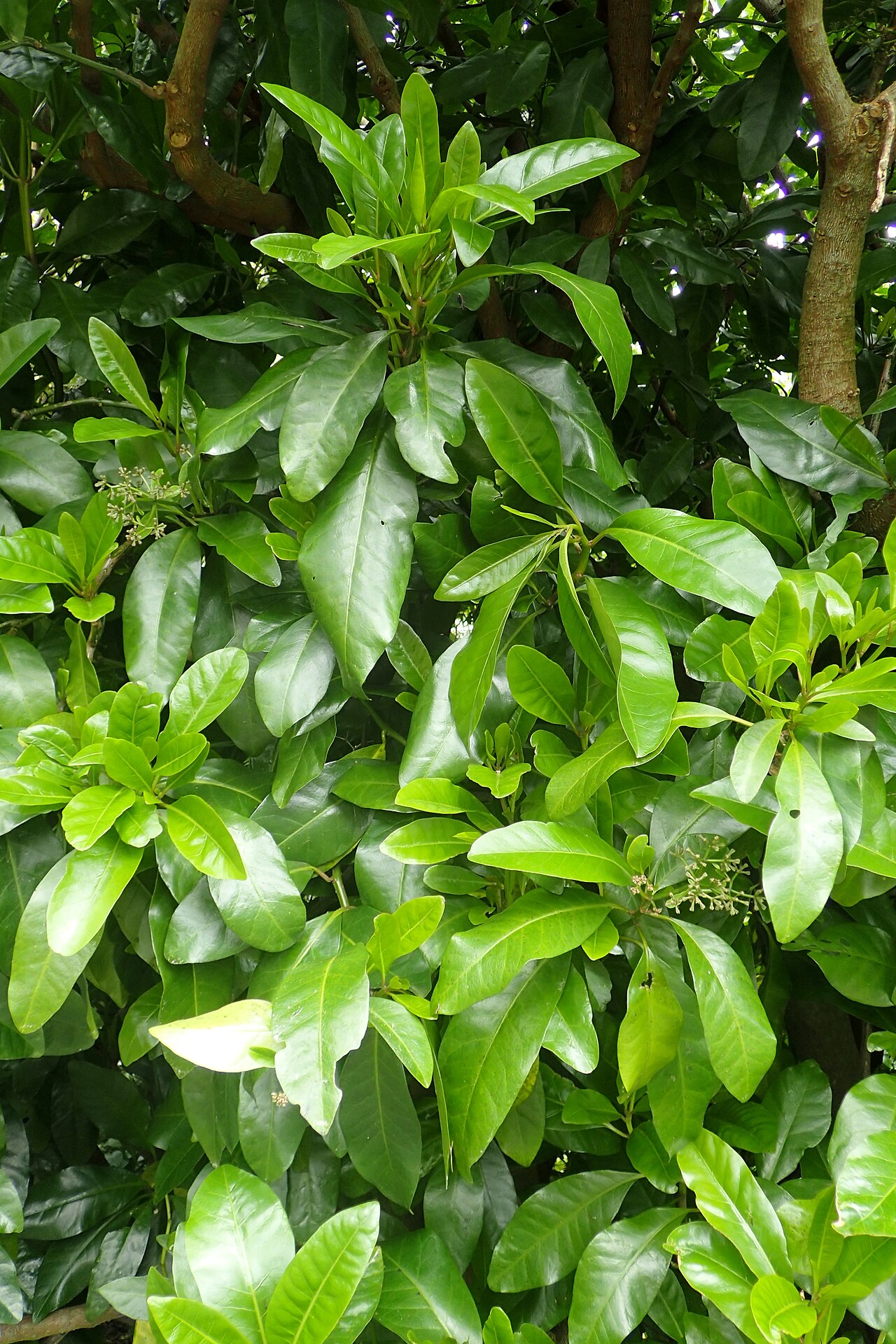
The tree is native to Hawaiʻi and also occurs naturally elsewhere in the Pacific. It is therefore indigenous rather than Hawaiian endemic. In Hawaiian landscapes it can provide shade and a substantial leafy presence, especially in a suitable dry-to-mesic setting. It should be selected as a distinctive specimen with known maintenance needs, not as a generic fruiting tree for a busy walkway.
Current Bishop Museum treatment uses Ceodes brunoniana. Older horticultural sources, photographs, and the USDA profile often retain Pisonia brunoniana. Both names refer to the same species on this page. The change follows a botanical reassessment of the broader birdcatcher-tree group, not the discovery that Hawaiʻi’s familiar pāpala kēpau is an introduced plant.
Quick Facts
| Scientific Name | Ceodes brunoniana |
| Family | Nyctaginaceae |
| Plant Type | Evergreen native tree or variable shrub/tree |
| Mature Height | 15–30 ft in the regional planting guide; larger trees occur |
| Mature Spread | 10 ft or more; provide substantial clearance from paths |
| Growth Rate | Variable with site |
| Sun Exposure | Partial sun; full sun also tolerated in suitable conditions |
| Water Needs | Average to dry after establishment; good drainage |
| Soil Type | Well-drained soil matched to native habitat and nursery provenance |
| Soil pH | Assess local soil and nursery performance before amending |
| Bloom Time | Variable with source and conditions; observe local seasonality |
| Flower Color | Small pale flowers in branched clusters |
| Fall Color | Evergreen; seasonal new growth may contrast with older foliage |
| Fruit | Elongated, very sticky fruits |
| Deer Resistant | Not a browse-proof planting; protect young trees where needed |
| USDA Hardiness Zones | Use Hawaiian island, elevation, and exposure guidance for site selection |
Identification and the Name Change
Pāpala kēpau belongs to Nyctaginaceae, the four-o’clock family. Its relatively large, dark green leaves give the crown a coarse, full texture. The University of Hawaiʻi profile describes a small tree or tall shrub, with a spread of ten feet or more. The regional planting list’s 15–30-foot height is a useful planning range, but the eventual size depends on the individual and its growing conditions.
The flowers are small and described as greenish white to purple, with moderate fragrance in the University of Hawaiʻi account. They are not the main visual feature from a distance. The foliage and overall crown shape usually make the first impression; closer inspection reveals the flowers and then the sticky fruits.
Why Ceodes and Pisonia Both Appear
Research on the birdcatcher-tree group showed that the broad historical concept of Pisonia included lineages better recognized separately. The 2020 taxonomic work and the Smithsonian summary explain the separation into Pisonia, Ceodes, and Rockia. Bishop Museum’s Plants of Hawaiʻi applies Ceodes brunoniana to this species.
For practical gardening, retain the older name in nursery and maintenance records as a synonym. It helps connect current labels to photographs, older forest literature, and databases that have not adopted the same treatment. It does not justify purchasing or counting the two names as different species.
Common names also require care. Pāpala can refer to other Hawaiian plants, including Charpentiera, and pāpala kēpau is used for more than one sticky-fruited relative. Confirm the complete scientific name before making assumptions about native range, size, or garden behavior.
Native Range and Hawaiian Habitat
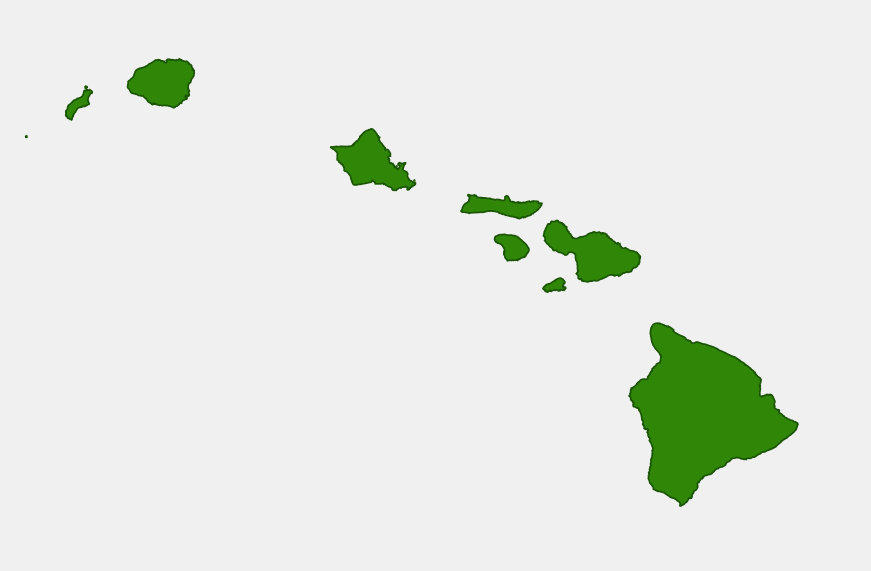
The University of Hawaiʻi account describes this species in dry to mesic forest, at roughly 1,395 to more than 4,000 feet. It lists Oʻahu, Molokaʻi, Lānaʻi, Maui, and Hawaiʻi; the Bishop Museum account includes additional main-island records. Differences among summaries are a reason to consult local records for a specific project rather than treating a statewide planting list as a complete distribution atlas.
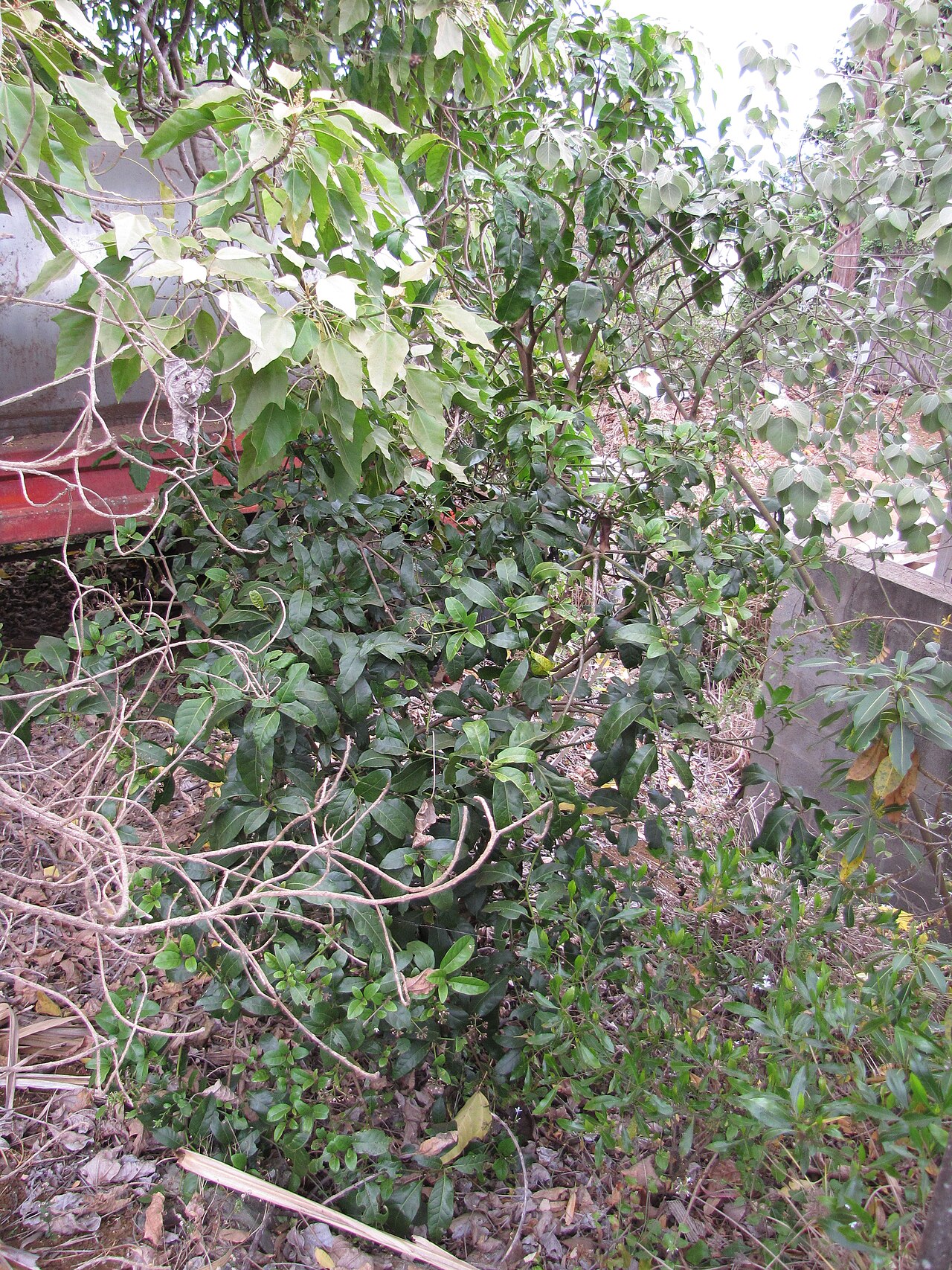
The species is not confined to Hawaiʻi, with native occurrence elsewhere in the Pacific, including New Zealand and Lord Howe Island. An overseas photograph can therefore be useful for identification without documenting a Hawaiian population. Likewise, a photograph from a Hawaiian botanic garden demonstrates cultivation, not necessarily native occurrence at that exact location.
Native Range
| U.S. States | Hawaii |
| Hawaiian Islands | Recorded on the main islands in Bishop Museum accounts; local records differ |
| Mexico / Canadian Provinces | Not included in the verified native range used here |
| Ecoregion | Hawaiian tropical forest and woodland |
| Elevation Range | Roughly 1,395–4,000 ft or more in UH habitat account |
| Habitat | Dry to mesic Hawaiian forest; also native elsewhere in the Pacific |
| Common Associates | Site-appropriate native forest canopy and understory |
USDA PLANTS profile (PIBR3). Species identity verified; this link is not a guarantee of county-level distribution data.
The map above highlights Hawaiʻi as the U.S. native-range state. It does not claim occurrence on every shaded island or show the species’ entire Pacific range. For restoration, use locality records and appropriately sourced plants. For a garden, use the dry-to-mesic forest association together with nursery experience to judge the intended site.
The Sticky-Fruit Question Comes First
The fruits adhere readily to feathers, fur, clothing, shoes, and hair. The University of Hawaiʻi profile explicitly notes that small creatures can become ensnared and may die if they cannot free themselves. This is a real siting consideration, not simply a colorful common-name story. A tree beside a pet run, children’s play area, narrow entry path, or frequently used seating space may create avoidable problems.
Consider where fruit will fall when the crown is mature, not just where the nursery plant stands today. Wind, slope, and routine maintenance can move debris beyond the trunk. Leave enough clearance to inspect and collect fallen material where necessary, and do not place the tree where fruit will be difficult to reach without damaging surrounding plants.
The sticky fruit is not equivalent to a conventional fleshy bird-food crop. Its relationship with animals involves adhesion and dispersal, sometimes with harmful outcomes for the animal. Garden descriptions should acknowledge that distinction rather than presenting the tree as an uncomplicated bird-feeding choice.
Light and Soil Conditions
The University of Hawaiʻi growing guidance allows full sun or partial sun and identifies drought tolerance, with dry conditions and well-drained soil. These traits make the species more plausible in a dry-to-mesic garden than many wet-forest natives. They do not eliminate the need to water a newly planted tree or to choose stock suited to the local setting.
Assess drainage before planting. A drought-tolerant tree can still suffer when roots remain in saturated, poorly aerated soil. A compacted depression receiving roof runoff is not a suitable substitute for a freely draining forest slope. Where drainage is uncertain, observe the site after substantial rain and resolve the location before committing the tree.
In partial sun, allow enough space and light for a useful crown rather than tucking the tree beneath dense competing branches. In full sun, consider reflected heat and drying wind, especially during establishment. The broad light recommendation should be applied to the actual garden conditions, not reduced to a label without context.
Planting and Early Watering
Keep the root ball moist during transport and planting. Set the tree at its appropriate original soil level, avoid burying the stem base, and water to settle soil around the roots. Handle the plant carefully and prepare the site before exposing the root ball to sun or wind. Good installation reduces the need for later attempts to correct preventable stress.
Check moisture inside the nursery root ball as well as in the surrounding ground. Those two materials can dry at different rates. Water sufficiently to support establishment, then allow drainage. A fixed schedule is less useful than observations of soil moisture, weather, and the tree’s developing root system.
As roots expand, gradually adapt irrigation to the larger area the tree occupies. Established drought tolerance is not the same as immediate tolerance of a dry planting hole. Conversely, continuing frequent irrigation indefinitely can be unnecessary or unsuitable where soil remains wet. Adjust by evidence rather than treating the initial establishment routine as permanent.
Managing a Mature Specimen
Provide room for the natural crown and maintain access beneath or beside it for inspection. Prune damaged or conflicting branches with a clear purpose, but do not rely on repeated severe cutting to keep a tree away from a path that was too close from the beginning. The best solution to fruit conflict is thoughtful placement before the crown develops.
Plan maintenance around the actual fruiting pattern of the tree. Observe when flowers and fruits appear locally, and check the ground during those periods. A garden record can help anticipate recurring work without assuming that another island’s seasonal timing will apply exactly.
When choosing companions, avoid creating an inaccessible thicket directly beneath the crown. A simpler, maintainable ground layer may be more practical where fallen fruit needs attention. This does not require bare soil; it means selecting a design that allows the gardener to see and manage what the tree produces.
Pests and Nutrition
Ants, scales, mealybugs, and aphids are listed as possible problems in the University of Hawaiʻi profile. Inspect leaves and branch junctions when growth looks abnormal. Ant activity may draw attention to sap-feeding insects, but identify the actual issue before choosing a treatment. A plant’s native status does not make it immune to garden pests.
Use nutrient amendments according to the soil and the tree’s condition. Published horticultural profiles may offer feeding schedules, but those do not replace local assessment. Poor drainage, root damage, and unsuitable watering can all affect leaf appearance. Adding fertilizer without checking these conditions may fail to address the reason for decline.
Keep mulch away from the stem, prevent mechanical damage from routine maintenance, and revisit irrigation as the tree grows. These basic practices are especially useful for a specimen whose main role is to develop a healthy, substantial crown over many years.
Cultural Context
Sticky material from pāpala kēpau has a documented place in Hawaiian bird-catching practices associated with featherwork. Historical accounts describe the use of adhesive material in obtaining feathers for culturally important objects. The University of Hawaiʻi profile also records adhesive uses in repair and medicinal traditions associated with pāpala kēpau.
These accounts deserve to be presented as cultural history, with attention to the people, knowledge, and circumstances involved. They are not instructions to trap present-day wildlife or a home medical guide. A living tree can support learning about those relationships while being managed responsibly in a contemporary garden.
The name kēpau evokes sticky substances and helps explain why this tree was noticed and used. Its unusual fruit links identification, ecology, and cultural knowledge in a particularly direct way. Understanding that connection makes a more informative planting label than describing the tree only as a shade provider.
Questions Before Buying
Is Pisonia brunoniana a different plant from Ceodes brunoniana? No. The former is the widely used older name for the species treated here under the current Bishop Museum name.
Is it native to Hawaiʻi? Yes, indigenous rather than endemic. Its natural range also extends beyond Hawaiʻi. Cultivated photographs should not be used as evidence for a particular island’s native population.
Is it suitable beside a dog run or busy walkway? The sticky fruits make those locations poor default choices. Consider mature crown spread, fruit fall, animal contact, and practical cleanup before planting.
Does drought tolerance mean no watering? No. New plants need establishment care, and even established performance depends on soil, exposure, and the severity of dry conditions.
A Distinctive Tree for a Deliberate Location
Pāpala kēpau can be an engaging native specimen where its broad foliage, small flowers, and unusual fruit can be observed without creating constant conflict. Confirm the species, choose a well-drained site, and give the mature crown a maintenance-friendly setting. Its strongest landscape role is not as an interchangeable shade tree, but as a plant whose particular biology has been understood before it is planted.
Sources & Further Reading
- University of Hawaiʻi, Native Plants Hawaiʻi species profile
- Bishop Museum Plants of Hawaiʻi: Ceodes brunoniana and synonyms
- Smithsonian: modern classification of birdcatcher trees
Botanical range, identification, and cultural information are based on these sources. Garden-management advice should be adapted to local soil, exposure, and nursery provenance.
Find Native Plants Near You
Look for correctly identified, nursery-propagated plants with documented Hawaiian provenance. Visit our Hawaii native plant nursery directory and ask about stock suited to your island, elevation, and rainfall. Compare other trees in our Hawaii native plant list.