
Sharp-lobed Hepatica (Hepatica acutiloba)
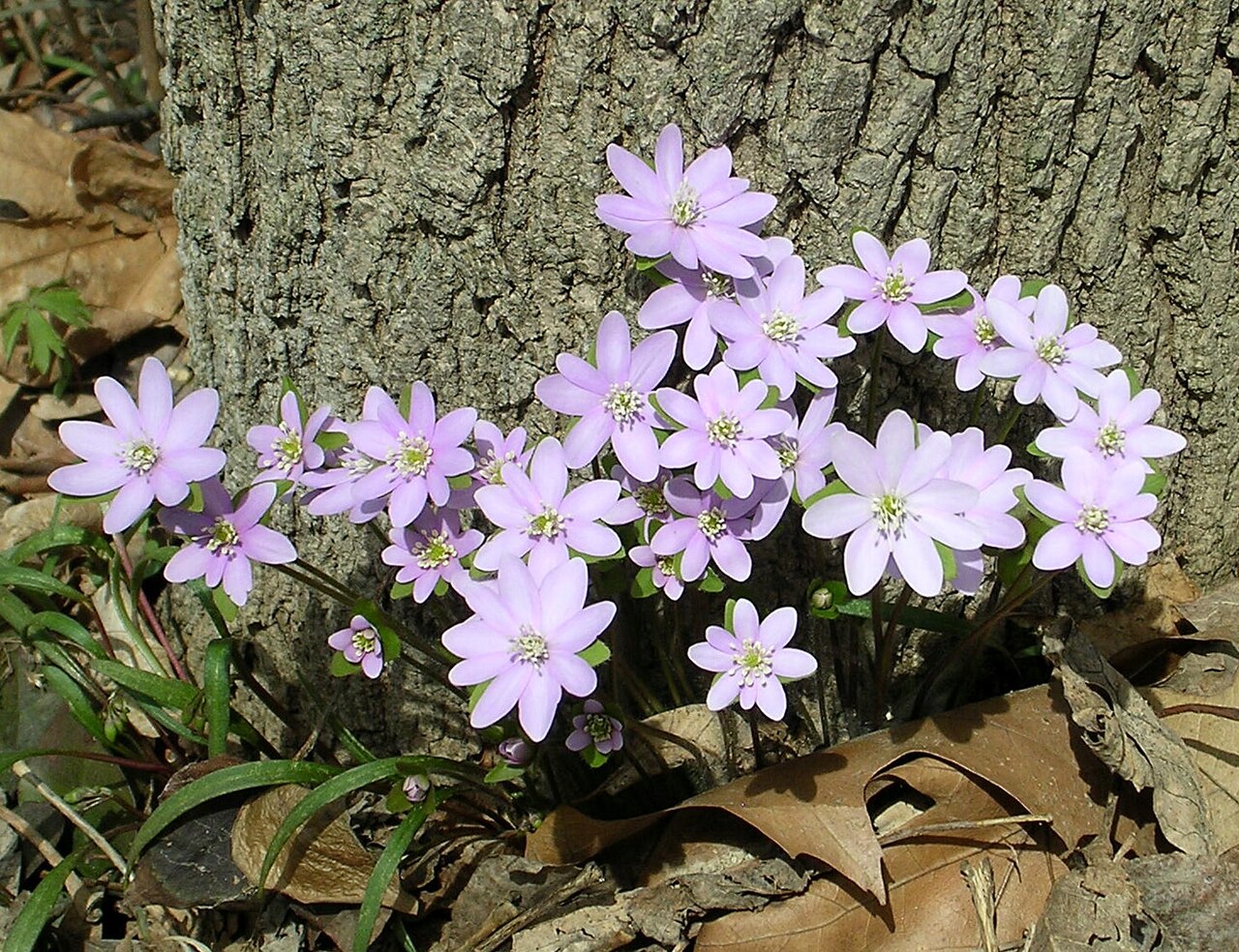
Sharp-lobed hepatica (Hepatica acutiloba) is a small woodland perennial whose spring flowers arrive while much of the garden is still waking. White, pink, or lavender blooms rise on soft hairy stalks among last year’s leaves. New leaves then unfold into three pointed lobes, creating a low, persistent clump that remains interesting after the flowers have gone.
In Maryland, Virginia, and West Virginia, this is a plant for a quiet woodland corner rather than a heavily cultivated border. Rich leaf-derived soil, good drainage, and protection from harsh summer sun matter more than fertilizer. Place it near a path or a low rock where its flowers can be seen without stepping into the bed. A modest cluster can be far more effective at close range than a large planting hidden under taller perennials.
Taxonomic names vary. You may find this plant as Anemone acutiloba, Hepatica nobilis var. acuta, or, in NC State’s treatment, Hepatica americana var. acuta. Those names refer to the sharp-lobed plant discussed here. Keep that synonym trail with a nursery label, and do not substitute the rounded-leaf hepatica merely because both bloom in similar colors.
Identification
Leaves
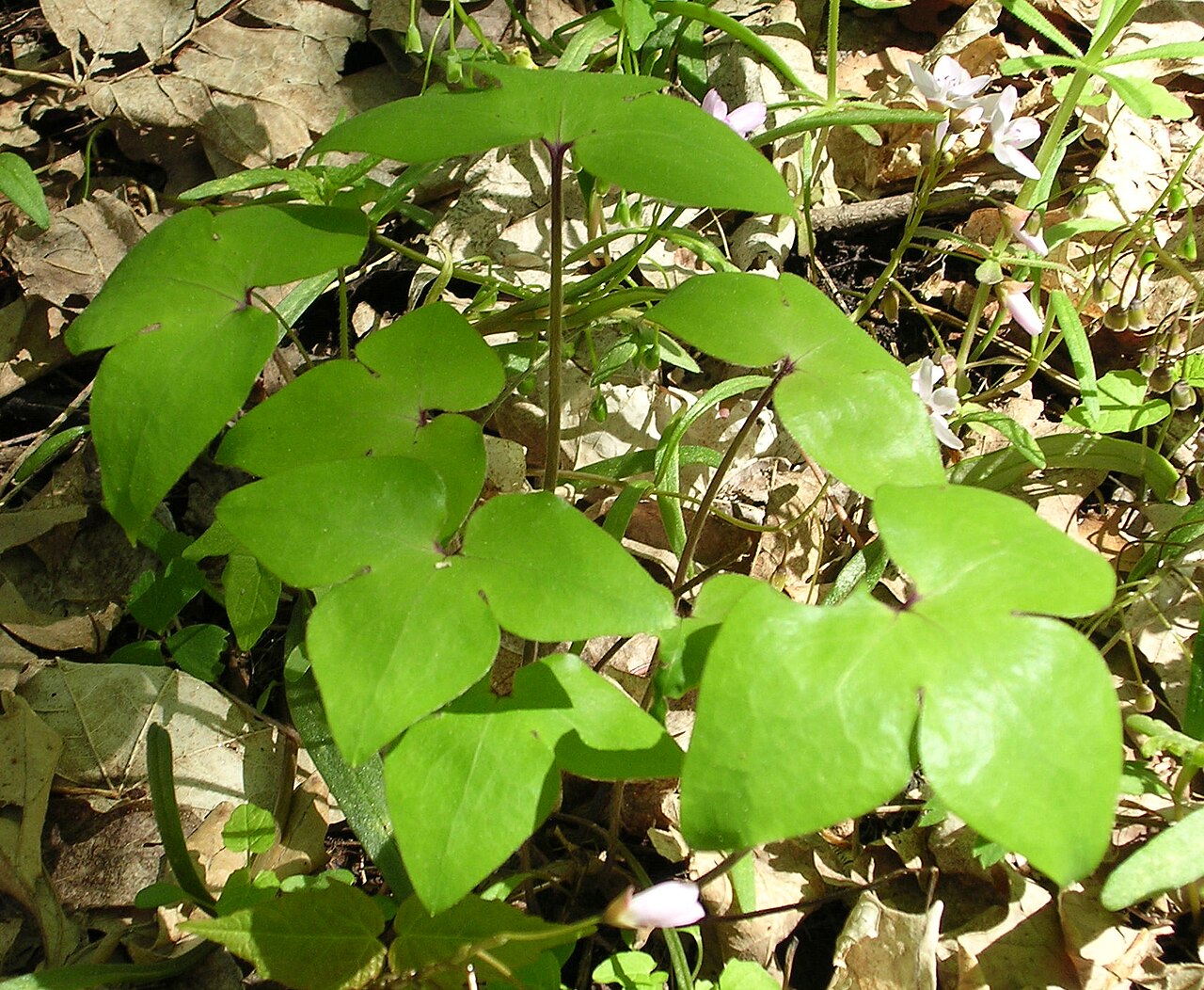
Mature leaves have three lobes ending in distinct points. They are basal, leathery, and often mottled, with hairs visible on young growth and around the leaf surfaces. The pointed tips distinguish this plant from round-lobed hepatica more reliably than flower color does. Older leaves can turn reddish or brownish and persist through winter. In early spring, those weathered leaves help locate the clump before the new foliage expands.
Stalks and Habit
The plant forms a compact, slow-growing clump rather than a running groundcover. Leafless flower stalks emerge separately from the basal leaves and are covered in soft hairs. Most plants remain only a few inches tall; the regional list’s 4–9-inch scale captures a small woodland plant, while many garden references describe typical clumps around 4–6 inches. Do not mistake a single elongated flower stalk for the normal height of the whole leafy mound.
Flowers
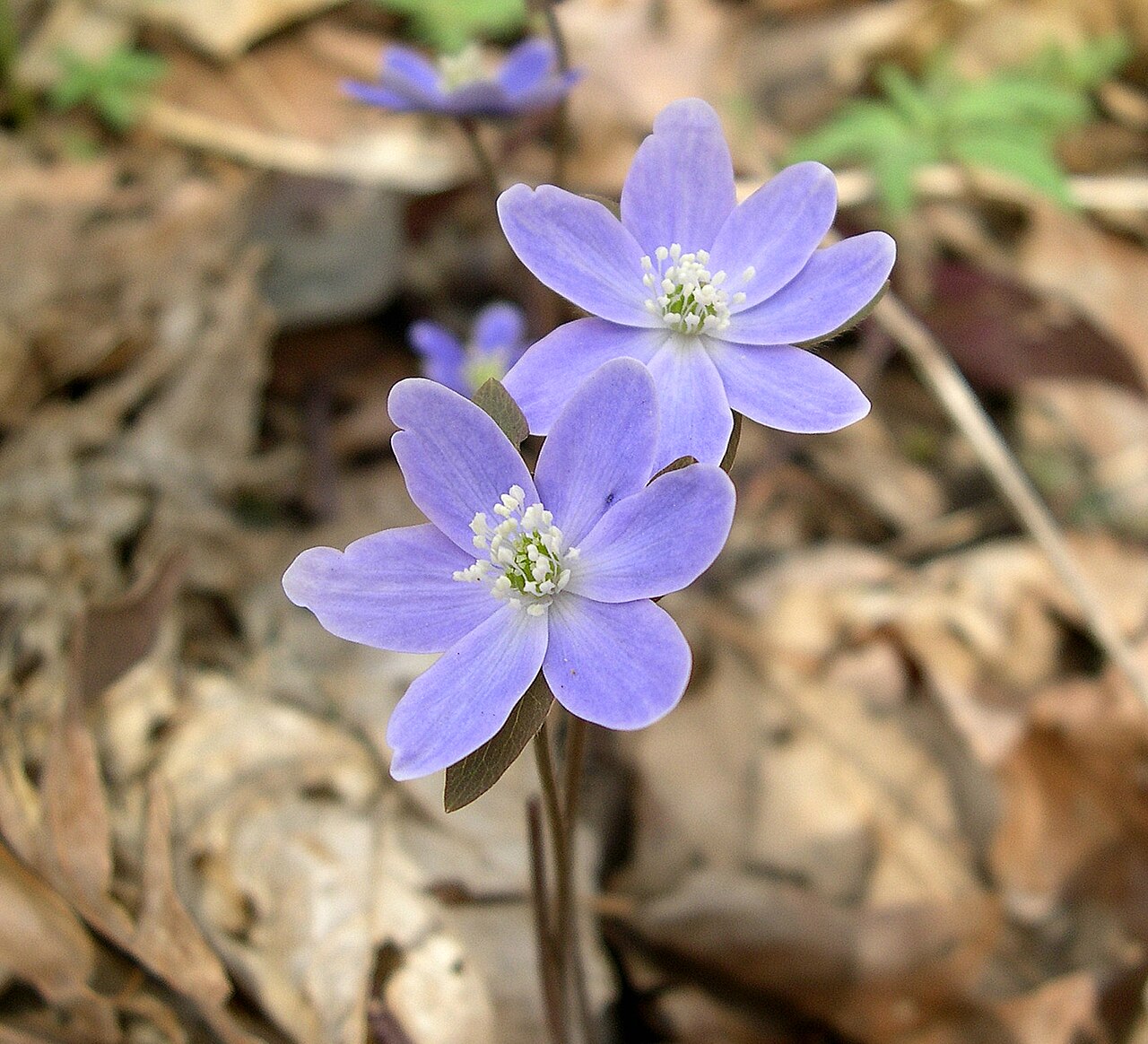
Each stalk carries one flower-like display with several petal-like colored sepals and numerous pale stamens around the center. Three green bracts sit immediately beneath it; their pointed tips help distinguish the sharp-lobed plant. The showy structures are botanically sepals rather than ordinary petals, though their garden effect is similar. Bloom time follows local spring conditions, often March or April in much of the region and later in cooler sites. White, pink, and lavender forms can all belong to the same taxon.
Fruit and the Seasonal Cycle
After flowering, small dry one-seeded fruits develop. New leaves expand as the old overwintered leaves decline. This turnover is normal: an old brown leaf beside a fresh green one does not by itself indicate disease. Do not strip the clump bare immediately after the flowers fade. The new foliage needs a full season to replenish reserves for the following spring, and a small slow-growing plant has little excess tissue to spare.
Quick Facts
| Scientific Name | Hepatica acutiloba DC. |
| Names in Other Treatments | Anemone acutiloba; Hepatica nobilis var. acuta; Hepatica americana var. acuta |
| Family | Ranunculaceae (buttercup family) |
| Plant Type | Small clump-forming woodland perennial |
| Mature Height | About 4–9 in; typical garden clumps often 4–6 in |
| Mature Spread | About 6–8 in, increasing slowly |
| Growth Rate | Slow |
| Sun Exposure | Woodland shade, partial shade, or dappled light |
| Water Needs | Average moisture; some seasonal dryness tolerated after establishment |
| Soil Type | Humus-rich, well-drained woodland soil |
| Soil pH | Neutral to somewhat alkaline conditions often preferred |
| Bloom Time | Early spring, varying with elevation and weather |
| Flower Color | White, pink, lavender, or blue-purple |
| Fall Color | Leaves may turn reddish to brown and persist through winter |
| Fruit | Small hairy achenes |
| Deer Resistant | Not a dependable deer-proof planting |
| USDA Hardiness Zones | 3–7 |
Native Range
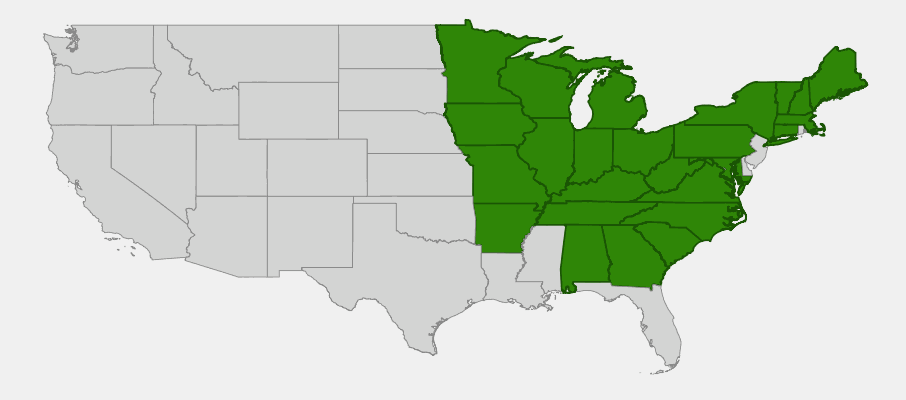
Sharp-lobed hepatica is native to eastern and north-central North America. Its distribution includes Ontario and Quebec and a broad arc of U.S. deciduous-forest regions. The species is especially associated with rich woods, often on relatively base-rich soils. In the southern part of its range it is commonly a mountain or upland woodland plant rather than a species of every coastal lowland.
The map follows the native-state list in NC State’s treatment of the sharp-lobed taxon. Different references group the hepaticas differently, so broad maps of Hepatica nobilis or Hepatica americana should not automatically be applied to this exact plant. A statewide mark is only a geographic summary; it does not imply that the species grows in every forest or is appropriate for every soil within that state.
For regional gardening, the important connection is to undisturbed, humus-rich woodland. Decaying deciduous leaves, a cool root zone, and drainage create the setting in which the plant persists. That is not the same as a waterlogged depression or a root-filled strip of dry soil beside a building. If you are restoring natural habitat rather than making a garden, consult local records and a regional nursery before choosing provenance.
📋 Regional plant list: Maryland, Virginia & West Virginia
Growing & Care Guide
Light
Choose dappled or partial woodland shade. Early spring light before deciduous trees leaf out is useful, while protection from hot summer sun keeps foliage in better condition. The regional shade recommendation should not be read as an instruction to plant beneath an impenetrable evergreen canopy. A place with seasonal light and open air is often better than a permanently dark corner. Watch for scorched leaf edges if exposure is too strong.
Soil and Water
Build the planting around well-drained soil with leaf-derived organic matter. Neutral to mildly alkaline conditions are often suitable for sharp-lobed hepatica; do not add acidifying amendments automatically because the plant grows in woods. Equally, do not add lime without understanding the soil. Water new plants through establishment and during unusually dry spells. Some seasonal dryness is tolerated, but a small recently transplanted clump is not as resilient as a settled wild population with an intact root environment.
Planting Tips
Set the crown at the original soil level and disturb roots as little as practical. Plant into a prepared pocket rather than forcing roots into a narrow hole between competing tree roots. Leave space for the mature clump and for observing new leaves. A light covering of leaf litter around the plant helps preserve the woodland surface; keep thick matted leaves from smothering the crown. Avoid deep bark mulch, which can hide both the flowers and the growing points.
Pruning and Maintenance
Do not shear the plant after bloom. Remove only clearly dead or smothering material, and protect emerging growth from tools and feet. Mark the clump so it is not accidentally dug over when the flowers are absent. Slow growth means that repeated disturbance, division, or browsing can set it back for a long time. If a planting is not thriving, evaluate drainage, soil, and light before adding fertilizer; richer feeding cannot correct a fundamentally unsuitable site.
Propagation
Fresh seed and careful division are established methods, but neither should be treated as instant multiplication. Wildflower Center guidance recommends sowing fresh seed promptly; stored seed may need a moisture and temperature sequence appropriate to the species. Protect small seedlings from drying and disturbance. If dividing a mature garden clump, retain several buds and a healthy root portion in each piece. Allow plants to rebuild before dividing again. Never remove plants from wild populations to fill a garden bed.
Design and Companions
Use companions that share the woodland conditions without overwhelming the hepatica. Small spring wildflowers and restrained ferns can frame the clump, while rapidly spreading groundcovers can bury it. Keep a viewing gap near the path so the early blooms are visible. In a collection of both sharp- and round-lobed hepaticas, maintain labels and separate records; their similar flowers make later identification from memory unreliable.
Landscape Uses
- Plant near a woodland path for an early-spring close-up display.
- Use small groups in a shaded native rock garden with humus-rich soil pockets.
- Combine with restrained woodland perennials that leave the low clumps visible.
- Include in an educational garden comparing pointed and rounded hepatica leaf lobes.
Wildlife & Ecological Value
For Pollinators
The early flowers provide pollen for visiting bees and flies. NC State records small carpenter bees and other flower visitors for this taxon. The timing can be valuable when relatively few garden plants are blooming, but weather and local insect populations determine what a particular clump attracts. Avoid insecticides on the flowers and provide other native spring plants nearby so the resource is not limited to a single brief display.
For Birds
This is not a shrub with conspicuous bird-dispersed berries. Its role for birds is indirect, as part of a living woodland ground layer with associated insects and litter. Retain surrounding habitat rather than treating a collection of isolated potted flowers as equivalent to a woodland garden.
For Mammals
Small mammals can interact with the dry fruits, and browsing or digging may affect a garden clump. Do not assume that an inconspicuous woodland plant is immune to deer. Protect young plants if needed, and avoid placing the only specimen where repeated animal traffic will flatten it. The plant is not recommended for human or pet consumption.
Ecosystem Role
A persistent low perennial contributes seasonal diversity to deciduous woods: flowers appear before canopy closure, then leaves use the shaded growing season. Maintaining that pattern requires more than planting the species name. Preserve a cool root environment, natural litter, and compatible neighbors. Removing wild clumps damages an established community and is unnecessary when nursery propagation is available.
Cultural & Historical Uses
The names hepatica and liverleaf are linked to the lobed shape and winter color of the leaves. Older herbal traditions associated that appearance with the liver. Such a historical association does not establish medical effectiveness or safety; the plant should not be used to make home remedies.
Botanists have placed the sharp-lobed plant at different ranks and in different genera, which explains the several names still found in books and nursery catalogs. The practical identification remains the same: pointed leaf lobes and pointed bracts beneath the spring flowers. Recording those features avoids confusing a taxonomic change with the discovery of a new garden species.
For today’s native-plant gardener, its most meaningful use is as a carefully sourced woodland perennial. A labeled, undisturbed clump can return for successive springs and become a familiar seasonal marker. That slow continuity is part of its appeal, not a problem to solve by frequent lifting or aggressive feeding.
Frequently Asked Questions
How do I distinguish it from round-lobed hepatica?
Look at mature leaves and the three bracts beneath the flower. Sharp-lobed hepatica has pointed tips; round-lobed hepatica has rounded tips. Flower color overlaps and is not a reliable separator.
Why does my nursery use a different scientific name?
Anemone acutiloba, Hepatica nobilis var. acuta, and Hepatica americana var. acuta are names used for this sharp-lobed taxon in different treatments. Keep the synonym on your label rather than assuming the plant is different.
Should I remove all the brown leaves before flowering?
Not automatically. Older leaves persist through winter and are replaced around flowering. Remove smothering debris carefully, but avoid stripping living foliage or damaging emerging stalks.
Will it quickly cover a large shady bank?
No. It is a small, slow-growing clump-former. Use it as a close-up accent and choose a more vigorous, appropriate native groundcover for large-scale coverage.
Can I make liverleaf tea?
No. Historical names and traditional uses are not evidence of safety. Grow it for flowers and foliage, not as a home medicine.
Sources & Further Reading
- NC State Extension: sharp-lobed liverleaf and synonyms
- Lady Bird Johnson Wildflower Center: Hepatica nobilis var. acuta
- USDA PLANTS: sharp-lobed hepatica
Find Native Plants
Ask growers about nursery propagation and regional provenance. Browse our Maryland native plant nurseries, Virginia native plant nurseries, West Virginia native plant nurseries directory for suppliers.