
Purple Passionflower (Passiflora incarnata)
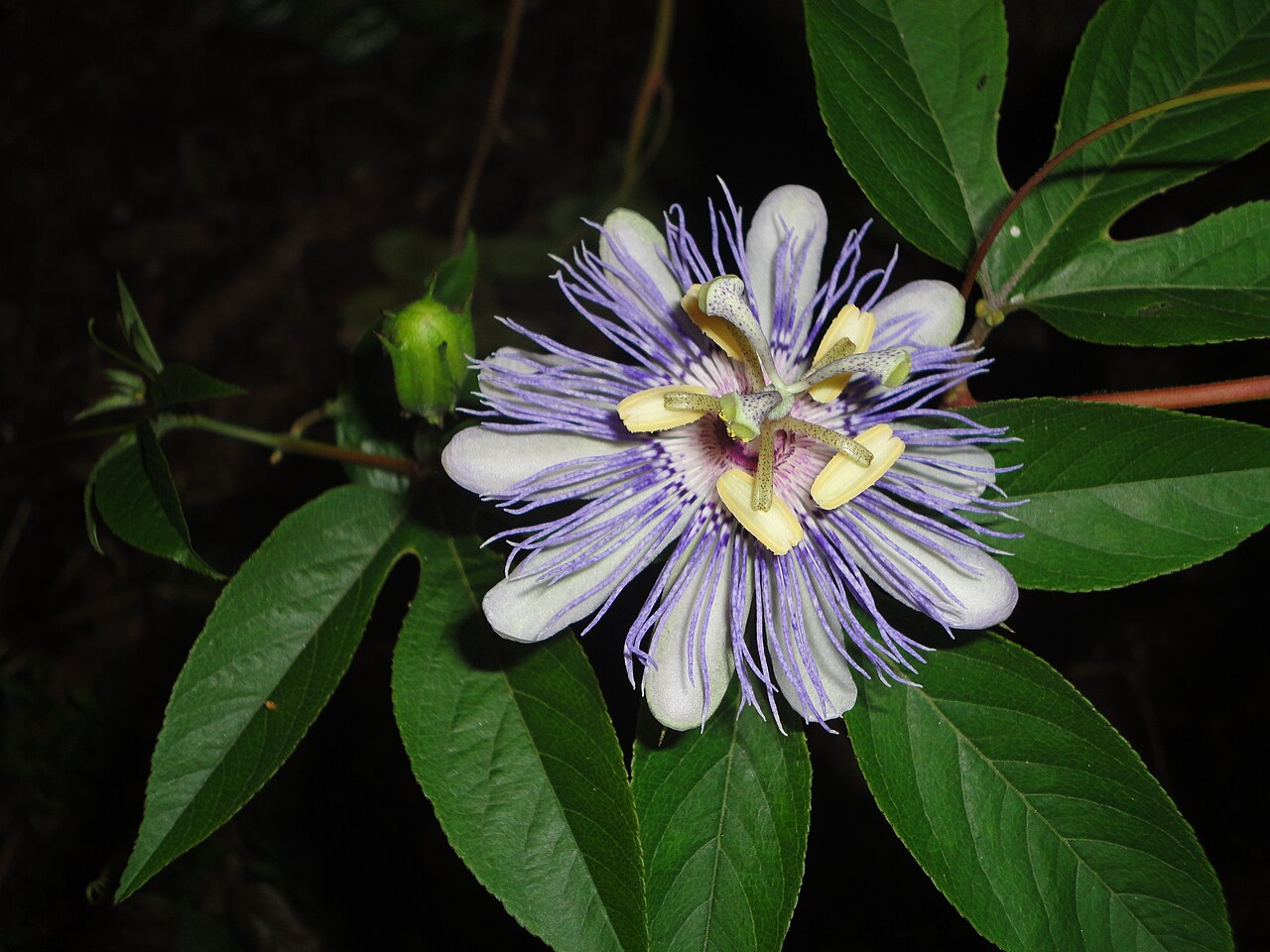
Purple passionflower looks tropical, but this elaborate-flowered vine is native across much of the central and southeastern United States. Its fringed purple corona, raised reproductive structures and three-lobed leaves make it a memorable plant to watch at close range. The common name maypop refers to the egg-shaped fruit, which develops after successful pollination.
For Arkansas, Louisiana, eastern Oklahoma and eastern Texas gardens, its greatest strengths and challenges come from the same trait: vigorous warm-season growth. It climbs rapidly by tendrils and can send up shoots away from the original crown. A fence with room for root suckers is a better match than a tightly packed formal border where every new shoot will be unwelcome.
This species must be distinguished from the many tropical passionflowers and hybrids sold in pots. A spectacular flower does not establish winter hardiness or native identity. Ask for Passiflora incarnata by name, choose nursery-propagated stock suited to the region and plan for the whole growing season, including spring dormancy and the eventual removal of dead stems.
Identification
Bark & Stems
The stems trail or climb using tendrils produced at the nodes. Growth is largely herbaceous in cold-winter gardens and may die back to the root system, while warmer conditions can allow more persistent stems. A root sucker arising several feet away is not necessarily a seedling. Follow the stem structure and leaf pattern when distinguishing the vine from other climbers on a crowded fence.
Leaves
The familiar leaves are usually divided into three pointed lobes, with toothed margins and a substantial blade. Young growth can vary, so use mature leaves together with flowers and tendrils for identification. Small glands on leaf stalks and the placement of buds provide further botanical clues. Leaves are also food for specialized butterfly larvae; some holes can indicate successful habitat rather than a failed ornamental planting.
Flowers
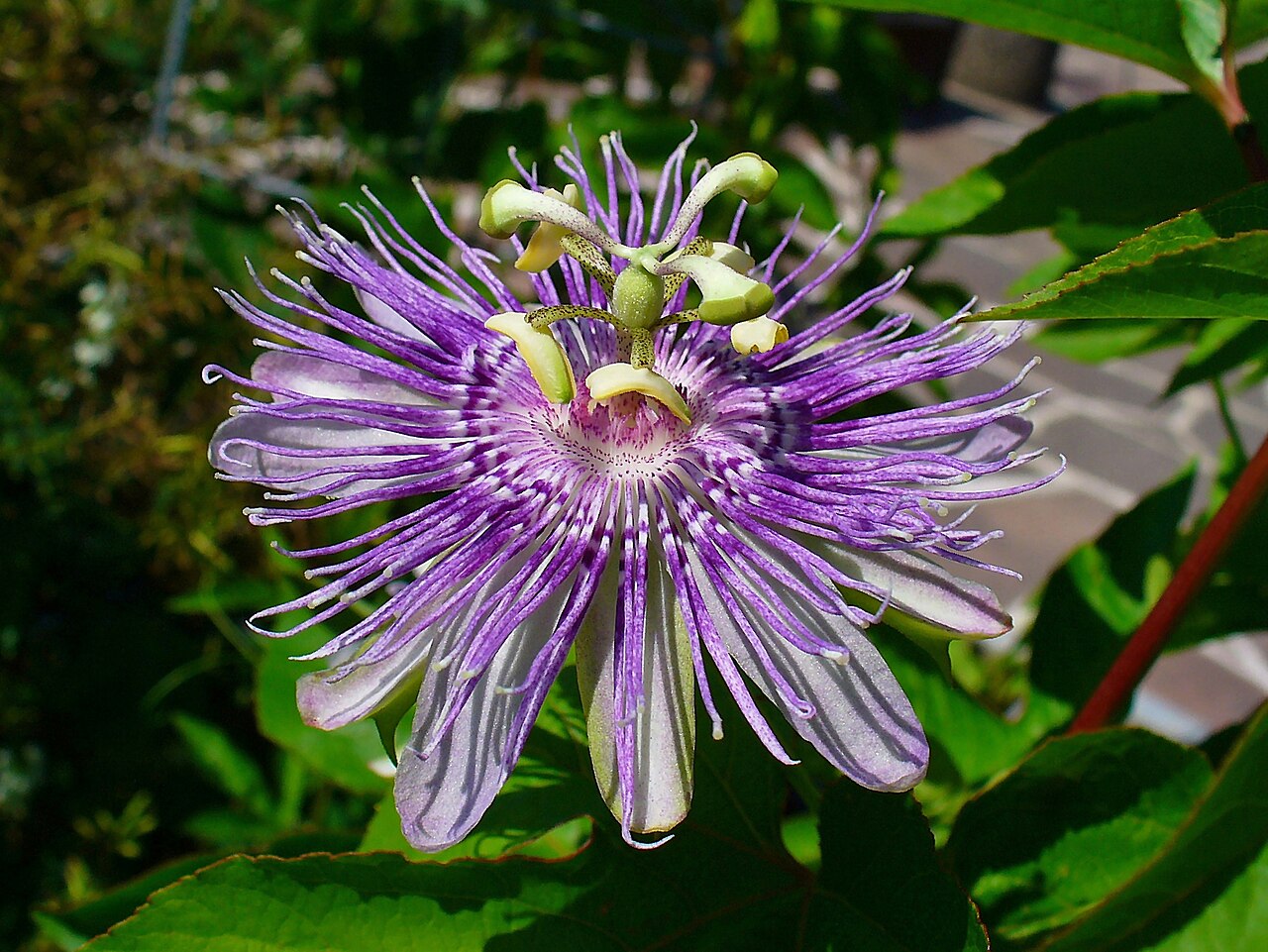
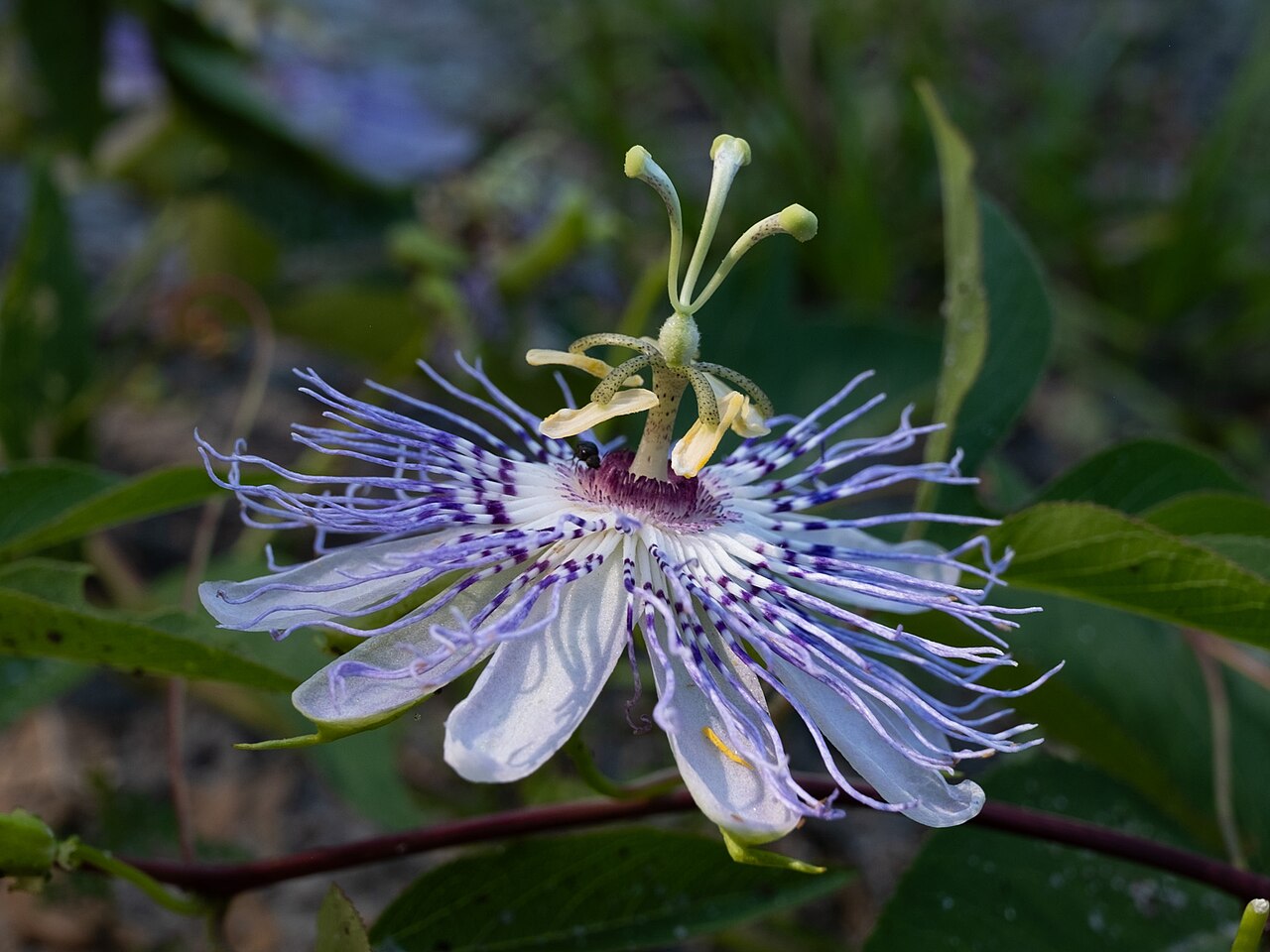
A ring of showy filaments surrounds the raised central structures, with pale petals and sepals forming the background. The three-dimensional flower is best understood from both a face-on and side view. Individual flowers are short-lived, but a healthy vine can produce a succession. Do not identify passionflower species solely by purple coloration: several cultivated species and hybrids have similar colors but different leaves, fruits and cold tolerance.
Fruit & Seeds
The maypop is a leathery, rounded to egg-shaped berry with seeds embedded in pulp. Fruit color and softness change as it ripens, and not every flower necessarily sets fruit. Only positively identified ripe fruit is discussed as edible here; the statement does not apply to leaves, immature fruit or an unknown ornamental passionflower. Allowing some fruit to remain also offers wildlife food where that fits the garden.
Quick Facts
| Scientific Name | Passiflora incarnata |
| Family | Passifloraceae |
| Plant Type | Perennial tendril-climbing vine; usually dies back in cold winters |
| Mature Height | Commonly 10–20 ft of seasonal climbing growth |
| Mature Spread | Can form a broad colony through root suckers |
| Growth Rate | Rapid during warm weather |
| Sun Exposure | Full sun to partial shade |
| Water Needs | Average moisture with drainage; established plants tolerate dry spells |
| Soil Type | Average-fertility loam, sandy loam or other well-drained garden soil |
| Soil pH | No narrow pH requirement asserted; test soil before adjusting |
| Bloom Time | Late spring through summer, often into early fall in warm areas |
| Flower Color | White to pale lavender with a purple fringed corona |
| Fall Color | Yellowing foliage before seasonal dieback |
| Fruit | Egg-shaped maypop berry; ripe pulp is edible after positive identification |
| Deer Resistant | Moderately resistant to browsing, not immune |
| USDA Hardiness Zones | 5–9; provenance, drainage and winter exposure matter |
Native Range
Kew's native treatment includes central and eastern U.S. states southward to Texas and Florida, plus Bermuda. Some occurrence lists include additional Mid-Atlantic states without separating origin. This page follows Kew in treating Delaware, Maryland, the District of Columbia and New Jersey as introduced rather than adding them to the native-state map.
Within its native range, maypop favors open, warm places and vegetation edges rather than deep woodland shade. Root spread lets it exploit space in fields and disturbed openings. That ecological behavior translates into a vigorous garden vine, especially where water and fertility are abundant. Native status does not mean it will stay within the dimensions of its original planting hole.
The shaded states indicate a broad native distribution, not uninterrupted occurrence. Local floras and county records are useful near northern limits and in heavily altered landscapes. For restoration, use locally appropriate material; for a home garden, consider both winter conditions and the ability to manage shoots outside the intended support.
Native Range at a Glance
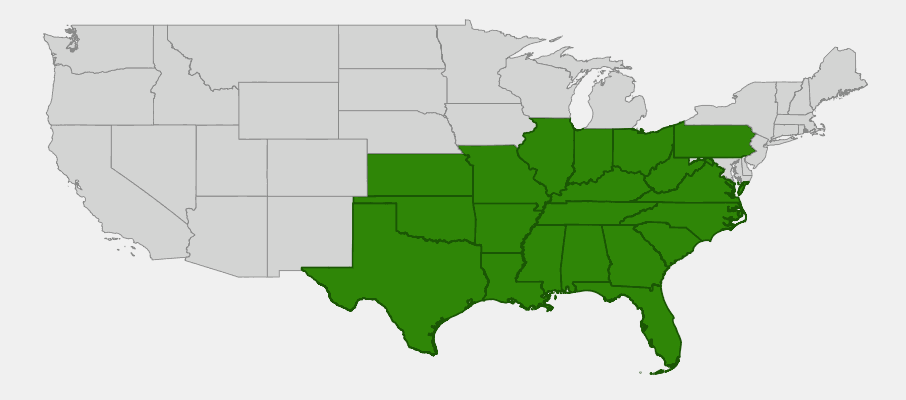
| U.S. States | Alabama, Arkansas, Florida, Georgia, Illinois, Indiana, Kansas, Kentucky, Louisiana, Mississippi, Missouri, North Carolina, Ohio, Oklahoma, Pennsylvania, South Carolina, Tennessee, Texas, Virginia, West Virginia |
| Mexico / Canada / Other Range | Bermuda is included in Kew’s native range |
| Ecoregion | Central and southeastern open woodlands, fields and warm forest margins |
| Elevation Range | Mostly lowland and lower upland open habitats; local variation substantial |
| Habitat | Sunny disturbed openings, field margins, thickets and woodland edges |
| Common Associates | Local meadow grasses, shrubs and edge species; avoid small plants vulnerable to smothering |
📋 Explore the native plant list for Arkansas, Louisiana, eastern Oklahoma and eastern Texas. Species occurrence differs within this multi-state region.
Growing & Care Guide
Light
Provide sun for flowering and fruiting, with partial shade acceptable where the site is otherwise suitable. A vine weaving through dense shrubs may survive but flower where you cannot see or reach it. Position a trellis so blooms are visible from the garden path and stems can be checked for caterpillars before pruning.
Soil & Water
Use well-drained soil of ordinary fertility. Water young plants while they establish, then adjust to rainfall and soil conditions. Heavy feeding is seldom the answer to poor flowering; it may encourage an already vigorous vine to produce more foliage. Mulch can reduce competition and moisture swings, but avoid a thick wet layer directly over the crown, especially before winter.
Planting Tips
Put the support in first and leave an accessible strip around the root zone. Label the crown because new shoots can emerge later than many spring perennials. Do not dig out a dormant plant merely because neighboring shrubs have leafed out. In a mixed border, consider whether you are willing to remove suckers regularly; a confined maintenance area is much easier to manage than a vine threaded through valuable shrubs.
Pruning & Maintenance
Remove dead seasonal stems when the plant is dormant and check for living growth before cutting. Through summer, guide shoots onto the support and trim only where necessary. Inspect for butterfly eggs and larvae so maintenance does not destroy the very wildlife the vine was planted to support. Root suckers can be removed early where they are not wanted; seed removal alone will not contain the colony.
Propagation
Seed and root cuttings are recognized propagation routes. Seed-grown plants can vary, and germination may be irregular; follow a documented protocol rather than discarding a pot too quickly. Nursery plants with known identity are the simplest starting point. When moving rooted material, avoid transporting invasive weeds in the soil and verify that the source is P. incarnata rather than a similarly colored ornamental hybrid.
Landscape Uses
- A sunny fence where seasonal coverage and root suckers are manageable.
- A butterfly garden with tolerance for caterpillar feeding.
- A pergola or trellis positioned for close viewing of the flowers.
- A native edible landscape with careful ripe-fruit identification.
Wildlife & Ecological Value
For Pollinators
The flowers are visited by large bees and other pollinators. Their structure makes watching pollen transfer especially rewarding, but visits do not guarantee fruit set on every flower. Keep flowering vines free of insecticide applications and provide additional native blooms so forage is available outside the passionflower season.
For Birds
The ripe fruit can be used by birds and mammals, while the foliage supports insects that contribute to the wider food web. A habitat garden need not harvest every maypop. If wildlife browsing or fruit removal becomes inconvenient, decide how much sharing is acceptable rather than treating every visitor as a pest.
For Mammals
Passionflower is a larval host for several butterflies, including gulf and variegated fritillaries in appropriate parts of their ranges. Those butterflies are not equally resident everywhere the vine grows. Caterpillar feeding can remove substantial foliage; a vigorous established vine often tolerates more feeding than a small recent transplant. Protecting the plant and supporting larvae requires observation rather than automatic spraying.
Ecosystem Role
Root-spreading growth can create patches in sunny openings, but the same habit can crowd smaller garden plants. Give the vine a defined role, a durable support and an edge you can maintain. A diverse habitat planting benefits more from a controlled patch of passionflower than from allowing it to bury every nearby species.
Cultural & Historical Uses
The name passionflower comes from historical religious interpretation of the flower's structures. Maypop is the more down-to-earth name associated with its fruit. Neither name changes the need to identify the plant by its botanical characters before using any harvested fruit.
The species has a documented history in food and herbal traditions, but historical use is not a dosage guide. This page does not recommend self-treatment with leaves or roots. The garden use emphasized here is ornamental display, butterfly habitat and, where correctly identified, the ripe fruit pulp.
Gardeners sometimes assume that a passionflower must require a tropical greenhouse. P. incarnata shows why species-level identification matters: its perennial root system can survive winters that many ornamental relatives cannot. Conversely, buying a vine under the generic label 'passionfruit' is not a reliable way to obtain this native species.
Frequently Asked Questions
Is maypop the same as tropical passionfruit?
It is a passionflower, but P. incarnata is distinct from common tropical fruit species such as P. edulis. Verify the botanical name.
Why is it late to emerge in spring?
The root system can remain dormant after other plants begin growing. Mark the planting location and check patiently rather than digging it out early.
Will removing fruit stop its spread?
No. It also spreads by root suckers, so managing fruit does not control all new shoots.
Should I remove caterpillars?
Identify them first. Fritillary larvae use passionflower as a host; their feeding can be part of the reason to grow it.
Can I eat any purple passionflower fruit?
No. Only positively identified ripe fruit of the appropriate edible species should be considered. Unknown ornamental vines, unripe fruit and other plant parts are not covered by that advice.
Sources & Further Reading
- Kew Plants of the World Online: identity, synonyms and native distribution
- USDA PLANTS profile
- NC State Extension Gardener Plant Toolbox: identification and cultivation
- University of Florida IFAS: maypop
Find Native Plants Near You
Ask a native-plant nursery for correctly identified, nursery-propagated stock and information about regional provenance. Match the plant to your site rather than collecting it from a wild population.
Arkansas native plant nurseries · Louisiana native plant nurseries · Oklahoma native plant nurseries · Texas native plant nurseries